seamus dubhghaill

Promoting Irish Culture and History from Little Rock, Arkansas, USA


Leave a comment

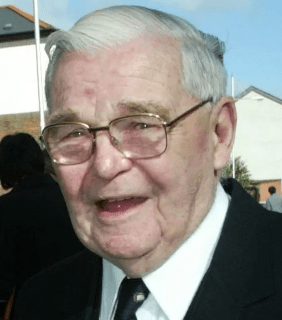
Birth of Thomas Finlay, Judge, Politician & Barrister

Thomas Aloysius Finlay, Irish judge, politician and barrister, is born on September 17, 1922, in Blackrock, Dublin. He serves as a Teachta Dála (TD) for the Dublin South-Central constituency from 1954 to 1957, a Judge of the High Court from 1971 to 1985, President of the High Court from 1974 to 1985 and Chief Justice of Ireland and a Judge of the Supreme Court from 1985 to 1994.

Finlay is the second son of Thomas Finlay, a politician and senior counsel whose career is cut short by his early death in 1932. He is educated at Clongowes Wood College, University College Dublin (UCD) and King’s Inns. While attending UCD, he is elected Auditor of the University College Dublin Law Society. His older brother, William Finlay, serves as a governor of the Bank of Ireland.

Finlay is called to the Bar in 1944, practicing on the Midlands circuit and becomes a senior counsel in 1961.

Finlay is elected to Dáil Éireann as a Fine Gael TD for the Dublin South-Central constituency at the 1954 Irish general election. He loses his seat at the 1957 Irish general election.

Following his exit from politics in 1957, having lost his Dáil seat, Finlay resumes practicing as a barrister. He successfully defends Captain James Kelly in the infamous 1970 arms trial.

In 1971, Finlay is tasked by the Fianna Fáil government with representing Ireland before the European Commission of Human Rights, when, in response to the ill treatment of detainees by security forces in Northern Ireland, they charge the British government with torture. Despite the notional recourse such prisoners would have within the British legal system, the Commission rules the complaint admissible.

Finlay is subsequently appointed a High Court judge and President of the High Court in January 1974. In 1985, Taoiseach Garret FitzGerald and his government nominates him to the Supreme Court and to the office of Chief Justice of Ireland. On October 10, 1985, he is appointed by President Patrick Hillery to both roles.

During this period Finlay presides over a number of landmark cases, including Attorney General v X in 1992, when he overturns a High Court injunction preventing a pregnant teenage rape victim travelling to the UK for an abortion.

When, in the same year, Judge Liam Hamilton of the High Court, chair of the Beef Tribunal, seeks disclosure of the cabinet’s minutes for a particular meeting, Chief Justice Finlay along with the majority of the Supreme Court deny the request ruling that the concept of collective government responsibility in the Constitution takes precedence.

Finlay announces his resignation as Chief Justice of Ireland and retirement as a judge in 1994.

After his retirement, Finlay presides over a number of public inquiries.

In 1996, Finlay oversees the inquiry into the violence by English fans at the aborted 1995 friendly soccer match versus the Republic of Ireland at Lansdowne Road. His report to Bernard Allen, Minister for Sport, is critical of security arrangements on the night and recommends improvements to ticketing, seat-allocation, fan-vetting and policing arrangements. The Irish Government shares his report with the British Home Office.

After the collapse of The Irish Press group in 1995, the Minister for Enterprise and Employment, John Bruton, receives a damming report from the Competition Authority that Independent Newspapers has abused its dominant position and acted in an anti-competitive manner by purchasing a shareholding in The Irish Press. In September 1995, Bruton announces the Commission on the Newspaper Industry with an extremely wide remit to examine diversity and ownership, competitiveness, editorial freedom and standards of coverage in Irish newspapers as well as the impact of the sales of the British press in Ireland. Minister Bruton appoints 21 people to the commission and appoints Finlay chair. Due to the wide remit and huge number of submissions, the commission’s report is delayed but is eventually published at the end of July recommending widespread reforms.

Following the discovery of the BTSB anti-D scandal, in 1996, Finlay is appointed the chair and singular member of the Tribunal of Inquiry into the Blood Transfusion Service Board. The speed and efficiency with which his BTSB Tribunal conducts its business, restores confidence in the Tribunal as a mechanism of resolving great controversies in the public interest.

Finlay also sits on an Irish Rugby Football Union (IRFU) panel to adjudicate on the cases of Rugby players accused of using banned performance-enhancing substances.

Finlay is married to Alice Blayney, who predeceases him in 2012. They have five children, two of whom follow in his family’s legal tradition: his son John being a Senior Counsel and his daughter Mary Finlay Geoghegan a former judge of the High Court, Court of Appeal and Supreme Court. Whenever his work schedule allows, he escapes to County Mayo where he indulges his passion for fishing.

Thomas Finlay dies at the age of 95 in Irishtown, Dublin, on December 3, 2017.

Leave a comment

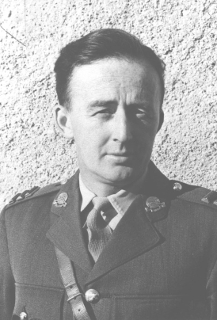
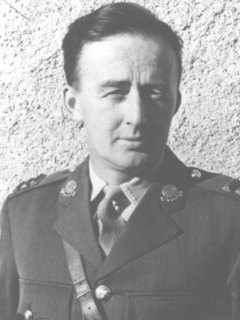
Birth of James Kelly, Irish Army Intelligence Officer

Capt. James Kelly, former Irish Army intelligence officer who is found not guilty of attempting to illegally import arms for the Provisional Irish Republican Army in the Arms Trial of 1970, is born on October 16, 1929, in Bailieborough, County Cavan.

Kelly is the eldest of ten children born into a staunchly Irish republican family. His father, also named James Kelly, had stood for Sinn Féin in local elections in 1918, topping the poll. An ancestor from the late 18th century, Robert Kelly, was a member of the Society of United Irishmen, and was supposedly a Officer Commanding of the United Irishmen in the East Cavan/South Monaghan area. Kelly joins the Irish Army in 1949. By 1960 he has been promoted to captain and appointed to the intelligence section at army headquarters.

Kelly is a central figure in the Arms Trial, having travelled to Hamburg to arrange the purchase of arms. It emerges later that Neil Blaney had ordered him to do so outside normal legal channels, but before the weapons arrive the Garda Special Detective Unit has heard of the plan and informs Taoiseach Jack Lynch, aborting the importation and resulting in criminal charges for the plotters. Although in his summation the judge says it is no defence for Kelly to say that he believed that the government had authorised the importation of arms, Kelly is acquitted.

Although he is acquitted, Kelly suffers financially because he had felt compelled to resign from the Army even before the prosecution is brought. He prints and publishes a personal memoir in paperback format called Orders for the Captain? in 1971.

Kelly never denies that he had been involved in extra-legal arms purchase talks but contends that he had been ordered to do so by some ministers. A typical version of the events is found in a 1993 hostile biography of Charles Haughey, claiming: “As early as October 1969, to the certain knowledge of Charles Haughey, James Gibbons, the Department of Justice, the Special Branch and Army Intelligence, there were meetings with leading members of the Irish Republican Army (IRA), when they were promised money and arms. The critical encounter took place in Bailieborough [sic], County Cavan, on Saturday, 4 October 1969. It had been arranged by Captain James Kelly, an army intelligence officer, and Cathal Goulding. Kelly, at that stage, was already the subject of several security reports to the Secretary of the Department of Justice, Peter Berry, from the Special Branch, implicating Kelly with subversives and with promises of money and of arms.” Kelly never objects to such versions of the events of 1969.

Following the Arms Trial, Kelly joint-founds Aontacht Éireann, a political party directly born out of the scandal. He is elected vice-chairman of the party and stands in Dáil elections for them unsuccessfully on two occasions in 1973 and 1977 in the Cavan-Monaghan constituency. Aontacht Éireann meets with little success at the polls and by 1980 he has joined Fianna Fáil, becoming a member of its national executive. Following the first applications of the 1987 Extradition (European Convention on the Suppression of Terrorism) Act, he resigns from the party in 1989 in opposition to the extradition of Provisional IRA prisoners to the United Kingdom. He also serves twice as President of the “1916-1921” Club.

Kelly is heavily involved in the Northern Ireland peace process. In 1989 he publishes his own draft on how a peace process could proceed. His document called The Courage of the Brave is launched in Conway Mill, Belfast on August 24, 1989. Present on the platform party at the launch of the document are Fianna Fáil Councillor Macarten McCormack, Ernest Cowan, Chairman of Kentstown Fianna Fáil who had served with Captain Kelly on the Fianna Fáil National Executive, Robert C. Linnon, National President, Irish American Unity Conference, Kate Lavery, representing John J. Finucane, National President, American Irish Political Education Committee and Father Des Wilson of Belfast.

Kelly dies on July 16, 2003, and is buried in Glasnevin Cemetery in Dublin. The epitaph on his grave is “Put not your trust in princes,” which is a quote from Niccolò Machiavelli.


Leave a comment

Death of James Kelly, Irish Army Intelligence Officer

james-kelly

James Kelly, former Irish Army intelligence officer who is found not guilty, along with two former Irish government ministers, of attempting to illegally import arms for the Provisional Irish Republican Army in the Arms Crisis of 1970, dies on July 16, 2003.

Kelly is the eldest of ten children, born on October 16, 1929 into a staunchly Irish republican family from Bailieborough, County Cavan.

Kelly is a central figure in the Arms Crisis, having traveled to Hamburg to arrange the purchase of arms. It emerges later that Neil Blaney had ordered him to do so outside normal legal channels, but before the weapons arrive the Gards Special Detective Unit hears of the plan and informs the Taoiseach, Jack Lynch, aborting the importation and resulting in criminal charges for the plotters. Although in his summation the judge says it is no defence for Kelly to say that he believes that the government authorised the importation of arms, Kelly is acquitted.

Despite his acquittal, Kelly suffers financially because he had felt compelled to resign from the Army even before the prosecution was brought. He prints and publishes a personal memoir in paperback format called Orders for the Captain? in 1971.

Kelly never denies his involvement in extra-legal arms purchase talks, but contends that he had been ordered to do so by some ministers. A typical version of the events is found in a 1993 hostile biography of Charles Haughey, claiming: “As early as October 1969, to the certain knowledge of Charles Haughey, James Gibbons, the Department of Justice, the Special Branch and Army Intelligence, there were meetings with leading members of the IRA, when they were promised money and arms. The critical encounter took place in Bailieborough, County Cavan, on Saturday, 4 October 1969. It had been arranged by Captain James Kelly, an army intelligence officer, and Cathal Goulding. Kelly, at that stage, was already the subject of several security reports to the Secretary of the Department of Justice, Peter Berry, from the Special Branch, implicating Kelly with subversives and with promises of money and of arms.” Kelly never objected to such versions of the events of 1969.

Kelly is elected vice-chairman of Aontacht Éireann. Aontacht Éireann meets with little success at the polls and by 1980 he has joined Fianna Fáil, becoming a member of its national executive. Following the first applications of the 1987 Extradition (European Convention on the Suppression of Terrorism) Act, he resigns from the party in 1989 in opposition to the extradition of Provisional IRA prisoners to the United Kingdom. He also serves twice as President of the 1916-1921 Club. He launches a successful defamation case against Garret FitzGerald over an article in The Irish Times.

James Kelly dies on July 16, 2003 and is buried in Glasnevin Cemetery in Dublin. The epitaph on his grave is “Put not your trust in princes,” a quote from Psalm 146.


Leave a comment

Charles Haughey Acquitted of Conspiring in the Arms Crisis

Charles Haughey, former Minister for Finance, and three others including former Minister for Agriculture Neil Blaney, are acquitted on October 23, 1970, of charges that they had conspired to illegally import arms and ammunition into Ireland for the Irish Republican Army (IRA), an incident known as the Arms Crisis.

The Garda Special Branch informs the Minister for Justice Micheál Ó Móráin and Taoiseach Jack Lynch that a plot to import arms exists and includes government members, however Lynch takes no action until the Special Branch makes opposition leader Liam Cosgrave aware of the plot. Cosgrave tells Lynch he is aware of the plot and will announce it in the Dáil the next day if he does not act. Lynch subsequently requests that Haughey and Blaney resign from the Cabinet. Both men refuse, saying they had done nothing illegal. Lynch then asks President Éamon de Valera to terminate their appointments as members of the government, a request that de Valera is required to grant by convention. Haughey and Blaney are subsequently tried in court along with Captain James Kelly, a former intelligence captain in the Irish Army, and Albert Luykx, a former Flemish Nationalist and businessman, who allegedly used his contacts to buy the arms.

The verdict, reached by jury after two hours and 10 minutes of deliberation, leads to political repercussions for the Government of Taoiseach Jack Lynch. Lynch had dismissed the Haughey from his Cabinet post the previous May on the allegation of illegal gunrunning.

Witnesses declare during the 14‐day trial that the arms, imported from the Continental Europe, were ultimately destined for the Roman Catholic minority in Northern Ireland. However, the defense contends that the arms had been brought in with the knowledge and approval of the current Minister for Agriculture, Jim Gibbons, who was serving as Minister for Defence at the time.

The jury rules that the prosecution had failed to prove its case.  Haughey is carried from the High Court after the acquittal, as are the three other defendants.

Although cleared of wrongdoing, it appears as if Haughey’s political career is finished. Blaney eventually resigns from Fianna Fáil but Haughey remains. He spends his years on the backbenches building support within the grassroots of the party. During this time, he remains loyal to the party and serves the leader but after the debacle of the Arms Crisis neither man trusts the other.

(Pictured: Charles Haughey with Neil Blaney at the 1970 at the Arms Trial)