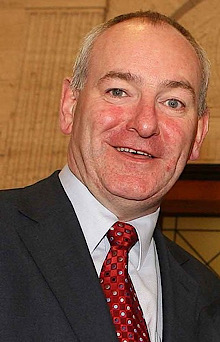
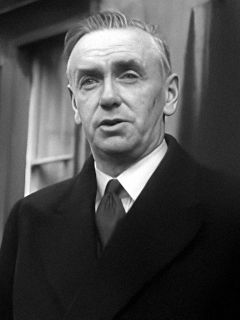
Mullen is first elected to Seanad Éireann (the Irish Senate) in 2007 for the National University of Ireland constituency, and has been continuously re-elected in 2011, 2016, 2020, and 2025, often topping the poll among NUI graduates. In 2018, he founds the Human Dignity Alliance, an anti-abortion political party. He is also affiliated with the European Christian Political Party (ECPP).
Mullen has built his career around social conservative causes:
Anti-abortion advocacy: He opposes the repeal of the Eighth Amendment and seeks stronger protections for conscientious objection among medical staff.
Opposition to same-sex marriage: He is prominent during the 2015 referendum opposing constitutional changes related to marriage.
Human rights and palliative care: He introduces bills and motions promoting hospice care and the protection of vulnerable adults.
Freedom of conscience and family values: He advocates policies emphasizing parental rights in education, ethical protections, and support for families.
International advocacy: He criticizes human rights abuses in China, the treatment of religious minorities, and European Union (EU) bureaucratic overreach, while seeking Ireland’s engagement on human dignity standards internationally.
A lifelong practicing Roman Catholic, Mullen emphasizes the principle of human dignity in both politics and daily life, integrating faith and reason in his ethical framework. He maintains a connection to Irish culture and the Irish language, and has engaged in public discussions on moral and social issues, grounding his positions in Catholic teaching without seeking to impose religious law.
In summary, Mullen is a long-standing independent Irish senator influential in debates on social policy, ethics, and human rights. His career is marked by consistent advocacy for pro-life positions, family integrity, and freedom of conscience, alongside active engagement in European and international policy discussions on human dignity and social justice.
Blair tells Sinn Féin he needs assurance that its members are committed to “exclusively peaceful means” for the peace process to succeed, and stresses that all parties must recognise their obligations under the 1998 Good Friday Agreement.
Durkan warns that while the power sharing government might be suspended, the agreement itself should not be “crippled” but only “injured.” He says the SDLP will not support a motion to exclude Sinn Féin from the Executive, but acknowledges that the Ulster Unionists cannot be expected to continue sitting alongside Sinn Féin under the current circumstances.
Durkan also stresses that the best way to reassure communities is to end IRA-related concerns, calling for an end to IRA activity. He urges both governments to avoid an “orgy of mutual recrimination” and to keep the political agenda focused on protecting the peace process.
This moment is a critical test for the Good Friday Agreement, as the suspension of the Executive risks undermining the democratic path it has established, but Durkan’s stance reflects the SDLP’s commitment to preserving the framework of the peace deal even amid political turmoil.
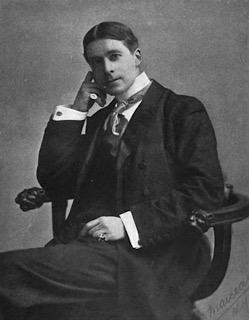
McCarthy’s early career was meteoric: his first book, An outline of Irish history from the earliest times, appears in 1883 and is a fast-moving, strongly worded, nationalist sketch of Irish history. This is followed by a heavy-handed dramatic poem, Serapion (1883), about the early Christian era. In June of the following year he is returned as the Home Rule LeagueMP for Athlone on the death of the sitting member, and also publishes, to excellent reviews, England under Gladstone, which runs to a second edition within a year. In November 1884, his first play, The Candidate, is an overnight success in the Criterion Theatre in London. Its plot is thin but the humour and political badinage ensures it a long run.
At the 1885 United Kingdom general election McCarthy is elected nationalist MP for Newry, and he holds this seat until 1892. In the two years after his election he writes a number of novels, translates works from Persian, and writes Ireland Since the Union (1887), which is well researched, nationalist and impassioned in tone, showing a flair for biographical sketches. During this period he is known for his good attendance in the House of Commons though he does not speak much – throughout his life he is more an observer than a participator – and he is said by William O’Brien to conceal “under the gentlest of exteriors the fire of the ‘Spirit of the Nation’ ballad” (New Ireland Review, 523). In London he is well known for his controversial drama reviews in The Gentleman’s Magazine and the Sunday Sun, and in Dublin for his numerous verse and prose contributions to United Ireland. Although he makes a name for himself as a brilliant young man, he never fulfills his early promise.
In later years McCarthy continues to publish prolifically but produces only ephemeral works, and his parliamentary attendance slackens off. His political commitment is soured possibly by the party’s split in 1890. He originally sides with Charles Stewart Parnell, emphasizing in a speech on December 1, 1890, that he believes in the old-fashioned theory of personal loyalty to a leader. However, five days later he causes a minor drama by rising at the last minute to follow his father and the forty-three other anti-Parnellites, claiming that he feels he must abide by the decision of the majority. Two years later he leaves politics for good without standing in the 1892 United Kingdom general election. A sympathetic profile of him in the New Ireland Review in 1894 remarks that “no man of equal talents made so slight an impression on the political world.”
Thereafter McCarthy has less involvement in Irish affairs and writes no more Irish history books, though his novels continue to have Irish themes. He lives in London in Putney Common, and continues to travel widely. In 1894, he marries in some haste a popular comic actress, Cecilia Loftus, and the event is widely reported in the English press. However, the marriage is dissolved in the United States five years later. In 1908, his second marriage is to Loullie, daughter of Henry Killick of Budapest. He continues to enjoy success as a dramatist and has five plays, four sketches, and three duologues performed in London in the 1890s. However, he concentrates increasingly on historical fiction, which he produces at breakneck speed. In the first decade of the twentieth century he writes over twelve novels based on periods in English, Italian, French, and Irish history. The Illustrious O’Hagan (1906), The O’Flynn (1910), and The King Over the Water (1911) pointedly contradict English stereotypes of the “stage Irishman.” The Fair Irish Maid (1911) is an allegory of the Irish Parliamentary Party‘s political marriage to the ordinary Irish people rather than to the Anglo-Irishascendancy.
McCarthy dies at home in Putney on March 20, 1936 aged 79, although his obituaries all put his age at 75.
(From: “McCarthy, Justin Huntly” by Bridget Hourican, Dictionary of Irish Biography, http://www.dib.ie, October 2009)
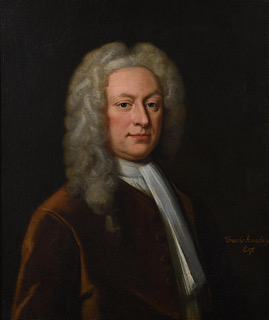
Annesley is a prominent figure in Irish politics during the late 1690s. Initially aligned with the Whig faction, he later moves closer to Tory interests, particularly in his opposition to Catholic influence and the growing presence of ScottishPresbyterians in Ulster. His political stance and actions in the Irish Parliament draw criticism from certain factions.
The “Report of the Commissioners” is a formal parliamentary document produced by a committee tasked with examining Ireland’s governance, economic conditions, and political tensions. Annesley’s involvement in drafting or presenting parts of this report is seen by some as politically damaging or controversial. The exact nature of his contribution is not fully detailed in surviving records, but it is sufficient to trigger his expulsion.
The early 1700s in Ireland are marked by ongoing sectarian tensions between Protestants and Catholics, political maneuvering between Whig and Tory factions in the Irish Parliament and economic hardship and poor governance conditions, which are themes in the commissioners’ report.
Annesley’s expulsion reflects the sensitivity of political discourse in Ireland at the time, where even well-intentioned inquiries can be used to target opponents.
Following his expulsion, Annesley continues his political career in England, being returned as MP for Preston in 1705 and later for Westbury. He remains active in Parliament until 1734, when he does not stand for re-election in the 1734 British general election.
In summary, on September 28, 1703, Francis Annesley is expelled from the Irish House of Commons for his part in the “Report of the Commissioners,” a move that underscores the political risks of engaging in sensitive parliamentary inquiries during a volatile period in Irish history.
Progressing the Peace Process – the parties are consolidating steps needed to establish Northern Ireland’s new devolved Assembly, following the Good Friday Agreement signed in April 1998.
Confirming Executive Arrangements and Cross-Community Cooperation – discussion focuses on how the new Northern Ireland Assembly and Executive can function on a cross-community basis, ensuring Unionist and Nationalist representation in governance and decision-making.
Addressing the Controversial Role of the Queen – newly declassified documents show that Tony Blair and Secretary of State for Northern IrelandMo Mowlam explored whether Queen Elizabeth II should officially open the new Assembly, a sensitive question due to nationalist perception. They propose consulting privately with Seamus Mallon before final decisions are made with David Trimble.
Ensuring the Implementation of Key Good Friday Agreement Provisions – including Irish Republican Army (IRA) decommissioning of weapons, parity in representation for Unionists and Nationalists in the Assembly, and planning for the full transfer of powers from the UK Government to the Assembly, which is scheduled for December 1999.
Key outcomes and discussions coming out of the meeting include:
Commitment to Institutions: Blair, Trimble, and Mallon agree on the importance of setting up a shadow Assembly that can transition to full devolved powers once cross-party agreements are stable.
Cross-Community Provisions: Blair emphasizes that sensitive issues require cross-community approval in the Assembly, warning that majority-rule-only systems could lead to collapse if abused.
International Support: George Mitchell, as U.S. envoy, reaffirms American support for the peace process and encourages local leaders to uphold commitments.
Political Sensitivities of the Queen’s Role: Blair and Mowlam note the potential nationalist backlash if the Queen’s presence is prominent, suggesting alternative ceremonial openings.
Security and Prisoner Issues: Discussions also cover paramilitary decommissioning, with particular concern over Sinn Féin and IRA compliance to allow the formation of the shadow Executive safely.
The meeting is part of a broader diplomatic effort. It occurs after the signing of the Good Friday Agreement (April 10, 1998) but before formal referendums in Northern Ireland and the Republic of Ireland approving the Agreement (May 22 and 23, 1998). It highlights the delicate balancing act between Unionists and Nationalists, the role of the UK and Irish governments, and international mediation, notably from the U.S. via George Mitchell.
Declassified documents at the Public Record Office of Northern Ireland (PRONI) in Belfast detail concerns over cross-community decision-making and the Queen’s status in ceremonial openings. The CAIN: Irish Peace Process Chronology confirms Blair, Trimble, and Mallon are engaging in preparatory discussions to implement the Agreement’s provisions and ensure the Assembly’s initial functionality. U.S. involvement through George Mitchell underscores the international commitment to maintaining peace and political stability during the transitional period.
In summary, the September 27, 1998 meeting is a crucial step in operationalizing the Good Friday Agreement, demonstrating cooperative leadership among British, Unionist, and Nationalist figures, with strategic oversight from the United States. It sets the stage for the new Northern Ireland Assembly, addressing ceremonial, legislative, and security challenges central to the successful devolution of powers.
Key participants demonstrate cautious diplomacy, foresight in cross-community governance, and recognition of the international dimension crucial to Northern Ireland’s peace process.
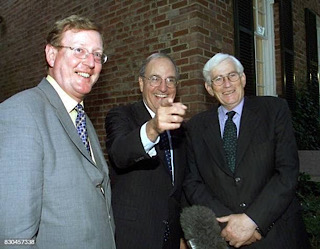
(Pictured: (L to R) David Trimble, George Mitchell and Seamus Mallon)
The inaugural 12-person national executive sits at the “top table” under a banner of the 1916 Proclamation’s signatories. Notable members included Nuala Perry, vice-chairperson and former Provisional IRA prisoner, Kevin Murphy, former Real IRA prisoner, Risteard Ó Murchú, former republican prisoner, Sharon Rafferty, Dee Fennell, David Jordan and Mandy Duffy, sister-in-law of Colin Duffy. Other attendees include veteran republican leader Billy McKee, Thomas Ashe Mellon and Issam Hijjawi, Chair of the Association of Palestinian Communities in Scotland.
Saoradh positions itself as a far-left, dissident republican movement advocating a 32-county socialist republic free from British rule and European Union (EU) interference, anti-imperialism, anti-capitalism, and worker ownership of production, rejection of the Good Friday Agreement as a capitulation to British control and grassroots activism, street politics, and campaigns for republican prisoners.
The founding press release emphasizes that Ireland should be governed by the Irish people, with wealth and wealth-producing mechanisms in the people’s ownership, rejecting both British imperialism and capitalist exploitation. The event is marked by a mix of political rhetoric, historical symbolism, and support from prominent dissident figures.
In short, September 24, 2016, marks the official launch of Saoradh as a political front for dissident republicans committed to revolutionary means to achieve Irish unification and national sovereignty.
Ellis is from an Irish republican family, and both of his grandfathers fought in the Easter Rising in 1916. He later owns a television repair business.
Ellis is a former Provisional Irish Republican Army prisoner. He is arrested in 1981, when explosives and bomb making equipment are found under his bed. He is charged with possession of explosives. He jumps bail, but is arrested in Buffalo, New York in February 1982 and extradited to the Republic of Ireland, where in April 1983, he is sentenced to ten years’ imprisonment in Portlaoise Prison. He is convicted of possessing multiple power-timer units for IRA bombs, including those suspected of being used in the Hyde Park and Regent’s Park bombings. In 1983, his fingerprints are found on a huge cache of IRA explosives found in a forest outside the Berkshire town of Pangbourne. The cache is linked to the Harrods and Hyde Park bombings. On November 14, 1990, after thirty-five days on hunger strike, he becomes the first person extradited from the Republic of Ireland to the United Kingdom under the 1987 Extradition Act. He goes on hunger strike to protest efforts to send him to Britain, but is extradited in the sixth week of his fast. His hunger strike draws considerable domestic and international attention, and at one point TaoiseachCharles Haughey intervenes, asking Ellis’ parents to ask him to give it up, but they refuse. He is acquitted at his trial in London in October 1991.
Ellis is first elected to Dublin City Council in 1999, for the Finglas local electoral area. He unsuccessfully contests the 2002 Irish general election in the Dublin North-West constituency, and receives 4,781 first-preference votes (18.3%). He is again unsuccessful at the 2007 Irish general election in the same constituency, receiving 4,873 votes (15.7%). At the 2011 Irish general election, he is elected to the 31st Dáil with 7,115 (21.7%) of the first-preference votes.
In October 2014, following claims made by Máiría Cahill that she had been raped as a 17-year-old by a member of the Provisional IRA, Ellis states that “If an allegation was made against a volunteer it would have to be investigated [internally]…To be honest they were not qualified to deal with something like sexual abuse”. Based on this, Philip Ryan of the Irish Independent accuses Ellis of admitting that the IRA ran “kangaroo courts.”
In September 2016, a bill is put forward, which if passed would criminalise hare coursing. Sinn Féin supports the legalisation of hare coursing and decides to apply the party whip. As Ellis opposes it he declines to vote. He defies party instructions by not informing party whip Aengus Ó Snodaigh that he will not be taking part in the vote so he could be excused. He is subsequently given a written warning.
In December 2016, during a session of the Dáil, Ellis and his fellow Sinn Féin TD Martin Ferris are accused by Fine Gael TD Alan Farrell of having information in relation to the shooting of Brian Stack, the chief prison officer at PortlaoisePrison, in 1983. Sinn Féin leader Gerry Adams had just delivered an address to the Dáil in relation to Stack when Farrell rises and uses Dáil privilege to state Gerry Adams had listed Ellis and Ferris as amongst people who may have information about the Stack death in an e-mail to the Garda Commission in February 2014, and ask that the two should also address the Dáil on the matter. Ellis immediately responds by stating, “I refute [sic] any allegations. For the information, the man in question claims to be a solicitor, I was actually in jail for the period. In Portlaoise, and before that in America, so you should check your facts. You’re a disgrace.” Ferris follows Ellis, and states, “On the record of this house; In 2013, I met with gardaí at their request regarding the death of Brian Stack, I co-operated fully with them and I have nothing to answer for, and it’s a disgrace what you have come in here naming. You should be ashamed of yourself.” In December 2016, Ellis states he had received death threats following the exchange in the Dáil.
In February 2018, Ellis is censured by Sinn Féin after he states publicly that fellow party member and councillor for Ballymun Noeleen Reilly is “not fit to represent Sinn Féin” and that she had waged a social media campaign against him. For her part, Reilly is suspended by the party for six months.
At the 2020 Irish general election Ellis is again elected with 14,375 first-preference votes (44.4%). He is a poll topper in the 2020 general election along with many Sinn Féin TDs in the 2020 election. He is criticised for joining his supporters singing “Come Out, Ye Black and Tans” at the count, but he dismisses the suggestion it is inappropriate.
In 2012, the Irish Independent, citing released internal documents held by the British government that were previously sealed for 30 years, alleges that by 1982 British authorities believe Ellis to be linked to “50 murders” as part of his time in the Provisional IRA. The allegation specifically cites a telegraph from the British embassy in Washington, D.C., to American counterparts in which they claim that Ellis is linked by “forensic evidence to some 50 murders” across Northern Ireland and the Republic of Ireland. The Irish Independent claims another document states that Ellis is a “leading member” of the Provisional IRA.
Sinn Féin denounces the allegations as an “Indo Smear” and releases a statement declaring, “This is not the first time such unsubstantiated allegations have been made and Dessie Ellis rejects them as he has repeatedly done. Following a prolonged hunger strike in the 1990s to protest his extradition to Britain, Dessie successfully beat these trumped-up charges in court. Dessie Ellis has made no secret of his involvement in the republican struggle over many decades, including within the ranks of the IRA. Dessie has also been an important persuader for the Peace Process for many years.” Ellis does not make any personal statement on the allegations and refers journalists to Sinn Féin’s official statement.
Ellis is proficient in karate, holding a black belt, and teaches martial arts to young people. He is married to Anne Ellis (née Dunne) with grown up children.
Cook is born on January 25, 1944, to Francis John Granville Cook and Jocelyn McKay (née Stewart) in Leicester, England. As a child, he moves to Northern Ireland with his parents and sisters after his father is appointed headmaster of Campbell College in 1954.
Cook works as a solicitor, eventually becoming a senior partner at Sheldon and Stewart Solicitors.
In 1970, Cook is a founder member of the Alliance Party of Northern Ireland (APNI), a nonsectarian party, while he is elected to the party’s Central Executive in 1971.
Cook is elected to Belfast City Council in 1973, a position he holds until 1985. In 1978, he becomes the first non-Unionist Lord Mayor of Belfast since William James Pirrie, a Home Rule Liberal, in 1896–1898.
In 1994, Cook becomes the Chairman of the Police Authority of Northern Ireland, but he is sacked from this role in 1996 after losing a vote of confidence. After a critical account of his role in an internal row in that authority appears in newspapers in 1998, he undertakes a lengthy libel case which is ultimately settled out of court. He subsequently sits on the Craigavon Health and Social Services Trust.
On September 20, 2020, it is announced that Cook has died after being diagnosed with COVID-19 during the pandemic. According to his family, he dies on September 19, 2020, at Craigavon Area Hospital. He had had a stroke two years before. He is survived by his wife Fionnuala, his sisters Alison and Nora, his daughter Barbary, his sons John, Patrick, Julius, and Dominic, and his granddaughters Romy and Imogen.
The ban comes after just eight months of Dáil Éireann’s existence, which begins on January 21, 1919, when Sinn Féin MPs refuse to take their seats in Westminster and instead convene a separate parliament in Dublin. The British initially underestimate its significance, but events change rapidly.
Sinn Féin’s attempt to raise funds (the Dáil Loan) in August 1919 for the republican cause is seen as a move to legitimise an independent administration, undermining British control. Also, some Irish Volunteers members swear allegiance to Dáil Éireann, which is seen as a political act with potential to inspire wider resistance. The summer of 1919 also sees a surge in attacks, prompting Dublin Castle to respond with suppression measures.
The proclamation takes effect nationwide, including all counties and major boroughs such as Dublin, Belfast, Cork, Limerick, Derry, and Waterford. Within days, police raids and searches target Sinn Féin headquarters and members’ homes. The Harcourt Street headquarters in Dublin is raided, leading to arrests of figures like Patrick O’Keefe and Ernest Blythe. Similar searches occur in Belfast, Derry, Omagh, and Ballycastle, uncovering literature, weapons, and ammunition in some cases.
The ban is a major blow to Sinn Féin’s political prestige, but it also hardens the resolve of many republicans. Historians note that the suppression turned some moderate politicians into “extremists” and increased the likelihood of militarisation. Despite the crackdown, the Dáil continues to operate in secret, meeting in multiple Dublin locations to maintain the Irish Republic’s political legitimacy.
In short, the September 12, 1919 declaration marks a turning point in the Irish War of Independence, shifting the conflict from political negotiation to open confrontation.
(Pictured: Members of the First Dáil Éireann seated and standing outside the Mansion House in Dublin on January 21, 1919)
By 1947, de Valera’s government has begun drafting legislation to repeal the Act. Initially, the bill does not mention a republic, but by January 1948 it includes a reference to the state as a republic. Costello, as Taoiseach, introduces the bill in November 1948, citing irritation over the British invitation to King George VI to open the Canadian Parliament — seen as a slight to Irish sovereignty.
On September 7, 1948, Costello tells reporters in Ottawa that Ireland will repeal the External Relations Act, thereby ending the Crown’s role in Irish external affairs. The British government is not informed until a month later, and relations remain cordial until Ireland formally leaves the Commonwealth in April 1949.
The Republic of Ireland Act 1948 is passed by the Oireachtas in December 1948 and signed by PresidentSeán T. O’Kelly on December 21, 1948. It repeals the External Relations Act 1936, declares the state’s description as the Republic of Ireland and vests executive power in the President for external relations on the advice of the Government. The Act takes effect on April 18, 1949 (Easter Monday), marking the symbolic completion of Ireland’s transition from dominion to republic.
The Parliament of the United Kingdom passes the Ireland Act 1949, acknowledging Ireland’s new status, preserving Northern Ireland’s constitutional position, and maintaining rights of Irish citizens in Britain. This ensures continuity in trade, travel, and citizenship without major disruption.
The significance of the 1948–1949 process is a definitive assertion of Irish sovereignty, aligning Ireland’s legal framework with its de facto republican governance. It ends the last constitutional vestige of the British monarchy in Ireland and marks Ireland’s formal departure from the Commonwealth.