seamus dubhghaill

Promoting Irish Culture and History from Little Rock, Arkansas, USA


Leave a comment

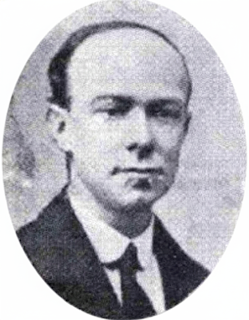
Birth of Liam Deasy, Irish Republican Army Officer

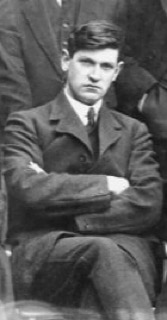
Liam DeasyIrish Republican Army (IRA) officer who fights in the Irish War of Independence and the Irish Civil War, is born in KilmacsimonBandonCounty Cork on May 6, 1896. In the latter conflict, he is second-in-command of the anti-Treaty forces for a period in late 1922 and early 1923. Before the anti-Treaty and pro-Treaty split, he is considered closely associated with Michael Collins.

Deasy is the third among six sons of William Deasy, seaman, and Mary Deasy (née Murray). He is educated locally at Ballinadee before leaving school at the age of thirteen to work in nearby Bandon.

During the Irish War of Independence (1919–21), Deasy is adjutant of the IRA’s 3rd Cork Brigade (West Cork). He serves under Tom Barry in one of the unit’s best known actions, the Crossbarry ambush in March 1921. His younger brother, Pat, dies in action at the Kilmichael ambush in November 1920, an engagement at which Deasy is not present. He also takes part in the Tooreen ambush.

Deasy opposes the Anglo-Irish Treaty. In the months that follow he tries to persuade Collins to renegotiate aspects of the treaty, especially to remove an oath to the British king from the constitution of the new Irish Free State. When fighting breaks out in Dublin in June 1922 between pro and anti-Treaty forces, he sides with the Anti-Treaty IRA in the ensuing Irish Civil War. However, he is reluctant to fight his former comrades and voices the opinion that the fighting should have ended with the Free State seizure of the Four Courts.

In late July 1922, Deasy commands 1,500 anti-Treaty fighters who hold a line around Kilmallock south of Limerick city against about 2,000 Free State troops under Eoin O’Duffy. His men are the most experienced IRA fighters of the 1919-21 war and hold their position until August 8, when they are outflanked by seaborne landings on the southern coast. His men then disperse. He goes on the run in the southeast of the country.

In August 1922, Deasy is in command of a band of republican guerrillas in West Cork when they hear that Collins is in the area. Deasy has his men prepare an ambush for Collins’ convoy at Béal na Bláth, should it return by the same route it had taken earlier.

Deasy and most of his men do not take part in the ambush as they had retired to a nearby pub, assuming that they had missed Collins. However, Collins arrives as the last of Deasy’s men are clearing the mine and barricade that had been erected on the road at Béal na Bláth. Collins is killed in the ensuing firefight. Deasy later writes in his memoirs that he profoundly regrets the death of his former commander.

In January 1923, by which time Deasy has become Deputy Chief of Staff of the IRA, he is captured by Free State forces near Clonmel, County Tipperary, and sentenced to death. He is aware that the newly formed government plans on wholesale executions and knows that the IRA will retaliate with reprisals. He decides that it is now time to end the war. He signs a document (written by his captors) ordering the men under his command to surrender themselves and their arms to the government. He is spared execution. On the day that his order is published, Free State authorities demand that the prisoners in a jail in Limerick sign a statement agreeing to unconditional surrender, threatening wholescale executions to those who refused. Some republicans denounce Deasy as a traitor and a coward for this action, but he argues in his book, Brother against Brother, that he was opposed to continuing the civil war anyway and would have called on republicans to surrender whether or not he had been captured.

Deasy takes no further part in politics following the end of the Irish Civil War. In 1924, he sets up a business making weatherproof textiles. On November 24, 1927, he marries Margaret Mary O’Donoghue. They have three daughters together.

During The Emergency, Deasy serves in the Irish Army from 1940 to 1945, reaching the rank of commandant. He later writes two memoirs about his experiences during the revolutionary period: Toward Ireland Free and Brother against Brother, the latter being published after his death.

Deasy dies at St. Anne’s Hospital, Northbrook Road, Dublin, on August 20, 1974. He is buried in Bohernabreena Cemetery in Dublin.


Leave a comment

Death of Laurence Ginnell, Politician, Lawyer & Member of Parliament

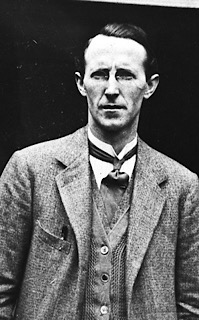
Laurence GinnellIrish nationalist politicianlawyer and Member of Parliament (MP) of the House of Commons of the United Kingdom of Great Britain and Ireland, dies in the United States on April 17, 1923. He serves as member of the Irish Parliamentary Party (IPP) for North Westmeath at the 1906 United Kingdom general election. From 1910 he sits as an Independent Nationalist and at the 1918 United Kingdom general election in Ireland he is elected for Sinn Féin.

Ginnell is born in DelvinCounty Westmeath, in 1852, (baptised April 9, 1852) the son of Laurence Ginnell and Mary Monaghan and twin to Michael Ginnell. He is self-educated and is called to the Irish bar as well as the Bar of England and Wales. In his youth, he is involved with the Land War and acts as private secretary to John Dillon.

The last great social and agrarian campaign of the Irish home rule movement, the Ranch War (1906 and 1909), is largely led and organised by Ginnell from the central office of the United Irish League. He is elected an MP in 1906, takes his seat at Westminster and swears allegiance to Edward VII. On October 14, 1906, he launches the “war” at Downs, County Westmeath.

The purpose of the war is to bring relief to the large numbers of landless and smallholders, particularly in the West, who are relatively untouched by the Wyndham Land Act (1903) and by the larger policy of purchase. The strategy that Ginnell pursues is the Down’s Policy, or cattle driving, a proceeding designed to harass the prosperous grazier interests, whose “ranches” occupy large, under populated and under worked tracts. The Down’s Policy is also meant to draw public attention to the scandalous inequalities that survive in the Irish countryside. The conservatives within the home rule leadership are understandably suspicious about the revival of agrarian disturbances, but the mood of the party organisation is hardening in the aftermath of a disappointing devolution bill in May 1907, from the new Liberal government, so that it seems logical to turn to the traditional mechanism for reactivating the national question: agrarian agitation.

Ginnell’s cattle drives begin to tail off after the summer of 1908, and the agitation is finally dissolved with the passage of a 1909 Act by the Liberal Chief Secretary Augustine Birrell that allows the transfer to the Irish Land Commission of farmland by compulsory purchase, which is hailed by the national movement as an historic victory. In reality, the Ranch War involves an implosion within sectors of the Irish Parliamentary Party, as its leadership has not facilitated the working of the Wyndham Land Act in the first place because John Dillon and his like want conflict above victory.

In 1909, Ginnell is expelled from the Irish Parliamentary Party for the offence of asking to see the party accounts after which he sits as an Independent Nationalist. During this time, he is addressed frequently as “The MP for Ireland.” At Westminster, he is highly critical of the British government‘s war policy and its holding of executions of certain participants in the Easter Rising of 1916. On May 9, he accuses British Prime Minister H. H. Asquith, of “Murder” and is forcibly ejected from the Chamber. He visits many of the prisoners who are interned in various prisons in Wales and England.

In 1917, Ginnell campaigns to try to ensure the election of George Noble Plunkett in the North Roscommon by-election in which he defeats the IPP candidate on an abstentionist platform. Following the victory of Éamon de Valera in East Clare, while he is standing for Sinn Féin, on July 10, 1917, Ginnell joins Sinn Féin.

At the Sinn Féin ardfheis in 1917, at which the party is reconstituted as a republican party with de Valera as president, Ginnell and W. T. Cosgrave are elected Honorary Treasurers. He is imprisoned in March 1918 for encouraging land agitation and later deported to Reading Gaol. In the 1918 United Kingdom general election, he is elected as a Sinn Féin MP for the Westmeath constituency by comfortably defeating his IPP challenger. After his release from prison, he attends the proceedings of the First Dáil. Along with fellow TD James O’Mara, he is one of the only TDs to serve as a member in both the House of Commons and Dáil Éireann.

He is one of the few people to have served in the House of Commons and in the Oireachtas. He is appointed Director of Propaganda in the Second Ministry of the Irish Republic. After spending a year as a republican campaigner in Chicago, he is appointed the Representative of the Irish Republic in Argentina and South America by de Valera. He carries out his propaganda work here to distribute copies of the Irish Bulletin and to provide the Sinn Féin version of the conflict during the Irish War of Independence. On August 16, 1921, he returns home to attend the first meeting of the Second Dáil. He travels back to Argentina some months later to serve as the Representative of the Republic there.

Ginnell opposes the Anglo-Irish Treaty that is ratified by the Dáil in January 1922, and is elected as an anti-Treaty Sinn Féin TD at the 1922 Irish general election on the eve of the Irish Civil War.

On September 9, 1922, Ginnell is the only anti-Treaty TD to attend the inaugural meeting of the Provisional Parliament or Third Dáil. Before signing the roll, he says, “I want some explanation before I sign. I have been elected in pursuance of a decree by Dáil Éireann, which decree embodies the decree of May 20, 1922. I have heard nothing read in reference to that decree, nothing but an Act of a foreign Parliament. I have been elected as a member of Dáil Éireann. I have not been elected to attend any such Parliament. Will anyone tell me with authority whether it is…”.

Ginnell is at this point interrupted but resumes by saying that he will sign the roll and take his seat in the Assembly if the Assembly is Dáil Éireann. He is informed he is not allowed raise any such question until a Ceann Comhairle has been elected. He continues to ask questions regardless to which he gets no answer including his question: “Will any member of the Six Counties be allowed to sit in this Dáil?” W. T. Cosgrave moves at this point that he be excluded from the House. Ginnell protests, and he is dragged out by force.

De Valera later appoints Ginnell a member of his “Council of State,” a twelve-member body set up to advise him on the deteriorating situation in the civil war. He returns to the United States soon afterward to serve as the Republic‘s envoy in the country. He orders Robert Briscoe and some of his friends to take possession of the Consular Offices in Nassau Street, New York City, then in the hands of the Irish Free State Government, to obtain the list of the subscribers to the bond drive organized to aid the struggle in the War of Independence. At the time, a court case is ongoing to decide on who has the right to the funds: the newly installed Provisional Government or de Valera, as one of the three trustees among the anti-Treatyites.

Ginnell dies in Washington, D.C. on April 17, 1923, at the age of 71, still campaigning against the Anglo-Irish Treaty.


Leave a comment

Death of Donogh O’Malley, Politician & Rugby Union Player

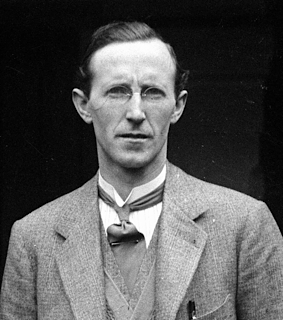
Donogh Brendan O’Malley, Irish Fianna Fáil politician and rugby union player, dies suddenly in Limerick, County Limerick, on March 10, 1968. He serves as Minister for Education (1966-68), Minister for Health (1965-66) and Parliamentary Secretary to the Minister for Finance (1961-65). He also serves as a Teachta Dála (TD) for the Limerick East constituency (1954-68). He is best remembered as the Minister who introduces free secondary school education in the Republic of Ireland.

O’Malley is born on January 18, 1921, in Limerick, one of eight surviving children of Joseph O’Malley, civil engineer, and his wife, Mary “Cis” (née Tooher). Born into a wealthy middle-class family, he is educated by the Jesuits at Crescent College and later at Clongowes Wood CollegeCounty Kildare. He later studies at University College Galway (UCG), where he is conferred with a degree in civil engineering in 1943. He later returns to Limerick, where he works as an engineer before becoming involved in politics.

O’Malley plays rugby at provincial level for MunsterLeinster and Connacht and at club level for Bohemians and Shannon RFC. His chances at an international career are ruined by the suspension of international fixtures during World War II. It is at a rugby match in Tralee that he first meets Dr. Hilda Moriarty, who he goes on to marry in August 1947.

Although O’Malley runs as a Fianna Fáil candidate, he is born into a politically active family who supports Cumann na nGaedheal until a falling-out with the party in the early 1930s. He first becomes involved in local politics as a member of Limerick Corporation. He becomes Mayor of Limerick in 1961, the third O’Malley brother to hold the office (Desmond from 1941-43 and Michael from 1948-49). He is a strong electoral performer, topping the poll in every general election he runs in.

O’Malley is first elected to Dáil Éireann as a Fianna Fáil TD for Limerick East at the 1954 Irish general election. Fianna Fáil is not returned to government on that occasion. He spends the rest of the decade on the backbenches. However, his party is returned to power in 1957. Two years later, the modernising process begins when Seán Lemass takes over from Éamon de Valera as Taoiseach. Lemass introduces younger cabinet ministers, as the old guard who has served the party since its foundation in 1926 begin to retire.

In 1961, O’Malley joins the government as Parliamentary Secretary to the Minister for Finance. He is part of a new, brasher style of politician that emerges in the 1960s, sometimes nicknamed “the men in the mohair suits.” It is expected that this generation of politician, born after the Irish Civil War, will be a modernising force in post-de Valera Ireland.

Although his sporting background is in rugby and swimming, it is association football which O’Malley gets involved in at a leadership level, becoming President of the Football Association of Ireland despite never having played the sport.

Following Fianna Fáil’s retention of power in the 1965 Irish general election, O’Malley joins the cabinet as Minister for Health. He spends just over a year in this position before he is appointed Minister for Education, a position in which he displays renowned dynamism. Having succeeded Patrick Hillery, another dynamic young minister, he resolves to act swiftly to introduce the recommendations of an official report on education.

As Minister for Education, O’Malley extends the school transport scheme and commissions the building of new non-denominational comprehensive and community schools in areas where they are needed. He introduces Regional Technical Colleges (RTCs), now called Institutes of Technology, in areas where there is no third level college. The best example of this policy is the University of Limerick, originally an Institute of Higher Education, where O’Malley is credited with taking the steps to ensure that it becomes a university. His plan to merge Trinity College Dublin and University College Dublin arouses huge controversy, and is not successful, despite being supported by his cabinet colleague Brian Lenihan. Access to third-level education is also extended, the old scholarship system being replaced by a system of means-tested grants that give easier access to students without well-off parents.

Mid-twentieth century Ireland experiences significant emigration, especially to the neighbouring United Kingdom where, in addition to employment opportunities, there is a better state provision of education and healthcare. Social change in Ireland and policies intending to correct this deficit are often met with strong resistance, such as Noël Browne‘s proposed Mother and Child Scheme. As a former Health Minister, O’Malley has first-hand experience of running the department which had attempted to introduce this scheme and understood the processes that caused it to fail, such as resistance from Department of Finance and John Charles McQuaid. This influences his strategy in presenting the free-education proposal.

Shortly after O’Malley is appointed, he announces that from 1969 all education up to Intermediate Certificate level will be without cost, and free buses will bring students in rural areas to their nearest school, seemingly making this decision without consulting other ministers. However, he does discuss it with Lemass. Jack Lynch, who, as Minister for Finance, has to find the money to pay for the programme, is not consulted and is dismayed at the announcement.

By announcing the decision first to journalists and on a Saturday (during a month when the Dáil is in recess), the positive public reaction tempers resistance to the idea before the next cabinet meeting. O’Malley’s proposals are hugely popular with the public, and it is impossible for the government to go back on his word.

Some Irish commentators consider that O’Malley’s extension of education, changing Ireland from a land where the majority are schooled only to the age of 14 to a country with universal secondary-school education, indirectly leads to the Celtic Tiger boom of the 1990s-2000s when it is followed for some years by an extension of free education to primary degree level in university, a scheme that is launched in 1996 by the Labour Party and axed in 2009 by Fianna Fáil’s Batt O’Keeffe.

In 1967, O’Malley appoints Justice Eileen Kennedy to chair a committee to carry out a survey and report on the reformatory and industrial school systems. The report, which is published in 1970, is considered ground-breaking in many areas and comes to be known as the Kennedy Report. The Report makes recommendations about a number of matters, including the Magdalene laundries, in relation to which they are not acted upon. The report recommends the closure of a number of reformatories, including the latterly infamous reformatory at DaingeanCounty Offaly.

O’Malley’s reforms make him one of the most popular members of the government. He is affectionately known as “the School Man” for his work in education. His sudden death in Limerick on March 10, 1968, before his vision for the education system is completed, comes as a shock to the public. He is buried with a full Irish state funeral.

Following O’Malley’s death, his widow, Hilda O’Malley, does not run in the subsequent by-election for the seat he has left vacant. It is won narrowly by their nephew Desmond O’Malley. Hilda seeks the Fianna Fáil nomination for the 1969 Irish general election, but Fianna Fáil gives the party nomination to Desmond, as the sitting TD. Hilda runs as an Independent candidate in that election. After what proves a bitter campaign against her nephew, she fails to get the fourth seat in Limerick East by just 200 votes.


Leave a comment

Anti-Treaty IRA Raid Ballyconnell, County Cavan

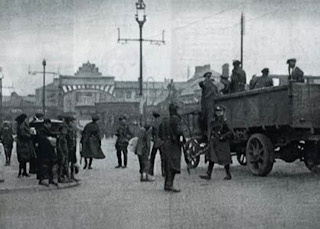
On the morning of February 5, 1923, at about 7:00 a.m., fifty well-armed anti-Treaty Irish Republican Army (IRA) fighters descend on Ballyconnell, County Cavan, from the hills in a military lorry and several cars. The guerrillas, armed with rifles and three machine guns, stop the train to nearby Ballinamore so that word will not get out to adjacent Irish Free State garrisons and then go in search of those they hold responsible for the death of anti-Treaty IRA volunteer Michael Cull during a raid on Ballyconnell on January 6.

At Oven’s grocery, the proprietor, William Ovens, is shot through the thigh and badly wounded. One of his employees, William Ryan, is dragged out and shot dead. According to the local press, the guerrillas shout “was it you who shot Cull?” at Ryan before they shoot him. His 80 year old father follows the fighters through the streets, shouting “murder, murder.”

Sean McGrath, an Irish language teacher, originally from Galway, is also dragged out of bed and shot dead, apparently for no other reason than that he is lodging at the home of Free State supporter, John Dunn.

The guerrillas proceed to bomb and burn out three shops, including the car dealership and the Post Office, and to smash the windows of the other premises with shots and rifle butts. The Ulster Bank branch is robbed of £200 and two Ford cars are seized. After a rampage of 35 minutes, the IRA column re-mounts their vehicles and heads back toward the Arigna hills, leaving the little town partially in flames, pockmarked with bullet holes and mourning the death of two of its citizens.

According to the pro-Treaty National Army, “Our troops in Belturbet got word of the raid, and immediately set out in all their transport. They were joined en route by two Fords of troops from Cavan, and all proceeded to Ballyconnell, where they arrived shortly after 9 o’clock. They followed the Irregulars past Ballinamore, but failed to get in touch with them.”

The ruthlessness of the reprisal at Ballyconnell – the premeditated assault on civilians – shocks pro-Treaty opinion. For the Free State government it exemplifies the irrationality and criminality of what they called the “Irregulars.” Such madness justifies the government’s repressive measures, particularly the executions of republican prisoners which had been going on since November of the previous year.

Kevin O’Higgins, Minister for Home Affairs and hard-line supporter of the executions policy, says, “I want to combat the view that it was a natural thing to expect that a body of Irishmen would descend upon this little town and proceed to murder their fellow-citizens. It was not a natural thing. It is perhaps the most unnatural thing that has happened since this unnatural strife began.”

Within a week, a National Army expedition is dispatched to the West Cavan/ Leitrim area in considerable strength to root out Ned Bofin’s anti-Treaty column, which had carried out the Ballyconnell raid. They report that “the people are delighted at our presence and their only fear is that we might leave” but are afraid to give information. “Our only concern,” they report, “is the remarkable agility of the Irregulars in retreating from an engagement with us.”

If one is to believe the National Army version, the Irregulars are simply cowardly bandits without any public support and the conflict in the border region would evaporate with the presence in strength of government troops. And if one is to take the Ballyconnell reprisal alone, this would appear to make sense. However, looked at a little more closely, it is clear that the Irish Civil War in this region is a complex web of national and local conflicts, that the Ballyconnell incident is only the culmination of the collapse of Free State authority in the area over several months.

(From: “The Tragedies of Ballyconnell” by John Dorney, The Irish Story, http://www.theirishstory.com, June 2014 | Pictured: The main street in Ballyconnell in the early 20th century)


Leave a comment

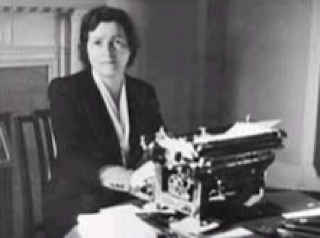
Birth of Louie Bennett, Suffragette, Trade Unionist, Journalist & Writer

Louisa (Louie) Bennett, suffragette, trade unionist, and peace activist, is born on January 7, 1870, in Garville Avenue, Rathgar, Dublin, the eldest daughter of James Cavendish Bennett, a prosperous auctioneer, and his wife Susan (née Bolger). She is brought up at Temple Hill, Blackrock, and educated at Alexandra College, and at an academy for young ladies in London, where she and her sisters form an Irish League. She goes on to study singing in Bonn, Germany. Already as a teenager she shows an interest in writing, her first literary effort being Memoirs of the Temple Road in the 80s. Afterward she publishes two unsuccessful romantic novels, The Proving of Priscilla (1902) and A Prisoner of His Word (1908), the latter set in County Down in the aftermath of the Irish Rebellion of 1798.

Bennett turns her attention to women’s issues and by 1910 has become involved in the suffrage movement, initially through her reading of the suffrage monthly The Irish Citizen. In 1911, she co-founds, with her life-long friend and colleague Helen Chenevix, the Irish Women’s Suffrage Federation, an umbrella organisation, which by 1913 has connected fifteen Irish suffrage societies and has established links with Europe and the United States. She and Chenevix are the organisation’s first honorary secretaries. She is also associated with the Irish Women’s Franchise League, for which she runs public speaking classes. However, as the divide between militants and opponents of the use of violence become more pronounced, Bennett, as a confirmed pacifist, who endorses what she calls “constructive, rather than destructive action,” distances herself from the league, and through her involvement in the production of The Irish Citizen seeks to sideline the militants.

Bennett’s concerns are not limited to the question of women’s franchise. As founder of the Irish Women’s Reform League, she not only addressea the suffrage question, but examines many social issues concerning women. The league focuses on working conditions, monitors court cases involving women, and demands school meals and better education. She is among those who assist in the relief effort at Liberty Hall during the 1913 strike and lockout in Dublin, and she appeals for funds for strikers’ families through The Irish Citizen. In the period that follows she maintains her links with the labour movement. She often opposes the direct, uncompromising approach of both James Connolly and Helena Molony, and argues that labour and women’s issues can only be hampered by any affiliation with nationalist politics. The aftermath of the Easter Rising, and in particular, the murder of Francis Sheehy-Skeffington, causes her to revise some of her views on nationalism. In late 1916 she accepts an invitation to reorganise the Irish Women Workers’ Union (IWWU), on the understanding that she would have complete independence from Liberty Hall. Assisted by Chenevix and Father John Flanagan, she re-creates the union along professional lines, and by 1918 its membership has risen dramatically from a few hundred to 5,300. She consistently defends its separatist stance, arguing that women’s concerns in a male-dominated union will always be of secondary importance.

Throughout World War I Bennett campaigns for peace, and she is selected as the Irish representative to the Women’s International League for Peace and Freedom. She leads the IWWU in its opposition to the attempted introduction of conscription in 1918, and in 1920 she travels to the United States to highlight Black and Tan atrocities (she later meets David Lloyd George and demands the removal of the Black and Tans from Ireland). As a member of the Women’s Peace Committee, she acts as a mediator during the Irish Civil War.

In 1925, Bennett is appointed to an Irish Trades Union Congress (ITUC) committee to promote a scheme of working class education with the assistance of the labour movement. Her interest in adult education later leads to her involvement with The People’s College. A member of the national executive of the ITUC (1927–32, 1944–50), she becomes the first female president of the congress in 1932. She serves a second presidential term in 1947. Her knowledge of labour issues is officially acknowledged by the Irish government in 1932, when she is sent as a representative to Geneva to put forward the case of Irish women workers. In 1938 she delivers a paper entitled Industrialism in an Agrarian Country to the International Relations Institute in the Netherlands.

Despite the depth of Bennett’s involvement with the union movement, she has ambitions outside trade unionism, and in 1938 she lets her name be put forward by the IWWU as a congress candidate for election to the senate, but this comes to nothing. In that year she is appointed to the government commission on vocational organisation (1938–43). In 1943, she is elected as a Labour Party member of the Dún Laoghaire borough council. As a councillor she consistently lobbies for improved housing and is instrumental in the establishment of Dún Laoghaire’s housing council in 1949. She had refused a labour nomination in the 1918 general election, but she stands for Dublin County Council and Dáil Éireann in 1944, in both cases unsuccessfully. She is the only Labour Party member to criticise the party’s support for the Fianna Fáil minority government of 1932, arguing that it is “never right or wise to co-operate with another party with fundamentally different principles.” As an elected member of the Labour Party executive, she represents Ireland at the International Labour Organization in Europe. She is also a representative at the League of Nations.

Throughout her public career Bennett consistently condemns colonialism, fascism, and armaments expenditure. She is possibly best remembered for her leadership in the laundry workers’ strike of 1945, during which IWWU members successfully fight for a fortnight‘s paid holiday. Her management of the IWWU, which lasts until 1955, is marked by determination and diplomacy, though she often uses threatened resignations as a means of controlling her colleagues. She died, unmarried, on November 25, 1956, in Killiney, County Dublin.

(From: “Bennett, Louisa (‘Louie’)” by Frances Clarke, Dictionary of Irish Biography, October 2009)


Leave a comment

Birth of Mícheál Ó Móráin, Fianna Fáil Politician

Mícheál Ó Móráin, an Irish Fianna Fáil politician, is born in CastlebarCounty Mayo on December 24, 1911. He serves as Teachta Dála (TD) from 1938 to 1973, Minister for Lands from 1959 to 1968, Minister for the Gaeltacht from 1957 to 1959 and 1961 to 1968, and Minister for Justice from 1968 to 1970.

Ó Móráin hails from a strong Republican family, members of which had fought in the Irish War of Independence, and in the Irish Civil War on the Anti-Treaty side. A solicitor by profession, he is first elected to Dáil Éireann for the Mayo South constituency on his second attempt at the 1938 Irish general election. He remains on the backbenches for several years until he is appointed to the cabinet by Taoiseach Éamon de Valera in 1957 as Minister for the Gaeltacht. He is a native speaker of the Irish language. He is appointed Minister for Lands by Taoiseach Seán Lemass in 1959 and is re-appointed to the Gaeltacht portfolio in 1961. He remains in these two Departments until 1968.

Ireland formally applies for European Economic Committee (EEC) membership in July 1961. Ó Móráin, as Minister for Lands and the Gaeltacht, delivers a widely reported address to the Castlebar Chamber of Commerce in 1962. In the speech, he argues that Ireland is “ready to subscribe to the political aims of the EEC” and that Ireland does not want to be seen as “committed” to its policy of neutrality. In the ensuing controversy, he and Lemass deny that there is any suggestion Ireland might or should abandon neutrality. Outside the country, foreign governments see this episode as a deliberately provoked debate to evaluate the government’s domestic room for manoeuvre on neutrality.

Ó Móráin is appointed Minister for Justice by Taoiseach Jack Lynch in 1968. It is in this role that he is most remembered. While he is still Minister, the Arms Crisis in Ireland erupts in 1970. This political scandal sees Government ministers Charles Haughey and Neil Blaney dismissed by the Taoiseach for alleged involvement in a conspiracy to smuggle arms to the Irish Republican Army (IRA) in Northern Ireland. Ó Móráin continually suffers from ill health, which is accentuated by his alcoholism. When the Arms Crisis erupts, Lynch comes to see him in a hospital in Galway and asks for his resignation. Ó Móráin is a witness at the subsequent Arms Trial. He testifies that he had passed on Garda intelligence reports about the involvement of ministers with the IRA to the Taoiseach before the arms were seized at Dublin Airport. Hus evidence at the trial has been described as “erratic.”

Ó Móráin loses his Dáil seat at the 1973 Irish general election and retires from politics. He dies at his home in Sutton, Dublin, in on May 6, 1983. With a Fianna Fáil guard of honour, he is buried in Castlebar. With his wife, Madge, he has one daughter, Sorcha, and two sons, John, and Michael, who dies in a road accident in 1972.


Leave a comment

Death of Dorothy Macardle, Writer, Playwright, Journalist

Dorothy Macardle, Irish writer, novelist, playwright, journalist and non-academic historian, dies in Drogheda, County Louth, on December 23, 1958. Associated throughout her life with Irish republicanism, she is a founding member of Fianna Fáil in 1926 and is considered to be closely aligned with Éamon de Valera until her death, although she is vocal critic of how women are represented in the 1937 constitution created by Fianna Fáil. She is also unable to respect de Valera’s attitudes adopted during World War II. Her book, The Irish Republic, is one of the more frequently cited narrative accounts of the Irish War of Independence and its aftermath, particularly for its exposition of the anti-treaty viewpoint.

Macardle is born in Dundalk, County Louth, on March 7, 1889, into a wealthy brewing family famous for producing Macardle’s Ale. Her father, Sir Thomas Callan Macardle, is a Catholic who supports John Redmond and the Irish Home Rule movement, while her mother, Lucy “Minnie” Macardle, comes from an English Anglican background and is politically a unionist. Lucy converts to Catholicism upon her marriage to Thomas. Macardle and her siblings are raised as Catholics, but Lucy, who is politically isolated in Ireland, “inculcated in her children an idealised view of England and an enthusiasm for the British empire“. She receives her secondary education in Alexandra College, Dublin—a school under the management of the Church of Ireland—and later attends University College Dublin (UCD). Upon graduating, she returns to teach English at Alexandra where she had first encountered Irish nationalism as a student. This is further developed by her first experiences of Dublin’s slums, which “convinced her that an autonomous Ireland might be better able to look after its own affairs” than the Dublin Castle administration could.

Between 1914 and 1916, Macardle lives and works in Stratford-upon-Avon in Warwickshire, England. There, her encounters with upper-class English people who express anti-Irish sentiment and support keeping Ireland in the British Empire by force further weakens her Anglophilia. Upon the outbreak of World War I, she supports the Allies, as does the rest of her family. Her father leads the County Louth recruiting committee while two of her brothers volunteer for the British Army. Her brother, Lieutenant Kenneth Callan Macardle, is killed at the Battle of the Somme, while another brother, Major John Ross Macardle, survives the war and earns the Military Cross. While Macardle is a student, the Easter Rising occurs, an experience credited for a further divergence of her views regarding republicanism and her family.

Macardle is a member of the Gaelic League and later joins both Sinn Féin and Cumann na mBan in 1917. In 1918, she is arrested by the Royal Irish Constabulary (RIC) while teaching at Alexandra.

On January 19, 1919, Macardle is in the public gallery for the inaugural meeting of the First Dáil and witnesses it declare unilateral independence from the United Kingdom, which is ultimately the catalyst for the Irish War of Independence.

By 1919 Macardle has befriended Maud Gonne MacBride, the widow of the 1916 Easter Rising participant John MacBride, and together the two work at the Irish White Cross, attending to those injured in the war. It is during this period she also becomes a propagandist for the nationalist side.

In December 1920, Macardle travel to London to meet with Margot Asquith, the wife of the former British prime minister H. H. Asquith, hoping to establish a line of communication between the Irish and British governments. It is during this trip that she comes into contact with Charlotte Despard, sister of the Lord Lieutenant of Ireland John French. Despard takes the pro-Irish side in the war and returns with Macardle to Dublin.

Following the signing of the Anglo-Irish Treaty in December 1921, Macardle takes the anti-treaty side in the ensuing Irish Civil War. Alongside Gonne MacBride and Despard, she helps found the Women Prisoners’ Defence League, which campaigns and advocates for republicans imprisoned by the newly established Irish Free State government. It is also during this same time that she begins working alongside Erskine Childers in writing for anti-treaty publications An Phoblacht and Irish Freedom.

In October 1922, Despard, Gonne MacBride and Macardle are speaking at a protest on O’Connell Street, Dublin against the arrest of Mary MacSwiney, a sitting Teachta Dála, by the Free State when Free State authorities move to break it up. Rioting follows and Free State forces open fire, resulting in 14 people being seriously wounded while hundreds of others are harmed in the subsequent stampede to flee. Following the event, Macardle announces she is going to pursue support of the Anti-treaty side full-time in a letter to Alexandra College, which ultimately leads to her dismissal on November 15, 1922. In the following days Macardle is captured and imprisoned by the Free State government and subsequently serves time in both Mountjoy Prison and Kilmainham Gaol, with Rosamond Jacob as her cellmate. During one point at her time in Kilmainham, Macardle is beaten unconscious by male wardens. She becomes close friends with Jacob and shares a flat with her in Rathmines later in the 1920s.

The Irish Civil War concludes in the spring of 1923, and Macardle is released from prison on May 9.

Following the Irish Civil War, Macardle remains active in Sinn Féin and is drawn into the camp of its leader Éamon de Valera and his wife Sinéad. She travels alongside the de Valeras as they tour the country and she is a frequent visitor to their home. As the trust between Macardle and de Valera develops, de Valera asks her to travel to County Kerry to investigate and document what later becomes known as the Ballyseedy massacre of March 1923, in which a number of unarmed republican prisoners are reportedly killed in reprisals. She obliges, and by May 1924 she has compiled a report that is released under the title of The Tragedies of Kerry.” Immediately upon the release of the report, the Minister for Defence Richard Mulcahy sets up an inquiry in June 1924 to carry out a separate investigation by the government. However, the government’s inquiry comes to the conclusion there had been no wrongdoing committed. Her book The Tragedies of Kerry remains in print and is the first journalistic historical account of the Irish Civil War from those on the republican side detailing Ballyseedy, Countess Bridge and various other incidents that occur in Kerry during this time.

In 1926, Éamon de Valera resigns as President of Sinn Féin and walks out of the party following a vote against his motion that members of the party should end their policy of abstentionism against Dáil Éireann. De Valera and his supporters, including Macardle, form the new political party Fianna Fáil in May 1926, with Macardle immediately elected to the party’s National Executive|Ard Chomhairle, one of six female members out of twelve on the original party National Executive, the others being Hanna Sheehy-SkeffingtonKathleen Clarke, Countess Constance Markievicz and Linda Kearns. Macardle is made the party’s director of publicity. However, she resigns from Fianna Fáil in 1927 when the new party endorses taking their seats in Dáil Eireann. Nevertheless, her views remain relatively pro-Fianna Fáil and pro-de Valera.

Macardle recounts her civil war experiences in Earthbound: Nine Stories of Ireland (1924). She continues as a playwright for the next two decades. In her dramatic writing, she uses the pseudonym Margaret Callan. In many of her plays a domineering female character is always present. This is thought to be symbolic of her own relationship with her own mother. Her parents’ marriage had broken up as her mother returned to England and her father raised the children with servants in Cambrickville and they were sent away for school. This female character holds back the growth and development of the younger female character in Dorothy’s plays and writings. 

By 1931, Macardle takes up work as a writer for The Irish Press, which is owned by de Valera and leans heavily toward supporting Fianna Fáil and Irish republicanism in general. In addition to being a theatre and literary critic for the paper, she also occasionally writes pieces of investigative journalism such as reports on Dublin’s slums. In the mid-1930s she also becomes a broadcaster for the newly created national radio station Radio Éireann.

In 1937, Macardle writes and publishes the work by which she is best known, The Irish Republic, an in-depth account of the history of Ireland between 1919 until 1923. Because of the book, political opponents and some modern historians consider her to have been a hagiographer toward de Valera’s political views. In 1939 she admits, “I am a propagandist, unrepentant and unashamed.” Overall, however, the book is well-received, with reviews ranging from “glowing” to measured praise. She is widely praised for her research, thorough documentation, range of sources and narration of dramatic events, alongside reservations about the book’s political slant. The book is reprinted several times, most recently in 2005. Éamon de Valera considers The Irish Republic the only authoritative account of the period from 1916 to 1926, and the book is widely used by de Valera and Fianna Fáil over the years and by history and political students. She spends seven years writing the book in a cottage in DelganyCounty Wicklow, and it is a day-by-day account of the history of the events in Ireland from 1919 to 1923 recorded in painstaking detail together with voluminous source material.

In 1937, de Valera’s Fianna Fáil government is able to create a new Constitution of Ireland following a successful referendum. However, there is widespread criticism of the new Constitution from women, particularly republican women, as the language of the new Constitution emphasises that a woman’s place should be in the home. Macardle is among them, deploring what she sees as the reduced status of women in this new Constitution. Furthermore, she notes that the new Constitution drops the commitment of the 1916 Proclamation of the Irish Republic to guarantee equal rights and opportunities “without distinction of sex” and writes to de Valera questioning how anyone “with advanced views on the rights of women” can support it. DeValera also finds her criticising compulsory Irish language teaching in schools.

The entire matter of the new Constitution leads Macardle to join Hanna Sheehy-Skeffington’s Women’s Social and Progressive League.

While working as a journalist with the League of Nations in the late 1930s, Macardle acquires a considerable affinity with the plight of Czechoslovakia being pressed to make territorial concessions to Nazi Germany. Believing that “Hitler‘s war should be everybody’s war,” she disagrees with de Valera’s policy of neutrality. She goes to work for the BBC in London, develops her fiction and, in the war’s aftermath, campaigns for refugee children – a crisis described in her book Children of Europe (1949). In 1951, she becomes the first president of the Irish Society of Civil Liberties.

Macardle dies of cancer on December 23, 1958, in a hospital in Drogheda, at the age of 69. Though she is somewhat disillusioned with the new Irish State, she leaves the royalties from The Irish Republic to her close friend Éamon de Valera, who had written the foreword to the book. De Valera visits her when she is dying. She is accorded a state funeral, with de Valera giving the oration. She is buried in Sutton, Dublin.


Leave a comment

Death of Oscar Traynor, Fianna Fáil Politician & Republican

Oscar TraynorFianna Fáil politician and republican, dies in Dublin on December 14, 1963. He serves as Minister for Justice from 1957 to 1961, Minister for Defence from 1939 to 1948 and 1951 to 1954, Minister for Posts and Telegraphs from 1936 to 1939 and Parliamentary Secretary to the Minister for Defence from June 1936 to November 1936. He serves as a Teachta Dála (TD) from 1925 to 1927 and 1932 to 1961. He is also involved with association football, being the President of the Football Association of Ireland (FAI) from 1948 until 1963.

Traynor is born in Dublin on March 21, 1886, into a strongly nationalist family. He is educated by the Christian Brothers. In 1899, he is apprenticed to John Long, a famous woodcarver. As a young man he is a noted footballer and tours Europe as a goalkeeper with Belfast Celtic F.C. whom he plays with from 1910 to 1912. He rejects claims soccer is a foreign sport calling it “a Celtic game, pure and simple, having its roots in the Highlands of Scotland.”

Traynor joins the Irish Volunteers and takes part in the Easter Rising in 1916, being the leader of the Hotel Metropole garrison. Following this he is interned in Wales. During the Irish War of Independence, he is brigadier of the Dublin Brigade of the Irish Republican Army and leads the disastrous attack on the Custom House in 1921 and an ambush on the West Kent Regiment at Claude Road, Drumcondra on June 16, 1921, when the Thompson submachine gun is fired for the first time in action.

When the Irish Civil War breaks out in June 1922, Traynor takes the Anti-Treaty IRA side. The Dublin Brigade is split, however, with many of its members following Michael Collins in taking the pro-Treaty side. During the Battle of Dublin, he is in charge of the Barry’s Hotel garrison, before making their escape. He organises guerilla activity in south Dublin and County Wicklow, before being captured by Free State troops in September. He is then imprisoned for the remainder of the war.

On March 11, 1925, Traynor is elected to Dáil Éireann in a by-election as a Sinn Féin TD for the Dublin North constituency, though he does not take his seat due to the abstentionist policy of Sinn Féin. He is re-elected as one of eight members for Dublin North in the June 1927 Irish general election but just one of six Sinn Féin TDs. Once again, he does not take his seat. He does not contest the September 1927 Irish general election but declares his support for Fianna Fáil. He stands again in the 1932 Irish general election and is elected as a Fianna Fáil TD for Dublin North.

In 1936, Traynor is first appointed to the Cabinet as Minister for Posts and Telegraphs. In September 1939, he is appointed Minister for Defence and holds the portfolio to February 1948. In 1948, he becomes President of the Football Association of Ireland, a position he holds until his death. He serves as Minister for Defence in several Fianna Fáil governments and as Minister for Justice, where he is undermined by his junior minister, and later TaoiseachCharles Haughey, before he retires in 1961.

Traynor dies in Dublin at the age of 77 on December 14, 1963. He has a road named in his memory, running from the Malahide Road through Coolock to Santry in Dublin’s northern suburbs.


Leave a comment

Birth of Timothy Lyons, Irish Republican Army Volunteer

Timothy Lyons, also known as Aero or Aeroplane, an Irish Republican Army (IRA) soldier who fights with the Anti-Treaty side during the Irish Civil War, is born in Garrynagore, County Kerry, on December 4, 1895.

Lyons is born in to Margaret (née Sullivan) and Timothy Lyons senior, who is listed on his birth certificate as a cottier. He is the oldest of six siblings. Prior to the Irish Civil War, he works as a labourer. He fights with the IRA’s Kilflynn Company during the Irish War of Independence. He is described as being slight, “adventurous” as a column leader and a marksman who shoots at small birds. He shoots a British officer in an ambush led by captain George O’Shea at Shannow Bridge where the Kilflynn road joins the R557, forcing a retreat. He gains the nickname “Aeroplane” or “Aero” because of the way he suddenly appears and his last-minute escapes. Because of regular searches by Black and Tans, his father fears the family home will be burnt out and asks him to leave.

After the ratification of the Anglo-Irish Treaty, Lyons fights against Free State forces . At the time of his death he is commandant. He is involved in fighting in Listowel and Limerick, is captured near Athea, jailed in Limerick and released in late 1922 with an undertaking not to rejoin the fight. Notwithstanding this, the column continues to operate, generally around Causeway and Ballyduff.

On April 15, 1923, Lyons’ column attacks a Free State raiding party in Meenoghane, County Kerry. The raiding party receives reinforcements. He and his men are eventually surrounded at nearby Clashmealcon on April 16 by Michael Hogan’s 1st Western Division. They descend the rugged, Atlantic cliffs to the caves and hide in Dumfort’s Cave. He shoots out searchlights with his Lee-Enfield rifle and two Free State soldiers are shot dead from the cave. The situation is under Army Emergency Powers. With no escape for the men hiding, troops try to blast them out by dropping mines and smoke them out with petrol-soaked turf.

On April 16, James McGrath, the brother of Thomas McGrath, one of Lyons’s men, is arrested and taken to the cliffs in order to enter the cave and persuade the men to surrender. On the night of April 17-18, Thomas McGrath and Patrick O’Shea, his first cousin, fall trying to scale the cliffs to escape and drown. After offering to surrender himself on the morning of the April 18, Lyons falls several metres onto rocks from a rope that is provided by National Army troops. He is then shot multiple times by troops from the cliff top and is not recovered.

Three of Lyons’ men who surrender, Edmond GreaneyJames McEnery and British deserter-turned-republican Reginald Stephen Hathaway, are executed in Ballymullen Barracks by gunshot on April 25, for breaking their undertaking not to take up arms against the Free State, attacking troops at Clashmealcon, burning the Civic Guard station at Ballyheigue, stripping the same Civic Guards and robbing the post office at Ballyduff.

Lyons’ decomposing body, minus a leg, is washed up on May 5, identifiable by a boot. He is buried alongside George O’Shea and Timothy Tuomey (both killed at Ballyseedy) in the Republican plot at Kilflynn Church (now St. Columba’s Heritage Centre).

(Pictured: Kilflynn IRA Flying Column, 1922. Back (L to R): Denis O’Connell (Lixnaw), Stephen Fuller (Kilflynn), William Hartnett (Mountcoal), Tim Twomey (Kilflynn). Front (L to R): Terry Brosnan (Lixnaw), John McElligott (Leam, Kilflynn), Danny O’Shea (Kilflynn), Timothy (Aero) Lyons (Garrynagore), Tim Sheehy (Lyre), Pete Sullivan (Ballyduff), Paddy Mahony (Ballyegan, Battalion O.C.).)


Leave a comment

Birth of George Noble Plunkett, Scholar & Revolutionary

George Noble Plunkett, scholar and revolutionary, is born on December 3, 1851, at 1 Aungier Street, Dublin, the youngest and only survivor from infancy of the three children of Patrick Joseph Plunkett (1817–1918), builder and politician, and his wife, Elizabeth (née Noble). The Plunketts are Catholic, claiming collateral descent from Archbishop of Armagh Oliver Plunkett, and nationalist: the two drummers from the republican army at Vinegar Hill in 1798 visit George’s cradle.

Plunkett is educated expensively: at a primary school in Nice, making him fluent in French and Italian, then at Clongowes Wood College, and, from 1872, at Trinity College Dublin (TCD), where his generous allowance allows him to study renaissance and medieval art. He enrolls at King’s Inns in 1870 and the Middle Temple in 1874, but is not called to the bar until 1886. While there he befriends Oscar Wilde and Jeremiah O’Donovan Rossa. In 1877, he endows a university gold medal for Irish speakers and publishes a book of poems, God’s Chosen Festival, and the following year he issues a pamphlet, The Early Life of Henry Grattan. He also writes articles for magazines, editing a short-lived one, Hibernia, for eighteen months from 1882. In 1883, he donates funds and property to the nursing order of the Little Company of Mary (Blue Sisters), and on April 4, 1884, Pope Leo XIII makes him a count.

On June 26, 1884, Plunkett marries Mary Josephine Cranny (1858–1944). The couple has seven children: Philomena (Mimi) (b. 1886), Joseph (b. 1887), Mary Josephine (Moya) (b. 1889), Geraldine (b. 1891), George Oliver (b. 1894), Fiona (b. 1896), and Eoin (Jack) (b. 1897).

Plunkett surprises many in 1890 by declaring for Charles Stewart Parnell against the Catholic hierarchy. In the 1892 United Kingdom general election in Ireland he is a Parnellite candidate for Mid Tyrone but withdraws from a potential three-cornered fight lest he let in the unionist. He is sole nationalist candidate for Dublin St. Stephen’s Green in the 1895 United Kingdom general election in Ireland, and at an 1898 by-election there he cuts the unionist majority to 138 votes. The reunited Irish Party wins the seat in 1900.

In 1894, Plunkett part-edits Charles O’Kelly‘s memoir The Jacobite War in Ireland. By 1900, when he publishes the standard biography Sandro Botticelli, he is supplementing his income by renewed artistic studies, which until 1923 finances his lease of Kilternan Abbey, County Dublin. His Pinelli (1908) is followed by Architecture of Dublin, and, in 1911, by his revised edition of Margaret McNair Stokes‘s Early Christian Art in Ireland. In 1907, he becomes director of the National Museum of Ireland, where he increases annual visits from 100 to 3,000.

Joseph Plunkett swears his father into the Irish Republican Brotherhood (IRB) in April 1916, sending him secretly to seek German aid and a papal blessing for the projected Easter rising. After its defeat, Plunkett is sacked by the National Museum of Ireland and deported with the countess to Oxford, and the following January he is expelled by the Royal Dublin Society (RDS). This earns him nomination as the surviving rebels’ candidate in the North Roscommon by-election. He returns to Ireland illegally on January 31, 1917, and wins the seat easily three days later. Pledging abstention from attendance at Westminster in accordance with Sinn Féin policy, he initiates a Republican Liberty League, which coalesces with similar groups such as Sinn Féin. In October this front becomes the new Sinn Féin, committed to Plunkett’s republic rather than to the “king, lords and commons“ of Arthur Griffith. Plunkett and Griffith become the new party’s vice-presidents, under Éamon de Valera.

On May 18, 1918, Plunkett is interned again. Released after Sinn Féin’s general election landslide (in which he is returned unopposed), he presides, Sinn Féin’s oldest MP, at the planning meeting for Dáil Éireann on January 17, 1919, and at its opening session on January 21. On the 22nd he is made foreign affairs minister by Cathal Brugha, an appointment reaffirmed by de Valera on April 10. He criticises his president for advocating a continuing Irish external relationship with Britain, and fails to organise an Irish foreign service. In February 1921, de Valera makes Robert Brennan his departmental secretary and a ministry takes shape, while Plunkett publishes a book of poems, Ariel. After uncontested “southern Irish“ elections to the Second Dáil, de Valera moves his implacable foreign minister from the cabinet to a tailor-made portfolio of fine arts. Plunkett’s Dante sexcentenary commemoration is overshadowed by news of the Anglo–Irish Treaty. Opposing this, Plunkett cites his oath to the republic and its martyrs including his son. He leaves his ministry on January 9, 1922.

Plunkett chairs the anti-treaty Cumann na Poblachta, which loses the June general election, though he is returned again unopposed. In the Irish Civil War the treatyites intern him and the republicans appoint him to their council of state. In the August 1923 Irish general election, his first electoral contest since 1917, the interned count tops the poll in County Roscommon. He is released in December.

When de Valera forms Fianna Fáil in 1926, Plunkett stays with Sinn Féin, and loses his deposit in the June 1927 Irish general election. A year later he publishes his last poetry collection, Eros. He runs for a new Cumann Poblachta na hÉireann in a County Galway by-election in 1936, but loses his deposit again. On December 8, 1938, with the other six surviving abstentionist Second Dáil TDs, he transfers republican sovereignty to the IRA Army Council.

Plunkett is a big man with a black beard which whitens steadily after his fiftieth birthday. He is always formally pleasant and courteous. His oratory is described by M. J. MacManus as “level, cultured tones . . . [more] used to addressing the members of a learned society than to the rough and tumble of the hustings” (The Irish Press, March 15, 1948). Theoretically and practically, he is more scholar than politician. His portrait is on display at the Royal Society of Antiquaries of Ireland (RSAI).

Plunkett dies from cancer on March 12, 1948, and is buried in Glasnevin Cemetery, survived by his children Geraldine (wife of Thomas Dillon), Fiona, and Jack. His grandson Joseph (1928–66), son of George Oliver Plunkett, inherits the title.

(From: “Plunkett, Count George Noble” by D. R. O’Connor Lysaght, Dictionary of Irish Biography, http://www.dib.ie, October 2009)