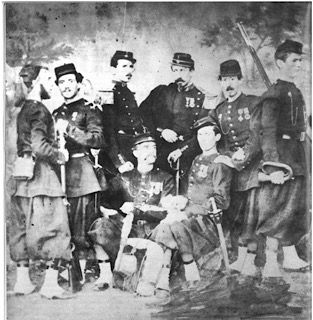
On September 17, 1860, units of the Irish Battalion of St. Patrick of the Papal army, commanded by CaptainMyles O’Reilly from County Louth, fights a Piedmontese force under General Brignone at Spoleto, Italy.
By 1860, the Papal States are under threat from King Victor Emmanuel II of Piedmont and Giuseppe Garibaldi’s “Redshirts” during the Wars of Italian Unification. Pope Pius IX has called for Catholic volunteers from Europe, and within weeks over 1,000 Irishmen have enlisted, forming the Irish Battalion. They are poorly equipped and inexperienced, but their morale is high.
The Irish are stationed at Spoleto, a walled city south of Florence with the fortress of Rocca on a hill. On September 16, Brignone’s forces arrive and demand surrender. O’Reilly refuses, and on the following day the Piedmontese launch an assault.
The Irish are tasked with defending the North Wall and the Gate House of the Castle Albornozian. The attackers endure prolonged artillery fire from the fortress walls. When the famed Bersaglieri advance, they are met with a withering musket and rifle fire from the Irish, halting the attack. The Irish hold their ground for fourteen hours under constant bombardment.
Despite their resistance, the bishop of Spoleto, alarmed by the destruction and loss of life, arranges a ceasefire. O’Reilly, nearly out of ammunition, sends a Papal representative to Brignone. Terms are agreed: the Irish can march out as prisoners, with officers retaining their swords.
Brignone praises O’Reilly as “both honourable and brave.” Each officer and enlisted man receives a Medaglia di Pro Petri Sede (“Medal for the Seat of Saint Peter”), and all are declared “meritorious of the Catholic Church, the Holy See and all human society.”
The battle is part of the short 1860 war in which the Papal army, including the Irish Battalion, fight at Ancona, Perugia, Spoleto, and Castelfidardo. Though ultimately defeated, the Irish earn high praise for their courage and discipline.
(Pictured: The Company of Saint Patrick in the Papal Army, 1860)
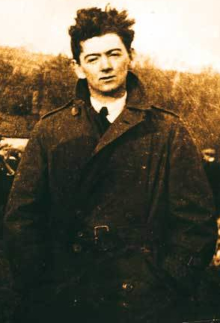
Barry returns to Bandon in early 1919. He describes in his guerilla days in Ireland a Damascus-like conversion to Irish nationalism on hearing of the Easter Rising while with the Mesopotamian expeditionary force, but he is only accepted into the IRA with considerable caution. Initially tested in intelligence and training work, in mid-1920 he takes charge of the new brigade flying column, which is used both to train officers and to stage offensive actions.
Barry adapts his military experience successfully to the demands of guerrilla warfare, becoming the most famed of column leaders during the Irish War of Independence. In his memoirs, he pours scorn on the obsession of many with military titles and orthodox procedure, complaining of a “paper army.” He stresses the need for spontaneity, initiative, and knowledge of local conditions. “The reality,” he writes, “was a group of fellows, mostly in caps and not-too-expensive clothing, wondering how to tackle their job and where they would sleep that night or get their supper.” (The Reality of the Anglo–Irish War (1974)). He well realises that the war’s character does not permit any close control from the IRA’s GHQ in Dublin, hence increasing the importance of local leaders. His tactics put strong emphasis on speed of movement and on the need to attack the enemy at his weakest point. The column’s ambush successes are small in number but among the best-remembered of the war. He admits, however, that his own and his column’s lack of experience with mines frequently weakened their offensives.
The column’s first successful ambush is at Tooreen on October 22, 1920, followed on November 28 by the dramatic ambushing of a patrol of auxiliaries at Kilmichael while traveling from their Macroom base. A column of thirty-six men, divided into three sections, kill sixteen auxiliaries, with one captured and later shot, suffering two fatalities of their own. Controversy has raged since over whether a false surrender by the British force caused the brutality of some of the deaths. Together with the Bloody Sunday killings of a week earlier in Dublin, Kilmichael has a profound effect on the British military and political establishment, with the declaration in December of martial law for much of Munster and the implementation of wide-ranging internment, together with the authorisation of official reprisals.
After a short period in hospital with a heart condition, in early 1921 Barry leads unsuccessful attacks on Kilbrittain, Innishannon, Drimoleague, and Bandon barracks. The seizure of Burgatia House, outside Rosscarbery, in early February, and the successful resistance made there to British troops, wins much publicity but has little military significance. He is a leading figure in the brutal final stage of the war in the first six months of 1921, which sees widespread shooting of suspected spies and destruction of loyalist property. By March 1921, his flying column, with 104 men, is easily the largest in Ireland, and an explosives expert, Capt. McCarthy, has joined them.
The protracted engagement between Barry’s column and encircling British forces at Crossbarry on March 19, 1921, comes at a time when large-scale sweeps are making life increasingly difficult for the IRA. It consists of a daring and courageous breakout. Crossbarry is the largest action of the war, and Barry is to regard it as even more important than Kilmichael. Soon afterwards, Rosscarbery barracks is successfully attacked by a Barry-led party, representing one of the few successful such initiatives in 1921. Isolated triumphs, however, cannot hide the fact that pressure is increasing on the column, and he becomes increasingly critical of inactive regions. He is later to say that all County Kerry does during the war is to shoot one decent police inspector at Listowel Racecourse and a colleague of his. He is strongly critical also of the lack of assistance from GHQ and of the divisionalisation policy. He visits Dublin in May, travels around with Michael Collins, and is present when two American officers demonstrate the Thompson submachine gun. He is more aware than most of his 1st Southern Division colleagues of the scarcity of arms and ammunition at the war’s end.
During the truce, Barry becomes liaison officer for Munster, riling the British by insisting on his military rank, and criticising the IRA liaison men in Dublin for being overly deferential. He joins the overwhelming majority of the Cork IRA in opposing the Anglo–Irish Treaty but plays a characteristically maverick role throughout the treaty split. His independent attitude is heightened by his dislike of Liam Lynch, the republican IRA’s Chief of Staff, and his continuing respect for Michael Collins. He shows impatience at the long-drawn-out peace initiatives. In March 1922, therefore, he advocates armed confrontation with pro-treaty units over the occupation of barracks in Limerick, and on June 18 he submits a resolution, which only narrowly fails, at the army convention, giving British troops seventy-two hours to leave Dublin.
At the beginning of the Irish Civil War, Barry is arrested entering the Four Courts disguised as a woman. He escapes from an internment camp at Gormanston in early September 1922. For the rest of the war his actions mirror its confused nature. In late October 1922, he leads successful raids on the small towns of Ballineen and Enniskean, and later on Inchigeelagh and Ballyvourney. In December his column takes Carrick-on-Suir, demonstrating the weakness of the Free State army, but his talk of advancing on the Curragh and of large-scale actions does not materialise. There is no evidence that he is acting in accordance with any coordinated plan. By February 1923, he realises that the Republican IRA cause is hopeless and he is involved with Fr. Tom Duggan in efforts to get 1st Southern Division to declare a ceasefire. He journeys to Dublin to put pressure on the intransigent Lynch in this connection, telling Lynch, “I did more fighting in one week than you did in your whole life.”
Barry avoids capture in roundups after the war, remaining on the run until 1924. Unlike many republicans, he does not turn to constitutionalism, remaining strongly militaristic. He is always an unreconstructed republican, though by no means a naive one. In 1924 he becomes attached to Cleeves Milk Co., based in Limerick and Clonmel, and from 1927 to retirement in 1965 is general superintendent with the Cork harbour commissioners. He strongly advocates preserving the independence of the IRA army executive during the republican split of 1925–27. He is instrumental in continuing the drilling of IRA members and is a strong supporter of armed opposition to the Blueshirts.
During the 1930s Barry is arrested at various times for possession of arms and seditious utterances. He promotes an attack against a Freemasons’ meeting in Cork in 1936 and gives the orders for the killing on March 4 of that year of Vice-AdmiralHenry Boyle Somerville. He is opposed to the use by Frank Ryan of IRA volunteers to support the republican cause in the Spanish Civil War and to the proposals of Seán Russell for a bombing campaign in England. To maintain the link with traditional republicanism, he is elected IRA chief of staff in 1937. His plan, however, for the seizure of Armagh city, as part of a direct northern offensive, quickly collapses due to a leak of information, and he soon resigns his position. He forcefully attacks the bombing of English cities in 1938, regarding attacks on innocent civilians as immoral and counterproductive. He enlists in the National Army on July 12, 1940, only to be demobilised a month later. In 1946, he stands as an independent candidate in a by-election in the Cork Borough constituency, finishing at the bottom of the poll. He is more comfortable the following year touring the United States on an anti-partition platform.
In 1949 his Guerilla Days in Ireland is published. It proves a best-seller and has frequently been reprinted. It is well written in a forceful and direct style, one memoir needing no assistance from a ghost writer. Age does not mellow him: lawyers and bank managers are threatened by him over matters relating to his own column, and in 1974 he publishes a fierce pamphlet, angry at perceived slights in the Irish War of Independence memoir of Liam Deasy. He does strive to achieve a public reconciliation with Collins’s memory by unveiling the memorial to Collins at Sam’s Cross in 1966. On the outbreak of the Northern Ireland crisis in the late 1960s, he takes a militant line, castigating the argument that the Six Counties can be brought into the Republic by peaceful means, and asking when had peaceful means existed there. At the memorial meeting in Carrowkennedy, County Mayo, in 1971, he claims that there is a perfect right at the opportune time to take the Six Counties by force. He remains opposed to IRA bombing of civilian targets.
Barry dies in Cork on July 2, 1980. He is buried in St. Finbarr’s Cemetery, Cork. Early in the truce of 1921 he marries Leslie Price, one of the most active of Cumann na mBan members during and after the rising. They have no children.
While Barry always remains an influential figure in republican circles, he will be remembered best as the pioneer of guerrilla warfare, the hero of Kilmichael and Crossbarry. His military flair, individualism, and ruthlessness are well suited to the 1919–21 conflict. After that, his strained relations with colleagues and his lack of flexibility reduce his importance. While his life after the revolutionary era appears anti-climactic, he retains much of his charisma. In later years, he is ever willing to remind politicians and historians how far Ireland has retreated from republican ideals. He is often prickly and autocratic yet could be generous to old colleagues of either side of the treaty split. He is arguably the most intelligent but also the most intolerant of the revolutionary leaders.
(From: “Barry, Thomas Bernadine (‘Tom’)” by M. A. Hopkinson, Dictionary of Irish Biography, http://www.dib.ie, October 2009)
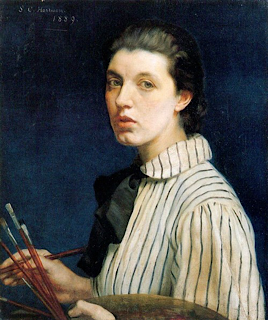
Harrison’s brother, Henry, is a supporter of Charles Stewart Parnell and a Member of Parliament for Mid Tipperary. She herself becomes the first female city councillor for Dublin Corporation in 1912. She campaigns to have poor relief extended to the able-bodied unemployed and works to promote women’s rights. She is closely involved in Hugh Lane‘s efforts to establish a gallery of modern art in Dublin.
For some 30 years Harrison is part of social reform and women’s rights in Ireland. In 1912 she is the first woman to be elected to the Dublin City Council. Here she works closely with Alderman Alfie Byrne. She is also recognised for her prominent place in the suffrage victory procession and escorting Anna Haslam to vote in the Williams Street Courthouse, Dublin, in the 1918 United Kingdom general election.
Following Hugh Lane’s death on the RMS Lusitania in 1915, Harrison claims that they had been engaged to be married. Her 1914 portrait of Lane is one of her best-known works. She never marries.
Harrison dies on July 23, 1941, in Drumcondra, Dublin. She is buried in Mount Jerome Cemetery, the inscription on her gravestone reads “Artist and Friend of the Poor.”
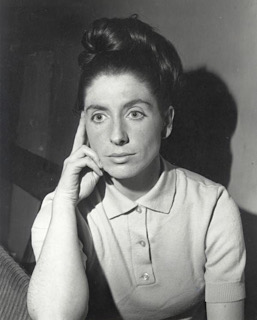
Maude is born on May 22, 1941, in Casla, County Galway, and reared in the Irish language. Her mother, Máire Nic an Iomaire, is a school teacher, and she receives her primary education from her on a small island off the coast of Rosmuc. Her father, John Maude, is from Cill Bhriocáin township near Rosmuc. She attends secondary school at Coláiste Chroí Mhuire, Spiddal, an all-Irish language school in County Galway. She later credits one of her Irish language teachers there, Sister Ailbhe, as an early influence in cultivating her writing confidence.
Maude begins writing modern literature in Irish in secondary school and develops a rhythm of poetry closely attuned to the rhythms of the Conamara Theas dialect of Connacht Irish, spoken in her native district. Though not conventionally religious, she admits in an interview that she has a deep interest in spirituality and that this has left its mark on her poetry. She is noted as a highly effective reciter of her own verse. Géibheann is the best-known of her poems, and is studied at Leaving Certificate Higher Level Irish in the Republic of Ireland. A posthumous collected edition, Caitlín Maude, Dánta, is published in 1984, Caitlín Maude: file in 1985 in Ireland and Italy, and Coiscéim in 1985.
Maude is widely known as an actress. She acts at the university, at An Taibhdhearc in Galway and the Damer Theatre in Dublin, and is particularly successful in a production of An Triail by Máiréad Ní Ghráda at the Damer Theatre in 1964. She plays the protagonist, Máire Ní Chathasaigh, an unmarried mother who experiences family rejection, a stay in a Magdalene laundry, and ultimately murders her infant child followed by suicide. In 2017, Former Irish Minister For JusticeMáire Geoghegan-Quinn cites this performance as “pathbreaking”: “Caitlín Maude played the role, when nobody talked about the issue and when, as we know, women were still devalued, still caricatured, still incarcerated and disenfranchised if they became mothers out of wedlock.” Maude herself is a playwright and co-authors An Lasair Choille with poet Michael Hartnett.
Maude is very active in the Celtic Revival. She founds An Bonnán Buí, an Irish-speaking social club in the 1970s in Dublin. As a member of the Dublin Metropolitan Gaelgeoir community, she is active in many direct action campaigns by the language revival organization Gluaiseacht Chearta Sibhialta na Gaeltachta, including the campaign that forces the Irish State to establish a Gaelscoil (Irish-medium primary school) Scoil Santain in the suburb of Tallaght, County Dublin. A second Irish language school, Scoil Chaitlin Maude, opens in Tallaght in 1985 shortly after her death. It begins as a two-room school with 35 children and has grown to a 16 room new building serving 345 children as of 2023.
Maude is also a distinguished sean-nós singer. She makes one album in this genre, Caitlín, released in 1975 on Gael Linn Records and now available as a CD. It contains both traditional songs and a selection of readings of her poetry.
Maude marries Cathal Ó Luain in 1969. They have one child Caomhán, their son.
Maude dies of complications from cancer on June 6, 1982, at the age of 41. She is buried in Bohernabreena graveyard, which overlooks the city from the Wicklow Mountains.
In 2001, a new writers’ centre in Galway is named after her: Ionad Scríbhneoirí Chaitlín Maude, Gaillimh.
Since Maude’s death, critics in several languages have continued to study her literary works. Irish writer and The Irish Times columnist Michael Harding cites her as one of a few examples of groundbreaking women to “spin the hurt and wound of their oppression, and weave new loves songs and laments.” Irish Studies professor Sarah McKibben notes that Maude’s innovation in the poem represents an instance of recent Irish writers transgressing “literary, nationalistic, sociolinguistic and gender norms to craft new ways of writing in Irish.”
According to Louis de Paor, “Although no collection of her work was published during her lifetime, Caitlín Maude had a considerable influence on Irish language poetry and poets, including Máirtín Ó Direáin, Micheál Ó hAirtnéide, Tomás Mac Síomóin, and Nuala Ní Dhomhnaill. That influence is a measure of the dramatic force of her personality, her exemplary ingenuity and commitment to the language, and her ability as a singer to embody the emotional disturbance at the heart of a song. Her collected poems are relatively slight, including incomplete drafts and fragments, but reveal a poetic voice confident of its own authority, drawing on the spoken language of the Connemara Gaeltacht but rarely on its conventions of oral composition or, indeed, on precedents in Irish poetry in either language. The best of her work is closer to the American poetry of the 1960s in its use of looser forms that follow the rhythms of the spoken word and the sense of the poem as direct utterance without artifice, a technique requiring a high degree of linguistic precision and formal control.”
Maude’s work has also been translated into English and Spanish. Spanish language critic Pura Coloma notes that Maude’s work played a role in preserving Connemaran culture, as she “utilizes her own style to replicate the deep rhythms and tonalities of the regional voice.”
Walker is born in Dublin, son of Cooper Walker, merchant, and educated by Thomas Ball. He suffers from asthma, which prevents him from attending college. Instead he travels to Italy, where he possibly receives some private tuition in Latin, Greek, French, Italian, and Spanish. He takes a special interest in Italian literature and Irish antiquities, and on his return to Ireland (where he is employed in the Irish treasury as third clerk in the upper department) resides in an Italianate villa, St. Valerie, on the road from Bray to Enniskerry.
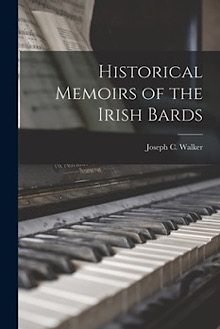
In 1785, Walker is elected one of the original members of the Royal Irish Academy (RIA) and on March 17, 1786, is requested to sit on its committee of antiquities. In this capacity he submits several essays to the Academy’s Transactions. However, his best-known work is Historical Memoirs of the Irish Bards (1786). His interest in poetry, and in eighteenth-century vernacular survivals of the ancient bardic tradition, suggests important new contemporary and literary dimensions for what had previously been antiquarian and scholarly pursuits. He also breaks new ground by considering modern as well as historical Irish culture, and introduces it to an Anglo-Irish audience by providing English translations of Gaelic songs and poems.
The authorities Walker cites covers the entire range of Irish and Anglo-Irish scholarship on Irish antiquities. He includes excerpts from his correspondence with Charles O’Conor, Charles Vallancey, and Sylvester O’Halloran and carries out an extensive correspondence with Thomas Percy after he becomes Bishop of Dromore in 1782. He focuses on both poetry and music, which according to the popular eighteenth-century view has been the two traditional pursuits of the Irish bards. He presents a historical outline of their progress from the earliest times to the eighteenth century and ends with nine appendices, which are almost as lengthy as the main text. In these, his appreciation of what he considers to be the contemporary survivals of the ancient Irish bardic tradition is apparent in his including an account of Cormac Common, a blind eighteenth-century poet from Mayo, as well as a lengthy biographical notice of Turlough O’Carolan, together with translations of several of his songs. The book brings together many of the literary, scholarly, popular, Celtic, antiquarian, political, and musical dimensions of eighteenth-century Irish culture and prefigures the synthesis of literary modes, cultural theories, and musical styles that would occur in the literary productions of the United Irishmen.
Despite his linguistic skills, Walker has little knowledge of the Irish language, yet he (a member of the Anglo-Irish elite) is consistent in his praise of Gaelic culture, portraying it as sophisticated and literate and, although he highly romanticises his work, he does help to challenge negative appraisals of the Irish character. By the standards of the time it is a work of great erudition. However, today the book is judged to be of limited academic merit as Walker is severely hampered by a shortage of primary documents and by his limited grasp of the Irish language. This is illustrated by his ambiguous use of James Macpherson‘s volumes of Ossianic poems, published in the 1760s, which he quotes as authentic in the text while hinting in the footnotes that they are unreliable.
Charlotte Brooke translates three poems, and in return Walker encourages her to produce her Reliques of Irish Poetry (1789). Her work reflects Walker’s influence and she thanks him in the preface for affording her “every assistance which zeal, judgment and extensive knowledge, could give” as well as for prevailing on people to subscribe to her work and for being a subscriber himself. He is part of a literary circle that includes Edward Ledwich, Charles O’Conor, Edward Berwick, John Philpot Curran, and Henry Grattan. He also writes Historical essay on the dress of the ancient and modern Irish (1788), dedicated to his friend James Caulfeild, 1st Earl of Charlemont, for which he interviews the older generation, consults manuscripts, and even visits tombs to examine the clothing of corpses, and admits he has received copious aid from Elizabeth Rawdon, Countess of Moira. The English Review receives it warmly but Richard Gough, the reviewer for TheGentleman’s Magazine, states he is “much disappointed in the perusal of this high priced history.” Other works by Walker include “an historical essay on the Irish stage,” RIA Trans., ii (1788), Historical Memoir on Italian Tragedy (1799) and contributions to Vallancey’s Collectanea de rebus Hibernicis (Dublin, 1770–1804). In the 1790s he subscribes to Anthologia Hibernica: a monthly collection of science, belles lettres and history and in December 1794 submits an “Historical essay on the Irish stage” which surveys Irish drama from bardic times through to contemporary folk plays.
Walker dies on April 12, 1810, in Enniskerry, County Wicklow, leaving a fine gallery of pictures, a library containing Irish manuscripts, and a collection of antiquities. He is buried on April 14 in St. Mary’s Churchyard, Dublin. His memoirs of Alessandro Tassoni are published posthumously in London in 1815 (with a lengthy preface by his brother Samuel), as is the second edition of Historical Memoirs of the Irish Bards (2 vols., Dublin, 1818).
(From: “Walker, Joseph Cooper” by Rosemary Ritchie, Dictionary of Irish Biography, http://www.dib.ie, October 2009)
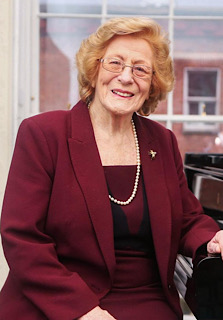
Veronica Dunne, Irish operaticsoprano and voice teacher also known as Ronnie Dunne, who is described as “an Irish national treasure,” dies on April 5, 2021. After a successful operatic career at the Dublin Opera and the Royal Opera House in London, she focuses on voice teaching in Dublin, where she trains future international singers. The triennial Veronica Dunne International Singing Competition is established in 1995. She receives the National Concert Hall Lifetime Achievement Award in 2014.
Dunne is born in Dublin on August 20, 1927. She is the youngest of three children of a well-to-do family. Her father works as a master builder whose construction firm builds the church in Foxrock, Dublin, in the early 1930s. She begins singing when she is 11 years old. She studies initially in Dublin with Hubert Rooney. She then sells her pony for £125 in order to fund her dream of studying music in Italy. She goes to Rome in 1946 to study with Soldini Calcagni and Francesco Calcatelli. Her family meets with Sarsfield Hogan, the secretary of the Department of Finance at the time, to discuss the issue of her monthly allowance, which would breach foreign exchange controls. Sarsfield permits her to receive the money on the condition that she return to Ireland in the future and teach her young compatriots to sing.
Dunne gives a number of world premieres of works by contemporary Irish composers including Never to Have Lived is Best (1965) by Seóirse Bodley, as well as Irish Songs (1971) and The Táin (1970) by James Wilson.
Dunne is appointed a voice teacher at the then Dublin College of Music (today Technical University Conservatory of Music and Drama) in 1962. She is awarded an honorific doctorate in 1987. She retires in 1992, but continues to teach at the Leinster School of Music and the Royal Irish Academy of Music. Her students include Patricia Bardon, Orla Boylan, Mary Brennan, Tara Erraught, Lynda Lee, Colette McGahon, Anthony Kearns, Suzanne Murphy, and Finbar Wright, who have all sung in the major international opera houses. In 2014, at the age of 87, she continues to teach 39 hours per week.
The triennial Veronica Dunne International Singing Competition, established by the Friends of the Vocal Arts in Ireland in 1995, awards bursaries in her name. Recipients included Orla Boylan, Sarah-Jane Brandon, Tara Erraught, Pumeza Matshikiza and Simon O’Neill. She receives the National Concert Hall Lifetime Achievement Award in 2014.
Dunne marries Peter McCarthy in 1953. The couple has two children.
Dunne dies at the age of 93, on April 5, 2021. Irish PresidentMichael D. Higgins pays tribute to Dunne, saying that she “captivated millions with her singing” and adding, “The legacy she leaves lies in the talents of those scores of others whose talents and performances she unlocked with her enthusiasm, energy and commitment as a teacher and friend.”
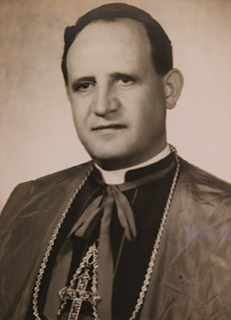
This is a challenging time for the Catholic Church in Ireland, then led by Cardinal William Conway, as it adjusts to both the internal changes generated by the Second Vatican Council and the wider social changes. He is ill-suited to coping with these changes and in particular the violence in Northern Ireland. It is widely assumed that he sees to it that the more overtly nationalistTomás Ó Fiaich is appointed to Armagh in 1977 after the death of Cardinal Conway. The journalist and authorEd Moloney in his book on the Irish Republican Army (IRA) asserts that Alibrandi’s “sympathy for the IRA was a constant source of friction with the government in London.”
Alibrani plays a major role in the 1971 decision by the Vatican to accept the resignation of John Charles McQuaid as Archbishop of Dublin. This comes as a shock to McQuaid, who expected that he would be allowed to remain for some time after the normal retirement age of 75.
In many of the episcopal appointments made while Alibrandi is nuncio, he favours doctrinally “sound,” right-of-centre priests and in the case of the Archdiocese of Dublin picks two priests, Kevin McNamara and Desmond Connell, who are notably ill-suited. In a profile of the Archbishop at the time of his retirement, T. P. O’Mahony observes in The Tablet, “although he rarely gave interviews, and never overtly intervened in policy-making or in public controversies, it is beyond dispute that Archbishop Alibrandi wielded considerable influence behind the scenes.”
The respected academic and church historian Dermot Keogh assessing this period argues that “there was a general view that the best candidates had not been appointed…that a number were not up to the job, that most of the appointees shared a defensive attitude to matters of church and state.”
Alibrandi has “a very testy relationship with three Taoisigh – Jack Lynch, Liam Cosgrave and Garret FitzGerald.” After reaching the retirement age of 75, he returns to his home town in Sicily where he dies on July 3, 2003. His funeral Mass was celebrated on Saturday in Castiglione di Sicilia by Archbishop Paolo Romeo, Apostolic Nuncio to Italy. A memorial Mass for Archbishop Alibrandi will be celebrated by Archbishop Giuseppe Lazzarotto, Apostolic Nuncio to Ireland, on Friday, 11 July at 19.30 in the Church of Our Lady Help of Christians, Navan Road, Dublin.
It is reported in September 2012 during the second Dr. Garret FitzGerald Memorial Lecture at University College Cork (UCC) by Seán Donlon, former secretary general at the Department of Foreign Affairs, that “It came to our [Department of Foreign Affairs] attention that a substantial amount in three bank accounts in Dublin [held by the archbishop] were way in excess of what was needed to run the nunciature. The source [of the money] appeared to be South America.” Donlon goes on to say, “Because of its size, we thought it appropriate to ask if the funds belonged to the Holy See.” When contacted for an answer, Alibrandi “quickly answered ‘no’ and that they belonged to ‘family’. When it was pointed out to him that the money was then liable under Irish taxation law to DIRT, he said he would retire shortly and the accounts would be closed.”
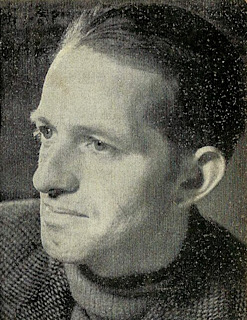
Ó Cuinneagáin Is the third child of Sean Cunningham and his wife Caitlín. He is educated in Belfast, at St. Brigid’s school, Malone Road, and the St. Patrick’s Christian Brothers school on Donegall Street. His political views are permanently influenced by memories of the sectarian violence of 1920–22. In 1927, he enters the Irish civil service as a tax clerk, stationed first at Athlone and then at Castlebar. He is promoted to junior executive officer in the Department of Defence, but resigns in July 1932 after his superiors refuse to allow him six months unpaid leave to study the Irish language in the Donegal Gaeltacht. He turns down a promotion to the Department of Finance, a decision partly motivated by disillusion with Fianna Fáil. He subsequently works as an accountant and lives in the south Dublin suburbs. In 1934, he establishes his own publishing company, Nuachtáin Teoranta, which he boasts is the first company to be registered in the Irish language, and he also contributes to an Irish language socialist paper, An t-Éireannach, under the pen name “Bruinneal gan Smal.”
In 1940–41, Ó Cuinneagáin is active in the Friends of Germany, a pro-Nazi organisation which disintegrates after some of its leading members are interned. On September 26, 1940, he founds Craobh na h-Aiséirighe, a branch of the Gaelic League aimed at attracting dynamic young enthusiasts frustrated by the older activists who dominate established branches. It makes a point of using modern publicity methods to get its message across, a trait which is carried over into Ailtirí na hAiséirghe (Architects of Resurrection), a political movement made up of branch members, which Ó Cuinneagáin founds in 1942. This move leads to the expulsion of Craobh na h-Aiséirighe from the Gaelic League and the establishment of Glún na Buaidhe by branch members who disapprove of his political ambitions and wish to concentrate on the promotion of the Irish language.
Members of Ailtirí wear an informal uniform of a green shirt, tweed suit, and báinín jacket. In private Ó Cuinneagáin reveals that the organisation is modeled on the Hitler Youth. His own title of “ceannaire” (leader) equates with “Führer” and “duce.” Features of the movement copied from Nazism include an emphasis on propaganda based on a few simple concepts and phrases. The claim that party politics allow statesmen to evade individual responsibility, whereas a single leader is necessarily more responsive to public opinion; and the belief that all difficulties can be overcome through willpower.
Ó Cuinneagáin takes to extremes contemporary Catholic advocacy of a corporate state based on vocational principles as the solution to the problems of modernity. While venerating António de Oliveira Salazar‘s Portugal as a role model, he believes that Ireland can surpass it and create a Catholic social model that will redeem the whole world. He takes a quasi-racial view of Irishness and comes close to saying that the only true Irish Catholics are of Gaelic race. When Seán Ó’Faoláin comments acidly in The Bell on the paradox of “Celtophiles” who bear such Celtic names as Blackham and Cunningham, Ó Cuinneagáin protests that he can prove his pure Gaelic descent. The Ailtirí state forces all male citizens to undertake a year’s compulsory military service, which is also used as a means of Gaelicisation, and the resulting citizen army of 250,000 would mount a lightning invasion of Northern Ireland, modeled on the blitzkrieg, with a favourite slogan being “Six Counties, Six Divisions, Sixty Minutes.” In 1943, the Stormont government excludes Ó Cuinneagáin from Northern Ireland.
Ailtirí attracts considerable attention. Its leaders address numerous meetings around the country, attracting large crowds to demonstrations at Dublin and Cork. Ó Cuinneagáin, who is by no means unintelligent, is capable of shrewd observations on the restrictions imposed on most Irish-language bodies by government subsidies, and the impact of the snobbery shown toward the poor by their middle class co-religionists. Several of his lieutenants are academics or engineers. In the 1970s he praises modernist architecture as breaking with the hated Georgian past, and denounces conservationists who oppose plans to build an oil refinery in Dublin Bay. Bilingual pamphlets produced by the group sell thousands of copies. Ó Cuinneagáin is the author of several, including Ireland’s twentieth century destiny (1942), Aiséirí says . . .(1943), Partition: a positive policy (1945), and Aiséirí for the worker (1947). Hus attempts to launch a party paper are stifled until the end of the war. Some of the interest attracted by the group is derived from curiosity or amusement. It also functions to some extent as a front organisation for the banned Irish Republican Army (IRA), with Ó Cuinneagáin declaring that Jews and freemasons should be locked up instead of IRA men. Aiséirí members are involved in the bombing of the Gough memorial in Phoenix Park in July 1957, with the stolen head concealed for a time in the party’s offices.
The party runs four candidates, including Ó Cuinneagáin in Dublin North-West, in the 1943 Irish general election and seven in 1944, but all lose their deposits. Ó Cuinneagáin does not actually vote for himself. Throughout his life he demands Irish language ballot papers. When given English language ones he tears them up, claiming that they disenfranchise him and that this invalidates the election. In 1946, Ailtirí na h-Aiséirí elects eight members to local bodies in counties Louth and Cork. This helps to bring about the decline of the party, as the Cork activists rebell against the rigid Führerprinzip upheld by the electorally unsuccessful ceannaire and his Dublin acolytes. Most of the party’s local support is absorbed by Clann na Poblachta. Ó Cuinneagáin retains a small group of followers centred on his newspaper Aiséirighe.
Ó Cuinneagáin keeps himself in the public gaze by driving around the country in a van painted with slogans, and by regularly appearing in court for refusing to respond to official documents (rates demands, car insurance, court summonses) unless they are supplied in Irish. He enjoys some success in securing the provision of Irish language versions of such documents, and he contrasts the state’s niggardliness on this point with its professed commitment to the revival of Irish. In 1954, he founds an Irish language women’s artistic and social paper, Deirdre, which operates successfully for over a decade without government subsidy.
Ó Cuinneagáin continues to write sympathetically about IRA activities, at one point offering a £1,000 reward for the capture of the Prime Minister of Northern Ireland, Basil Brooke. He maintains surprisingly extensive international neo-fascist contacts. He regularly reprints in Aiséirighe material by the American antisemite and racial segregationistGerald L. K. Smith. He cites praise for Aiséirighe from Der Stahlhelm, a far-right German veterans’ paper, and notes Oswald Mosley‘s support for Irish reunification. He denounces Hugh Trevor-Roper‘s Last days of Hitler as typical British slander of a fallen enemy. He compares the sacrificial ideology of the Hungarian Nazi collaborator Ferenc Szálasi to that of Patrick Pearse. He praises Juan Perón as a model whom Ireland should imitate and he follows the electoral fortunes of Italian neo-fascism with interest. He also maintains contacts with the radical right-wing fringes of Breton, Scottish, and Welsh nationalism. He declares that Ireland’s grievance is against England alone and bemoans the Dublin government’s failure to encourage the break-up of the United Kingdom.
Ó Cuinneagáin denounces the Soviet Union and United States alike as controlled by Zionists and freemasons. He points to illegitimacy and divorce rates in the United States as proof of the folly of those who regard “progressive” American education as superior to the sound Irish teaching methods embodied by the Christian Brothers, and bemoans the increasing flow of “immoral” American comics and paperback books into Ireland. While noting with pride that he has been described as “Ireland’s foremost Jew-baiter,” He claims that his frequent diatribes against Robert Briscoe and the state of Israel are merely anti-Zionist, and that he has nothing against Jews, whom he defines as ultra-Orthodox anti-Zionists. He hopes that a Europe united on national–Christian principles might fend off the influence of the super powers. He echoes Mosleyite calls for European unity and is an early and determined advocate of Irish membership of the European Community. However, he dissents from the Mosleyite view that such a union should be based on African empire. He is generally anti-imperialist, though somewhat more lenient toward Portuguese than British imperialism, and from 1956 the President of Egypt, Gamal Abdel Nasser, becomes one of his heroes. While supporting European unity as a defensive strategy, he also warns that unless Ireland adopts mass conscription the country might be conquered by a regiment of Russian paratroopers landing on Dollymount Strand. Throughout the 1950s and 1960s he regularly calls for the Irish Army to mount a military coup, hinting that it should install him as leader in the same way that the Portuguese army had installed Salazar.
Ó Cuinneagáin gives up contesting elections but regularly cites those who do not vote in elections as indicating the extent of political support for Ailtirí na hAiséirghe. He regularly laments that the safety valve of emigration had taken the steam out of radical politics. In his later years he notes the growth of anti-clericalism and the beginnings of a permissive society in Dublin. He attributes this to the church’s failure to implement its own social teaching and its encouragement of West British snobbery at the expense of the truly Catholic traditions of the Gael.
On April 4, 1945, Ó Cuinneagáin marries Sile Ní Chochláin. They have four sons and two daughters, some of whom become active in left-wing politics. He dies on June 13, 1991. He tends to be remembered as a figure of fun, but this view demands some qualification. He possesses genuine abilities and dedication. His fantasies are an extreme development of the official ideology of the state, and part of his appeal stems from his ability to point out the hypocrisy involved in paying it lip service while failing to push it to its logical conclusion. The blindness and cruelty involved in imposing his world view at a personal level has their counterparts in the institutions of official Ireland. Ailtirí na hAiséirghe may have been a marginal millennial cult, but in Europe during the 1940s such groups were often raised to power by circumstances. Had the World War II taken a different direction after 1940, he might be remembered not as a parody of Pearse but as an Irish Szálasi.
(From: “ÓCuinneagáin, Gearóid Seán Caoimhín” by Patrick Maume, Dictionary of Irish Biography, http://www.dib.e, October 2009)
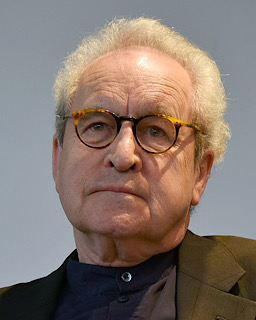
Banville is born to Agnes (née Doran) and Martin Banville, a garage clerk, in Wexford. He is the youngest of three siblings. He is educated at CBS Primary, Wexford, a Christian Brothers school, and at St. Peter’s College, Wexford. Despite having intentions of being a painter and an architect, he does not attend university. After school, he works as a clerk at Aer Lingus, which allows him to travel at deeply discounted rates. He takes advantage of these rates to travel to Greece and Italy. He begins working as a sub-editor at The Irish Press in 1969.
Banville publishes his first book, a collection of short stories titled Long Lankin, in 1970. His first novel, Nightspawn, appears in 1971, followed by his second, Birchwood, two years later. His The Revolutions Trilogy, published between 1976 and 1982, comprises works named after renowned scientists: Doctor Copernicus, Kepler and The Newton Letter. His next work, Mefisto, has a mathematical theme, and, in combination with the three books from The Revolutions Trilogy, is the fourth book from the “Scientific Tetralogy.” His 1989 novel, The Book of Evidence, begins The Frames Trilogy, dealing with the work of art. It is completed by Ghosts and Athena. His thirteenth novel, The Sea, wins the Booker Prize in 2005. In addition, he publishes crime novels as Benjamin Black, most of which feature the character of Quirke, an Irish pathologist based in 1950s Dublin. His alternative history novel, The Secret Guests (2020), is published under the name B. W. Black.
In 1969, Banville marries the American textile artist Janet Dunham, whom he met in San Francisco the previous year while she is a student at the University of California, Berkeley. The couple has two sons together. The marriage breaks down after Banville has an affair with a neighbour, Patricia Quinn, who subsequently becomes director of the Arts Council of Ireland. Banville has two daughters with Quinn, born around 1990 and 1997. Despite separating, Banville and Dunham never divorce and he describes them as remaining “on good terms.” Dunham dies at Blackrock Clinic on November 22, 2021, after which Banville states that he experienced “brain fog” due to grief and is unable to write for six months. In a 2024 interview, he expresses regret over his relationship history, saying, “I caused Janet such anguish. I have caused Patricia Quinn such anguish. I wasn’t good with my children. I was not a good parent. I am not a good person. I am selfish. But I have to have responsibility.”
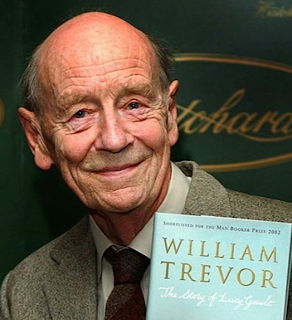
Trevor wins the 2008 International Nonino Prize in Italy. In 2014, he is bestowed with the title of Saoi within Aosdána. He resides in England from 1954 until his death in 2016, at the age of 88.
Trevor is educated at a succession of schools including St Columba’s College, Dublin (where he is taught by Oisín Kelly) and at Trinity College Dublin (TCD), from which he receives a degree in history. He works as a sculptor under the name Trevor Cox following his graduation from TCD, supplementing his income by teaching.
Trevor marries Jane Ryan in 1952 and emigrates to England, working as a teacher, a sculptor and then as a copywriter for an advertising agency. During this time he and his wife have their first son. In 1952, he becomes an art teacher at Bilton Grange, a prep school near Rugby. He is commissioned to carve reliefs for several churches, including All Saints’ Church, Braunston, Northamptonshire. In 1956, he moves to Somerset to work as a sculptor and carries out commissions for churches. He stops wood carving in 1960.
Trevor’s first novel, A Standard of Behaviour, is published in 1958 by Hutchinson & Co. of London, but receives little critical success. He later disowns this work, and, according to his obituary in The Irish Times, “refused to have it republished.” It is, in fact, republished in 1982 and in 1989.
In 1964, at the age of 36, Trevor is awarded the Hawthornden Prize for The Old Boys. This success encourages him to become a full-time writer.
In 1971, he and his family move from London to Devon in South West England, first to Dunkeswell, then in 1980 to Shobrooke, where he lives until his death. Despite having spent most of his life in England, he considers himself to be “Irish in every vein”.
Trevor dies peacefully in his sleep, at the age of 88, at Crediton, Devon, England, on November 20, 2016.