Mullen is first elected to Seanad Éireann (the Irish Senate) in 2007 for the National University of Ireland constituency, and has been continuously re-elected in 2011, 2016, 2020, and 2025, often topping the poll among NUI graduates. In 2018, he founds the Human Dignity Alliance, an anti-abortion political party. He is also affiliated with the European Christian Political Party (ECPP).
Mullen has built his career around social conservative causes:
Anti-abortion advocacy: He opposes the repeal of the Eighth Amendment and seeks stronger protections for conscientious objection among medical staff.
Opposition to same-sex marriage: He is prominent during the 2015 referendum opposing constitutional changes related to marriage.
Human rights and palliative care: He introduces bills and motions promoting hospice care and the protection of vulnerable adults.
Freedom of conscience and family values: He advocates policies emphasizing parental rights in education, ethical protections, and support for families.
International advocacy: He criticizes human rights abuses in China, the treatment of religious minorities, and European Union (EU) bureaucratic overreach, while seeking Ireland’s engagement on human dignity standards internationally.
A lifelong practicing Roman Catholic, Mullen emphasizes the principle of human dignity in both politics and daily life, integrating faith and reason in his ethical framework. He maintains a connection to Irish culture and the Irish language, and has engaged in public discussions on moral and social issues, grounding his positions in Catholic teaching without seeking to impose religious law.
In summary, Mullen is a long-standing independent Irish senator influential in debates on social policy, ethics, and human rights. His career is marked by consistent advocacy for pro-life positions, family integrity, and freedom of conscience, alongside active engagement in European and international policy discussions on human dignity and social justice.
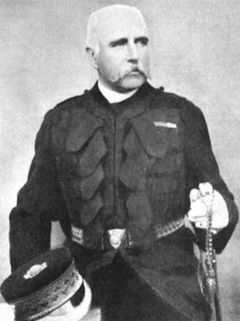
Reed is the son of John Reed of Galway and Mary Adamson of County Meath. He is educated at Queen’s University Belfast (QUB) and called to the Bar in 1873. He enters the Royal Irish Constabulary and is appointed District Inspector in 1859; becoming Inspector-General in 1885. He retires 1900.
Aside from being the only RIC cadet officer to be promoted to Inspector General, Reed changes the rules for promotion in the Royal Irish Constabulary. Up until his tenure, Catholics had little success in attaining promotions. Even though most of the force is Catholic, almost all the officers are non-Catholic. He institutes a rule that each year, sixty men who are Catholic and pass the Sergeant’s exam will be promoted.
Reed is appointed a Knight Bachelor in 1889, a Companion of the Order of the Bath (CB) in 1892, a Commander of the Royal Victorian Order (CVO) in 1900 and a Knight Commander of the Order of the Bath (KCB) in 1897.
Reed dies in Dublin on November 7, 1914, and is buried in Dean’s Grange Cemetery. His epitaph reads: – “I have no greater joy than to hear that my children walk in truth.” (3 John 4.)
The Battle of Castlebar takes place on August 27, 1798. A combined force of about 800 French troops under GeneralJean Joseph Amable Humbert and 2,000 United Irishmen rebels defeat a much larger British Crown force of 3,000 to 5,000 men led by General Gerard Lake. The French, though exhausted from long marches, exploit the disorganisation of Lake’s militia-heavy army, routing it in what becomes known as the “Castlebar Races” or “Races of Castlebar.” The British suffer heavy casualties — around 400 killed or wounded and 800 captured, while the French lose about 200 to 220.
The victory at Castlebar is a significant boost to the rebels, but it also alarms the British government. Cornwallis, commanding the Crown forces in the west, is tasked with reasserting control and preventing further advances into Ulster. By September 4, he has moved from Tuam to threaten Castlebar, aiming to recapture the town and disrupt Humbert’s plans to push north into County Sligo and beyond.
Anticipating Cornwallis’s move, Humbert evacuates Castlebar with his remaining troops — roughly 800 French soldiers and 1,000 Irish insurgents — and marches north into County Sligo. His objective is to ignite further rebellion in Ulster, continuing the momentum of the short-lived “Republic of Connacht.” This evacuation leaves the town vulnerable to British reoccupation.
While Humbert’s force is retreating, fresh risings broke out in counties Longford and Westmeath, showing the insurrection’s reach. However, these uprisings are ultimately suppressed, and the British, under commanders like Cornwallis, work to mop up rebel strongholds across Ireland.
In summary, on September 4, 1798, Cornwallis’s advance from Tuam is a direct response to the rebel victory at Castlebar, aiming to regain a key rebel-held town and halt Humbert’s northern push. The move reflects the British strategy of localized offensives to counter the momentum of the Irish Rebellion of 1798.
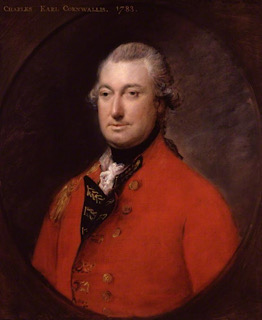
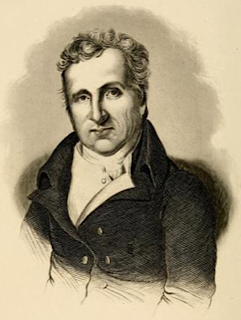
(Pictured: Charles Cornwallis, 1st Marquess Cornwallis)
The consecration is a major ecclesiastical event attended by PresidentÉamon de Valera, who lights the sanctuary candle, and by Cardinal William Conway, Archbishop of Armagh and Primate of All Ireland, who celebrates Mass. Bishop Michael Browne, Bishop of Galway and Kilmacduagh, is accompanied at the altar by four archbishops, underscoring the cathedral’s importance as the mother church of the Diocese of Galway and Kilmacduagh. Thousands of people gather for the blessing, which begins with a procession from the Convent of Mercy to the cathedral’s front entrance.
Galway Cathedral is built on the site of the old city prison, with construction starting in 1958 and completion in 1965. Designed by architect John J. Robinson, it is a striking example of Renaissance Revival architecture, with influences from Romanesque and Gothic styles. Constructed almost entirely of local limestone, it features an octagonal dome 44.2 metres (145 ft.) high, supported by eight pillars each adorned with a mosaic of one of the Beatitudes.
The consecration marks the opening of the cathedral as the last great stone cathedral to be built in Europe. The dedication to Our Lady Assumed into Heaven reflects both Marian devotion and the city’s maritime heritage, while the building itself stands as a testament to Galway’s cultural and religious identity.
In summary, August 15, 1965, is a historic day for Galway, when Cardinal Richard Cushing’s consecration of the new cathedral brings together national and international religious figures, Irish political leadership, and the faithful in a celebration of faith, heritage, and architecture.
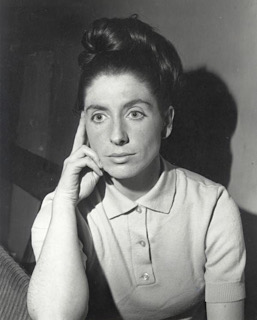
Maude is born on May 22, 1941, in Casla, County Galway, and reared in the Irish language. Her mother, Máire Nic an Iomaire, is a school teacher, and she receives her primary education from her on a small island off the coast of Rosmuc. Her father, John Maude, is from Cill Bhriocáin township near Rosmuc. She attends secondary school at Coláiste Chroí Mhuire, Spiddal, an all-Irish language school in County Galway. She later credits one of her Irish language teachers there, Sister Ailbhe, as an early influence in cultivating her writing confidence.
Maude begins writing modern literature in Irish in secondary school and develops a rhythm of poetry closely attuned to the rhythms of the Conamara Theas dialect of Connacht Irish, spoken in her native district. Though not conventionally religious, she admits in an interview that she has a deep interest in spirituality and that this has left its mark on her poetry. She is noted as a highly effective reciter of her own verse. Géibheann is the best-known of her poems, and is studied at Leaving Certificate Higher Level Irish in the Republic of Ireland. A posthumous collected edition, Caitlín Maude, Dánta, is published in 1984, Caitlín Maude: file in 1985 in Ireland and Italy, and Coiscéim in 1985.
Maude is widely known as an actress. She acts at the university, at An Taibhdhearc in Galway and the Damer Theatre in Dublin, and is particularly successful in a production of An Triail by Máiréad Ní Ghráda at the Damer Theatre in 1964. She plays the protagonist, Máire Ní Chathasaigh, an unmarried mother who experiences family rejection, a stay in a Magdalene laundry, and ultimately murders her infant child followed by suicide. In 2017, Former Irish Minister For JusticeMáire Geoghegan-Quinn cites this performance as “pathbreaking”: “Caitlín Maude played the role, when nobody talked about the issue and when, as we know, women were still devalued, still caricatured, still incarcerated and disenfranchised if they became mothers out of wedlock.” Maude herself is a playwright and co-authors An Lasair Choille with poet Michael Hartnett.
Maude is very active in the Celtic Revival. She founds An Bonnán Buí, an Irish-speaking social club in the 1970s in Dublin. As a member of the Dublin Metropolitan Gaelgeoir community, she is active in many direct action campaigns by the language revival organization Gluaiseacht Chearta Sibhialta na Gaeltachta, including the campaign that forces the Irish State to establish a Gaelscoil (Irish-medium primary school) Scoil Santain in the suburb of Tallaght, County Dublin. A second Irish language school, Scoil Chaitlin Maude, opens in Tallaght in 1985 shortly after her death. It begins as a two-room school with 35 children and has grown to a 16 room new building serving 345 children as of 2023.
Maude is also a distinguished sean-nós singer. She makes one album in this genre, Caitlín, released in 1975 on Gael Linn Records and now available as a CD. It contains both traditional songs and a selection of readings of her poetry.
Maude marries Cathal Ó Luain in 1969. They have one child Caomhán, their son.
Maude dies of complications from cancer on June 6, 1982, at the age of 41. She is buried in Bohernabreena graveyard, which overlooks the city from the Wicklow Mountains.
In 2001, a new writers’ centre in Galway is named after her: Ionad Scríbhneoirí Chaitlín Maude, Gaillimh.
Since Maude’s death, critics in several languages have continued to study her literary works. Irish writer and The Irish Times columnist Michael Harding cites her as one of a few examples of groundbreaking women to “spin the hurt and wound of their oppression, and weave new loves songs and laments.” Irish Studies professor Sarah McKibben notes that Maude’s innovation in the poem represents an instance of recent Irish writers transgressing “literary, nationalistic, sociolinguistic and gender norms to craft new ways of writing in Irish.”
According to Louis de Paor, “Although no collection of her work was published during her lifetime, Caitlín Maude had a considerable influence on Irish language poetry and poets, including Máirtín Ó Direáin, Micheál Ó hAirtnéide, Tomás Mac Síomóin, and Nuala Ní Dhomhnaill. That influence is a measure of the dramatic force of her personality, her exemplary ingenuity and commitment to the language, and her ability as a singer to embody the emotional disturbance at the heart of a song. Her collected poems are relatively slight, including incomplete drafts and fragments, but reveal a poetic voice confident of its own authority, drawing on the spoken language of the Connemara Gaeltacht but rarely on its conventions of oral composition or, indeed, on precedents in Irish poetry in either language. The best of her work is closer to the American poetry of the 1960s in its use of looser forms that follow the rhythms of the spoken word and the sense of the poem as direct utterance without artifice, a technique requiring a high degree of linguistic precision and formal control.”
Maude’s work has also been translated into English and Spanish. Spanish language critic Pura Coloma notes that Maude’s work played a role in preserving Connemaran culture, as she “utilizes her own style to replicate the deep rhythms and tonalities of the regional voice.”
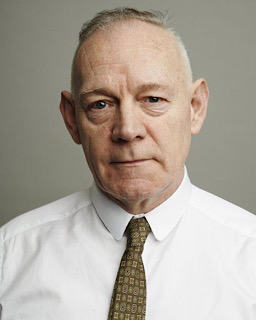
Flynn publishes the novel Nothing To Say in 1983. It is subsequently translated into German, Italian, and Polish. He founds his arts company, Farcry Productions, in 2004, which produces visual art, performance and installation work around taboo issues such as child sexual abuse, violence, and addiction.
Flynn is first elected to Dublin City Council in the 2009 Irish local elections as an independent candidate representing the South-East Inner City electoral area. He is re-elected to the revised Pembroke-South Dock electoral area in the 2014 Irish local elections.
Flynn tables a motion to move the Temple Bar Cultural Trust, a State company set up in 1991 as a regeneration agency for Temple Bar, under the direct control of Dublin City Council. The trust is subsequently found to be in breach of corporate governance and accountability in a number of public reports. He also expresses critical views of the way public money is spent as part of a Grafton Street regeneration project in Dublin.
Flynn supports tougher regulation around the amplification of busking on public streets, which leads to his office being vandalised in February 2015. He is involved in a number of challenges to cycle lane provision, with a High Court challenge against the Strand Road cycle lane COVID-19 mobility trial and is a spokesperson for a group opposed to this cycle lane trial. Critics accuse him of consistently voting against policies that would provide more active travel infrastructure and in favour of policies which negatively impact pedestrians and cyclists. His legal challenges to cycling provision have the potential to revert a number of cycle lanes which have been created back to servicing predominantly cars.
In 2015, Flynn resigns from the Dublin City Council Arts SPC over what he perceives as a lack of cohesive overall policy, strategy, and vision.
In 2016, Flynn protests against the Artane Band, due to its association with the Artane Industrial School. The band responds saying it has had no association with the former industrial school. His peaceful protest, which includes him protesting on a window sill in his Dublin City Council office, is criticised by some as “attention seeking” and a “publicity stunt full stop.”
In 2019, Flynn is involved in a protest march against plans to open the state’s largest homeless shelter in his ward. Protesters march northbound on Aungier Street blocking traffic and shouting slogans against the Peter McVerry trust for providing the services in conjunction with Dublin City Council. In 2020, he takes further legal action against the council, who are working in conjunction with the Peter McVerry Trust, so that he can ensure the homeless facilities will not be built in the area.
Dillon leaves school at the age of fourteen and for seven years works as a painter and decorator, mostly in London. From an early age he is interested in art, cinema, and theatre. About 1936 he starts out as an artist.
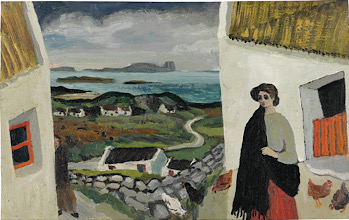
Dillon’s Connemara landscapes provide the viewer with context, portraits of the characters who work the land, atmosphere and idiosyncratic colour interpretations. At the age of 18, he goes to London, initially working as a decorator. With the outbreak of World War II, he returns to Belfast. Over the next five years he develops as a painter in Dublin and Belfast. His works during this period are more than simple depictions of the life and people around him, they are reactions and interactions in paint.
In 1942, Dillon’s first solo exhibition is opened by his friend and fellow artist, Mainie Jellett, at The Country Shop, St. Stephen’s Green, Dublin. “Father, Forgive Them Their Sins” depicts his concerns about the new war that has broken out. Despite a growing reputation, he returns to London in 1944 to work on demolition gangs to restore his finances. In the late 1940s and during the 1950s, he finds himself favouring the town of Roundstone, County Galway. In 1951 he is introduced to Noreen Rice by her piano teacher. She has no formal training and takes Dillon and George Campbell as her mentors for decades and her work is of a similar surrealistic and primitive style.
In 1958, Dillon has the double honour of representing Ireland at the Guggenheim International, and Great Britain at the Pittsburg International Exhibition. He and his sister, Mollie, have a property on Abbey Road in 1958. They let out part of the house to Arthur Armstrong and they let a flat to Noreen Rice and her brother. He and Noreen tour junk yards to find objects like leather and string that they include in their artwork.
Dillon travels widely in Europe and teaches for brief periods in the London art schools.
In 1967, Dillon suffers a stroke and spends six weeks in hospital. From this time his work changes direction. A notion of imminent death sends his work almost into another world, a realm of dreams and paintings intimating his death. In 1968 he is back in Dublin, where he helps to design sets and costumes for Seán O’Casey‘s play Juno and the Paycock. He continues to paint and also to make tapestries, sitting at his Singersewing machine.
In 1969, Dillon pulls his artworks from the Belfast leg of the Irish Exhibition of Living Art in purported protest during the Troubles against the “arrogance of the Unionist mob.” However, he does send work to Ulster when he donates work to Sheelagh Flanagan who had organised an exhibition for the relief of victims of the Belfast riots, in October 1969. His picture is hanged alongside the donated works of T. P. Flanagan, William Scott, F. E. McWilliam, Deborah Brown and Carolyn Mulholland as well as more than twenty others. Michael Longley retorts in a further letter, “Belfast needed creativity, it needed people like Gerard Dillon.” During his last years, he is invited to be involved in a children’s art workshop in the National Gallery of Ireland.
Dillon dies of a second stroke at the age of 55 on June 14, 1971. His grave, as requested, is unmarked in Belfast’s Milltown Cemetery. Danlann Gerard Dillon/The Gerard Dillon Gallery in Cultúrlann McAdam Ó Fiaich is named in his honour.
In his biography of the artist, James White briefly touches on the artists homosexuality: “such was his religious feeling that although he was drawn to people of that type, if he once had an encounter I believe that it never occurred again.” The artist’s nephew, Martin Dillon, recalls that after his uncle’s death he found a diary entry describing a homosexual encounter with a sense of guilt, but the author Gerard Keenan insists he was “a very well-adjusted homosexual.” Reihill expands on this, pointing to a probably unrequited love for the painter Daniel O’Neill and also highlights Dillon’s association with Basil Rákóczi and The White Stag Group‘s Kenneth Hall both strong gay connections. Pictures with both overt and covert references are known.
Barrington is born in 1756 or 1757 in Knapton, Abbeyleix, Queen’s County (now County Laois), the third son of John Barrington, an impoverished Protestantgentleman landowner in Queens’s County and his wife Sibella French of Peterswell, County Galway. He is raised and schooled by his grandparents in Dublin and enters Trinity College Dublin (TCD) in 1773, aged 16, but leaves TCD without a degree.
Barrington joins the Irish Volunteers and supports the Irish Patriot Party in the early 1780s. His father raises and commands two Corps: the Cullenagh Rangers and the Ballyroan Light Infantry.
Barrington’s elder brother commands both the Kilkenny Horse and the Durrow Light Dragoons. Through his correspondence with General Hunt Walsh, Barrington’s father secures him a commission in Walsh’s regiment. Upon learning that the regiment is to be sent to America to fight in the American Revolution, and fearful of dying on some foreign battlefield, he writes to Walsh asking him to present the commission to another candidate instead, claiming that he himself is too tender to be of any real use. His fears prove well founded when his replacement, the only child of one of Walsh’s friends, is killed in his first engagement.
Barrington is called to the Irish bar in 1788 and in 1789 he marries Catherine, daughter of Dublin mercer, Edward Grogan. They ultimately have seven children. The following year he enters by the purchase of the seat the pre-1801 Parliament of Ireland as MP for Tuam. He accepts a sinecure post in 1793 at the Dublin customhouse worth £1,000 p.a. generally supporting Henry Grattan and he takes silk the same year. He is a member of the Kildare Street Club in Dublin. Appointed an Admiralty court judge in 1798, he re-enters parliament the same year as member for Clogher and votes against the Act of Union in 1799–1800, rejecting John FitzGibbon, 1st Earl of Clare‘s offer of the solicitor-generalship in 1799. In 1802, he unsuccessfully contests a seat for Dublin City in the Parliament of the United Kingdom.
Barrington’s comments on the Act of Union has a continuing resonance with the Young Ireland, Fenian and Irish Parliamentary Party movements, which hope to re-establish “Grattan’s Parliament” in some way. In particular, his Rise and Fall of the Irish Nation (1833) provides the basis for this romantic idealisation of Grattan’s Parliament adopted by the Irish Parliamentary Party from the 1880s.
Appointed an Admiralty court judge in 1798 at a salary of £500, Barrington finds there is little work to be done and his lack of a degree restricts other opportunities to support extravagant tastes. His award of a knighthood in 1807 brings no increased income. His court orders the sale of two derelict vessels and he gives instructions that the proceeds are to go to his own bank account. In 1810 or 1811 he takes his wife and family to England and from that time on his work in Ireland is carried out by surrogates. Still retaining his judgeship and salary, he moves to France in 1814 to escape his creditors and never returns to Ireland.
In 1828, commissioners learn of Barrington’s financial irregularities. He crosses the channel to London and protests that he is innocent but does not answer the charges based on the documentary evidence produced by the commissioners. In 1830, a parliamentary commission recommends that he be removed from office, finding misappropriations of court funds in 1805, 1806 and 1810. Pursuant to a provision of the Act of Settlement 1701, which seeks to protect the independence of the judiciary, both Houses of the Parliament of the United Kingdom vote for an Address to King William IV praying for his removal, and the King duly dismisses Barrington from office. By then, Barrington’s first 1827 volume of memoirs has sold successfully, and they are republished and expanded. He is the first judge removed from office under the Act of Settlement, and to this day, is the only judge in the United Kingdom to be so removed.
According to one of Barrington’s sometimes spurious personal memoirs, on March 20, 1780, he travels to Donnybrook, Dublin, to duel with Richard Daly. Daly has fought 16 duels in three years – three with swords and thirteen with pistols. Remarkably, he, and his opponents, have always escaped serious injury. Barrington has no pistols so he and his second, Richard Crosbie, spend the previous night constructing a pair “from old locks, stocks and barrels.” At Donnybrook, Daly’s second, Jack Patterson, a nephew of the Chief Justice, approaches Crosbie, explains that it is all a mistake and asks that the two shake hands. Barrington is in favour, but Crosbie has none of it. Taking out a duelling handbook, he points to rule No.7 – “No apology can be received after the parties meet, without a fire.”
Taking up their positions, Barrington loses no time in pressing the trigger and Daly staggers back, puts his hand to his chest, and cries, “I’m hit, Sir.” The ball does not penetrate but does drive part of a brooch slightly into his breastbone. Barrington only then thinks to inquire why the duel is even taking place. This time the rule book notes: “If a party challenged accepts the challenge without asking the reason for it, the challenger is never bound to divulge it afterwards.”
Barrington is most notable today for his memoirs which include scathing but humorous thumbnail portraits of contemporary Irish lawyers, judges and politicians during the last years of the Protestant Ascendancy. Personal sketches also includes vignettes on Irish people from every background. His works are reprinted with frequent additions and renamings.
Since his death, Barrington’s work has been quoted by a wide selection of editors, primarily following two themes: the political drama surrounding the Act of Union and the colourful nature of life in 1700s Ireland.
Morris’s twin brother John (Johnny) becomes a photographer and marries Thelma Mansfield. Their elder brother, George Redmond, follows in the footsteps of their father, Lord Killanin, by becoming a film producer. His credits include The Reader. They also have one sister, Monica Deborah.
At the age of fifteen Morris’s formal education ends following his diagnosis with dyslexia. He then begins working at racing stables. He earns the nickname “Mouse” when he is an amateur rider.
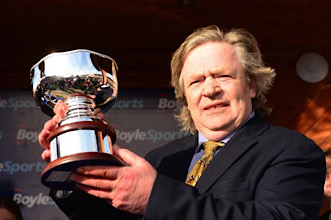
Initially, Morris comes to prominence as an amateur jockey. In 1974 he rides Mr. Midland to victory at Cheltenham Racecourse giving Edward O’Grady his first Festival winner. In 1975 he turns professional. He rides Skymas in his successive victories in the 1976 and 1977 Queen Mother Champion Chase at Cheltenham. He rides Billycan to victory in the 1977 Irish Grand National, a race he is subsequently to win twice as a trainer. His career as a rider ends after a fall in South Carolina‘s Colonial Cup.
Morris is based in Fethard, County Tipperary. In 1981, he takes out a licence and begins his National Hunt training career. Hus first major breakthrough comes when Buck House wins the 1983 Supreme Novices’ Hurdle, giving him his first winner at Cheltenham.
The 1990s start brightly for the “Mouse” Morris yard when Trapper John, ridden by jockey Charlie Swan, wins the Stayers’ Hurdle at the 1990 Cheltenham Festival. The following year, Cahervillahow is beaten by a short head in the Irish Grand National and merely three weeks later in the Whitbread Gold Cup he is controversially judged to have interfered with runner-up Docklands Express in the closing stages. As a result, Docklands Express is awarded the race. He finishes second in the 1993 Grand National which is voided after a false start. He trains His Song who is one of the best novice hurdlers of the period. His Song finishes second behind the J. P. McManus owned Istabraq in the 1998 AIG Irish Champion Hurdle on his fourth race outing before again finishing second in the Supreme Novice Hurdle at Leopardstown Racecourse. One of his most important wins as a trainer comes in 2006 when he sends out the seven-year-old geldingWar Of Attrition to win the 2006 Cheltenham Gold Cup, beating another Irish challenger, Hedgehunter, on Saint Patrick’s Day. In 2008, he trains Hear The Echo to victory in the Irish Grand National. In 2011, he trains the winner of the Grade 1 Neptune Investment Management Novices’ Hurdle at Cheltenham, First Lieutenant, ridden by Davy Russell. In 2016, he wins the Irish Grand National again this time with Rogue Angel. Also in 2016, he wins the Grand National for the first time with Rule The World.
Morris is married to Susanna Felicity Clark. They have two sons, James (Jamie) born in 1983 and Christopher (Tiffer) born in 1985. Tiffer dies at the age of 30 in June 2015 of carbon monoxide poisoning while traveling in Argentina.
Duhan is one of nine children, one of whom dies before Johnny is born. His parents, John and Christina (née Murphy), raise their family on Wolfe Tone Street, Limerick. He attends the Christian Brothersnational school on Sexton Street but hates it.
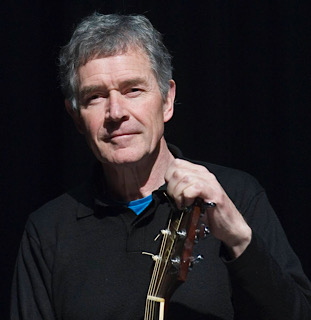
Duhan is writing songs from an early age. He leaves school and starts his career as the 15-year-old frontman of the Irish beat group Granny’s Intentions. After success in Limerick and Dublin, where he shares a flat with Phil Lynott and Gary Moore, the band moves to London and is signed to the Deram Records record label. His girlfriend, Maureen, leaves her job as a teacher to travel to London with him. The band releases several singles and one album, Honest Injun, with Duhan composing eight of the band’s eleven songs. Granny’s Intentions melds a bluesy rock sound with a down-home earthiness. Moore joins the band at the age of 17, and Pete Cummins (later of The Fleadh Cowboys) is also a member. The band has their sights set on a further move to Los Angeles, California, but the deal falls through. The band disbands before Duhan is twenty-one. While in London he is offered a job as lead singer with St. James Gate, but that deal falls through as well.
From there, the couple set about a different kind of life, with Duhan growing his own vegetables and embarking on a path as a solo singer-songwriter in earnest. He has a cry in his voice that is plaintive and highly distinctive. An advance from Arista Records allows him and Maureen to put a deposit on their first home in Sandyvale Lawn on Headford Road in Galway. Later they move to Barna, where he enjoys a quiet but very orderly, some might say even regimental life: rising daily before dawn, attending daily Mass, reading vociferously and enjoying his daily swims on his beloved Silver Strand. He climbs Diamond Mountain most Sundays and Carrauntoohil annually.
Just Another Town, To the Light, Flame, and The Voyage are some of Duhan’s work. These align with the first four sections of his poetic autobiography, To The Light. His songs have been performed by Christy Moore, The Dubliners, Mary Black, and other Irish and international singers. Christy Moore states that his song “The Voyage” has been performed at over a million weddings worldwide.
His daughters, Ailbhe and Niamh, describe Duhan as a kind, gentle and selfless soul. He is a true family man. Headstrong in his beliefs, he never follows trends. He spends his life seeking meaning, delving deeply into philosophical and theological works. Mornings are devoted to reading and studying his favourite writers, making meticulous notes on whether he agrees or disagrees with their thoughts, and more importantly why. He teaches all his children to play music, and Niamh is now a music teacher.
Duhan drowns on November 12, 2024, while swimming off Silver Strand in Galway. His funeral Mass takes place at St. Killian’s New Inn Church in County Galway. He is laid to rest at Killaan Cemetery, Woodlawn.