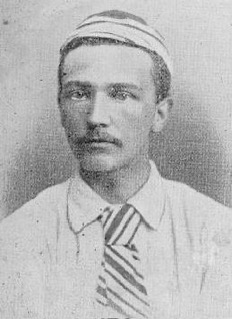
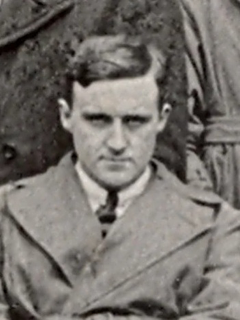
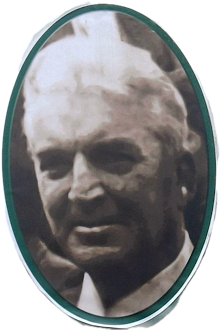
On September 16, 1920, the British double agent John Henry Gooding, operating under the alias F. Digby Hardy, makes a dramatic overture to the Irish Republican Army (IRA). Hardy, a habitual criminal with a long record of forgery, fraud, and petty crime, has been recruited by British intelligence to infiltrate the IRA’s intelligence network and capture Michael Collins.
Born in 1868 in Devonport, Plymouth, England, Hardy has a troubled life marked by multiple imprisonments, bigamy, and a career in petty crime. After deserting the Royal Navy in 1888, he adopts the alias “Frank Hall” and lives in Surrey before moving to London. By 1920, he is a known criminal with a five-year fraud sentence in 1918, partially served until his release in 1919.
Hardy approaches IRA intelligence, offering to betray his British superior, Basil Thomson, to the IRA. The plan is for him to infiltrate the IRA’s network and hand over information on Collins. However, the operation is foiled when Arthur Griffith, a leading Irish republican, intercepts Hardy’s mission.
Griffith arranges a staged meeting in Dublin attended by international journalists. Hardy is confronted and, upon presentation of evidence, confesses his mission and criminal background. The exposure embarrasses British intelligence and draws international attention.
Rather than being executed, Hardy is given until the next morning to leave Ireland. He flees, resuming petty crimes until his death in 1930. The September 16, 1920 incident becomes a notable example of how British intelligence’s reliance on unreliable agents could backfire during the Irish War of Independence.
In summary, on September 16, 1920, F. Digby Hardy (John Henry Gooding) attempts to betray his British handler to the IRA, but is exposed and forced to flee Dublin after being misled by Arthur Griffith into revealing his mission to reporters.
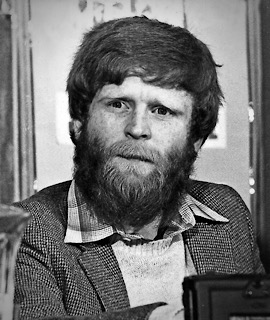
Special Category Status, introduced in 1972 after a 35‑day hunger strike by Irish Republican Army (IRA) prisoners, grants convicted paramilitary offenders the rights and treatment of prisoners of war — no prison uniforms, no forced labour, and separate accommodation. In March 1976, the British government announces that those convicted after March 1, 1976, will lose this status and be treated as ordinary criminals. They are to be moved from the “Cages” to the newly built H‑Blocks, designed to enforce the policy of criminalisation and to portray republicans as common criminals.
On September 14, 1976, Nugent refuses to wear the prison uniform, instead wrapping himself in a blanket. This act of defiance quickly spreads: other IRA and Irish National Liberation Army (INLA) prisoners join, refusing to wear uniforms and sometimes going naked. The protest is a peaceful civil disobedience campaign aimed at restoring political prisoner status and rejecting the criminalisation of republicans.
The British authorities enforce uniform compliance through cell confinement and deny association rights. In response, the protest evolves into the “dirty protest” (also called the “no‑wash protest”) in 1978, where prisoners refuse to shower or use lavatories, smear walls with excrement, and defecate in cells to protest perceived brutality and denial of political recognition.
The Blanket Protest becomes a key phase in the prison struggle during the Troubles, symbolising the refusal to accept the criminalisation of political prisoners. It sets the stage for the 1980–1981 hunger strikes, which draw international attention and result in ten deaths, including Bobby Sands, who is elected to Parliament during his fast.
In summary, the September 14, 1976, start of the Blanket Protest marks the beginning of a sustained campaign of non‑violent resistance by republican prisoners to defend their political prisoner status against the British government’s criminalisation policy.
The killing is widely seen as a political act, with Dunne and O’Sullivan claiming to have acted in defence of Irish nationalist principles, blaming Wilson for the “Orange Terror” and the deployment of the Ulster Special Constabulary (USC). Some historians suggest the assassination may have been intended to pressure Michael Collins to attack the Four Courts garrison, though no conclusive evidence of orders was ever established.
After the shooting, Dunne escapes but O’Sullivan is captured by a hostile crowd. Dunne attempts to rescue him but is himself arrested after wounding two police officers and a passerby. Both are tried quickly, found guilty after just three minutes of deliberation, and sentenced to death by Justice Montague Shearman.
Despite petitions from 45,000 people and appeals from figures like George Bernard Shaw, both men are executed on August 10, 1922, and buried within the prison grounds.
The executions are a major political flashpoint. It is only after the abolition of hanging that the law is changed and Joseph’s brother, with the assistance of the Irish National Graves Association, is able to arrange for the bodies of the two men to be repatriated to Ireland.
Dunne’s trial speech, reprinted in the Irish Independent, remains a notable piece of republican political rhetoric, framing the act as a necessary stand for Irish rights.
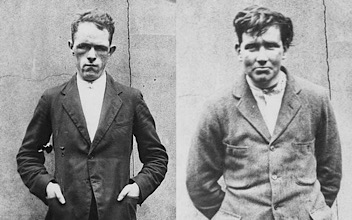
(Pictured: Joseph O’Sullivan (left) and Reginald Dunne (right))
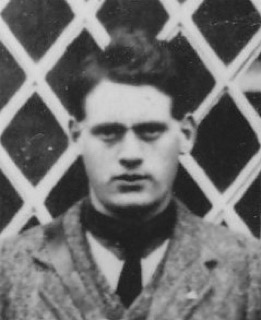
Burke is born into an influential Drogheda family, the Burkes of Duleek Street. His father, also named Christopher Patrick Burke, is a gas works secretary, and his mother is Mary McQuillan. The family lives initially on Coola Street before moving to Duleek Street after his father’s death in 1906.
Raised in a well-off household, Burke’s early years are shaped by the nationalist and cultural revival movements of the time, including the Gaelic League, which fosters physical resilience and republican ideals. His family connections, including to fellow revolutionary Thomas Burke, provide him with early exposure to Sinn Féin and Irish Volunteers activities.
Burke operates under the nom de guerre “Seán Jones” (also “Seaghan Mac Seaghan”) and is captured on at least one occasion by British forces, later released in a prisoner exchange.
During the Irish Civil War, Burke undertakes a 23-day hunger strike, reflecting his continued commitment to republican resistance against the Irish Free State.
In 1932, Burke is brought to court by his older brother, Michael, after assaulting him in the family home on Duleek Street, Drogheda. The house had been left to Michael in the will of their aunt Jane McQuillan, who died in 1919, leaving the premises to him, but requiring his mother and two sisters, Mary “Maise” and Christina Mary “Tena”, to be supported there. However, Burke insists on living there, along with his brother Joseph, leading to a family dispute. The Justice rules that the will gives Michael Burke the ownership of the house and the tenants subject to the charges set out in it. He fines Burke five shillings.
After this, Burke goes into the dairy business with his brother Joseph, and builds a house on the family farm in Bryanstown, County Meath. He dies from coronary occlusion at the age of 65 in his home on June 23, 1964. His sister, Christina Mary “Tena” Burke is present at his death. His requiem mass is celebrated at St. Mary’s Church in Drogheda. His republican comrades attend the funeral, and the Mayor of Drogheda and members of the Drogheda Corporation walk in the cortége wearing their robes of office.
Burke’s contributions to the IRA’s armament production and his steadfast republican stance cements his place in Irish revolutionary history. His life bridges the technical skills of a craftsman with the political resolve of a nationalist leader, making him a notable figure in the struggle for Irish independence.
Rice joins the Irish Volunteers in 1913 but does not take part in the 1916 Easter Rising. For a time, he shares lodgings in Rock Street, Tralee, with Austin Stack, and like Stack he is a Gaelic Athletic Association (GAA) member, playing hurling with Kenmare. At the outbreak of the Irish War of Independence (1919-1921), he becomes Officer Commanding of the 5th Battalion of the Kerry No. 2 Brigade. He also holds the post of second in command of that brigade, under Humphrey Murphy. On April 26, 1921, he attends the meeting in Kippagh, County Tipperary, that sees the establishment of the First Southern Division. After the truce, Murphy is transferred to command Kerry No. 1 Brigade, and Rice becomes commanding officer of Kerry No. 2.
Rice opposes the Anglo-Irish Treaty and leads the brigade throughout the Irish Civil War (1922-1923). When Michael Collins comes to Killarney on April 22, 1922, to speak in favour of the agreement, he is met at the train station by a group of fifty men, led by Rice, who attempt to prevent him from speaking. The meeting goes ahead despite several attempts by the group to stop it. During the civil war he leads his men into Limerick, briefly seizing Rathkeale, but for the most part they are on the defensive. In September he commands a force of seventy republicans to take Kenmare. This is a rare and morale-boosting success. When the First Southern Division council meets on February 26-28, 1923, he is one of only two senior officers, among a group of eighteen, who feel that it is worth fighting on.
Shortly after the civil war, Rice marries Nora Aherne, a Cumann na mBan member; they have one son, George. After the war he continues to be active in the Irish Republican Army (IRA) and Sinn Féin. He attends IRA executive meetings in 1923 and is involved in attempts to reorganise the IRA in 1924. He is a delegate to the Sinn Féin ardfheis in 1926, opposing the proposal of Éamon de Valera that abstention be a matter of policy rather than principle. He is elected as a Sinn Féin TD for the Kerry South constituency at the 1957 Irish general election. He does not take his seat in the Dáil due to the Sinn Féin policy of abstentionism. He is one of four Sinn Féin TDs elected at the 1957 Irish general election, the others being Ruairí Ó Brádaigh, John Joe McGirl and Eighneachán Ó hAnnluain. During his time as a TD, he campaigns against the Special Powers Act, which grants the Irish state extra abilities to deal with and punish suspected members of the IRA. He is defeated at the 1961 Irish general election.
In 1966, Rice and fellow Kerry Republican John Joe Sheehy are expelled from Sinn Féin, as are many others, by the new Marxist-Leninist party leadership that had recently come into power. This move both foreshadows and fuels the split in 1969/1970 of both the IRA and Sinn Féin, which leads to the creation of the Marxist-Leninist Official IRA and the more traditional but still left-wing Provisional IRA, and in parallel Sinn Féin – The Workers’ Party and “Provisional” Sinn Féin. Rice gives his support to the Provisionals.
Rice drives an oil lorry for a time and then becomes manager of the Tralee branch of Messrs Nash, mineral water manufacturers and bottlers. He remains in this position until his retirement in 1965. He dies on July 24, 1970, at his son’s residence in Oakview, Tralee.
Rice’s sister, Rosalie, is a member of Cumann na mBan during the 1916 Easter Rising and is arrested for sending a telegram alerting the Irish Republican Brotherhood (IRB) in the United States to the rising. His cousins Eugene and Timothy Ring are members of the IRB and are also involved with the telegram. His grandfather, Timothy Ring, was a Fenian who fought in the uprising. Two of his cousins are members of the Royal Irish Constabulary (RIC) who both help the republican side during the Irish revolutionary period.
On June 5, 1976, a bomb explodes at the door of the Times Bar on York Road, killing two Protestants. The pub is frequented by members of the Ulster Defence Association (UDA), a legal loyalist paramilitary group. Irish republicans are blamed for the bombing. Shortly after, the UVF Brigade Staff (its Shankill Road-based leadership) decide to hit back by attacking the Chlorane Bar. It is a hastily arranged operation devised by its military commander “Bunter,” whom investigative journalistMartin Dillon refers to as “Mr. F.” The Chlorane Bar is located at 23 Gresham Street in Belfast’s city centre, near Smithfield Market. Its clientele is mixed (Protestant and Catholic), which is unusual during The Troubles. On August 17, 1973, the Chlorane Bar had been firebombed, however, no one was injured as the pub was closed at the time of the attack. Later that same month, the Ulster Freedom Fighters (UFF), a cover name sometime used by the UDA, claim responsibility for a car bomb which exploded in Gresham Street. Although there were no human casualties, a pet shop located near the bomb’s epicentre was damaged in the blast and a number of animals inside the building were either killed or injured.
The attack is planned and executed by the UVF platoons based at the Brown Bear and the Windsor Bar respectively. These are two pubs located on the Shankill Road and regularly frequented by UVF members. Dillon sometimes refers to the former platoon as the “Brown Bear Team” because the members generally meet at that particular pub, which faces Shankill Library on the corner of Mountjoy Street. To carry out the attack, along with the procuring of weapons and masks, a black taxi is hijacked by two young men outside the Long Bar on the Shankill Road to transport the gunmen to the Chlorane Bar. Taxi driver Mark Hagan and a passenger are held hostage at the Windsor Bar.
The Chlorane Bar is likely chosen for its nearness to the Shankill Road, affording the attackers a speedy getaway. There is not much of a security presence that evening in the area. The driver of the taxi, with four specifically chosen armed men seated in the rear of the vehicle in the manner of genuine passengers, makes his way from the Shankill Road to North Street and turns south into Gresham Street. Upon arrival outside the Chlorane Bar, the four gunmen don their masks, devised from yellow money bags, and exit the taxi.
At 10:00 p.m., the four masked gunmen storm through Chlorane Bar’s front door leading to the public bar. There are about sixteen customers inside the pub at the time. One of the four gunmen is Robert “Basher” Bates, a member of the violent Shankill Butchers gang led by Lenny Murphy, who is in police custody at the time the attack against the Chlorane takes place. Bates is the only one of the four to have been from the “Brown Bear Team.” The hit squad is commanded by a “Mr. G,” leader of the Windsor Bar UVF platoon, with “Mr. D” as his second-in-command and “Mr. C” completing the team. Entering the bar in single file, “Mr. G” orders everybody to stand up, and then asks the startled customers whether there are any “Prods” (Protestants) among them. William Greer, a Protestant, thinking the gunmen are from the Irish Republican Army, quickly flees to the men’s toilet where he places his feet up against the door. Customer Frederick Graham and his girlfriend, Pat Mahood, assume the same thing. “Mr. G” tells the customers to separate into two groups, with the Protestants standing at the bottom end of the bar, and the Catholics at the top.
When one man, Edward Farrell, admits to being a Catholic, the UVF men open fire. Farrell tries to run toward the toilet but is shot dead. The Catholic owner of the Chlorane, 64-year-old James Coyle, is standing behind the bar when he is hit at close-range. The bullet enters his heart and he dies instantly. The gunmen continue firing and two Protestant men, Daniel McNeil and Samuel Corr, are also struck by the hail of bullets. McNeil is killed on the spot and Corr is fatally wounded. Another Catholic man, John Martin, is shot and dies of his injuries on June 23. Several other customers are hit as gunfire is sprayed around the bar. One customer pretends to be dead, however, a gunman walks over to where he lay and deliberately fires three shots into his thigh, knee, and below the ankle. The man later recounts that he had then looked up to see “men lying shot all over the place.” William Greer, hiding in the toilet, is shot when one of the gunmen fire through the door. He survives despite being hit in the leg and neck. There are more customers upstairs in the lounge area, but although they hear the gunshots, the gunmen never go near them. Dillon maintains that it had not been the UVF unit’s intention to kill any Protestants.
“Mr. G” calls a halt to the shooting, saying “that’s it,” and the four-man UVF team nonchalantly walks out of the pub and re-enters the hijacked black taxi, which is parked so the driver has easy access to North Street. This route offers a quick return to the Shankill. After the four men get into the back seat, the driver (“Mr. H”) drives off. As the taxi passes by the Catholic Unity Flats area, three shots are fired from the vehicle. Two young men walking nearby get a look at the driver. He is described as being around 38 to 40 years old and having shoulder-length, black curly hair. Upon the taxi’s return to the Shankill, Mark Hagan and the passenger are released. They immediately go to the Tennent Street Royal Ulster Constabulary (RUC) Station off the Shankill where they report the taxi’s hijacking. The shooting team proceeds to the Long Bar pub where “Mr. I” (commander of UVF 1st Battalion) procures a forty-ounce bottle of vodka for “Mr. G” and “Mr. D” – their payment for leading the operation.
Having heard the gunshots, a barmaid serving in the upstairs lounge goes downstairs to investigate and discovers the body of her employer, James Coyle, lying on the floor behind the bar and those of the other dead and wounded. The first policeman on the scene is Constable George McElnea, from the RUC Special Patrol Group in Tennent Street. He quickly notices the pile of bodies near the men’s toilet as Samuel Corr stumbles toward him, gravely injured. McElnea places Corr on a bench and offers what assistance he can but to no avail. Corr dies of his gunshot wounds before the ambulance arrives. Alan McCrum, a Scenes of Crime officer, appears at the Chlorane fifteen minutes after the shootings. He retrieves 24 spent bullet casings from the floor and determines that most of the shots had been fired at the rear of the pub. Later ballistic testing establishes that the weapons used in the attack were a .22 caliber pistol, a 9 mm pistol, and two .45 snub-nosed revolvers. Police believe one of the victims, Daniel McNeil, had tenuous UVF connections, although he is not an active member.
The hijacked black taxi is found by police the following morning in a cul-de-sac in Beresford Street, off the Shankill Road. A cyclist, who had witnessed the masked gunmen entering the Chlorane Bar, describes the four men as having been in the 20 to 30 age group, all about 5’10 in height and well-built. The last gunman to enter had shoulder-length brown hair. The witness had gone to a nearby British Army post where he told soldiers what he had seen.
Ten days after the gun attack, the Chlorane Bar is blown up by a bomb. Three weeks after the attack the Provisional IRA, using their sometime cover-name of the “Republican Action Force“, enter Walker’s Bar in Templepatrick and kill three Protestant civilians in retaliation for the Chlorane attack. As part of this series of deadly tit for tat attacks on pubs, the UVF responds by killing six customers at the Catholic-owned Ramble Inn outside Antrim.
No one is ever charged with the shootings. In February 1979, Bates is convicted of the murders he had committed as part of the Shankill Butchers, and given ten life sentences. In his statement to the police following his arrest in 1977, he recounts his role in the Chlorane Bar attack. He alleges while working as a barman in the Long Bar on the evening of June 5, 1976, he is approached by the UVF military commander, “Mr. F”, who informs him of a job in which he is to take part that same evening. It is decided to attack the city centre pub in retaliation for the IRA’s earlier bombing of The Times pub. Bates goes on to say that “Mr. I” provides the weapons which are used in the shooting and “Mr. J” (UVF Provost Marshal) procures the masks. Bates claims that his revolver malfunctions and therefore he never fires his gun during the attack. However, forensic evidence proves that two .45 revolvers had been fired inside the Chlorane. Upon his release from the HM Prison Maze, Bates is gunned-down in June 1997 by the son of James Curtis Moorhead, a UDA man he had killed in 1977.
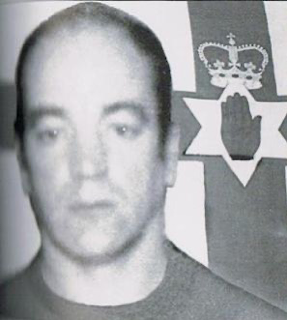
Jackson is born on September 27, 1948, in Tullynarry Cottages, Donaghmore, County Tyrone, Northern Ireland, one of seven children of John Jackson, farmhand, and his wife Eileen. As a teenager he participates in Paisleyite demonstrations against the Northern Ireland civil rights movement. He is already a local “hard man” who cultivates an air of menace. After a brief period in Australia, he returns home and serves in the Ulster Defence Regiment (UDR) from 1972 to 1975. He also joins the Ulster Volunteer Force (UVF) and is alleged to have committed his first murders in 1973. He is arrested in 1973 after the doorstep killing of a BanbridgeCatholic who works in the shoe factory that employs Jackson. The victim’s wife identifies Jackson as the murderer, but the charge is withdrawn after she admits to a degree of prompting by the police.
Jackson is a leading member of a UVF gang linked to about 100 murders carried out at random against Catholic civilians between 1973 and 1979, earning for the north Armagh and east Tyrone area the nickname “the murder triangle.” He also allegedly helps to plan the Dublin and Monaghan car bombings of May 17, 1974, killing thirty-three civilians, and orchestrates the attack on the Miami Showband on July 31, 1975. He becomes UVF Mid-Ulster Brigade commander in 1975. Never convicted of any of the numerous murders attributed to him, he is however jailed between 1979 and 1983 for arms possession.
Jackson marries Eileen Maxwell in the late 1960s. They have a son and two daughters. The marriage does not survive his imprisonment and after his release he moves to Donaghcloney, County Down, where he lives with a much younger girlfriend. He remains active in loyalist paramilitarism but takes a less prominent role. He survives several Irish Republican Army (IRA) attempts on his life, including the detonation of a car bomb outside his house. In 1984, the editor of the Belfast edition of the Sunday World is shot and wounded after publishing articles denouncing “the Jackal,” the nickname by which the press calls Jackson during his lifetime.
After the Anglo–Irish Agreement of 1985, Jackson is briefly linked to Ulster Resistance (UR), a paramilitary group founded by associates of Ian Paisley. He allegedly assists the rearming and reorganisation of the Mid-Ulster UVF under Billy Wright after the killing of his brother-in-law and alleged accomplice, Roy Metcalf, by the IRA in 1988. Relations between Wright and Jackson cool after the killing of a Catholic in Donaghcloney by Wright’s men leads to Jackson being called in for questioning, and he supports the UVF leadership in its 1996–97 dispute with Wright. He is also the focus of recurring allegations about collusion between loyalist paramilitaries and elements of the security forces in mid-Ulster, including claims that he operated on behalf of British military intelligence who shielded him from prosecution.
Jackson dies of lung cancer at the age of 49 at his Donaghcloney home on May 30, 1998. He is buried on June 1 in a private ceremony in the St. Bartholomew Church of Ireland churchyard in his native Donaghmore, County Down. His grave, close to that of his parents, is unmarked apart from a steel poppy cross. His father had died in 1985 and his mother outlives him by five years.
Considerable uncertainty surrounds his involvement in many of the crimes attributed to him, but there is no doubt that he is a cold-blooded multiple murderer and one of the most sinister “hard men” of loyalist paramilitarism.
(From: “Jackson, Robin” by Patrick Maume, Dictionary of Irish Biography, http://www.dib.ie, October 2009)
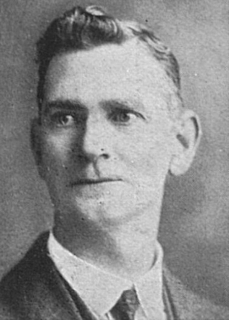
Twaddell’s death precipitates a clamp-down on the IRA in Northern Ireland and 350 IRA members are interned. Seamus Woods, who is interned on HMS Argenta during the clampdown, is charged with his murder. Woods, who had joined the Irish National Army, is trying to control irregular elements within the IRA. By agreement with the government of Northern Ireland, two officers of the Irish National Army are given permission to travel to the trial. General J. J. “Ginger” O’Connell and Commandant Charles McAlister give evidence and Woods is found not guilty. A total of 724 people are interned in Northern Ireland up to the end of 1924.
Twaddell was buried at Drumcree Church cemetery, Portadown, County Armagh, Northern Ireland, where his headstone says that he was “foully murdered in Belfast.”
Deasy is the third among six sons of William Deasy, seaman, and Mary Deasy (née Murray). He is educated locally at Ballinadee before leaving school at the age of thirteen to work in nearby Bandon.
During the Irish War of Independence (1919–21), Deasy is adjutant of the IRA’s 3rd Cork Brigade (West Cork). He serves under Tom Barry in one of the unit’s best known actions, the Crossbarry ambush in March 1921. His younger brother, Pat, dies in action at the Kilmichael ambush in November 1920, an engagement at which Deasy is not present. He also takes part in the Tooreen ambush.
Deasy opposes the Anglo-Irish Treaty. In the months that follow he tries to persuade Collins to renegotiate aspects of the treaty, especially to remove an oath to the British king from the constitution of the new Irish Free State. When fighting breaks out in Dublin in June 1922 between pro and anti-Treaty forces, he sides with the Anti-Treaty IRA in the ensuing Irish Civil War. However, he is reluctant to fight his former comrades and voices the opinion that the fighting should have ended with the Free State seizure of the Four Courts.
In late July 1922, Deasy commands 1,500 anti-Treaty fighters who hold a line around Kilmallock south of Limerick city against about 2,000 Free State troops under Eoin O’Duffy. His men are the most experienced IRA fighters of the 1919-21 war and hold their position until August 8, when they are outflanked by seaborne landings on the southern coast. His men then disperse. He goes on the run in the southeast of the country.
In August 1922, Deasy is in command of a band of republican guerrillas in West Cork when they hear that Collins is in the area. Deasy has his men prepare an ambush for Collins’ convoy at Béal na Bláth, should it return by the same route it had taken earlier.
Deasy and most of his men do not take part in the ambush as they had retired to a nearby pub, assuming that they had missed Collins. However, Collins arrives as the last of Deasy’s men are clearing the mine and barricade that had been erected on the road at Béal na Bláth. Collins is killed in the ensuing firefight. Deasy later writes in his memoirs that he profoundly regrets the death of his former commander.
In January 1923, by which time Deasy has become Deputy Chief of Staff of the IRA, he is captured by Free State forces near Clonmel, County Tipperary, and sentenced to death. He is aware that the newly formed government plans on wholesale executions and knows that the IRA will retaliate with reprisals. He decides that it is now time to end the war. He signs a document (written by his captors) ordering the men under his command to surrender themselves and their arms to the government. He is spared execution. On the day that his order is published, Free State authorities demand that the prisoners in a jail in Limerick sign a statement agreeing to unconditional surrender, threatening wholescale executions to those who refused. Some republicans denounce Deasy as a traitor and a coward for this action, but he argues in his book, Brother against Brother, that he was opposed to continuing the civil war anyway and would have called on republicans to surrender whether or not he had been captured.
Deasy takes no further part in politics following the end of the Irish Civil War. In 1924, he sets up a business making weatherproof textiles. On November 24, 1927, he marries Margaret Mary O’Donoghue. They have three daughters together.
During The Emergency, Deasy serves in the Irish Army from 1940 to 1945, reaching the rank of commandant. He later writes two memoirs about his experiences during the revolutionary period: Toward Ireland Free and Brother against Brother, the latter being published after his death.
Deasy dies at St. Anne’s Hospital, Northbrook Road, Dublin, on August 20, 1974. He is buried in Bohernabreena Cemetery in Dublin.
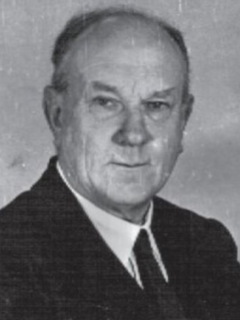
Mac Airt first becomes involved in Irish republicanism as a boy when he joins the Fianna Éireann. His first imprisonment is in 1942 when he is sent to jail for illegal military foot drilling. He Is later interned during the IRA’s Border Campaign of 1956-1962.
Having retired at some earlier point, Mac Airt returns to the republican movement in 1969, throwing his lot in with the newly established Provisional Irish Republican Army (PIRA) and their political arm Provisional Sinn Féin. Indeed, in early 1970 his Patrick Pearsecumann, which he sets up in the Clonard area of the Falls Road, is the first branch of Provisional Sinn Féin established in Belfast and proves central to the growth of the dissident party in the city. In August 1970, he Is appointed editor of the Belfast-based Republican News, succeeding Jimmy Steele who had died soon after being appointed editor. Despite his advancing age Mac Airt also becomes involved in the gun battles that rage between the republicans from Falls and loyalists from the neighbouring Shankill Road. As a consequence, he becomes one of the leaders of the nascent PIRA in Belfast. He is publicly named as a leading republican by General Anthony Farrar-Hockley who commands the British Army present during the clashes and with whom Mac Airt has held failed negotiations at the scene of conflict. He serves as Adjutant to Billy McKee, who is first commander of the Provisional IRA Belfast Brigade. According to Brendan Hughes, Mac Airt’s Kane Street home doubles as Belfast Brigade headquarters at the early stage in the movement’s history.
On April 15, 1971, Mac Airt, along with Billy McKee, is arrested by the British Army when found in possession of a handgun. Both men are sentenced under the Explosive Substances Act 1883 and sent to Crumlin Road Gaol. In the prison the two men are recognised as the leaders of the republican prisoners, a role held by Gusty Spence on the loyalist side. They co-operate informally with Spence to maintain order until they agree to establish an official Camp Council. The make-up of this group sees Mac Airt and McKee representing the PIRA, Spence and an associate identified only as “Robert” representing the Ulster Volunteer Force (UVF) and Ned McCreery and James Craig as Ulster Defence Association (UDA) delegates, with members of the Official IRA (OIRA) and Irish National Liberation Army (INLA) eventually added.
Mac Airt is involved in the talks held between republicans and clergymen from various Protestant churches held at Feakle, County Clare, on December 12, 1974. While the talks produced little, he Is one of those who maintains contact with the clergymen. Indeed, on January 19, 1975, one of the ministers, Rev William Arlow of the Irish Council of Churches (ICC), even introduces Mac Airt and his ally Jimmy Drumm to British government officials Michael Oatley and James Allan in an attempt to have the republican grievances heard.
Although a new generation of leaders emerges in the Provisional IRA and Sinn Féin, Mac Airt remains an influential veteran. He is close to Danny Morrison and Tom Hartley and helps to ensure the removal of Seán Caughey from the editorship of Republican News in 1975 and his replacement by Morrison.
In 1968, Mac Airt records two vocal songs, “Croppy Boy” and “Flag of the Fianna” on the LP record Irish Songs of Freedom produced for the Outlet Recording Co. Ltd, Belfast.
Mac Airt dies on January 8, 1992, at the age of 69. The President of Sinn Féin, Gerry Adams, delivers the graveside oration at his funeral, describing him as “a radical in the Connolly tradition.”