seamus dubhghaill

Promoting Irish Culture and History from Little Rock, Arkansas, USA


Leave a comment

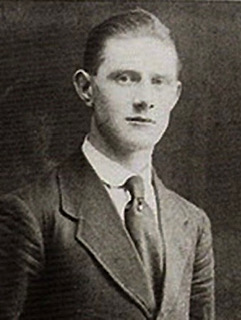
Death of Vincent “Vinnie” Byrne, Member of “The Squad”

Vincent (‘Vinnie’) Byrne, a member of the Irish Republican Army and a senior figure in the assassination group known as The Squad, dies at the age of 92 on December 13, 1992, in Artane, Dublin.

Byrne is born on November 23, 1900, in the National Maternity Hospital, Holles Street, Dublin, the elder among one son and one daughter of Vincent Byrne, carpenter, of 33 Denzille Street (now Fenian Street), and his wife Margaret (née White). By 1911 the family is living with maternal relatives at 1 Anne’s Lane. Educated at St. Andrew’s national school, Westland Row, he is apprenticed as a cabinet maker under Thomas Weafer, a company captain in the Irish Volunteers, who is subsequently killed in the 1916 Easter Rising. At the age of fourteen, he joins the Irish Volunteers in January 1915, and is posted to the 2nd Battalion of the Dublin Brigade. His training includes lectures on street fighting by James Connolly. During the 1916 rising he serves with the 2nd Battalion in Jacob’s biscuit factory under Thomas MacDonagh. At the surrender he is slipped out a factory window to safety by a priest who is acting as an intermediary. Arrested in his home a week later, he is held in Richmond Barracks with other youngsters, all of whom are released after an additional week. Active in the post-rising reorganisation of the Dublin Brigade, he claims to have voted twenty times for Sinn Féin candidates in the 1918 United Kingdom general election in Ireland.

In November 1919, Byrne is recruited to an elite counter-intelligence squad of the Dublin Brigade, whose primary mission is the assassination of plainclothes detectives of the Dublin Metropolitan Police’s (DMP) political (‘G’) division. He participates in the attempted ambush of the Lord Lieutenant of IrelandJohn French, at Ashtown, Dublin, on December 19, 1919, a combined operation of the Dublin and the 3rd Tipperary brigades. In March 1920, he leaves his civilian employment with the Irish Woodworkers, Crow Street, when the squad is constituted as a full-time, paid, GHQ guard, under direct orders from Michael Collins. Dubbed “The Twelve Apostles,” the squad also includes James Slattery, a workmate of Byrne since their apprenticeships. For the duration of the Irish War of Independence, Byrne takes part in the stakeouts and killings of police detectives and military intelligence agents. His witness statement to the Bureau of Military History recounts his participation in some fifteen such operations. On Bloody Sunday he commands an IRA detail that kills two of the “Cairo Gang“ agents in their boarding house at 38 Upper Mount Street on November 21, 1920. He takes part in The Custom House raid on May 25, 1921.

Owing largely to his devoted allegiance to Collins, Byrne supports the Anglo–Irish Treaty of December 1921, regarding it as a stepping stone to complete independence. Enlisting in the National Army, he serves in the Dublin Guard. Promoted five times from January 1922 to February 1923, he rises in rank from company sergeant to commandant. He is OC of the guard at the handover of Dublin Castle from British to Irish authority on January 16, 1922. During ensuing months he commands guard details at government buildings and the Bank of Ireland, College Green, Dublin. In March 1922, he foils an attempt by Anti-Treaty forces to seize the bank with the aid of mutinous soldiers within the building’s guard. Having displayed courage and presence of mind throughout the incident, he is promoted captain in the field. Resenting the role given to ex-British-army officers in the National Army, and feeling that the political elite of the Free State are betraying the national interest, he is among the group of officers involved in the failed army mutiny of 1924, and accordingly is forced to resign his commission on March 21. He then works as a carpenter on the industrial staff of the Office of Public Works (OPW), and in the post office stores, St. John’s Road, Kilmainham, Dublin, until his retirement.

Byrne is a founding member of both the Association of Dublin Brigades and the 1916–1921 Club. Long lived, and a willing raconteur with a colourful turn of phrase, he becomes probably the best known of Collins’s squad (of which he is the last surviving member), granting many interviews to journalists and historians. He expresses no misgivings about his role as a revolutionary hit man, arguing the necessity of the ruthless methods employed, which deterred potential informers, and eventually won the struggle by crippling British intelligence.

Byrne lives in Dublin at 59 Blessington Street, and later at 227 Errigal Road, Drimnagh. His last address is 25 Lein Road, Artane. His wife Eileen predeceases him. He dies on December 13, 1992, survived by two daughters and one son. He is buried at Balgriffin Cemetery, Balgriffin, County Dublin.

(From: “Byrne, Vincent (‘Vinnie’)” by Lawrence William White and Pauric J. Dempsey, Dictionary of Irish Biography, http://www.dib.ie, October 2009)

Leave a comment

Birth of Mary O’Rourke, Former Fianna Fáil Politician

Mary O’Rourke (née Lenihan), former Fianna Fáil politician, is born in Athlone, County Westmeath, on May 31, 1937.

O’Rourke is educated at St. Peter’s in Athlone, Loreto Bray Convent in County Wicklow, University College Dublin and St. Patrick’s College, Maynooth. She works as a secondary school teacher before beginning her political career.

O’Rourke begins her political career in local politics, serving on Athlone Urban District Council between 1974 and 1987 and on Westmeath County Council between 1979 and 1987. She is elected to Seanad Éireann in 1981 as a Senator for the Cultural and Educational Panel. She stands unsuccessfully for the Dáil at the February 1982 Irish general election but is subsequently re-elected to the Seanad. At the November 1982 Irish general election, she is first elected to Dáil Éireann as a Fianna Fáil TD for the Longford–Westmeath constituency, and from 1992 for the new Westmeath constituency.

In 1987, O’Rourke is appointed Minister for Education by Charles Haughey. She and her brother, Brian Lenihan Snr, become the first brother and sister in Irish history to serve in the same cabinet. In the November 1991 cabinet reshuffle, she becomes Minister for Health. In February 1992, Charles Haughey resigns as Taoiseach and Fianna Fáil leader, and she contests the subsequent leadership election along with Michael Woods and Albert Reynolds. Reynolds wins the election, and she is subsequently dropped from her ministerial position, but is appointed to a junior ministry as Minister of State for Labour Affairs at the Departments of Industry and Commerce, and later Enterprise and Employment.

In 1994, Bertie Ahern becomes party leader, and he appoints O’Rourke as deputy leader of Fianna Fáil, serving in the position until 2002. Following Ahern’s election as Taoiseach in June 1997, she becomes Minister for Public Enterprise, holding this position until she loses her Dáil seat at the 2002 Irish general election. This follows a vote management strategy from Fianna Fáil head office which restricts her from campaigning in her traditional areas around Kilbeggan, in an attempt to win 2 of the 3 seats in Westmeath. The loss of her Dáil seat is also attributed to her association with and the championing of, the privatisation of Telecom Éireann, which proves a financial disaster for many small investors, due to the share price falling radically, post privatisation. During this term as Minister, she also becomes the subject of public criticism by Ryanair chief executive Michael O’Leary. Following the loss of her Dáil seat, she is nominated to Seanad Éireann as a Senator by Taoiseach Bertie Ahern where she becomes Leader of the Seanad and leader of Fianna Fáil in the Seanad.

In January 2006, O’Rourke receives the party nomination to stand at the 2007 Irish general election. She narrowly defeats her nearest rival and Dáil election running mate, Kevin “Boxer” Moran of Athlone Town Council, causing a controversy when she thanks her election team for working “like blacks.” She is re-elected to the Dáil at the May 2007 Irish general election, with her highest ever vote.

In November 2008, during a march against the re-introduction of college fees, students from the Athlone Institute of Technology lay a funeral wreath at the door of O’Rourke’s constituency office. The card in the wreath states “Sincere sympathies on the death of free fees. We will remember this.” She describes the act as “heinous.” The wreath is placed there because she is not speaking at a rally against the fees.

In July 2010, O’Rourke concedes that she does not expect the party to be in power after the next general election. On RTÉ Radio‘s Today with Pat Kenny programme, she says the government is taking tough decisions to steer the country through the financial crisis and this will make it easy for the opposition. She says there is a general air of “crossness” within the Fianna Fáil party over their standing in the polls, but nobody is harboring leadership ambitions to challenge Brian Cowen.

In November 2010, O’Rourke says there is then more to unite her party and Fine Gael than to divide them. She points to the common approach of the two parties to Northern Ireland, Europe and the current financial crisis. In an address to the 1916–1921 Club in Dublin Castle, she says that most voters no longer defined themselves in terms of Civil War politics.

O’Rourke’s senior years lead her to often being referred to as the “Mammy of the Dáil.”

O’Rourke contests the 2011 Irish general election but is defeated on the poll. She had been critical of former Taoiseach Brian Cowen, saying that he should have resigned after his infamous “congested” radio interview. She supports the attack on Cowen by her nephew, former Finance Minister Brian Lenihan Jnr, who says he is “disappointed” by Cowen’s performance, and he had to provide the leadership when the Taoiseach did not.

As well as being a well-known politician, O’Rourke makes regular appearances in the media in a non-political capacity. She has been a contestant on RTÉ‘s reality series Celebrity Bainisteoir, as well as other shows such as Sex & Sensibility. She has guest presented Tonight with Vincent Browne.

In 2012, Just Mary: My Memoir is published. It wins the 2012 Irish Book Award in the “Listeners’ Choice” category.

O’Rourke comes from a strong political family, her father Patrick Lenihan serves as a TD for Longford–Westmeath from 1965 to 1970. Her brother Brian Lenihan is a senior government Minister and Tánaiste. Another brother, Paddy Lenihan, is a County Councillor in Roscommon, but resigns from Fianna Fáil in 1983 and becomes associated with Neil Blaney‘s Independent Fianna Fáil party. Two of her nephews, Brian Lenihan Jnr and Conor Lenihan, both sons of her brother Brian, serve as Ministers. Brian Lenihan Jnr is the Minister for Finance. Conor Lenihan is a Minister of State.

O’Rourke is widowed in January 2001, following the death of her husband, Enda. She has two sons. Aengus O’Rourke, her adopted son, runs for Athlone Town Council in 2009. The other son, Feargal O’Rourke, becomes Managing Partner of PricewaterhouseCoopers in Ireland in 2015 and is considered the “grand architect” of the Double Irish tax system, a major contributor to Ireland’s economic success in attracting U.S. multinationals to Ireland.


Leave a comment

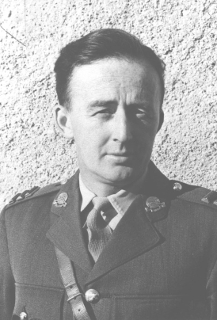
Death of James Kelly, Irish Army Intelligence Officer

james-kelly

James Kelly, former Irish Army intelligence officer who is found not guilty, along with two former Irish government ministers, of attempting to illegally import arms for the Provisional Irish Republican Army in the Arms Crisis of 1970, dies on July 16, 2003.

Kelly is the eldest of ten children, born on October 16, 1929 into a staunchly Irish republican family from Bailieborough, County Cavan.

Kelly is a central figure in the Arms Crisis, having traveled to Hamburg to arrange the purchase of arms. It emerges later that Neil Blaney had ordered him to do so outside normal legal channels, but before the weapons arrive the Gards Special Detective Unit hears of the plan and informs the Taoiseach, Jack Lynch, aborting the importation and resulting in criminal charges for the plotters. Although in his summation the judge says it is no defence for Kelly to say that he believes that the government authorised the importation of arms, Kelly is acquitted.

Despite his acquittal, Kelly suffers financially because he had felt compelled to resign from the Army even before the prosecution was brought. He prints and publishes a personal memoir in paperback format called Orders for the Captain? in 1971.

Kelly never denies his involvement in extra-legal arms purchase talks, but contends that he had been ordered to do so by some ministers. A typical version of the events is found in a 1993 hostile biography of Charles Haughey, claiming: “As early as October 1969, to the certain knowledge of Charles Haughey, James Gibbons, the Department of Justice, the Special Branch and Army Intelligence, there were meetings with leading members of the IRA, when they were promised money and arms. The critical encounter took place in Bailieborough, County Cavan, on Saturday, 4 October 1969. It had been arranged by Captain James Kelly, an army intelligence officer, and Cathal Goulding. Kelly, at that stage, was already the subject of several security reports to the Secretary of the Department of Justice, Peter Berry, from the Special Branch, implicating Kelly with subversives and with promises of money and of arms.” Kelly never objected to such versions of the events of 1969.

Kelly is elected vice-chairman of Aontacht Éireann. Aontacht Éireann meets with little success at the polls and by 1980 he has joined Fianna Fáil, becoming a member of its national executive. Following the first applications of the 1987 Extradition (European Convention on the Suppression of Terrorism) Act, he resigns from the party in 1989 in opposition to the extradition of Provisional IRA prisoners to the United Kingdom. He also serves twice as President of the 1916-1921 Club. He launches a successful defamation case against Garret FitzGerald over an article in The Irish Times.

James Kelly dies on July 16, 2003 and is buried in Glasnevin Cemetery in Dublin. The epitaph on his grave is “Put not your trust in princes,” a quote from Psalm 146.