seamus dubhghaill

Promoting Irish Culture and History from Little Rock, Arkansas, USA


Leave a comment

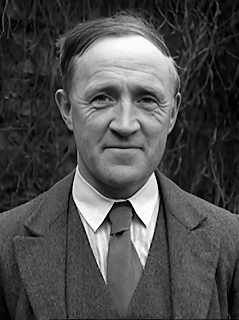
Birth of Gerald Boland, Fianna Fáil Politician

Gerald Boland, an Irish Fianna Fáil politician, is born in Manchester, England, on May 25, 1885.

Boland is the son of James Boland and Kate Boland (née Woods). He is the second child and eldest son among three sons (including Harry Boland) and two daughters of the couple. His family on both sides are staunch Irish Nationalists. His father is a Fenian in his younger days, a devout follower of Charles Stewart Parnell, and later a member of the Irish Republican Brotherhood (IRB). His father also has ties to the Irish National Invincibles, and his association with them causes him to have to flee to New York City for a time.

After his national school education, Boland attends the O’Brien Institute in Fairview, Dublin. He leaves school at fifteen and becomes an apprentice fitter at Broadstone railway station. Instead of attending his studies to secure an engineering diploma, he takes Irish language and history classes at night. Despite this, he passes his engineering exams.

Boland is enrolled in the IRB along with his younger brothers Harry in 1904, following in the footsteps of his father. He and his brothers Harry and Ned subsequently join the Irish Volunteers when that organisation is established in 1913, serving in the same company as Arthur Griffith. When news breaks out of the Easter Rising in 1916 he immediately leaves his job, however, he is bitterly disappointed when he finds out that the order has been countermanded. When the rebellion begins in earnest on Easter Monday, he makes his way to Jacob’s Mill where he fights under Thomas MacDonagh. Following the official surrender, he is arrested and interned at Frongoch internment camp in Wales, where he comes into contact with other notable revolutionary leaders, including his brother Harry’s friend Michael Collins.

Boland is released after a general amnesty in December 1916, however, he remains involved in revolutionary circles, although he declines to rejoin the IRB, believing the organisation is no longer needed. He is arrested and imprisoned in Belfast from May to December 1918 for practising military drills in the Dublin Mountains. Meanwhile, a number of his colleagues secure their release by winning seats in the 1918 United Kingdom general election.

During the Irish War of Independence, Boland is Battalion Commandant of 7 Battalion, Dublin Brigade, Irish Republican Army (IRA) and is known as “Trotsky” for his left-wing views.

Boland and his brothers are opposed to the Anglo-Irish Treaty of 1921. He is Battalion Commandant of 3 Battalion, 2 Dublin Brigade (South Dublin) in BlessingtonCounty Wicklow, but is captured early on in the Irish Civil War on July 7, 1922, and is interned until his release in July 1924. On the outside, his brother Harry dies some days after being shot, in August 1922, after two National Army officers attempt to arrest him at the Grand Hotel in Skerries, County Dublin. Boland applies to the Irish government for a service pension under the Military Service Pensions Act of 1934 and is awarded 11 and 5/12 years of service at Grade C for his service with the Irish Volunteers and the IRA between April 1, 1916 and September 30, 1923.

Following the end of the Irish Civil War, Boland helps to build up Sinn Féin as the main Republican party. While still imprisoned, he is selected to stand for Dáil Éireann as the Teachta Dála (TD) for Roscommon, Harry’s old seat, for the 1923 Irish general election, in which he is successful. He is among those in Kilmainham Gaol who go on hunger strike in October 1923. The hunger strike does not result in his release and he credits his practice of yoga with keeping him alive at the time.[3]

Boland is eventually released from the custody of the state in July 1924. Upon his release, he becomes secretary of Sinn Féin and stands on the executive of the party.

Boland is among the first in Sinn Féin to call for an end to the party’s abstentionism from Dáil Éireann, believing it to be a political dead end. Party leader Éamon de Valera proposes that the party abandon this policy and take their seats in the Dáil if changes are made to the oath of allegiance to the British monarch. His proposal is defeated and de Valera and his supporters, including Boland, leave Sinn Féin. Shortly after this split, a new party emerges called Fianna Fáil, with de Valera acting as leader and the other disillusioned Republican TDs joining. Boland is vital in transferring many members from Sinn Féin to Fianna Fáil. Fianna Fáil briefly also has an abstentionist policy but in 1927 a new law forces Fianna Fáil TDs to take the oath of allegiance and take their seats in the Dáil. Fianna Fáil dismisses the oath as “an empty formula.”

Boland works alongside Seán Lemass in building up Fianna Fáil’s grassroots support and organisation, giving particular attention to the party’s rural apparatus. In the September 1927 Irish general election Fianna Fáil comes within four seats of the ruling Cumann na nGaedheal party. The latter forms a coalition of sorts with the Farmers’ Party and returns to government.

Following the 1932 Irish general election, Fianna Fáil forms a new government. Boland is appointed Government Chief Whip, a position which allows him to attend cabinet meetings but not vote at them.

Fianna Fáil remains in power with an increased mandate following the 1933 Irish general election and Boland is promoted to the position of Minister for Posts and Telegraphs. Despite being the Minister in charge of the postal service, he does not own a telephone until some time later. During his tenure, the postal service makes considerable progress. It is also during this time that the Post Office becomes a paying concern. During his time as minister, he oversees a major expansion of the telephone service in Ireland, improvements in the transmission capacity of Radio Éireann, and construction of new provincial post offices and a new central postal sorting office.

Boland is acting Minister for Justice briefly for a time when P. J. Ruttledge is ill. It is during this time that he declares the Irish Republican Army a proscribed organisation.

A cabinet reshuffle in 1936 sees Boland become Minister for Lands. The Land Act 1939 reforms land distribution, broadening the criteria by which the state can take control over undeveloped land while offering the tenant of the land more favourable terms of compensation. He is critical of the policy of the Minister for Industry and Commerce, Seán Lemass, of centralising industrial development in Dublin. He instead wishes to see a more decentralised economy based around food production. The differing viewpoint causes a rift between Boland and Lemass, but despite this Boland favoured Lemass’s policy of state intervention in the economy over Seán MacEntee‘s more laissez-faire approach.

In 1937 Boland is highly vocal during the drafting of a new constitution of Ireland by Fianna Fáil against any word which would give the Catholic Church special status, something heavily considered at the time. He declares that if the constitution elevates the position of the Catholic Church above others, it would be sectarian, anti-republican, and a hindrance to any prospects of Irish reunification. As a compromise, the term “special position” is used in the approved text of the Constitution.

Following the outbreak of World War II in 1939, known in Ireland as the Emergency, there is a cabinet reshuffle, and Boland is appointed as Minister for Justice. He takes over at a time when the IRA has once again declared war against the British state and has begun their Sabotage Campaign. He is charged with the task of crushing the organisation and preventing the IRA from drawing the Irish state into conflict with the United Kingdom. Although he always considers himself a republican, he takes a hardline against the IRA and uses his powers to order the internment of hundreds of IRA members before introducing military courts and special criminal courts.

In 1940, several imprisoned IRA members go on hunger strike but Boland refuses to grant their release. Two of the men eventually die, one of whom is the nephew of one of his Fianna Fáil colleagues. Tony D’Arcy dies at the age of 32 on April 16, 1940, as a result of a 52-day hunger strike, and Jack McNeela dies three days later after 55 days on hunger strike. These deaths spark reprisals by the IRA on the Garda Síochána. Boland subsequently introduces tougher measures by setting up a military court with the death penalty and no provision for appeal except for a review by the government. In all, twelve men are found guilty with six of them facing death and the remaining six having their sentences changed to imprisonment. Among those executed is Charlie Kerins, an acting Chief of Staff of the IRA.

As Minister of Justice, Boland is also asked to enforce policies of wartime censorship, however, finding the idea of the state censorship distasteful he establishes a censorship board to avoid accusations of bias.

During the Emergency, Boland is also responsible for the detention of several foreign agents in pursuit of Ireland’s strict policy of neutrality. During this time some 500 individuals are interned and 600 are sentenced under the newly introduced Offences against the State Act, 1939. By 1943 the IRA is in disarray, particularly after the Chief of Staff is arrested and imprisoned, leaving the organisation without leadership. Boland and Fianna Fáil feel their hardline is backed by the electorate following strong returns for the party at the 1944 Irish general election.

In 1947, Boland is among four leading Fianna Fáil figures (including de Valera) involved in the “Locke’s Distillery Scandal”, an accusation brought by Oliver J. Flanagan that foreign businessmen are bribing members of Fianna Fáil to gain the right to purchase the distillery. A tribunal of inquiry finds no evidence to support the claims, but the event taints the public’s view of Fianna Fáil.

By 1948, Fianna Fáil has been in government for an uninterrupted 16 years. With World War II finally over, the electorate seeks change and a fresh start. Arising to meet this desire is the new political party Clann na Poblachta. Led by Seán MacBride, this new party seeks to kick off a new post-war political era in Ireland, and to do this means removing Fianna Fáil from power. Many in Clann na Poblachta have republican backgrounds and in some ways, the party can be partially described as an organic reaction to Fianna Fáil and Boland’s hardline stance during the war years. Many in political circles, including inside Fianna Fáil, believe Clann na Poblachta can be a new force to reckon with.

However, de Valera always holds a reputation for being cunning in selecting the dates of general elections, and he once again cements that notion, when he calls for a general election in early 1948 before Clann na Poblachta is completely ready to contest a national election. At the 1948 Irish general election Clann na Poblachta and other Fianna Fáil opponents do well, but not as well as expected. To remove Fianna Fáil from government, every single party in the Dáil and several independents have to form the unwieldy “First Inter-Party Government.” The coalition sees Clann na Poblachta forced to work with Fine Gael, considered the traditional “enemy” of Irish republicanism. By 1951, the coalition collapses and Fianna Fáil returns to government following that year’s election, with Boland re-appointed Minister for Justice.

Boland does not seek ministerial office in 1957 when Fianna Fáil returns to power after its defeat in 1954. However, his son, Kevin, is appointed to the cabinet as Minister for Defence at the beginning of his first term in the Dáil. By this stage, Boland is beginning to be seen as an aging warhorse, with his base in Roscommon starting to slip and Fianna Fáil unhappy that he is unable to get a Fianna Fáil running mate elected alongside himself.

At the 1961 Irish general election, Boland is defeated for the first time in fourteen general election campaigns. Despite losing his Dáil seat, he subsequently secures election to Seanad Éireann. Four years later in 1965, he returns to the Seanad, this time as a nominee by the Taoiseach Seán Lemass.

In 1970, the outbreak of the Arms Crisis sees Kevin Boland resign as a Minister and as Secretary of Fianna Fáil in protest at the government’s policy on Northern Ireland and in response to the sackings of Charles Haughey and Neil Blaney from the cabinet over allegations they had arranged for weapons to be provided to the Provisional IRA. Gerald Boland, in a similar protest, resigns as a vice president and as a trustee of Fianna Fáil, although he remains a member of the party. He also articulates his loss of confidence in the leadership of Taoiseach Jack Lynch.

Boland dies in Dublin at the age of 87 on January 5, 1973. He is buried in the republican plot in Glasnevin Cemetery, Glasnevin, County Dublin. His wife, Annie Boland, predeceases him in 1970. He is survived by his three daughters and four sons.
Leave a comment

Death of Dorothy Macardle, Writer, Playwright, Journalist

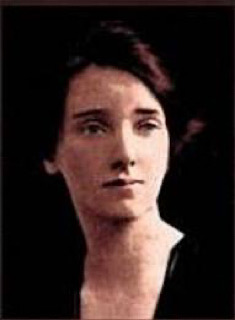
Dorothy Macardle, Irish writer, novelist, playwright, journalist and non-academic historian, dies in Drogheda, County Louth, on December 23, 1958. Associated throughout her life with Irish republicanism, she is a founding member of Fianna Fáil in 1926 and is considered to be closely aligned with Éamon de Valera until her death, although she is vocal critic of how women are represented in the 1937 constitution created by Fianna Fáil. She is also unable to respect de Valera’s attitudes adopted during World War II. Her book, The Irish Republic, is one of the more frequently cited narrative accounts of the Irish War of Independence and its aftermath, particularly for its exposition of the anti-treaty viewpoint.

Macardle is born in Dundalk, County Louth, on March 7, 1889, into a wealthy brewing family famous for producing Macardle’s Ale. Her father, Sir Thomas Callan Macardle, is a Catholic who supports John Redmond and the Irish Home Rule movement, while her mother, Lucy “Minnie” Macardle, comes from an English Anglican background and is politically a unionist. Lucy converts to Catholicism upon her marriage to Thomas. Macardle and her siblings are raised as Catholics, but Lucy, who is politically isolated in Ireland, “inculcated in her children an idealised view of England and an enthusiasm for the British empire“. She receives her secondary education in Alexandra College, Dublin—a school under the management of the Church of Ireland—and later attends University College Dublin (UCD). Upon graduating, she returns to teach English at Alexandra where she had first encountered Irish nationalism as a student. This is further developed by her first experiences of Dublin’s slums, which “convinced her that an autonomous Ireland might be better able to look after its own affairs” than the Dublin Castle administration could.

Between 1914 and 1916, Macardle lives and works in Stratford-upon-Avon in Warwickshire, England. There, her encounters with upper-class English people who express anti-Irish sentiment and support keeping Ireland in the British Empire by force further weakens her Anglophilia. Upon the outbreak of World War I, she supports the Allies, as does the rest of her family. Her father leads the County Louth recruiting committee while two of her brothers volunteer for the British Army. Her brother, Lieutenant Kenneth Callan Macardle, is killed at the Battle of the Somme, while another brother, Major John Ross Macardle, survives the war and earns the Military Cross. While Macardle is a student, the Easter Rising occurs, an experience credited for a further divergence of her views regarding republicanism and her family.

Macardle is a member of the Gaelic League and later joins both Sinn Féin and Cumann na mBan in 1917. In 1918, she is arrested by the Royal Irish Constabulary (RIC) while teaching at Alexandra.

On January 19, 1919, Macardle is in the public gallery for the inaugural meeting of the First Dáil and witnesses it declare unilateral independence from the United Kingdom, which is ultimately the catalyst for the Irish War of Independence.

By 1919 Macardle has befriended Maud Gonne MacBride, the widow of the 1916 Easter Rising participant John MacBride, and together the two work at the Irish White Cross, attending to those injured in the war. It is during this period she also becomes a propagandist for the nationalist side.

In December 1920, Macardle travel to London to meet with Margot Asquith, the wife of the former British prime minister H. H. Asquith, hoping to establish a line of communication between the Irish and British governments. It is during this trip that she comes into contact with Charlotte Despard, sister of the Lord Lieutenant of Ireland John French. Despard takes the pro-Irish side in the war and returns with Macardle to Dublin.

Following the signing of the Anglo-Irish Treaty in December 1921, Macardle takes the anti-treaty side in the ensuing Irish Civil War. Alongside Gonne MacBride and Despard, she helps found the Women Prisoners’ Defence League, which campaigns and advocates for republicans imprisoned by the newly established Irish Free State government. It is also during this same time that she begins working alongside Erskine Childers in writing for anti-treaty publications An Phoblacht and Irish Freedom.

In October 1922, Despard, Gonne MacBride and Macardle are speaking at a protest on O’Connell Street, Dublin against the arrest of Mary MacSwiney, a sitting Teachta Dála, by the Free State when Free State authorities move to break it up. Rioting follows and Free State forces open fire, resulting in 14 people being seriously wounded while hundreds of others are harmed in the subsequent stampede to flee. Following the event, Macardle announces she is going to pursue support of the Anti-treaty side full-time in a letter to Alexandra College, which ultimately leads to her dismissal on November 15, 1922. In the following days Macardle is captured and imprisoned by the Free State government and subsequently serves time in both Mountjoy Prison and Kilmainham Gaol, with Rosamond Jacob as her cellmate. During one point at her time in Kilmainham, Macardle is beaten unconscious by male wardens. She becomes close friends with Jacob and shares a flat with her in Rathmines later in the 1920s.

The Irish Civil War concludes in the spring of 1923, and Macardle is released from prison on May 9.

Following the Irish Civil War, Macardle remains active in Sinn Féin and is drawn into the camp of its leader Éamon de Valera and his wife Sinéad. She travels alongside the de Valeras as they tour the country and she is a frequent visitor to their home. As the trust between Macardle and de Valera develops, de Valera asks her to travel to County Kerry to investigate and document what later becomes known as the Ballyseedy massacre of March 1923, in which a number of unarmed republican prisoners are reportedly killed in reprisals. She obliges, and by May 1924 she has compiled a report that is released under the title of The Tragedies of Kerry.” Immediately upon the release of the report, the Minister for Defence Richard Mulcahy sets up an inquiry in June 1924 to carry out a separate investigation by the government. However, the government’s inquiry comes to the conclusion there had been no wrongdoing committed. Her book The Tragedies of Kerry remains in print and is the first journalistic historical account of the Irish Civil War from those on the republican side detailing Ballyseedy, Countess Bridge and various other incidents that occur in Kerry during this time.

In 1926, Éamon de Valera resigns as President of Sinn Féin and walks out of the party following a vote against his motion that members of the party should end their policy of abstentionism against Dáil Éireann. De Valera and his supporters, including Macardle, form the new political party Fianna Fáil in May 1926, with Macardle immediately elected to the party’s National Executive|Ard Chomhairle, one of six female members out of twelve on the original party National Executive, the others being Hanna Sheehy-SkeffingtonKathleen Clarke, Countess Constance Markievicz and Linda Kearns. Macardle is made the party’s director of publicity. However, she resigns from Fianna Fáil in 1927 when the new party endorses taking their seats in Dáil Eireann. Nevertheless, her views remain relatively pro-Fianna Fáil and pro-de Valera.

Macardle recounts her civil war experiences in Earthbound: Nine Stories of Ireland (1924). She continues as a playwright for the next two decades. In her dramatic writing, she uses the pseudonym Margaret Callan. In many of her plays a domineering female character is always present. This is thought to be symbolic of her own relationship with her own mother. Her parents’ marriage had broken up as her mother returned to England and her father raised the children with servants in Cambrickville and they were sent away for school. This female character holds back the growth and development of the younger female character in Dorothy’s plays and writings. 

By 1931, Macardle takes up work as a writer for The Irish Press, which is owned by de Valera and leans heavily toward supporting Fianna Fáil and Irish republicanism in general. In addition to being a theatre and literary critic for the paper, she also occasionally writes pieces of investigative journalism such as reports on Dublin’s slums. In the mid-1930s she also becomes a broadcaster for the newly created national radio station Radio Éireann.

In 1937, Macardle writes and publishes the work by which she is best known, The Irish Republic, an in-depth account of the history of Ireland between 1919 until 1923. Because of the book, political opponents and some modern historians consider her to have been a hagiographer toward de Valera’s political views. In 1939 she admits, “I am a propagandist, unrepentant and unashamed.” Overall, however, the book is well-received, with reviews ranging from “glowing” to measured praise. She is widely praised for her research, thorough documentation, range of sources and narration of dramatic events, alongside reservations about the book’s political slant. The book is reprinted several times, most recently in 2005. Éamon de Valera considers The Irish Republic the only authoritative account of the period from 1916 to 1926, and the book is widely used by de Valera and Fianna Fáil over the years and by history and political students. She spends seven years writing the book in a cottage in DelganyCounty Wicklow, and it is a day-by-day account of the history of the events in Ireland from 1919 to 1923 recorded in painstaking detail together with voluminous source material.

In 1937, de Valera’s Fianna Fáil government is able to create a new Constitution of Ireland following a successful referendum. However, there is widespread criticism of the new Constitution from women, particularly republican women, as the language of the new Constitution emphasises that a woman’s place should be in the home. Macardle is among them, deploring what she sees as the reduced status of women in this new Constitution. Furthermore, she notes that the new Constitution drops the commitment of the 1916 Proclamation of the Irish Republic to guarantee equal rights and opportunities “without distinction of sex” and writes to de Valera questioning how anyone “with advanced views on the rights of women” can support it. DeValera also finds her criticising compulsory Irish language teaching in schools.

The entire matter of the new Constitution leads Macardle to join Hanna Sheehy-Skeffington’s Women’s Social and Progressive League.

While working as a journalist with the League of Nations in the late 1930s, Macardle acquires a considerable affinity with the plight of Czechoslovakia being pressed to make territorial concessions to Nazi Germany. Believing that “Hitler‘s war should be everybody’s war,” she disagrees with de Valera’s policy of neutrality. She goes to work for the BBC in London, develops her fiction and, in the war’s aftermath, campaigns for refugee children – a crisis described in her book Children of Europe (1949). In 1951, she becomes the first president of the Irish Society of Civil Liberties.

Macardle dies of cancer on December 23, 1958, in a hospital in Drogheda, at the age of 69. Though she is somewhat disillusioned with the new Irish State, she leaves the royalties from The Irish Republic to her close friend Éamon de Valera, who had written the foreword to the book. De Valera visits her when she is dying. She is accorded a state funeral, with de Valera giving the oration. She is buried in Sutton, Dublin.


Leave a comment

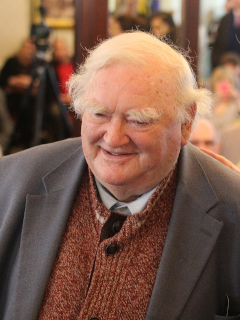
Birth of Ciarán Mac Mathúna, Broadcaster & Music Collector

Ciarán Mac Mathúna, broadcaster and music collector, is born on November 26, 1925, in Limerick, County Limerick. He is a recognised authority on Irish traditional music and lectures extensively on the subject. He travels around Ireland, England, Scotland and the United States collecting music.

According to Sam Smyth in the Irish Independent, Mac Mathúna is “on a mission to collect songs and stories, music, poetry and dance before they were buried under the coming tsunami of pop music.”

Mac Mathúna presents the radio programme, Mo Cheol Thú, for 35 years. Upon his retirement in 2005, the managing director of RTÉ Radio, Adrian Moynes, describes him as “inseparable from RTÉ Radio.” Upon his death in 2009, the Irish Independent describes him as “a national treasure.”

Mac Mathúna spends his early years in Mulgrave Street in Limerick. He is schooled at CBS Sexton Street, and later graduates from University College Dublin (UCD) with a BA in modern Irish and Latin. Subsequently, he completes an MA in Irish.

After college Mac Mathúna works as a teacher and later at the Placenames Commission. In 1954, he joins Radio Éireann where his job is to record Irish traditional musicians playing in their own locales. This entails visiting such places as Sliabh LuachraCounty Clare and County Sligo, and the resulting recordings feature in his radio programmes: Ceolta Tire, A Job of Journeywork and Humours of Donnybrook.

Director General of RTÉ Cathal Goan later recalls that Mac Mathúna interviewed him for his first job at the station. He assists in the organisation of Mac Mathúna’s music collection for the RTÉ Libraries and Archives.

Mac Mathúna’s long-running Sunday morning radio series, Mo Cheol Thú (You are my music), begins in 1970 and continues until November 2005, when he retires from broadcasting. Each 45-minute programme offers a miscellany of archive music, poetry and folklore, mainly of Irish origin. It is one of radio’s longest running programmes. The last episode is broadcast on November 27, 2005, at 8:10 a.m.

Mac Mathúna wins two Jacob’s Awards, in 1969 and 1990, for his RTÉ Radio programmes promoting Irish traditional music. He receives the Freedom of Limerick city in June 2004. He is also awarded honorary doctorates by NUI Galway and the University of Limerick. In 2007, he receives the Musicians Award at the 10th annual TG4 Traditional Music Awards.

Joe Kennedy in the Sunday Independent in 2007 compares Mac Mathúna to “an amiable rock, rolling gently along, still picking up some moss and morsels of music that he may have missed.”

Mac Mathúna‘s wife, Dolly MacMahon (using the English version of her surname), is a singer of traditional songs. She comes from Galway and meets her husband in 1955. He has two sons named Padraic and Ciarán, one daughter named Déirdre, and four grandchildren at the time of his death: Eoin, Colm, Conor and Liam.

Mac Mathúna dies in St. Gladys nursing home, Harold’s Cross, Dublin, on December 11, 2009. His funeral on December 15, 2009, is attended by hundreds of people, including aides-de-camp of the President and Taoiseach, RTÉ Director-General Cathal Goan, poet Seamus Heaney and others.

Musicians performing at the ceremony include Peadar Ó RiadaCór Cúil Aodha and members of The Chieftains and Planxty. The corpse is then taken to Mount Jerome Crematorium. Journalist Kevin Myers says Mac Mathúna’s legacy will be the “rebirth of Irish music,” adding, “Well, if Ciarán Mac Mathúna can die, I suppose anyone can. Actually, I had always thought that he was immortal. He certainly appeared to have all the ingredients.”


Leave a comment

Birth of Composer Geoffrey Molyneux Palmer

Geoffrey Molyneux Palmer (Irish: Seathrún de Pámar), Irish composer, is born to Protestant Irish parents in Staines, Middlesex, England, on October 8, 1882. His compositions consist mainly of operas and vocal music, among them the first musical settings of poems by James Joyce.

Palmer grows up in South Woodford, an area of East London, where his father, Abram Smythe Palmer, is vicar at Holy Trinity Church. He studies at the University of Oxford where, in 1901, he is the youngest Bachelor of Music (BMus) in college history. Between 1904 and 1907 he studies composition with Charles Villiers Stanford at the Royal College of Music, London. He moves to Ireland in 1910 where he is initially active as a church organist in Dublin suburbs. From his early twenties he suffers from multiple sclerosis, which makes a professional independence increasingly difficult.

Palmer’s music includes at least three operas, a number of choral pieces and many songs. His strong interest in opera comes during a politically difficult period in Irish history. Ireland is struggling for independence, and cultural politicians often regard opera (and classical music in general) as alien to Irish culture. Initially, however, he is successful, his earliest stage work being Finn Varra Maa (a transliteration from the Gaelic meaning “good Finbar”), subtitled The Irish Santa Claus. It survives as a libretto only, published in a drama series by Talbot Press, Dublin, in 1917. Contrary to what the (sub-)title may suggest, the work is a political satire that is much criticised for its nationalismSruth na Maoile (“The Sea of Moyle”) is first performed in July 1923 and restaged by the O’Mara Opera Company in the cultural by-programme of the Tailteann Games in August 1924. Its story is based on the legend of the Children of Lir, while the music relies on numerous references to Irish traditional music, including the song Silent O Moylefrom Thomas Moore‘s Irish Melodies. A third work, Grania Goes (1924), conceived as a light, comic opera, cannot be performed in the years following Irish independence. The manuscript scores of the Sruth na Maoile and Grania Goes are in the National Library of Ireland.

Between 1925 and 1930, Palmer embarks on a cycle of three full-scale operas on the Cuchullain cycle to words by William Mervyn Crofton. In one of them, Deirdre of the Sorrows (1925), Crofton acknowledges Palmer’s “beautiful music.” Despite this, Palmer’s illness prevents the completion of the score, which is later handed over to the composer Staf Gebruers (1902–70), but they are never performed. The manuscript scores of the operas Cuchullain and Deirdre of the Sorrows composed by Gebruers are held by his son Adrian. Unfortunately, despite extensive searching, the score of The Wooing of Emer has not been located, though it is referenced in Gebruers’ own inventories and mentioned as being of three hours duration. In addition, there is a copy of The King’s Song, also composed by Gebruers with lyrics by Crofton and described as from Act 1 of The Black Hag, but whether or not this has any connection with Palmer is unknown.

Palmer is mainly known as the composer of light songs and ballads, often in a folkloristic style, that find publishers in England and are frequently performed. “They show a skilled hand with a talent for vocal harmony but little originality.” His choral music is mainly on a similar miniature scale, an exception being the early cantata The Abbot of Innisfallen (1909). There are some isolated examples of orchestral music performed by the orchestra of Radio Éireann, but the surviving references may not give a full picture of his output.

In the last decades of his life, Palmer was confined to a wheelchair and depends upon the care of his two sisters, who were running Hillcourt, a private girls’ boarding school in Glenageary, near their home in Sandycove (south Dublin). Palmer dies in Dublin on November 29, 1957.


Leave a comment

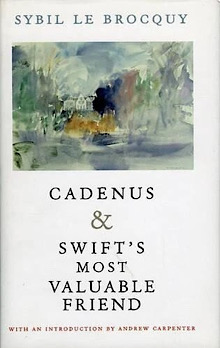
Death of Sybil le Brocquy, Playwright & Conservationist

Sybil le Brocquy, Irish playwright, patron of the arts and conservationist, dies in Dublin on September 4, 1973. Two of her three children are involved with the arts: a son is the painter Louis le Brocquy and her daughter is the sculptor Melanie le Brocquy.

She is born Helen Mary Sybil Staunton on December 21, 1892, in Herbert Street, Dublin, to Dorothy Eleanor Redington and Peter Maurice Staunton. Her father is a barrister who later becomes a solicitor. Though he moves to Aram Lodge, CastlereaCounty Roscommon where he practises law, she grows up in Dublin and Howth, going to secondary school in Loreto AbbeyRathfarnham, and later at Loreto Convent, St. Stephen’s Green. She goes on to study German and singing in Koblenz. She marries Albert le Brocquy on December 30, 1915, and settles in Dublin. They have three children, Louis, Noel and Melanie.

Le Brocquy becomes involved in various women’s movements, helping to organise the Women’s International League for Peace and Freedom in July 1926. She is involved with the League of Nations Association as well as helps to establish Irish Civil Rights, PEN International, and Amnesty International in Ireland. She is an active member of Old Dublin Society and for a time president of the Irish Women Writers’ Society. She acts with the Drama League appearing as Helen Staunton. She writes plays and dramatic pieces which are staged by the Drama League at the Abbey Theatre and broadcast by Radio Éireann.

Her writings and work are often historically investigative, finding W. B. Yeats’s birthplace and arguing that Jonathan Swift had a child by Vanessa. She is involved in the Swift Tercentenary celebrations with Cearbhall Ó Dálaigh. As a result of her work, including with Trinity College Dublin Library and representing the Library on the Royal Irish Academy’s National Committee for Anglo-Irish Literature, she is co-opted to the Cultural Committee of the Department of External Affairs and appointed a Trustee of the National Library of Ireland. She is an excellent organiser and fundraiser and is heavily responsible for securing money for the Gate Theatre, Dublin, in 1970. She also initiates the literary prize, the Book of the Year award.

Le Brocquy becomes ill with an undiagnosed illness and dies on September 4, 1973, at the Meath Hospital, Dublin.


Leave a comment

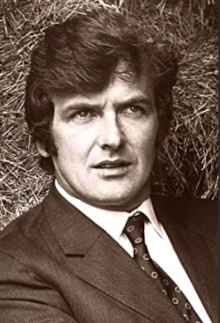
Birth of Brendan O’Reilly, Athlete, Journalist, Actor & Singer

Brendan O’Reilly, Olympic high jumper, journalist, actor, singer-songwriter, is born on May 14, 1929, in Granard, County Longford.

O’Reilly is one of six children of James P. O’Reilly, shopkeeper and musician, and Catherine O’Reilly (née Donegan). The family moves to Dublin when he is nine years old. He is educated at the Christian Brothers school in James’s Street, where he excels at Gaelic football and develops an interest in drama and music. Toward the end of his schooldays, he begins to participate in athletics, particularly the high jump, and is coached by Jack Sweeney, a leading athletics coach.

Always a man of many talents and interests, after leaving school O’Reilly combines working in the insurance business with an athletics career with Donore Harriers and evening drama classes. He wins several Irish titles, including the high jump, javelin, and decathlon, and sets a national record in the high jump. In 1954 he wins the British AAA Championships high jump title, beating the Commonwealth champion into second place, and setting a championship record of 6 ft. 5 in. (1.96 m). As a result, he secures a United States athletics scholarship to the University of Michigan, Ann Arbor, where he takes a degree in liberal arts, majoring in speech and drama. While at Michigan he improves his Irish record to 6 ft. 7 in. (2.007 m). His athletic career, however, is dogged with bad luck. He is selected to compete in the high jump at the European Athletics Championships in Bern, Switzerland, in 1954 but fractures an ankle in practice and fails to advance beyond the qualifying round. Although he competes at international level for ten years (1952–62), he is unlucky to never take part in the Olympic Games. A victim of sporting politics in 1952, as an NCAA athlete he is not entitled to compete. He is selected for the 1956 Summer Olympics in Melbourne but is unable to attend when, at the last minute, his club cannot provide the finance for him to attend. Earlier that year he wins the Big Ten Conference high jump title.

On leaving Michigan O’Reilly moves to New York City, where he embarks on an acting career with the Irish Players, but he returns to Dublin in 1959, where, after brief spells working as a teacher and for an advertising agency, he applies to Ireland’s new television station for a position. He is looking for an acting job but ends up being offered a position as a presenter, joining Teilifís Éireann in 1961 as an announcer/interviewer. His relaxed and unobtrusive style appeals to viewers and his light entertainment show, The Life of O’Reilly, is the most popular programme on Irish television in the day, eclipsing even a fledgling The Late Late Show. It is as a sports presenter and commentator, however, that O’Reilly is primarily remembered, as he becomes the face of sport on RTÉ Television for many years. He attends five Olympic Games as a broadcaster, from Mexico in 1968 to Los Angeles in 1984, commentating on athletics and gymnastics. The first presenter of RTÉ’s flagship Saturday afternoon sports programme Sports Stadium in 1984, he continues to present it over its fourteen-year life, co-presenting the final programme in December 1997. He also is the regular presenter of RTÉ’s Wimbledon Championships tennis coverage for many years, the sports results on news broadcasts on TV and radio, and Sunday Sport on RTÉ Radio, as well as commentating on individual sports such as ice-skating.

Although sports presenting is a natural progression for an athlete with his talents, O’Reilly’s real love is the arts. He continues to act, playing the part of Detective Inspector Michael Roarke in the classic children’s film Flight of the Doves (1971) with Ron Moody and Willie Rushton. He is also an accomplished singer and songwriter, and writes and performs his own one-man show, Across the Spectrum, comprising his own poems and songs in 1992. As well as a book of poems, The Great Explosion (1977), he releases a number of albums and tops the charts with his own song, “The Ballad of Michael Collins,” in 1981. He has a great admiration for Michael Collins, and this leads to his becoming the first non-political figure to give the oration at the annual Collins commemoration at Béal na Bláth, County Cork, in 1981. He also writes the song “Let the Nations Play” (1985), inspired by the boycotts of the Olympic games of 1980 and 1984, and the song is adopted as an anthem of the international Olympic movement.

Tall and slim in build, O’Relly is affable, modest, and self-deprecating in character. His relaxed style is no mere public affectation. He often exasperates colleagues by turning up just in time for broadcasts, and his ability to ad-lib is important in a live television environment. He once describes himself as “a champion high-jumper who could enunciate properly and keep my hair neatly combed” (The Irish Times, April 7, 2001). Despite the disappointments in his sporting career, he maintains that his other interests more than compensated. In relation to the Olympics he is quoted as saying, “If you asked me whether I’d have preferred to win a medal or have written the song, I’d honestly say I would have preferred to have written the song” (Longford Leader, April 6, 2001).

O’Reilly lives in Ranelagh, Dublin, and is married twice. He meets his first wife Linda Herbst (née Kuhl) in New York in the late 1950s. His second marriage is to Johanna Lowry. He has four children. After a lengthy illness, he dies on April 1, 2001, in St. Vincent’s Hospital, Fairview, Dublin. He is buried at Mount Venus cemetery, Rathfarnham.

(From: “O’Reilly, Brendan” by Jim Shanahan, Dictionary of Irish Biography, http://www.dib.ie, October 2009)


Leave a comment

Birth of Cathal Goan, Former Director-General of RTÉ

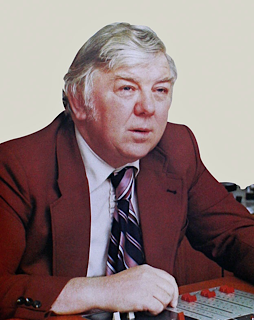
Cathal Séamus Goan, Director-General of RTÉ from 2003 to 2011, is born on May 5, 1954, in Ardoyne, Belfast, Northern Ireland. He also plays a leading role in the launch of TG4.

Goan is an Irish language speaker. He studies Celtic studies at University College Dublin (UCD). He joins RTÉ in 1979 as an archivist with RTÉ Radio. He becomes a producer and senior producer on RTÉ Radio. In 1988, he moves to RTÉ Television and works on Today Tonight. Remaining in current affairs, he becomes editor of Cúrsaí, an Irish language television programme about arts and current affairs. He becomes Editor of Irish Language Programming in 1990.

Four years after being appointed Editor, Goan is approached to become “Ceannasaí” of the new Teilifís na Gaeilge. From August 1994, he manages the commencement of the new television channel. After a successful launch of the channel, where award-winning programming is produced during his tenure, he returns to RTÉ in 2000. He is appointed Director of Television and becomes a member of the RTÉ Executive Board.

Bob Collins retires as Director-General of RTÉ in 2003 to pursue a career elsewhere. It is announced in July 2003 that Goan will fill this position. He becomes the Director-General in October 2003. In 2008, he has a salary of €280,000, but it is reduced by €35,000. In 2006, he is announced as member of the board of National Concert Hall and serves there until May 2011. After the broadcast of a news item on nude pictures of Taoiseach Brian Cowen, Minister Michael Kennedy calls for Goan to “consider his position” as Director-General of RTÉ. He also receives criticism from Minister Éamon Ó Cuív in February 2010, when Sunday Mass is reduced to being broadcast just once a month on RTÉ Raidió na Gaeltachta.

Goan announces in July 2010 that he intends to step down at the end of his seven-year term. His resignation is accepted by the RTÉ Board.

Goan is married to Irish singer Maighread Ní Dhomhnaill.


Leave a comment

Birth of Tim Pat Coogan, Journalist, Writer & Broadcaster

Timothy Patrick “Tim Pat” Coogan, Irish journalist, writer and broadcaster, is born in Monkstown, County Dublin, on April 22, 1935. He serves as editor of The Irish Press newspaper from 1968 to 1987. He is best known for such books as The IRA (1970) and On the Blanket: The H Block Story (1980), and biographies of Michael Collins and Éamon de Valera.

Coogan’s particular focus is on Ireland’s nationalist/independence movement in the 20th century, a period of unprecedented political upheaval. He blames the Troubles in Northern Ireland on “Paisleyism.”

Coogan is the first of three children born to Beatrice (née Toal) and Eamonn Coogan, a native of Kilkenny who is an Irish Republican Army (IRA) volunteer during the Irish War of Independence and later serves as the first Deputy Commissioner of the newly established Garda Síochána, then a Fine Gael TD for the Kilkenny constituency. His mother, the daughter of a policeman, is a Dublin socialite who is crowned Dublin’s Civic Queen of Beauty in 1927. She writes for the Evening Herald and takes part in various productions in the Abbey Theatre and Radio Éireann. He spends many summer holidays in the town of Castlecomer, County Kilkenny, his father’s hometown.

A former student of the Irish Christian Brothers in Dún Laoghaire and Belvedere College in Dublin, Coogan spends most of his secondary studies at Blackrock College in Dublin.

In 2000, Irish writer and editor Ruth Dudley Edwards is awarded £25,000 damages and a public apology by the High Court in London against Coogan for factual errors in references to her in his book Wherever Green is Worn: The Story of the Irish Diaspora (2000). In the book, he writes that Dudley Edwards had “groveled to and hypocritically ingratiated herself with the English establishment to further her writing career.” He also alleges that Dudley Edwards “had abused the position of chairwoman of the British Association for Irish Studies (BAIS) by trying to impose her political views on it” and that her commission to write True Brits had been awarded because of political favouritism.

When Taoiseach Enda Kenny causes confusion following a speech at Béal na Bláth by incorrectly claiming Michael Collins had brought Lenin to Ireland, Coogan comments, “Those were the days when bishops were bishops and Lenin was a communist. How would that have gone down with the churchyard collections?”

In November 2012, for reasons that are uncertain, the United States embassy in Dublin refuses to grant Coogan a visa to visit the United States. As a result, a planned book tour for his book The Famine Plot, England’s role in Ireland’s Greatest Tragedy (2012) is cancelled. After representations to then Secretary of State Hillary Clinton by United States Senator Chuck Schumer (D-NY) and Congressman Peter T. King (R-NY), he receives his visa.

Coogan has been criticised by the Irish historians Liam Kennedy and Diarmaid Ferriter, as well as Cormac Ó Gráda, for a supposed lack of thoroughness in his research and bias:

“Well, I waited in this book to hear some great revelation, and it just isn’t there. It’s anticlimactic. I could not see the great plot, and indeed there is no serious historian who … I can’t think of a single historian who has researched the Famine in depth – and Tim Pat has not researched it in depth” (The Famine Plot).

“Coogan is not remotely interested in looking at what others have written on 20th-century Irish history…. he does not appear interested in context and shows scant regard for evidence. He does not attempt to offer any sustained analysis in relation to the challenges of state building, the meaning of sovereignty, economic and cultural transformations, or comparative perspectives on the evolution of Irish society. There is no indication whatsoever that Coogan has engaged with the abundant archival material relating to the subject matter he pronounces on. There is no rhyme or reason when it comes to the citation of the many quotations he uses; the vast majority are not referenced. For the 300-page text, 21 endnotes are cited and six of them relate to Coogan’s previous books, a reminder that much of this tome consists of recycled material…. Tim Pat Coogan… he is a decent, compassionate man who has made a significant contribution to Irish life. But he has not read up on Irish history; indeed, such is the paucity of his research efforts that this book amounts to a travesty of 20th-century Irish history” (1916: The Mornings After).


Leave a comment

Death of Carl Hardebeck, Traditional Music Composer & Arranger

Carl Gilbert Hardebeck, or Carl G. Hardebec, British-born Irish composer and arranger of traditional music, dies in Dublin on February 10, 1945.

Hardebeck is born on December 10, 1869, in Clerkenwell, London, to a German father and Welsh mother. He loses his sight when he is a baby. He attends the Royal Normal School for the Blind in London (1880–92) where, under his teacher Frederick Corder, a professor from the Royal Academy of Music, he shows a marked aptitude for music.

In 1893, at the age of twenty-four, Hardebeck moves to Belfast, where he opens a music store, but the venture fails, and he becomes the organist of a small parish in the city, the Holy Family Church, Wellington Place. He enters an anthem, O God of My Salvation, for contralto and chorus, for the 1897 Dublin Feis Ceoil and wins. On this occasion he hears folk song arrangements of Charles Villiers Stanford and others for the first time. At the 1901 Feis Ceoil, he again wins a prize, this time for a large cantata, The Red Hand of Ulster. In 1914, his wife, Mary Reavy, dies.

In 1919, Hardebeck becomes the director of the music school in Cork and becomes the first professor of Irish music at University College Cork (UCC) in 1922. Ill-suited for administrative tasks, he relinquishes the post after one year and returns to Belfast, which after the Irish Civil War has become the capital of Northern Ireland. In 1932, he finally settles in Dublin, where he works for An Gúm, the Irish government publisher, as arranger of Irish traditional songs for piano and choirs, many of which become teaching material at schools in the nascent Republic of Ireland. He also teaches Irish and traditional music in the Dublin Municipal School of Music for two years. On many occasions he acts as adjudicator in singing and musical competitions across Ireland.

Despite Hardebeck’s mixed German/Welsh/English background, the events of the 1913 Dublin lock-out, the outbreak of World War I, and the 1916 Easter Rising radicalise him, turning him into an Irish nationalist. He is quoted as saying, “I believe in God, Beethoven and Patrick Pearse.” He studies the Irish language and collects folk songs from around the country, making some unique arrangements that bridge the gap between traditional and art song.

At home in Dublin, Hardebeck plays his excellent arrangements of Irish melodies on a Schiedmayer harmonium. The instrument has a “percussion” stop, which he uses to great effect. He also owns a Knauss piano but plays the harmonium by choice. He is quite an authority on plainchant. The noted Irish harpsichord maker Cathal Gannon is a close friend of his for many years. Hardebeck teaches him how to appreciate the structure of the classical symphony and concerto and passes on his enthusiasm and love of Irish melodies.

Following Hardebeck’s death at his home, 14 St. Vincent Street, Berkeley Road, Dublin, on February 10, 1945, a Radio Éireann-sponsored symphony concert, held in the Capitol Theatre in Dublin, begins with a sympathetic performance of his orchestral variations upon Seoithín Seó. A state funeral is held in Saint Joseph’s Church, Berkeley Road, Dublin. The church is packed; various government ministers, the Lord Mayor and representatives of President Douglas Hyde and of Éamon de Valera are there. Hardebeck’s own Kyrie and Agnus Dei are performed at the Requiem Mass. He is interred in Glasnevin Cemetery, where a Benedictus is chanted by the clergy present. A vote of sympathy is issued by the Irish National League of the Blind to Hardebeck’s widow and relatives, in which the hope is expressed “that the nation as a whole would not be unmindful of the important contribution which the late Dr. Hardebeck had made to Irish culture, music and art.”

Unfortunately, very little attention has been given to Hardebeck, who is one of the instigators in the revival of Irish music. Indeed, he is largely forgotten after his death. This is possibly due to his mixed origins and place of birth. His arrangement for orchestra of The Lark in the Clear Air is a fine piece of music, but he is content to sell it to the music publishers Boosey & Hawkes for just six guineas.

In June 2013, a plaque to Hardebeck’s memory is installed at Holy Family Church, Belfast.

(Pictured: “Carl Hardebeck (1869-1945),” oil on canvas, National Museums NI)


Leave a comment

Death of Máirín Cregan, Playwright & Novelist

Máirín Cregan, Irish nationalist who is involved in the 1916 Easter Rising and Irish War of Independence, dies in Dublin on November 9, 1975. She makes her name writing for children, as well as writing plays and novels for adults.

Mary Ellen Cregan is born in Killorglin, County Kerry, on March 27, 1891, to Morgan Cregan and Ellen O’Shea. Her father is a stonemason from Limerick. The family are strong believers in the Gaelic revival movement and Cregan herself learns the Irish language and performs songs at Gaelic League concerts. Although she goes to primary school locally, she goes away to secondary school to St. Louis Convent in Carrickmacross, County Monaghan. After finishing school, she becomes a teacher, working in Goresbridge, County Kilkenny from 1911 to 1914.

In September 1914 Cregan goes to Dublin to study music in the Leinster School of Music, under Madame Coslett Heller. It is while she is in Dublin that she becomes friends with the Ryan family, who are strong nationalists as well as interested in the Gaelic League and Sinn Féin. She begins to sing for concerts which are fundraisers for the Irish Volunteers. The last concert is just two weeks before the Easter Rising.

During Easter week Cregan is sent to Tralee with “automatics and ammunition” by Seán Mac Diarmada. While she is carrying a violin case of munitions, she is also carrying details for the wireless technology needed for communicating with the SS Aud, the boat which is carrying more weapons for the rebellion. The communications with the SS Aud go wrong when the car carrying the Volunteers goes off a pier and the occupants are drowned. She is still in the area to assist with the surviving Volunteer, who unfortunately knows nothing of the details for the SS Aud. She is not easily able to get back to Dublin, because owing to the Rising the city is cut off. By the time she gets back, her friends have been arrested.

When Cregan is going to school in Dublin she is also working in a school in Rathmines. Like many of the teachers, she loses her job after the rising because of her connection to the rebels. However, she is able to get new positions over the next few years in both Ballyshannon and Portstewart until she marries. In Ballyshannon she experiences the early expressions of support and sympathy, but Portstewart is a Unionist enclave with many houses flying union flags on polling day in 1918.

Cregan is a member of Cumann na mBan and with them is active during the Irish War of Independence. She is given a medal for her participation. On July 23, 1919, she marries Dr. James Ryan in Athenry, County Galway. His entire family had been deeply involved in the Easter Rising, as well as the Irish War of Independence and the Irish Civil War. They have three children, Eoin, who becomes a Senator, Nuala (Colgan) and Seamus.

The family is initially based in Wexford during the War. The house is often raided when the British soldiers are looking for her husband and Cregan herself is arrested in February 1921 for refusing to put up martial law posters. Later the family sells the house and remains mobile while she works for the Sinn Féin government, and her husband is in prison. It is during this time that she works as a courier to the continent and to London. After the war, they purchase Kindlestown House in Delgany, County Wicklow, where they remain for the rest of their lives.

Cregan works as a journalist for The Irish Press and The Sunday Press. Her political awareness and involvement mean that her work there is on political articles.

Cregan’s first book for children is Old John and gains her considerable international success and attention. Sean Eoin is also published in Irish and is illustrated by Jack Butler Yeats. Her work is also aired on the BBC and RTÉ. Rathina wins the Downey Award in the United States in 1943. She also writes two plays: Hunger strike (1933), based on experience of her husband’s involvement in such a strike, which is broadcast on Radio Éireann on May 5, 1936, and Curlew’s call (1940).

Cregan dies on November 9, 1975, in St. Vincent’s Hospital, Dublin, and is buried in Redford cemetery near her home in County Wicklow.

(Pictured: Máirín Cregan and her husband, Dr. James Ryan)