seamus dubhghaill

Promoting Irish Culture and History from Little Rock, Arkansas, USA


Leave a comment

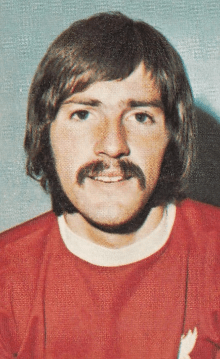
Birth of Steve Heighway, Irish Footballer

Stephen Derek Heighway, former Irish footballer who plays as a winger, is born in Dublin on November 25, 1947. He is part of the successful Liverpool F.C. team of the 1970s. Following his eleven-years with the club, he is ranked 23rd in the 100 Players Who Shook the Kop poll.

Heighway’s early education takes place in Sheffield, South Yorkshire, where he attends Ecclesall Junior School until 1959, followed by High Storrs School and latterly Moseley Hall Grammar School for Boys in Cheadle, near Stockport.

Heighway’s early promise as a winger is not spotted by professionals. Instead, he concentrates on his studies in economics and politics at the University of Warwick in Coventry achieving a 2:1.

In 1970, Heighway is studying for his final exams and playing for Skelmersdale United F.C. when he is spotted by Liverpool’s scouting system. With manager Bill Shankly keen to rebuild his ageing, underachieving team of the 1960s, Heighway is signed up swiftly in May of that year. It is due to his academic achievements that he gets his nickname “Big Bamber,” while teammate and fellow university graduate Brian Hall is dubbed “Little Bamber” – both after the television programme University Challenge host Bamber Gascoigne.

A strong and fast left winger with two good feet, Heighway settles into topflight football after making his debut on September 22, 1970, in a League Cup 2nd round replay at Anfield against Mansfield Town F.C. (3-2). He opens his goalscoring account in the 51st minute of a 2–0 home league win over Burnley F.C. on October 1, 1970.

A month later, Heighway scores against Merseyside rivals Everton F.C. in a hard-fought 3–2 win, after his team had found themselves down 2–0 early in the second half. He stays in the side for the rest of the season as Liverpool’s new charges finish the league campaign strongly and also defeat Everton in the semi-finals of the FA Cup to reach the final at Wembley Stadium.

Their opponents are Arsenal F.C., who are after a coveted “double” having won the Football League First Division championship. Heighway plays confidently in a match that is goalless after 90 minutes and therefore needs a period of extra-time. Just two minutes into the added half-hour, he receives the ball wide on his left flank from substitute Peter Thompson and starts a run toward the Arsenal penalty area, with Gunners full back Pat Rice tracking his run but unwilling to put in a tackle. With a swift turn outside, he gains a yard on Rice and hits a low drive into the net past Arsenal goalkeeper Bob Wilson, who had committed the cardinal goalkeeping sin of coming out too far from his near post to anticipate a cross, thereby leaving a gap that Heighway exploits. Sadly, for Heighway and Liverpool, their opponents scored two goals in response.

Heighway settles into the Liverpool team for the next decade, winning the first of four League titles in 1973, along with the UEFA Cup. He returns to Wembley for another FA Cup final a year later as Liverpool faces Newcastle United F.C. He scores again with 16 minutes remaining in the match to make the score 2–0, latching on to a flick from John Toshack after a long clearance from goalkeeper Ray Clemence to slot a right-footed shot into the far corner. The game ends 3–0.

By now, Heighway is a regular for the Republic of Ireland national football team, making his debut on September 23, 1970, against the Poland national football team. He remains so for the whole of the 1970s, winning a total of 34 caps but never managing to score. He does have a goal disallowed in a qualifier for the 1978 FIFA World Cup against the Bulgaria national football team in Sofia. On the domestic front, he attains another League and UEFA Cup double with Liverpool in 1976 and then forms part of the side which comes so close to the “treble” of League, FA Cup and European Cup.

Liverpool wins the League by a single point and again defeats rivals Everton in the semi-final to reach the FA Cup final, this time to face bitter rival Manchester United F.C. at Wembley. Liverpool loses 2–1 and the “treble” dream is dead.

Heighway scores his first goal of the 1977 European Cup in a 5–0 first round second leg win over Crusaders F.C. He then scores in a 3–0 second round win against Trabzonspor and in the 3–1 semi-final first leg win over FC Zürich. Liverpool beats Borussia Mönchengladbach 3–1 to win their first European Cup, with Heighway setting up both outfield goals for Terry McDermott, a defence-splitting pass, and Tommy Smith, a corner.

In 1978, Heighway is on the bench as Liverpool retains the European Cup with a 1–0 victory over Club Brugge KV at Wembley, coming on as a substitute for Jimmy Case. The following year he is again in the side frequently as Liverpool wins another League title, but from 1980 onward his opportunities in the side diminish.

Heighway stays for two more seasons, appearing only occasionally in the team and missing out on two more League title medals, another European Cup triumph and a first EFL Cup medal, which is successfully defended a year later. He leaves Anfield in 1982 after 444 matches and 76 goals.

Heighway then prolongs his career with a move to the United States, joining the Minnesota Kicks for the 1981 season. He plays 26 games, scoring four goals. He then joins the coaching staff of Umbro, which leads to a position with the Clearwater Chargers where he pioneers the role of director of coaching in the United States. In 1989 he is asked to rejoin Liverpool to run their youth academy, bringing promising youngsters up through the system until they were ready for the professional game. Among his successes are Steve McManaman, Robbie Fowler, Steven Gerrard, Jamie Carragher, Dominic Matteo, David Thompson and Michael Owen.

On September 4, 2006, a poll on Liverpool’s official web site names Heighway 23rd out of 100 Players Who Shook the Kop.

Heighway announces his retirement from Liverpool on April 26, 2007, immediately after the side he manages won the FA Youth Cup for the second year running. He comments, “I don’t know what the future holds just yet, we’ll have to wait and see.”

Heighway returns to working at Liverpool’s Academy part-time in 2015, at the request of Academy Director Alex Inglethorpe, before taking up a full-time consultancy role later that year. After seven years in this position, he retires for a second time in December 2022.

Heighway also features in the popular Liverpool chant, The Fields of Anfield Road, which is frequently sung by Liverpool fans during matches.

Leave a comment

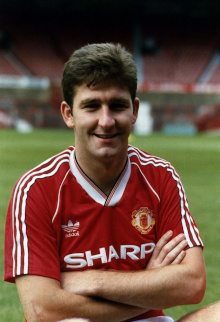
Birth of Norman Whiteside, Northern Ireland Footballer

norman-whiteside

Norman Whiteside, former Northern Ireland international footballer who played in two World Cups, is born in Belfast, Northern Ireland on May 7, 1965. He plays both as a midfielder and as a striker.

Whiteside grows up on Shankill Road, and because of his aggressive, physical playing style he is later nicknamed the “Shankill Skinhead” by Manchester United supporters. The family later moves to 10 Danube Street. He remains relatively unscathed by The Troubles as his Protestant parents keep a firm watch on their children to ensure that they do not stray far from home and that none of them become involved with Ulster loyalism. At around seven years of age, he joins the Boys’ Brigade, and quickly shows his natural talent for football, scoring ten goals in a game against boys almost twice his age. He is educated at Cairnmartin High School and becomes famous in the Shankill area as a footballing prodigy by the age of eleven.

Whiteside is said to have been discovered by Ipswich Town scout Jim Rodgers, who is told by manager Bobby Robson to wait until Whiteside grows older. Instead, it is Manchester United’s 80-year-old Ulster scout Bob Bishop, who previously unearthed Belfast-born George Best and Sammy McIlroy for the club, who first offers him a trial at an English club. He finds that he has been offered schoolboy terms at the club during a school trip to the United States, on which he and his classmates meet President Jimmy Carter in the Oval Office, a rare and extraordinary occasion for children from a disadvantaged background.

Whiteside signs professional forms in 1982 at the age of 17 and quickly becomes a key member of the Manchester United club. He scores 68 goals in 278 league and cup appearances for the club over the next seven years, picking up two FA Cup winners medals in 1983 and 1985, as well as playing in the 1982 FA Youth Cup final, the 1983 League Cup final, and the FA Charity Shield in 1983.

Whiteside remains with United until July 1989, when he is sold to Everton F.C. for £600,000. However intense running sessions run by coach Mick Lyons take their toll on his right knee, and on September 20, 1990, he takes a knock in a practice match, which requires him to have another operation on his right knee. After the return of Howard Kendall as manager in November 1990, he manages to appear in a few reserve team games, but this only delays the inevitable, and he is forced to retire from the game at the age of 26 in June 1991.

Upon retirement, Whiteside studies to become a podiatrist, graduating with a degree from the University of Salford, and serves Northwich Victoria F.C. as their assistant manager/physio from October 1991 until March 1992. He quits the role as he does not enjoy the amount of time spent travelling between games. He instead became an after-dinner speaker and also works for the Professional Footballers’ Association, while taking a postgraduate course at Manchester Metropolitan University. He later takes up private practice as a podiatrist in Manchester. Since 1994, he has also worked at the corporate hospitality department at Old Trafford. In 2003, he releases a book entitled My Memories of Manchester United. With the help of writer Rob Bagchi, he releases his autobiography entitled Determined in August 2007, published by Headline Publishing Group, and with a foreword by actor James Nesbitt.

Whiteside holds records as the youngest player to take part in a World Cup, the youngest player to score in a League Cup and FA Cup final, and the youngest player to score a senior goal for Manchester United. Winning 38 caps for Northern Ireland, he plays at the 1982 and 1986 World Cups and also helps his country to win the last ever British Home Championship in 1983–1984.


Leave a comment

Birth of Nicky Byrne, Singer & Songwriter

nicky-byrne

Nicholas Bernard James Adam Byrne, Jr., singer, songwriter, radio presenter, dancer, television presenter and former semi-professional footballer, best known for being a member of Irish music band Westlife, is born in Dublin on October 9, 1978.

Before his music career, Byrne plays professional football, representing Republic of Ireland at several junior levels. He plays for Home Farm F.C. and St. Kevins Boys in North Dublin before becoming a professional player. He joins Leeds United F.C. as a goalkeeper in 1995 and is a squad member of the FA Youth Cup winning team of 1997. He plays for Leeds for two years, leaving when his contract expires in June 1997. He plays in a reserve game for Scarborough F.C. and in a trial game with Cambridge United F.C. before returning to join Dublin club Shelbourne F.C. He then signs for Cobh Ramblers F.C. playing 15 games, then St. Francis F.C., all in Ireland’s League of Ireland.

On May 14, 2009, Byrne is a substitute for a Liverpool F.C. Legends XI that plays against an All Star XI in a Hillsborough Memorial match to mark the 20th anniversary of the Hillsborough disaster. He represented the Republic of Ireland at U15, U16 and U18 levels.

In June 1998, Byrne attends an audition for new Irish boyband, where Boyzone manager Louis Walsh approaches him to join his new venture, Westlife. He joins Westlife along with Kian Egan, Mark Feehily, Shane Filan and Brian McFadden. With Westlife, he has had 25 top ten UK singles, fourteen of which are number one, seven number one albums and has sold in excess of over 45 million records worldwide. He also has a number one single in Ireland in 2002, alongside the Republic of Ireland national football team and Dustin the Turkey with the Irish 2002 FIFA World Cup anthem, “Here Come the Good Times (Ireland).” He also co-writes many of Westlife’s songs.

On September 7, 2012, it is announced that Byrne will be a contestant for the tenth series of Strictly Come Dancing. He is the ninth contestant to be eliminated. He is ranked number two on Ireland’s Sexiest Man of 2014.

In early January 2016, it is rumored that RTÉ had internally chosen Byrne to represent Ireland in the Eurovision Song Contest 2016. On January 13, he is confirmed to be the Irish singer for the 2016 contest in Stockholm with the song, “Sunlight.” He performs it in the second semi-final but fails to advance to the final.

Byrne’s wife Georgina is the daughter of former Taoiseach Bertie Ahern, and they have twin sons, Rocco Bertie Byrne and Jay Nicky Byrne, and a daughter, Gia.