seamus dubhghaill

Promoting Irish Culture and History from Little Rock, Arkansas, USA


Leave a comment

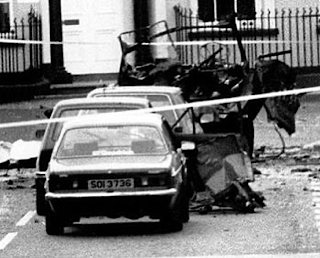
The Lisburn Van Bombing

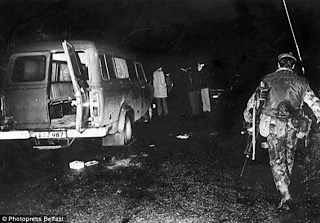
On June 15, 1988, an unmarked military van carrying six British Army soldiers is blown up by the Provisional Irish Republican Army (IRA) at Market Place in Lisburn, County AntrimNorthern Ireland. The explosion takes place at the end of a charity marathon run in which the soldiers had participated. All six soldiers are killed in the attack – four outright, one on his way to hospital and another later on in hospital.

Lisburn is the headquarters of the British Army in Northern Ireland. Four of the dead are from the Royal Corps of Signals while the other two are from the Green Howards and the Royal Army Ordnance Corps. A booby trap bomb is hidden under the Ford Transit van in which the soldiers are traveling, and is designed in such a way that the blast goes upward to cause maximum damage to the vehicle. Eleven civilian bystanders are injured, including a two-year-old child and 80-year-old man. The bombing is sometimes referred to as the Lisburn “Fun Run” bombing.

On Wednesday, June 15, 1988, at 8:50 p.m., an unmarked blue Ford Transit van carrying six off-duty British soldiers in civilian clothes drives off from a leisure centre carpark in Lisburn. The soldiers have just taken part in the “Lisburn Fun Run”, a 13-mile (21 km) charity half marathon held in the town. They leave the van unattended in the car park, which is the start and finish point for the run. It is there that an IRA active service unit (ASU), who has been following the van, hides a bomb underneath the vehicle. The half marathon and shorter “fun runs” are organised by Lisburn Borough Council, together with the YMCA, to raise funds for the disabled. There are 4,500 participants that day and at least 200 British Army personnel have been given leave to participate in the event.

Nine minutes later, the van stops at traffic lights at Market Place, in Lisburn’s town centre. As the van moves on, the seven-pound (3.2 kg) bomb detonates, turning the van into a massive fireball and instantly killing four of the soldiers as the vehicle disintegrates with the force of the blast. The Semtex device has been designed in a cone shape to channel the blast upward, thereby causing maximum damage to the vehicle and the soldiers inside. The area around Market Place is crowded with onlookers, including many teenagers and families with young children, although the biggest crowd is at the carpark. In all, about 10,000 onlookers have attended the charity run. There is pandemonium as frightened parents search for their children, while others rush to give aid to the dead and dying soldiers before fire engines and ambulances arrive.

Eleven civilian bystanders are injured in the attack, including a two-year-old child and an 80-year-old man. Another soldier dies on the way to hospital while a sixth soldier dies later that night after undergoing surgery for severe head injuries. The dead soldiers are stationed at Ebrington Barracks in Derry and are returning to base when the bomb goes off. Four of the men – Sergeant Michael Winkler (31), Signalman Mark Clavey (24), Lance Corporal Graham Lambie (22), and Corporal William Patterson (22) – are from the Royal Corps of Signals, while the other two – Corporal Ian Metcalf (36) and Lance Corporal Derek Green (20) – are from the Green Howards and Royal Army Ordnance Corps respectively.

Lisburn is a mainly Ulster Protestant town, 14 miles (23 km) southwest of Belfast. It serves as the garrison headquarters of the British Army in Northern Ireland. Six months before the van bombing, a booby trap bomb planted by the IRA kills Ulster Defence Association (UDA) leader John McMichael in the town.

The van bombing results in the greatest loss of life suffered by the British Army since eleven soldiers were killed in the Droppin Well Disco bombing on December 6, 1982.

In Belfast, on the same day as the Lisburn attack, the IRA shoots dead the Ulster Volunteer Force’s (UVF) East Belfast commander, Robert “Squeak” Seymour (33). This is retaliation for the UVF gun attack on an Irish nationalist pub in which three Catholics died.

On June 16, the Provisional IRA Belfast Brigade claims responsibility for the bombing, promising to wage “unceasing war” against the British security forces in Northern Ireland. Sinn Féin president Gerry Adams allegedly says that the IRA’s killing of the six soldiers is “vastly preferable” to killing members of the (locally recruited) Ulster Defence Regiment (UDR) or Royal Ulster Constabulary (RUC). The leisure centre is forced to remain shut for a time after the loyalist Protestant Action Force (a cover-name of the UVF) issues a warning that they regard Catholic staff working there as “legitimate targets,” inferring that they may have had a hand in the bombing. Lisburn mayor Councillor William Bleakes condemns the threats by the PAF.

That same day, Tom King, then Secretary of State for Northern Ireland, travels to Lisburn where he holds a meeting with Lieutenant General Sir John Waters, the British Army Commander in Northern Ireland, and senior RUC officers. They discuss the attack and proposals for heightened security. The soldiers had failed to follow proper security procedures, as they had left their vehicle unguarded for over two hours and had then driven off without having checked under it beforehand. After the Lisburn meeting, King flies to London where he reports directly to British Prime Minister Margaret Thatcher, who describes the attack as a “terrible atrocity.” However, she rejects demands from Conservative members of Parliament to bring back internment, regarding the proposal as “a very serious step.”

In his statement to the House of Commons, Tom King suggests that there would have been a much higher death toll had the bomb exploded in the carpark, where thousands of people had gathered after the run.

The Republic of Ireland‘s government also strongly condemns the killings and extends its sympathy to the families of the dead soldiers. The bombing is a topic of debate in the Seanad Éireann on June 16, 1988. Bishop Cahal Daly of the Roman Catholic Diocese of Down and Connor denounces the bombers and the killings in the “strongest possible terms.”

Questions are raised as to how the IRA knew the soldiers were attending the charity run in Lisburn, how they recognised their unmarked van, and how the unit was able to plant a bomb in the predominantly loyalist town without being spotted, despite the number of people in the carpark. The RUC believes that the bombers may have been wearing sports gear as they mingled with the crowd that evening. They appeal to onlookers who had attended the event to hand over any film they may have taken of the “fun run” in an attempt to identify the IRA bombers.

The following Saturday, between 1,000 and 2,000 people gather in Lisburn town centre to attend a remembrance service for the six soldiers. A book of condolences is also opened.


Leave a comment

The Chlorane Bar Attack

The Chlorane Bar attack is a mass shooting at a city centre pub on June 5, 1976, in BelfastNorthern Ireland. It is carried out by the Ulster Volunteer Force (UVF), an Ulster loyalist paramilitary organisation, apparently in retaliation for the Provisional Irish Republican Army bombing attack on the Times Bar on York Road, in which two Protestant civilians were killed. In the Chlorane attack, five civilian men are killed, three Catholics and two Protestants. The gunmen are militants from the UVF Belfast Brigade’s Shankill Road battalion. The assault is a joint operation by the platoons based at the Brown Bear and the Windsor Bar, drinking haunts in the Shankill Road district frequented by UVF members.

On June 5, 1976, a bomb explodes at the door of the Times Bar on York Road, killing two Protestants. The pub is frequented by members of the Ulster Defence Association (UDA), a legal loyalist paramilitary group. Irish republicans are blamed for the bombing. Shortly after, the UVF Brigade Staff (its Shankill Road-based leadership) decide to hit back by attacking the Chlorane Bar. It is a hastily arranged operation devised by its military commander “Bunter,” whom investigative journalist Martin Dillon refers to as “Mr. F.” The Chlorane Bar is located at 23 Gresham Street in Belfast’s city centre, near Smithfield Market. Its clientele is mixed (Protestant and Catholic), which is unusual during The Troubles. On August 17, 1973, the Chlorane Bar had been firebombed, however, no one was injured as the pub was closed at the time of the attack. Later that same month, the Ulster Freedom Fighters (UFF), a cover name sometime used by the UDA, claim responsibility for a car bomb which exploded in Gresham Street. Although there were no human casualties, a pet shop located near the bomb’s epicentre was damaged in the blast and a number of animals inside the building were either killed or injured.

The attack is planned and executed by the UVF platoons based at the Brown Bear and the Windsor Bar respectively. These are two pubs located on the Shankill Road and regularly frequented by UVF members. Dillon sometimes refers to the former platoon as the “Brown Bear Team” because the members generally meet at that particular pub, which faces Shankill Library on the corner of Mountjoy Street. To carry out the attack, along with the procuring of weapons and masks, a black taxi is hijacked by two young men outside the Long Bar on the Shankill Road to transport the gunmen to the Chlorane Bar. Taxi driver Mark Hagan and a passenger are held hostage at the Windsor Bar.

The Chlorane Bar is likely chosen for its nearness to the Shankill Road, affording the attackers a speedy getaway. There is not much of a security presence that evening in the area. The driver of the taxi, with four specifically chosen armed men seated in the rear of the vehicle in the manner of genuine passengers, makes his way from the Shankill Road to North Street and turns south into Gresham Street. Upon arrival outside the Chlorane Bar, the four gunmen don their masks, devised from yellow money bags, and exit the taxi.

At 10:00 p.m., the four masked gunmen storm through Chlorane Bar’s front door leading to the public bar. There are about sixteen customers inside the pub at the time. One of the four gunmen is Robert “Basher” Bates, a member of the violent Shankill Butchers gang led by Lenny Murphy, who is in police custody at the time the attack against the Chlorane takes place. Bates is the only one of the four to have been from the “Brown Bear Team.” The hit squad is commanded by a “Mr. G,” leader of the Windsor Bar UVF platoon, with “Mr. D” as his second-in-command and “Mr. C” completing the team. Entering the bar in single file, “Mr. G” orders everybody to stand up, and then asks the startled customers whether there are any “Prods” (Protestants) among them. William Greer, a Protestant, thinking the gunmen are from the Irish Republican Army, quickly flees to the men’s toilet where he places his feet up against the door. Customer Frederick Graham and his girlfriend, Pat Mahood, assume the same thing. “Mr. G” tells the customers to separate into two groups, with the Protestants standing at the bottom end of the bar, and the Catholics at the top.

When one man, Edward Farrell, admits to being a Catholic, the UVF men open fire. Farrell tries to run toward the toilet but is shot dead. The Catholic owner of the Chlorane, 64-year-old James Coyle, is standing behind the bar when he is hit at close-range. The bullet enters his heart and he dies instantly. The gunmen continue firing and two Protestant men, Daniel McNeil and Samuel Corr, are also struck by the hail of bullets. McNeil is killed on the spot and Corr is fatally wounded. Another Catholic man, John Martin, is shot and dies of his injuries on June 23. Several other customers are hit as gunfire is sprayed around the bar. One customer pretends to be dead, however, a gunman walks over to where he lay and deliberately fires three shots into his thigh, knee, and below the ankle. The man later recounts that he had then looked up to see “men lying shot all over the place.” William Greer, hiding in the toilet, is shot when one of the gunmen fire through the door. He survives despite being hit in the leg and neck. There are more customers upstairs in the lounge area, but although they hear the gunshots, the gunmen never go near them. Dillon maintains that it had not been the UVF unit’s intention to kill any Protestants.

“Mr. G” calls a halt to the shooting, saying “that’s it,” and the four-man UVF team nonchalantly walks out of the pub and re-enters the hijacked black taxi, which is parked so the driver has easy access to North Street. This route offers a quick return to the Shankill. After the four men get into the back seat, the driver (“Mr. H”) drives off. As the taxi passes by the Catholic Unity Flats area, three shots are fired from the vehicle. Two young men walking nearby get a look at the driver. He is described as being around 38 to 40 years old and having shoulder-length, black curly hair. Upon the taxi’s return to the Shankill, Mark Hagan and the passenger are released. They immediately go to the Tennent Street Royal Ulster Constabulary (RUC) Station off the Shankill where they report the taxi’s hijacking. The shooting team proceeds to the Long Bar pub where “Mr. I” (commander of UVF 1st Battalion) procures a forty-ounce bottle of vodka for “Mr. G” and “Mr. D” – their payment for leading the operation.

Having heard the gunshots, a barmaid serving in the upstairs lounge goes downstairs to investigate and discovers the body of her employer, James Coyle, lying on the floor behind the bar and those of the other dead and wounded. The first policeman on the scene is Constable George McElnea, from the RUC Special Patrol Group in Tennent Street. He quickly notices the pile of bodies near the men’s toilet as Samuel Corr stumbles toward him, gravely injured. McElnea places Corr on a bench and offers what assistance he can but to no avail. Corr dies of his gunshot wounds before the ambulance arrives. Alan McCrum, a Scenes of Crime officer, appears at the Chlorane fifteen minutes after the shootings. He retrieves 24 spent bullet casings from the floor and determines that most of the shots had been fired at the rear of the pub. Later ballistic testing establishes that the weapons used in the attack were a .22 caliber pistol, a 9 mm pistol, and two .45 snub-nosed revolvers. Police believe one of the victims, Daniel McNeil, had tenuous UVF connections, although he is not an active member.

The hijacked black taxi is found by police the following morning in a cul-de-sac in Beresford Street, off the Shankill Road. A cyclist, who had witnessed the masked gunmen entering the Chlorane Bar, describes the four men as having been in the 20 to 30 age group, all about 5’10 in height and well-built. The last gunman to enter had shoulder-length brown hair. The witness had gone to a nearby British Army post where he told soldiers what he had seen.

Ten days after the gun attack, the Chlorane Bar is blown up by a bomb. Three weeks after the attack the Provisional IRA, using their sometime cover-name of the “Republican Action Force“, enter Walker’s Bar in Templepatrick and kill three Protestant civilians in retaliation for the Chlorane attack. As part of this series of deadly tit for tat attacks on pubs, the UVF responds by killing six customers at the Catholic-owned Ramble Inn outside Antrim.

No one is ever charged with the shootings. In February 1979, Bates is convicted of the murders he had committed as part of the Shankill Butchers, and given ten life sentences. In his statement to the police following his arrest in 1977, he recounts his role in the Chlorane Bar attack. He alleges while working as a barman in the Long Bar on the evening of June 5, 1976, he is approached by the UVF military commander, “Mr. F”, who informs him of a job in which he is to take part that same evening. It is decided to attack the city centre pub in retaliation for the IRA’s earlier bombing of The Times pub. Bates goes on to say that “Mr. I” provides the weapons which are used in the shooting and “Mr. J” (UVF Provost Marshal) procures the masks. Bates claims that his revolver malfunctions and therefore he never fires his gun during the attack. However, forensic evidence proves that two .45 revolvers had been fired inside the Chlorane. Upon his release from the HM Prison Maze, Bates is gunned-down in June 1997 by the son of James Curtis Moorhead, a UDA man he had killed in 1977.


Leave a comment

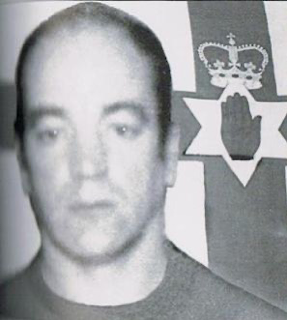
Death of Robin Jackson, Northern Irish Loyalist Paramilitary

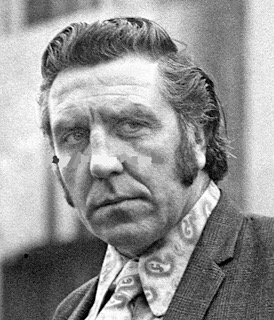
Robin Jackson, also known as The Jackal, a Northern Irish loyalist paramilitary and part-time soldier, dies at his home in Donaghcloney, County Down, Northern Ireland, on May 30, 1998.

Jackson is born on September 27, 1948, in Tullynarry Cottages, Donaghmore, County Tyrone, Northern Ireland, one of seven children of John Jackson, farmhand, and his wife Eileen. As a teenager he participates in Paisleyite demonstrations against the Northern Ireland civil rights movement. He is already a local “hard man” who cultivates an air of menace. After a brief period in Australia, he returns home and serves in the Ulster Defence Regiment (UDR) from 1972 to 1975. He also joins the Ulster Volunteer Force (UVF) and is alleged to have committed his first murders in 1973. He is arrested in 1973 after the doorstep killing of a Banbridge Catholic who works in the shoe factory that employs Jackson. The victim’s wife identifies Jackson as the murderer, but the charge is withdrawn after she admits to a degree of prompting by the police.

Jackson is a leading member of a UVF gang linked to about 100 murders carried out at random against Catholic civilians between 1973 and 1979, earning for the north Armagh and east Tyrone area the nickname “the murder triangle.” He also allegedly helps to plan the Dublin and Monaghan car bombings of May 17, 1974, killing thirty-three civilians, and orchestrates the attack on the Miami Showband on July 31, 1975. He becomes UVF Mid-Ulster Brigade commander in 1975. Never convicted of any of the numerous murders attributed to him, he is however jailed between 1979 and 1983 for arms possession.

Jackson marries Eileen Maxwell in the late 1960s. They have a son and two daughters. The marriage does not survive his imprisonment and after his release he moves to Donaghcloney, County Down, where he lives with a much younger girlfriend. He remains active in loyalist paramilitarism but takes a less prominent role. He survives several Irish Republican Army (IRA) attempts on his life, including the detonation of a car bomb outside his house. In 1984, the editor of the Belfast edition of the Sunday World  is shot and wounded after publishing articles denouncing “the Jackal,” the nickname by which the press calls Jackson during his lifetime.

After the Anglo–Irish Agreement of 1985, Jackson is briefly linked to Ulster Resistance (UR), a paramilitary group founded by associates of Ian Paisley. He allegedly assists the rearming and reorganisation of the Mid-Ulster UVF under Billy Wright after the killing of his brother-in-law and alleged accomplice, Roy Metcalf, by the IRA in 1988. Relations between Wright and Jackson cool after the killing of a Catholic in Donaghcloney by Wright’s men leads to Jackson being called in for questioning, and he supports the UVF leadership in its 1996–97 dispute with Wright. He is also the focus of recurring allegations about collusion between loyalist paramilitaries and elements of the security forces in mid-Ulster, including claims that he operated on behalf of British military intelligence who shielded him from prosecution.

Jackson dies of lung cancer at the age of 49 at his Donaghcloney home on May 30, 1998. He is buried on June 1 in a private ceremony in the St. Bartholomew Church of Ireland churchyard in his native Donaghmore, County Down. His grave, close to that of his parents, is unmarked apart from a steel poppy cross. His father had died in 1985 and his mother outlives him by five years.

Considerable uncertainty surrounds his involvement in many of the crimes attributed to him, but there is no doubt that he is a cold-blooded multiple murderer and one of the most sinister “hard men” of loyalist paramilitarism.

(From: “Jackson, Robin” by Patrick Maume, Dictionary of Irish Biography, http://www.dib.ie, October 2009)


Leave a comment

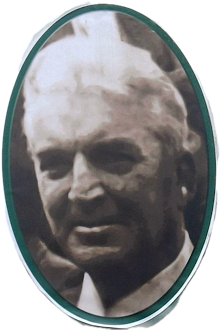
Birth of Proinsias Mac Airt, Activist & IRA Volunteer

Proinsias Mac Airt (English: Frank Card), Irish republican activist and long-serving member of the Irish Republican Army (IRA), is born in Belfast, Northern Ireland, on April 18, 1922.

Mac Airt first becomes involved in Irish republicanism as a boy when he joins the Fianna Éireann. His first imprisonment is in 1942 when he is sent to jail for illegal military foot drilling. He Is later interned during the IRA’s Border Campaign of 1956-1962.

Having retired at some earlier point, Mac Airt returns to the republican movement in 1969, throwing his lot in with the newly established Provisional Irish Republican Army (PIRA) and their political arm Provisional Sinn Féin. Indeed, in early 1970 his Patrick Pearse cumann, which he sets up in the Clonard area of the Falls Road, is the first branch of Provisional Sinn Féin established in Belfast and proves central to the growth of the dissident party in the city. In August 1970, he Is appointed editor of the Belfast-based Republican News, succeeding Jimmy Steele who had died soon after being appointed editor. Despite his advancing age Mac Airt also becomes involved in the gun battles that rage between the republicans from Falls and loyalists from the neighbouring Shankill Road. As a consequence, he becomes one of the leaders of the nascent PIRA in Belfast. He is publicly named as a leading republican by General Anthony Farrar-Hockley who commands the British Army present during the clashes and with whom Mac Airt has held failed negotiations at the scene of conflict. He serves as Adjutant to Billy McKee, who is first commander of the Provisional IRA Belfast Brigade. According to Brendan Hughes, Mac Airt’s Kane Street home doubles as Belfast Brigade headquarters at the early stage in the movement’s history.

On April 15, 1971, Mac Airt, along with Billy McKee, is arrested by the British Army when found in possession of a handgun. Both men are sentenced under the Explosive Substances Act 1883 and sent to Crumlin Road Gaol. In the prison the two men are recognised as the leaders of the republican prisoners, a role held by Gusty Spence on the loyalist side. They co-operate informally with Spence to maintain order until they agree to establish an official Camp Council. The make-up of this group sees Mac Airt and McKee representing the PIRA, Spence and an associate identified only as “Robert” representing the Ulster Volunteer Force (UVF) and Ned McCreery and James Craig as Ulster Defence Association (UDA) delegates, with members of the Official IRA (OIRA) and Irish National Liberation Army (INLA) eventually added.

Mac Airt is involved in the talks held between republicans and clergymen from various Protestant churches held at Feakle, County Clare, on December 12, 1974. While the talks produced little, he Is one of those who maintains contact with the clergymen. Indeed, on January 19, 1975, one of the ministers, Rev William Arlow of the Irish Council of Churches (ICC), even introduces Mac Airt and his ally Jimmy Drumm to British government officials Michael Oatley and James Allan in an attempt to have the republican grievances heard.

Although a new generation of leaders emerges in the Provisional IRA and Sinn Féin, Mac Airt remains an influential veteran. He is close to Danny Morrison and Tom Hartley and helps to ensure the removal of Seán Caughey from the editorship of Republican News in 1975 and his replacement by Morrison.

In 1968, Mac Airt records two vocal songs, “Croppy Boy” and “Flag of the Fianna” on the LP record Irish Songs of Freedom produced for the Outlet Recording Co. Ltd, Belfast.

Mac Airt dies on January 8, 1992, at the age of 69. The President of Sinn FéinGerry Adams, delivers the graveside oration at his funeral, describing him as “a radical in the Connolly tradition.”


Leave a comment

Hunger Striker Bobby Sands Wins Seat in the British Parliament

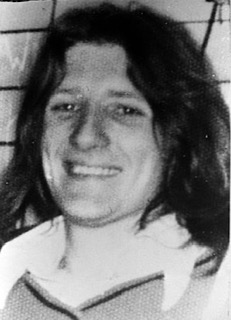
On April 9, 1981, imprisoned Irish Republican Army (IRA) hunger striker Bobby Sands is elected to the Parliament of the United Kingdom as the MP for Fermanagh and South Tyrone.

Sands stands as a candidate of the “Anti-H Block” campaign – the section of the Maze prison in Maze, County Down, Northern Ireland, reserved for republicans and loyalists convicted of terrorist offences. He wins just over 52% of the vote in the Northern Ireland by-election compared to 49% for the candidate of the Official Unionist party, Harry West. His winning margin is 1,400 but over 3,000 ballot papers are spoiled.

Recriminations over his victory begin almost immediately. Unionist parties come under fire for not mounting an effective challenge. There is also sharp criticism of the failure of the moderate Catholic Social Democratic and Labour Party (SDLP) to contest the seat. Many believe the absence of an alternative Catholic candidate ensures victory for Sands in a seat with a Catholic majority.

Sands’ election agent, Owen Carron, says the British Government has been sent a message. “The nationalist people have voted against Unionism and against the H-blocks. It is time Britain got out of Ireland and put an end to the torture of this country,” he says.

At the time of his election, Sands, 27, has served four years of a fourteen-year sentence for firearms possession. He began his hunger strike 41 days earlier to press the republican prisoners’ claim to be treated as prisoners of war.

The government has to decide how to respond to Sands’ victory.  It can try to have him expelled on the grounds that he is an “unacceptable member.” However, unless he starts to eat again, he is not expected to live for more than another few weeks. He has already lost two stone and is too weak to leave his bed in the prison’s hospital wing.

Sand’s victory is the second time the voters of Fermanagh and South Tyrone have elected a republican prisoner as their MP. The first, Philip Clarke, in 1955, is disqualified because the law then does not allow convicts to take up political office.

In spite of attempts by the European Commission of Human Rights to mediate, Sands dies on May 5, 1981. He is the first of ten republican prisoners to die after hunger strikes. They attract international media attention and sympathy for the republicans.

The hunger strikes come to an end in October 1981. However, the Conservative Government of Margaret Thatcher grants the republicans only a few minor concessions.

(From: “1981: Hunger striker elected MP” on “On The Day 1950-2005,” BBC, news.bbc.co.uk)


Leave a comment

Birth of Martin McAleese, Politician, Dentist & Accountant

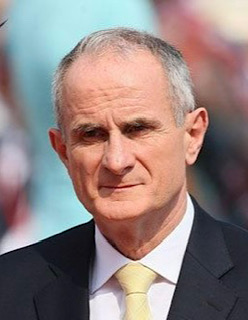
Martin McAleese, Irish politician, dentist and accountant who has served as the Chancellor of Dublin City University (DCU) since August 2011, is born in Belfast, Northern Ireland, on March 24, 1951. He serves as a Senator from 2011 to 2013, after being nominated by the Taoiseach. He is the husband of the former president of IrelandMary McAleese.

McAleese is educated at St. Mary’s Christian Brothers’ Grammar School, Belfast. He then studies at Queen’s University Belfast (QUB), obtaining an honours Bachelor of Science in Physics. He plays Gaelic football for the Antrim Minors and is captain of the team in 1969. In 1972, after he graduates he moves to Dublin and trains there as an accountant with the chartered accountancy firm of Stokes, Kennedy, Crowley. He later works as financial controller for an Aer Lingus subsidiary.

McAleese marries Mary Leneghan in 1976. The couple resides in Scholarstown, Dublin, for a short period, and then for almost twelve years near RatoathCounty Meath. In 1980, he returns to full-time education at Trinity College Dublin (TCD), to study as a dentist, subsequently moving back, with his family, to Northern Ireland, where he practises as a dentist in Crossmaglen and BessbrookCounty Armagh.

While his wife serves as President of Ireland, McAleese initiates a series of meetings with senior Ulster loyalist paramilitary leaders to pursue peace negotiations. These actions do not take place without controversy, but are widely viewed as instrumental in bringing loyalist paramilitary groups to peace talks.

In May 2011, McAleese is appointed as a Senator by the Taoiseach Enda Kenny. In August 2011, he is appointed the Chancellor of Dublin City University, taking over from David Byrne.

On February 1, 2013, McAleese announces his intention to resign as a member of Seanad Éireann.

McAleese accepts an appointment as Chairman of the Inter-Departmental Committee which is set up by the Government of Ireland to investigate the Magdalene laundries. His findings have been criticised by some survivors and researchers from the Magdalene Names project.

On October 18-19, 2014, McAleese attends the One Young World Summit in Dublin as a keynote speaker. Here, he hosts a special session for the One Young World Peace and Conflict Resolution Project alongside former Ulster Defence Association (UDA) prisoner Jackie McDonald and former Irish Republican Army (IRA) prisoner Sean Murray. They address young people from 191 countries to share and develop ideas to strengthen efforts at conflict resolution in their own countries.

McAleese and his wife Mary have three children. The family moves to RostrevorCounty Down, in 1987, when he sets up practice in County Armagh.


Leave a comment

The Abercorn Restaurant Bombing

The Abercorn Restaurant bombing is a bomb attack that takes place in a crowded city centre restaurant and bar in BelfastNorthern Ireland, on March 4, 1972. The bomb explosion claims the lives of two young women and injures over 130 people. Many of the injuries are severe and include the loss of limbs and eyes. The Provisional Irish Republican Army is blamed, although no organisation ever claims responsibility and nobody is ever charged in connection with the bombing. According to Ed Moloney, an Irish journalist who has written extensively about the IRA, republican sources have unofficially confirmed the group’s involvement.

The Abercorn is on 7-11 Castle Lane in central Belfast and houses a ground-floor restaurant and upstairs bar. It is owned by 45-year-old Bill O’Hara, a Catholic businessman. On Saturday, March 4 1972, it is packed with late afternoon shoppers when an anonymous caller issues a bomb warning to 999 at 4:28 p.m. The caller does not give a precise location, but advises that a bomb will go off in Castle Lane in five minutes’ time. The street, located in the busy Cornmarket area, mills with crowds of people shopping and browsing as is typical on a Saturday in Belfast.

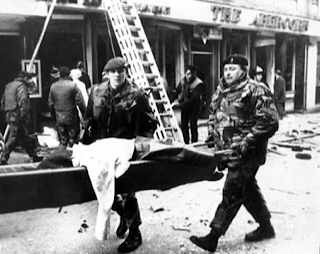
Two minutes later, at 4:30 p.m., a handbag containing a five-pound gelignite bomb explodes under a table inside the ground-floor restaurant. Two young Catholic friends are killed outright: Anne Owens (22), who is employed at the Electricity Board, and Janet Bereen (21), a hospital radiographer. The young women have been out shopping together and have stopped at the Abercorn to have coffee. They are seated at the table nearest the bomb and take the full force of the blast. Owens had survived a previous bombing at her workplace. More than 130 are injured in the explosion, which overturns tables and chairs, and brings the ceiling crashing down onto the ground floor restaurant. Many people are severely maimed. Some have their limbs blown off while others suffer terrible head and facial injuries, burns, deep cuts and perforated eardrums. Three have eyes destroyed by shards of flying glass. Two sisters, Jennifer and Rosaleen McNern (one of whom is due to be married), are both horrifically mutilated. Jennifer loses both legs and Rosaleen, the bride-to-be, loses her legs, right arm and one eye.

Witnesses describe a scene of panic and chaos as the bloodied survivors stumble through the smoke, broken glass, blood, and rubble, crawling over one another to get away, while firemen attempt to bring out the injured, many of whom lay with their bodies mangled, unable to move. A Royal Ulster Constabulary (RUC) officer is one of the first people to arrive on the scene. He describes the carnage that greets him as something he will never forget. “All you could hear was the moaning and squealing and the people with limbs torn from their bodies.”

A woman who had been inside the restaurant before the blast later tells an inquest that she had seen two teenaged girls walk out of the Abercorn leaving a handbag behind shortly before the explosion. This same woman was waiting at a bus stop when the bomb went off. A detective-sergeant establishes that the explosion’s epicentre is to the right of the table where the two girls had been sitting. The bomb is reportedly left behind inside a handbag.

Nobody is ever charged in connection with the bombing and no paramilitary organisation ever claims responsibility for it. Both wings of the IRA deny involvement and condemn the bombing. However, the RUC and British Military Intelligence blame the Provisional IRA First Battalion Belfast Brigade and it is now widely accepted that it was responsible. There is a public backlash against the organisation in Irish nationalist and Catholic areas such as West Belfast. The two dead women were both Catholic, along with many of the injured including the McNern sisters, and the Abercorn Bar was a popular venue with many young Catholics and nationalists.

Provisional IRA Chief of Staff Seán Mac Stíofáin claims the bombing is the work of loyalist paramilitaries. According to Mac Stíofáin, the Woodvale Defence Association (WDA) had made threats against the Abercorn in its weekly newsletter after the Abercorn management refused to play the British national anthem. The WDA denies the allegations, adding that one of its members had a friend who was badly injured in the blast. The day after the bombing, a leaflet allegedly circulated by the loyalist Vanguard Unionist Progressive Party (VUPP) declares: “We make no apologies for Abercorn. No apologies were made for Aldershot […] These premises were being used extensively by Southern Irish shoppers for the transmission of information vital to the terrorist campaign…” Vanguard leader Rev. Martin Smyth dismisses the statement as fake.

According to Ed Moloney in his book Voices from the Grave, IRA sources have since confirmed, albeit unofficially, that the Provisional IRA was responsible. Moloney suggests that, based on eyewitness accounts, two teenaged IRA girls were probably the bombers. Unnamed republican sources suggest that the Abercorn was targeted because the upstairs bar was frequented by off-duty British Army soldiers.

The detonation of a bomb in a city centre restaurant on a Saturday afternoon packed with shoppers, and the severity of the injuries—inflicted on mostly women and children—ensures that the attack causes much revulsion and leaves a lasting impression on the people of Belfast. It is condemned by both unionist and Irish nationalist politicians and also by church leaders. Ian Paisley calls on the government “to mobilise and arm every able-bodied volunteer to meet the enemy.” The extent of the injuries the blast inflicts results in the Royal Victoria Hospital implementing a “disaster plan” for the first time.

The sculptor F. E. McWilliam produces a series of bronzes (1972–73) known as Women of Belfast in response to the Abercorn bombing.

Unrelated to the bombing, the Abercorn features in a sectarian attack in July 1972, when Michael McGuigan, a Catholic working in the bar, is abducted by loyalist paramilitaries, shot and left for dead, but survives. He had been dating a Protestant waitress who also worked in the Abercorn, which is why the loyalist group targets him.

The Abercorn is demolished in 2007.

(Pictured: A victim’s body being removed from the scene by members of the security forces following the bomb explosion)


Leave a comment

Birth of Charles Harding Smith, Loyalist & UDA Leader

Charles Harding Smith, a Northern Irish loyalist and the first effective leader of the Ulster Defence Association (UDA), is born in Belfast, Northern Ireland, on January 24, 1931. An important figure in the Belfast-based “defence associations” that form the basis of the UDA on its formation in 1971, he later becomes embroiled in feuds with other UDA leaders and is eventually driven out of Northern Ireland by his opponents.

A former soldier in the British Army, Smith, at the time residing in Rosebank Street on the Shankill Road, calls a meeting of other locals at the Leopold Street Pigeon Fanciers Club to develop a response to attacks by republicans from the neighboring Ardoyne area. The location is chosen because Smith is himself a pigeon fancier and a member of the club. At the meeting, it is agreed to establish a vigilante group, the Woodvale Defence Association (WDA), with Smith in command and assisted by Davy Fogel, who organises military drilling for the forty or so recruits, and Ernie Elliott.

The WDA gains widespread notoriety and is blamed for a series of bomb attacks and shootings, most of which have been carried out by the Ulster Volunteer Force (UVF). Nevertheless, Smith’s reputation as a hardline loyalist is boosted as a result and when his group merges with other similar vigilante movements to form the Ulster Defence Association (UDA) in late 1971, he is chosen as chairman of the new group’s thirteen-member Security Council ahead of the other leading candidates, Tommy Herron and Jim Anderson. According to journalist Martin Dillon, Smith is heavily influenced by William Craig and William McGrath, both of whom see a need for a group to replace the Ulster Special Constabulary (USC) and feel that they can easily influence Smith to their way of thinking.

Smith soon takes charge of procuring arms for the UDA. In early 1972, working in tandem with Belfast businessman John Campbell who agrees to bankroll the purchases, he is put in contact with a Scottish arms dealer from whom he is to purchase £50,000 worth of weapons. He sends three WDA associates, John White, Bobby Dalzell, and Robert Lusty (who is also a serving officer in the Royal Ulster Constabulary (RUC)), to meet the arms dealer in a London hotel, following them without attending the actual meeting. The “arms dealer” is actually an RUC Special Branch agent and, after recording the conversation with the WDA men, arrests all three. Smith goes to Scotland Yard the same day to inquire about his friends only to be arrested himself.

Smith remains in custody in England until December 1972 when his case comes to trial. Campbell claims that the deal had been organised for the RUC to entrap the arms dealer, whom they believe to be a Provisional Irish Republican Army member and a series of mistakes by the prosecution helps to ensure that the case collapses with Smith acquitted. The trial is used as part of early arguments regarding collusion between the RUC and loyalists as a list of RUC Special Branch suspects is uncovered in Smith’s house while he attempts to call Chief Constable Graham Shillington as a character witness.

By the time Smith returns to Belfast in December 1972 there has been changes in the UDA with Tommy Herron in effective control of the organisation and Davy Fogel the dominant figure amongst the WDA. He immediately takes back control of his west Belfast stronghold, threatening Fogel with death if he does not fall into line. Fogel, a close ally of Ernie Elliott, who was killed in circumstances that Smith had been rumoured to be involved in, although it is later determined that Elliott was shot dead after a drunken brawl on Sandy Row had descended into a gunfight, decides it is best not to go up against Smith and stands down.

However, Smith is not satisfied and, after putting out intelligence that Fogel has been taking UDA funds for himself, arrests Fogel and holds him captive for three hours in a Shankill social club where he is told to leave the area. Fogel briefly leaves for east Belfast but when the UDA there makes it clear he is not welcome either he leaves to live in England, from where he controversially gives an interview about his time in the UDA to The Sunday Times. Among claims made by Fogel in this interview is one that Smith was attempting to take control of the UDA with the help of the UVF. Smith is a strong admirer of the UVF’s military structure and hopes to replicate it in the UDA but he has a deep dislike of UVF leader Gusty Spence. As part of his remit to instill military discipline, Smith moves against a culture of racketeering that has become endemic in the west Belfast UDA during his absence. It is this initiative that leads to the rumours concerning his involvement in the death of Elliott, who had been named by some of his rivals in the UDA as a gangster.

Despite Smith’s show of strength following his return to Belfast his public persona remains low-key, with Herron fast emerging as the public face of the UDA. Much of this is down to the fact that Smith is inarticulate and unable to project a good image, unlike Herron who is a good talker and fairly charismatic. The emergence of these two leaders at the same time however is to bring the fledgling movement into near civil war.

Following a period of marginalisation Jim Anderson, who is serving as caretaker leader of the UDA, resigns as chairman of the UDA and as a result a meeting is called of the group’s leaders in March 1973 to determine who will succeed him. By this time Smith and Herron are recognised as the undisputed leaders of the Belfast UDA. There is a fear that whichever of the two is chosen as chairman, the other one will automatically feel obliged to challenge his leadership. As a result, it is determined that someone else should be appointed chairman as a compromise candidate and as Highfield-based activist Andy Tyrie, a man noted for his skill as an organiser, is chairing the conference it is decided that he will be acceptable to both men as chairman of the UDA. Tyrie soon proves to be a powerful rival to the two leaders. In September 1973, Herron is kidnapped and shot dead. His murder remains unsolved.

Tyrie had not proven to be the puppet Smith had hoped and had consolidated his power through his close involvement with Glenn Barr and the Ulster Workers’ Council during the strike of May 1974, an event that had helped to give real credence to Tyrie’s leadership abilities. Fearing the growing power of Tyrie, Smith criticises the UDA leader for sending a delegation to Libya to meet Muammar Gaddafi, who is a hated figure for many loyalists due to his providing arms to the Provisional Irish Republican Army. Smith, who had known about the trip in advance but had raised no objections, verbally attacks Tyrie over the Libya debacle in a meeting of the Inner Council in December 1974 before declaring the following January that he intends to split his West Belfast Brigade from the rest of the UDA.

Two weeks after announcing the schism, Smith is attending a meeting at the West Belfast UDA’s headquarters with Tommy Lyttle when he notices a sniper on a nearby roof. Smith, who is wearing a bulletproof vest, opens his coat as if to challenge the sniper to fire but is seriously wounded when the sniper shoots twice, hitting him both times with armour-piercing bullets. With Smith in hospital, Tyrie calls a meeting of the leading figures in the Shankill UDA and manages to convince Lyttle and other leading figures that Smith is too divisive a figure to remain in charge.

Smith is out of the hospital after only two weeks and declares himself back in charge, but before long he has fallen foul of a number of important people. Two Shankill UDA members are interned on the basis of evidence that rumours suggest had come from Smith, while he also clashed with the local UVF after suggesting that they merge but only on the basis that he will be in control. He begins to make threats against Barr and Chicken, two popular members who are leading figures on the UDA’s political side. Smith calls a meeting of his commanders, but, on February 6, 1975, in an attack arranged in advance by his opponents within the UDA, a gunman bursts in and shoots him twice in the chest. The gunman walks up to the injured Smith and prepares to shoot him in the head but the gun jams and he again survives an attempt on his life.

Smith spends another week in hospital after which he again returns to his Belfast home. Loyalist Davy Payne is sent to his house with another hitman and the two order Smith to leave Northern Ireland. He is taken to the airport the following day and leaves for England, leaving Tyrie as sole leader of the UDA. He settles in Southowram, West Yorkshire, where he works as a lorry driver before his death in 1997. During Dáil Éireann debates in 2005 he is named as a “self-confessed British intelligence agent.”


Leave a comment

The Kingsmill Massacre

The Kingsmill massacre, also referred to as the Whitecross massacre, is a mass shooting that takes place on January 5, 1976, near the village of Whitecross in south County ArmaghNorthern Ireland. Gunmen stop a minibus carrying eleven Protestant workmen, line them up alongside it and shoot them. Only one victim survives, despite having been shot 18 times. A Catholic man on the minibus is allowed to go free. A group calling itself the South Armagh Republican Action Force claims responsibility. It says the shooting is retaliation for a string of attacks on Catholic civilians in the area by Loyalists, particularly the killing of six Catholics the night before. The Kingsmill massacre is the climax of a string of tit for tat killings in the area during the mid-1970s, and is one of the deadliest mass shootings of the Troubles.

On January 5, 1976, just after 5:30 p.m., a red Ford Transit minibus is carrying sixteen textile workers home from their workplace in Glenanne. Five are Catholics and eleven are Protestants. Four of the Catholics get out at Whitecross and the bus continues along the rural road to Bessbrook. As the bus clears the rise of a hill, it is stopped by a man in combat uniform standing on the road and flashing a torch. The workers assume they are being stopped and searched by the British Army. As the bus stops, eleven gunmen in combat uniform and with blackened faces emerge from the hedges. A man “with a pronounced English accent” begins talking. He orders the workers to get out of the bus and to line up facing it with their hands on the roof. He then asks, “Who is the Catholic?” The only Catholic is Richard Hughes. His workmates, now fearing that the gunmen are loyalists who have come to kill him, try to stop him from identifying himself. However, when Hughes steps forward the gunman tell him to “get down the road and don’t look back.”

The lead gunman then says, “Right,” and the others immediately open fire on the workers. The eleven men are shot at very close range with automatic rifles, which includes Armalites, an M1 carbine and an M1 Garand. A total of 136 rounds are fired in less than a minute. The men are shot at waist height and fall to the ground, some falling on top of each other, either dead or wounded. When the initial burst of gunfire stops, the gunmen reload their weapons. The order is given to “Finish them off,” and another burst of gunfire is fired into the heaped bodies of the workmen. One of the gunmen also walks among the dying men and shoots them each in the head with a pistol as they lay on the ground. Ten of them die at the scene: John Bryans (46), Robert Chambers (19), Reginald Chapman (25), Walter Chapman (23), Robert Freeburn (50), Joseph Lemmon (46), John McConville (20), James McWhirter (58), Robert Walker (46) and Kenneth Worton (24). Alan Black (32) is the only one who survives. He had been shot eighteen times and one of the bullets had grazed his head. He says, “I didn’t even flinch because I knew if I moved there would be another one.”

After carrying out the shooting, the gunmen calmly walk away. Shortly after, a married couple comes upon the scene of the killings and begin praying beside the victims. They find the badly wounded Alan Black lying in a ditch. When an ambulance arrives, Black is taken to a hospital in Newry, where he is operated on and survives. The Catholic worker, Richard Hughes, manages to stop a car and is driven to Bessbrook Royal Ulster Constabulary (RUC) station, where he raises the alarm. One of the first police officers on the scene is Billy McCaughey, who had taken part in the Reavey killings. He says, “When we arrived it was utter carnage. Men were lying two or three together. Blood was flowing, mixed with water from the rain.” Some of the Reavey family also come upon the scene of the Kingsmill massacre while driving to hospital to collect the bodies of their relatives. Johnston Chapman, the uncle of victims Reginald and Walter Chapman, says the dead workmen were “just lying there like dogs, blood everywhere”. At least two of the victims are so badly mutilated by gunfire that immediate relatives are prevented from identifying them. One relative says the hospital mortuary “was like a butcher’s shop with bodies lying on the floor like slabs of meat.”

Nine of the dead are from the village of Bessbrook, while the bus driver, Robert Walker, is from Mountnorris. Four of the men are members of the Orange Order and two are former members of the security forces: Kenneth Worton is a former Ulster Defence Regiment (UDR) soldier while Joseph Lemmon is a former Ulster Special Constabulary (USC) officer. Alan Black is appointed a Member of the Order of the British Empire (MBE) in the 2021 New Year Honours, for his cross-community work since the massacre.

The next day, a telephone caller claims responsibility for the attack on behalf of the “South Armagh Republican Action Force” or “South Armagh Reaction Force.” He says that it was retaliation for the Reavey–O’Dowd killings the night before, and that there will be “no further action on our part” if loyalists stop their attacks. He adds that the group has no connection with the Irish Republican Army (IRA). The IRA denies responsibility for the killings as it is on a ceasefire at the time.

However, a 2011 report by the Historical Enquiries Team (HET) concludes that Provisional IRA members were responsible and that the event was planned before the Reavey and O’Dowd killings which had taken place the previous day, and that “South Armagh Republican Action Force” was a cover name. Responding to the report, Sinn Féin spokesman Mitchel McLaughlin says that he does “not dispute the sectarian nature of the killings” but continues to believe “the denials by the IRA that they were involved”. Social Democratic and Labour Party (SDLP) Assemblyman Dominic Bradley calls on Sinn Féin to “publicly accept that the HET’s forensic evidence on the firearms used puts Provisional responsibility beyond question” and to stop “deny[ing] that the Provisional IRA was in the business of organising sectarian killings on a large scale.”

The massacre is condemned by the British and Irish governments, the main political parties and Catholic and Protestant church leaders. Merlyn Rees, the British Secretary of State for Northern Ireland, condemns the massacre and forecasts that the violence will escalate, saying “This is the way it will go on unless someone in their right senses stops it, it will go on.”

The British government immediately declares County Armagh a “Special Emergency Area” and deploys hundreds of extra troops and police in the area. A battalion of the Ulster Defence Regiment (UDR) is called out and the Spearhead Battalion is sent into the area. Two days after the massacre, the British Prime Minister Harold Wilson announces that the Special Air Service (SAS) is being sent into South Armagh. This is the first time that SAS operations in Northern Ireland are officially acknowledged. It is believed that some SAS personnel had already been in Northern Ireland for a few years. Units and personnel under SAS control are alleged to be involved in loyalist attacks.

The Kingsmill massacre is the last in the series of sectarian killings in South Armagh during the mid-1970s. According to Willie Frazer of Families Acting for Innocent Relatives (FAIR), this is a result of a deal between the local UVF and IRA groups.

(Pictured: The minibus carrying the textile factory workers is left peppered with bullet holes and blood stains the ground after the massacre, as detectives patrol the scene of the murders)


Leave a comment

Donnelly’s Bar and Kay’s Tavern Attacks

During the evening of December 19, 1975, two coordinated attacks are carried out by the Ulster Volunteer Force (UVF) in pubs on either side of the Irish border. The first attack, a car bombing, takes place outside Kay’s Tavern, a pub along Crowe Street in DundalkCounty LouthRepublic of Ireland – close to the border. The second, a gun and bomb attack, takes place at Donnelly’s Bar & Filling Station in Silverbridge, County Armagh, just across the border inside Northern Ireland.

The attacks are linked to the Glenanne gang, a group of loyalist militants who are either members of the UVF, the Ulster Defence Regiment (UDR), the Royal Ulster Constabulary (RUC) and the closely linked UVF paramilitary the Red Hand Commando (RHC). Some of the Glenanne gang are members of two of these organisations at the same time, such as gang leaders Billy Hanna, who is in both the UVF and the UDR and who fights for the British Army during the Korean War, and John Weir from County Monaghan, who is in the UVF and is a sergeant in the RUC. At least 25 UDR men and police officers are named as members of the gang. The Red Hand Commando claim to have carried out both attacks.

According to journalist Joe Tiernan, the attacks are planned and led by Robert McConnell and Robin “The Jackal” Jackson who are both alleged to have carried out dozens of sectarian murders during The Troubles, mainly from 1974 to 1977, mostly in south County Armagh – which in 1975 is virtually lawless. Loyalist paramilitaries and the Provisional Irish Republican Army roam the streets and countryside and can set up bogus military checkpoints freely.

The attacks are planned at the Glenanne farm of RUC reserve officer James Mitchell which is where most terrorist acts are planned by the gang and the farm also acts as a UVF arms dump and bomb-making site. After the attacks are finished everyone involved in both attacks is to meet at Mitchell’s farm. Then if there is any heat, Mitchell can claim the bombers and shooters were with him when the attacks happened.

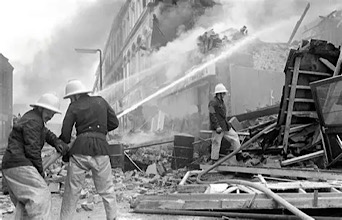
The first phase of the plan starts at around 6:15 p.m. along Crowe Street in Dundalk when a 100-pound no-warning bomb explodes in a Ford sports car just outside Kay’s Tavern. The blast kills Hugh Watters, who is a tailor and has just dropped into the pub to deliver some clothes he has altered for the pub’s owner, almost instantly. Jack Rooney, who is walking past the town hall on the opposite side of the street, is struck in the head by flying shrapnel and dies three days later. A further 20 people are injured in the explosion, several of them very seriously. The car bomb is fitted with fake southern registration plates and placed in one of the busiest streets in Dundalk in the hope of causing maximum death and injury. According to Joe Tiernan, UVF commander Robin Jackson plants the bomb and along with other members of his unit escapes across the border in a blue Hillman Hunter around the time the bomb goes off.

At around 9:00 p.m., about three hours after the Dundalk bombing, the second phase of the coordinated plan begins. It is led by McConnell and takes place at Donnelly’s Bar & Filling Station in the small Armagh village Silverbridge, close to Crossmaglen.

The unit arrives in two cars and come unusually fast toward the pub. The publican’s son, Michael Donnelly (14), is serving petrol to a customer. He notices the strange speed of the cars. He tries to run toward the pub, but McConnell jumps out of one of the cars and shoots the teenage boy dead with a Sten gun. McConnell then shoots the man Michael Donnelly had been serving petrol to in the head. Although the man survives the shooting, he is maimed for life.

Then a second gunman, believed to be Billy McCaughey, a UVF volunteer and member of the RUC Special Patrol Group, shoots dead a second person, local man Patrick Donnelly (no relation to the pub owner’s family) who has been waiting for petrol. McConnell then goes inside the pub and sprays the bar with his Sten SMG, killing a third man, Trevor Bracknell, and seriously injuring three more people.

As McConnell withdraws to his car, two other members of the unit carry a 25-pound cylinder bomb inside the pub. As McConnell’s unit flees back to Mitchell’s farm, the bomb detonates inside the pub. However, by this time most of the people have already fled.

(Pictured: Photograph of the destruction at Kay’s Tavern after the loyalist car bomb explosion on December 19, 1975. Members of the Garda and Dundalk fire service are seen in the foreground. Also present are a number of visiting government ministers from Dublin.)