seamus dubhghaill

Promoting Irish Culture and History from Little Rock, Arkansas, USA


Leave a comment

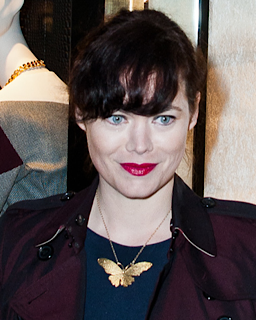
Birth of Jasmine Guinness, Designer & Fashion Model

Jasmine Leonora Guinness, Irish designer and a fashion model active since 1994, is born on September 28, 1976. She is a member of Anglo-Irish brewing Guinness family.

Guinness is the daughter of Patrick Guinness and Liz Casey. She is educated at St. Columba’s CollegeRathfarnham, in Dublin. She also spends a year at Winchester School of Art, the art school of the University of Southampton, situated 10 miles (14 km) north of Southampton in the city of Winchester near the south coast of England.

Guinness and Gawain O’Dare Rainey are engaged on January 31, 2005, and married on July 1, 2006, in Leixlip, County Kildare. The wedding is extensively covered in the July 18, 2006 issue of Hello! magazine and is attended by 500 guests, including the designer of her draped silk dress, Jasper ConranMario TestinoPaddy MoloneyAnjelica HustonJacquetta WheelerJade ParfittErin O’ConnorGarech Browne and Philip Treacy.

Her husband is the son of Michael Rainey and the Hon. Jane Ormsby-Gore, a daughter of David Ormsby-Gore, 5th Baron Harlech. They have two sons and a daughter together.

Guinness opens the toy shop Honeyjam on London‘s Portobello Road in 2006.

A portrait of Guinness is held at the National Portrait Gallery in London. She has modeled for various perfume and make-up campaigns, including Armani and Shu Uemura. She is the face of the Goffs Million horse races at the Curragh Racecourse in September 2007, an event that pays the highest winnings of any race meeting in Europe.

In 2009, Guinness is the face of the Arthur’s Day event celebrating her ancestor Arthur Guinness. In March and December 2011 she is again the subject of articles in Hello! magazine.

The year 2014 marks a revival of Guinness’s modeling career as she leads Jaeger‘s AW14 campaign alongside her mother Liz and fellow models Kirsty Hume and Jodie Kidd. Her range largely includes knitwear, including cardigans, skirts and sweater dresses.

Guinness is the great-granddaughter of Diana Mitford (later Lady Mosley), who is one of the Mitford sisters, and her first husband Bryan Guinness, later the 2nd Lord Moyne. Her paternal grandfather, Desmond Guinness, is a conservationist specialising in Georgian and classical architecture, while her paternal grandmother, Mariga Guinness, is born Marie-Gabrielle, Princess of Urach. Desmond and Mariga Guinness are co-founders of the Irish Georgian Society. Guinness’s maternal family is researched in the RTÉ programme Where Was Your Family During the Famine?

Leave a comment

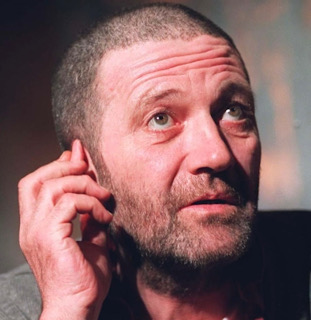
Death of Donal McCann, Stage, Film & Television Actor

Donal McCann, Irish stage, film, and television actor, dies from pancreatic cancer in Dublin on July 17, 1999. He is best known for his roles in the works of Brian Friel and for his lead role in John Huston‘s last film, The Dead (1987). In 2020, he is listed as number 45 on The Irish Times list of Ireland’s greatest film actors.

McCann is born on May 7, 1943, in Terenure, Dublin. His father is John J. McCann, a playwright and politician who serves twice as Lord Mayor of Dublin. Although he acts in a production of his father’s Give Me a Bed of Roses at Terenure College in 1962, he briefly studies architecture before taking a job as a trainee sub-editor at the Evening Press which allows him to pursue part-time acting classes at the Abbey School of Acting at the same time. He joins the Abbey Players in the late 1960s.

Among his most important early roles are Cú Chulainn in W. B. Yeats‘s On Baile Strand (1966), and as Estragon in a seminal production of Samuel Beckett‘s Waiting for Godot, partnering with Peter O’Toole as Vladimir (1969).

McCann’s career includes parts in many plays from the Irish literary canon, including Tarry FlynnThe Shaughran, and the Gate Theatre‘s highly acclaimed production of Seán O’Casey‘s classic Juno and the Paycock in the 1980s (McCann plays the “Paycock” (Captain Boyle) opposite Geraldine Plunkett as Juno and John Kavanagh as Joxer Daly) as well as a subsequent production of O’Casey’s The Plough and the Stars.

McCann develops a particularly fruitful relationship with the playwright Brian Friel. He plays the role of Gar O’Donnell, the public figure, in a film adaptation of Philadelphia, Here I Come! in 1970 and, despite popular belief, he never plays either public or private Gar on stage. He gives a landmark performance as Frank Hardy, the title character, in Faith Healer in 1980 (a role he reprised in 1994), continuing his relationship with Friel through productions of Translations (1988) and Wonderful Tennessee (1993).

Friel says that McCann’s work “contains extraordinary characteristics that go beyond acting … it is deeply spiritual.” Perhaps McCann’s most renowned role is as Thomas Dunne in Sebastian Barry‘s The Steward of Christendom. He wins the London Critics’ Circle Theatre Award (Drama Theatre) as best actor for this role in 1995. He reprises this role in a 1996 production at the Gate Theatre, Dublin and, following a twelve-week run at the Brooklyn Academy of Music in 1997, his “performance of unarguable greatness” (The New York Observer) had Newsweek hailing him as “a world-class star,” and The New York Times referring to this “astonishing Irish actor…widely regarded as the finest of them all.”

On the London stage, McCann plays in Prayer for My Daughter opposite Antony Sher (1978), and is Jean to Dame Helen Mirren‘s Julie in Miss Julie (1971). This is filmed for the BBC, and he much later plays Judge Brack with Fiona Shaw in the title role of Henrik Ibsen‘s Hedda Gabler, a production filmed for the BBC in 1993.

McCann begins his film career early, in 1966, in Walt Disney Pictures’s The Fighting Prince of Donegal (this later becomes a TV series). More significant roles include the title character’s father Shamie in Cal and one of the feuding brothers in Thaddeus O’Sullivan‘s December Bride (1990). He works a number of times with Neil Jordan (in AngelThe Miracle and High Spirits).

His best-known film role is as Gabriel Conroy in The Dead (1987), starring opposite Anjelica Huston and directed by her father, John Huston. Significant late roles include Bernardo Bertolucci‘s Stealing Beauty (1996) and in John Turturro‘s Illuminata (released in 1999, after McCann’s death).

McCann’s television work includes the featured role of Phineas Finn in the BBC’s serialised adaptation of Anthony Trollope‘s The Pallisers, Willie Burke in RTÉ‘s Prix Italia drama entry The Burke Enigma (1979) and Barney Mulhall in RTÉ’s Strumpet City (1980), as well as many one-off parts.

McCann plays in Bob Quinn‘s Irish language film Poitín (1979) and in Quinn’s somewhat experimental The Bishop’s Story (1995). After hearing that McCann is ill, Tom Collins asks Quinn to make a TV documentary about McCann for RTÉ called It Must Be Done Right (1999), after a remark by McCann on his craft. The film airs on RTÉ a week before McCann’s death.

In his private life, McCann is a quiet and unassuming man, but he battles both depression and alcoholism all his life. He has many friends in Irish theatre and artistic circles but also across all strata of life. His hobbies include sketching and he is passionate about horse racing.

Remembering McCann on the 25th anniversary of his death, Gerald Smyth writes, “In the melancholy of that life-worn voice could be heard the cadences of a lyric heart.”


1 Comment

Gerry Adams & Hillary Clinton Meet in New York City

On March 16, 2015, the eve of Saint Patrick’s Day, two ascendant politicians—one from Ireland, one from the United States—meet in a ballroom at the Essex House, in New York City. Hillary Clinton is there to be inducted into the Irish America Hall of Fame, in recognition of her “outstanding leadership” in bringing peace to Northern Ireland during the 1990s, when her husband was president of the United States. Gerry Adams, the president of the Irish Republican political party Sinn Féin, is there because for many Americans he is a living symbol of that peace. One of the architects of the Good Friday Agreement, which brought an end to the decades-long conflict in Northern Ireland that is known as the Troubles, he is very popular in the United States and makes regular trips here to raise funds for his party. According to a report in The Irish Times, Sinn Féin has raised twelve million dollars in the United States over the prior two decades, from construction companies, labor unions, and movie stars like Anjelica Huston and Martin Sheen.

Adams, however, remains a polarizing figure in Ireland. Though he is a longtime figurehead of the Republican movement, he insists that he was never a member of the Irish Republican Army (IRA) and that he played no role in the violence of the Troubles. Some people in Ireland do not actually believe this story, and, in recent years leading up to this meeting, some of his former compatriots in the Republican movement have said that he authorized a series of wartime atrocities, including the murder and secret burial of Jean McConville, a mother of ten. Adams denies these claims, and generally derides those who ask questions about his past as political foes with an agenda or opponents of the peace process.

“I remember very well when the request came, back in 1993, that my husband approve a visa for Gerry Adams,” Clinton told the crowd at the Essex House. Bill Clinton granted the visa, which was a controversial move at the time, because of Adams’s alleged association with the IRA, but also a crucial moment in the peace process, because it helped cement Adams’s transformation from a revolutionary to a statesman. “Absent that first step, that first risk, we might not have had the momentum to move forward, to get to the Good Friday accords and all that has followed,” Clinton said.

There is no way of knowing whether Clinton, dressed in Kelly green, felt any distaste at the prospect of sharing a table with Adams. There is some thirty-five million Irish Americans, a great many of whom regard Adams as a kind of Nelson Mandela, and no prospective presidential candidate can decline a Saint Patrick’s Day invitation. And to be sure, the IRA is not alone in standing accused of atrocities during the Troubles. Loyalist paramilitary groups and British government forces also perpetrated war crimes for which they have not been brought to account. But Clinton does indicate, obliquely, that the transition in Northern Ireland is not entirely complete. “There is still work to be done,” Clinton acknowledges. “You cannot bring peace and security to people just by signing an agreement.” The question for the people of Northern Ireland, and for Adams’s supporters in the United States, is whether you can bring enduring peace and security without some reckoning—by all parties in the conflict—with the crimes of the past.

(From: “Gerry Adams and Hillary Clinton in New York” by Patrick Radden Keefe, The New Yorker, http://www.new yorker.com, March 17, 2015 | Photo: Hillary Clinton at a previous meeting with Gerry Adams at the State Department in 2009. Photograph by Mark Wilson/Getty)


Leave a comment

Birth of Brendan O’Carroll, Actor, Comedian, Director & Producer

Brendan O’Carroll, Irish actor, comedian, director, producer and writer, is born in Finglas, Dublin, on September 17, 1955. He is best known for portraying foul-mouthed matriarch Agnes Brown on stage and in the BBC and RTÉ television sitcom Mrs. Brown’s Boys. In 2015, he is awarded the Irish Film and Television Academy Lifetime Achievement Award for his contribution to Irish television.

O’Carroll is the youngest of eleven children. His mother, Maureen, is a Labour Party TD and his father, Gerard O’Carroll, is a carpenter. His father dies in 1962 when O’Carroll is six years old, and his mother raises the eleven children with little money. He attends Saint Gabriel’s National School and leaves at the age of twelve. He has a string of occupations, including being a waiter and a milkman.

Having become well known as a comedy guest on The Late Late Show, O’Carroll releases four stand-up videos, titled How’s your Raspberry Ripple, How’s your Jolly Roger, How’s your Snowballs and How’s your Wibbly Wobbly Wonder.

O’Carroll writes the screenplay to Sparrow’s Trap, a boxing movie. The film, which has Stephen Rea cast in the lead role, runs into financing difficulties midway through the shoot when the distributor withdraws, and it is abandoned. Incurring debts of over €1 million, he becomes bankrupt, and the film has never been produced.

O’Carroll presents a quiz show called Hot Milk and Pepper on RTÉ One, with long-term collaborator Gerry Browne.

In 1992, O’Carroll performs a short radio play titled Mrs. Brown’s Boys and shortly afterwards he writes four books titled The Mammy, The Granny, The Chisellers and The Scrapper. In 1999, a movie named Agnes Browne, starring Anjelica Huston, is released, based on his book The Mammy. He also co-writes the screenplay. He then decides to put together his own family theatre company, Mrs. Browne’s Boys, and dresses up as a woman to play his part, as the actress he had originally hired did not show up.

From 1999 to 2009, O’Carroll writes and performs in five plays. Since 2011, the stage shows have been re-toured across the UK. In 2011, his plays are adapted into a television sitcom, with the name “Browne” shortened to “Brown.” From its beginning in 2011 through January 2022, 28 episodes have aired, across three series, several Christmas-special episodes and a one-off live episode that aired in 2016 on RTÉ One and BBC One. Mrs. Brown’s Boys D’Movie is released on June 27, 2014, and is a significant success in the UK, staying at number one in the box office for two consecutive weeks. However, the film has negative reviews with one saying it is not just unfunny but “close to anti-funny.” O’Carroll’s wife, his sister Eilish, his son Danny, and his daughter Fiona all appear or have appeared on episodes of Mrs. Brown’s Boys.

It is announced in January 2015 that the BBC wants O’Carroll to do “other stuff,” due to the fact that Mrs. Brown’s Boys has become so successful. He reveals plans to adapt his first ever written play, patser grey, into a television sitcom.

O’Carroll is married to Doreen O’Carroll from 1977 to 1999. He marries Jennifer Gibney in 2005. They live in Davenport, Florida. He has three surviving children: Fiona, Danny, and Eric. Their first son Brendan dies of spina bifida at just a few days old. He has six grandchildren, four children from Fiona and two children from Danny.

O’Carroll’s paternal grandfather, Peter O’Carroll, a father of seven and a prominent republican, is shot dead on October 16, 1920, at his home in Manor Street, Dublin. Two of his sons are Irish Republican Army volunteers. The incident is investigated in the television series Who Do You Think You Are?

In March 2016 O’Carroll appears in the BBC Two documentary Brendan O’Carroll – My Family at War, which explores the involvement of three of his uncles — Liam, James and Peadar O’Carroll — in the Easter Rising.