seamus dubhghaill

Promoting Irish Culture and History from Little Rock, Arkansas, USA


Leave a comment

Birth of Thomas Romney Robinson, Astronomer & Physicist

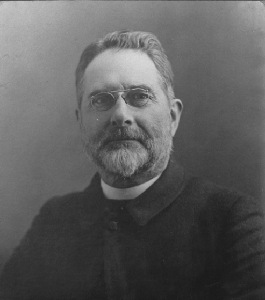
Reverend John Thomas Romney Robinson, 19th-century astronomer and physicist usually referred to as Thomas Romney Robinson, was born at St. Anne’s in Dublin on April 23, 1792. He is the longtime director of the Armagh Observatory, one of the chief astronomical observatories in the United Kingdom at the time. He is remembered as the inventor in 1846 of the Robinson 4-cup anemometer, a device for measuring the speed of the wind.

Robinson is the son of the English portrait painter Thomas Robinson (d.1810) and his wife, Ruth Buck (d.1826). He is educated at Belfast Academy then studies Divinity at Trinity College Dublin, where he is elected a Scholar in 1808, graduating BA in 1810 and obtaining a fellowship in 1814, at the age of 22. He is for some years a deputy professor of natural philosophy (physics) at Trinity.

In 1823, at the age of 30, Robinson gains the appointment of astronomer at the Armagh Observatory. From this point on he always resides at the Armagh Observatory, engaged in research connected with astronomy and physics, until his death in 1882. Having also been ordained as an Anglican priest while at Trinity, he obtains the church livings of the Anglican Church at Enniskillen and at Carrickmacross in 1824.

During the 1840s and 1850s Robinson is a frequent visitor to the world’s most powerful telescope of that era, the so-called Leviathan of Parsonstown telescope, which had been built by Robinson’s friend and colleague William Parsons, 3rd Earl of Rosse. He is active with Parsons in interpreting the higher-resolution views of the night sky produced by Parsons’ telescope, particularly with regard to the galaxies and nebulae and he publishes leading-edge research reports on the question.

Back at his own observatory in Armagh, Robinson compiles a large catalogue of stars and writes many related reports. In 1862 he is awarded a Royal Medal “for the Armagh catalogue of 5345 stars, deduced from observations made at the Armagh Observatory, from the years 1820 up to 1854; for his papers on the construction of astronomical instruments in the memoirs of the Astronomical Society, and his paper on electromagnets in the Transactions of the Royal Irish Academy.”

Robinson is president of the Royal Irish Academy from 1851 to 1856 and is a long-time active organiser in the British Association for the Advancement of Science. He is a friend of Charles Babbage, who says was “indebted” for having reminded him about the first time he came up with the idea of the calculating machine.

Robinson marries twice, first to Eliza Isabelle Rambaut (d.1839) and secondly to Lucy Jane Edgeworth (1806–1897), the lifelong disabled daughter of Richard Lovell Edgeworth. His daughter marries the physicist George Gabriel Stokes. Stokes frequently visits Robinson in Armagh in Robinson’s later years.

Robinson dies in Armagh, County Armagh at the age of 89 on February 28, 1882.
The crater Robinson on the Moon is named in his honour.


Leave a comment

Birth of William Frederick Archdall Ellison, Clergyman & Astronomer

Reverend William Frederick Archdall Ellison FRAS, Irish clergymanHebrew scholar, organist, avid amateur telescope maker, and, from 1918 to 1936, director of Armagh Observatory in ArmaghNorthern Ireland, is born on April 28, 1864. He is the father of Mervyn A. Ellison, the senior professor of the School of Cosmic Physics at Dunsink Observatory from 1958 to 1963.

Ellison comes from a clerical family, his father Humphrey Eakins Ellison having been Dean of FernsCounty Wexford. He gains a sizarship of classics at Trinity College, Dublin in 1883, becomes a Scholar of the House in 1886 and graduates in 1887 with junior moderatorships in classics and experimental science. In 1890 he takes Holy Orders and moves to England, where he becomes the Curate of Tudhoe and Monkwearmouth. In 1894 he takes his MA and BD degrees and in the following year wins the Elrington Theological Prize.

In 1899 he returns to Ireland to become secretary of the Sunday School Society, a post which he holds for three years before accepting the incumbency of Monart, Enniscorthy, moving in 1908 to become Rector of Fethard-on-Sea with Tintern in Wexford. Ellison develops an interest in astronomy, having been introduced to practical optics by Dr. N. Alcock of Dublin and sets up his first observatory at Wexford. He becomes highly adept at making lenses and mirrors and writes several books and articles on the subject, including major contributions to the Amateur Telescope Making series, the Journal of the British Astronomical Association, and the weekly newspaper The English Mechanic. His book The Amateur’s Telescope (1920) is still considered a standard for telescope-makers and a forerunner of the more extensive series on the same topic by Albert Graham Ingalls.

On September 2, 1918 Ellison is appointed Director of the Armagh Observatory. He finds the Observatory in a state of disrepair and sets about repairing the instruments and the observatory dome. On January 3, 1919 he deeds a telescope of his own to the observatory, an 18-inch reflecting telescope, which is still there.

Ellison is a highly regarded planetary and binary star observer. Working with his son Mervyn, he makes many measurements of binary stars using the observatory’s 10-inch Grubb refracting telescope and even discovers a new one close to Beta Lyrae, and according to Patrick Moore, is one of the few people to have observed an eclipse of Saturn’s moon Iapetus by Saturn’s outermost ring on February 28, 1919.

In 1934 Ellison becomes Canon and Prebendary of BallymoreArmagh Cathedral. He dies on December 31, 1936, having held the office of Director of the observatory for nearly twenty years.