The ban comes after just eight months of Dáil Éireann’s existence, which begins on January 21, 1919, when Sinn Féin MPs refuse to take their seats in Westminster and instead convene a separate parliament in Dublin. The British initially underestimate its significance, but events change rapidly.
Sinn Féin’s attempt to raise funds (the Dáil Loan) in August 1919 for the republican cause is seen as a move to legitimise an independent administration, undermining British control. Also, some Irish Volunteers members swear allegiance to Dáil Éireann, which is seen as a political act with potential to inspire wider resistance. The summer of 1919 also sees a surge in attacks, prompting Dublin Castle to respond with suppression measures.
The proclamation takes effect nationwide, including all counties and major boroughs such as Dublin, Belfast, Cork, Limerick, Derry, and Waterford. Within days, police raids and searches target Sinn Féin headquarters and members’ homes. The Harcourt Street headquarters in Dublin is raided, leading to arrests of figures like Patrick O’Keefe and Ernest Blythe. Similar searches occur in Belfast, Derry, Omagh, and Ballycastle, uncovering literature, weapons, and ammunition in some cases.
The ban is a major blow to Sinn Féin’s political prestige, but it also hardens the resolve of many republicans. Historians note that the suppression turned some moderate politicians into “extremists” and increased the likelihood of militarisation. Despite the crackdown, the Dáil continues to operate in secret, meeting in multiple Dublin locations to maintain the Irish Republic’s political legitimacy.
In short, the September 12, 1919 declaration marks a turning point in the Irish War of Independence, shifting the conflict from political negotiation to open confrontation.
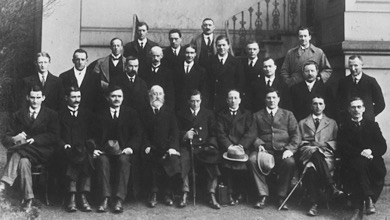
(Pictured: Members of the First Dáil Éireann seated and standing outside the Mansion House in Dublin on January 21, 1919)
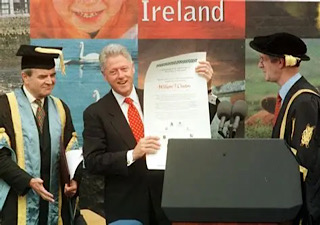
On September 5, 1998, United States PresidentBill Clinton becomes a Freeman of Limerick, following in the footsteps of John F. Kennedy, who had received the honor in 1963. The ceremony marks the last day of Clinton’s official visit to Ireland, which had begun earlier in the month and included stops in Dublin, Adare, Limerick, and Kerry.
On September 5, thousands gather on O’Connell Street to hear Clinton speak to an estimated 40,000 people. His address references the Good Friday Agreement and the peace process, saying: “Because of what you have done in Ireland in 1998, you have made it possible for me to tell every warring, feuding hating group of people trapped in the prison of their past conflicts to look at Ireland and know there can be a better day.”
The speech is broadcast worldwide and is delivered during a period when Clinton is facing political challenges in the United States, but he is still held in high esteem in Ireland for his role in the Northern Ireland peace process.
By being granted the Freedom of the City of Limerick, Clinton joins a distinguished list of U.S. presidents honored by Irish cities, underscoring the strong ties between the United States and Ireland. The visit and ceremony are symbolic of reconciliation, mutual respect, and the shared history of Irish Americans in U.S. politics.
In short, September 5, 1998, is both a personal milestone for Clinton and a moment of national and international significance, blending political diplomacy with public celebration.
At the start of the Irish Civil War in June 1922, the Free State controls only Dublin. Anti‑Treaty forces, forming the so‑called Munster Republic, hold Cork, Limerick, and Waterford, along with much of the west. Waterford’s republican garrison has fortified the city, dismantled the drawbridge’s control equipment, and isolated the port by removing wireless and other communications.
On July 16, republican forces learn that Free State troops ae moving toward Waterford. They raise the drawbridge early and move vessels from the Kilkenny side to the Waterford side. On July 18, Prout’s column is spotted from Sallypark Hill, prompting republican machine gun and rifle fire. A Free State volunteer, Costeloe, is wounded and later dies.
From July 19, sniping continues across the River Suir. On July 19, the Free State brings the 18‑pounder artillery into position overlooking the city, bombarding republican positions. The republicans hold key buildings such as the Adelphia Hotel, Country Club, and Reginald’s Tower.
By July 21, Free State forces cross the River Suir downstream at Gyles Quay, enter the city, and drive out republican troops from their positions. The drawbridge on Redmond Bridge is lowered by hand, and republican reinforcements from Cork and Tipperary either withdraw or do not engage. The Free State takes Waterford on July 21, 1922, ending the republican hold on the city.
Two anti‑Treaty volunteers, Maurice McGrath and John “Bonny” Boyle, are killed. Two Free State soldiers, Sergeant James Howlett and Michael Costelloe, are killed. At least six civilians are killed, including Joseph Dwan, William Long, and a 10‑year‑old girl. Many civilians are wounded.
The fall of Waterford marks a key Free State victory in the conventional phase of the Irish Civil War, contributing to the re‑capture of major southern cities and paving the way for the later guerrilla phase.
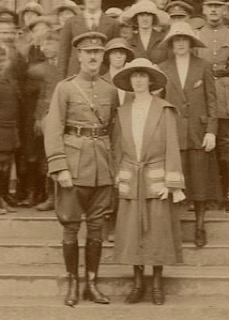
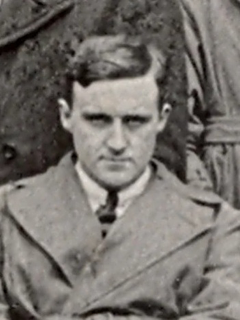
(Pictured: John T. Prout at his wedding to Limerick native Mary Conba at St. John the Evangelist Church (O’Loughlin Memorial Church), Kilkenny, July 12, 1922)
Barry returns to Bandon in early 1919. He describes in his guerilla days in Ireland a Damascus-like conversion to Irish nationalism on hearing of the Easter Rising while with the Mesopotamian expeditionary force, but he is only accepted into the IRA with considerable caution. Initially tested in intelligence and training work, in mid-1920 he takes charge of the new brigade flying column, which is used both to train officers and to stage offensive actions.
Barry adapts his military experience successfully to the demands of guerrilla warfare, becoming the most famed of column leaders during the Irish War of Independence. In his memoirs, he pours scorn on the obsession of many with military titles and orthodox procedure, complaining of a “paper army.” He stresses the need for spontaneity, initiative, and knowledge of local conditions. “The reality,” he writes, “was a group of fellows, mostly in caps and not-too-expensive clothing, wondering how to tackle their job and where they would sleep that night or get their supper.” (The Reality of the Anglo–Irish War (1974)). He well realises that the war’s character does not permit any close control from the IRA’s GHQ in Dublin, hence increasing the importance of local leaders. His tactics put strong emphasis on speed of movement and on the need to attack the enemy at his weakest point. The column’s ambush successes are small in number but among the best-remembered of the war. He admits, however, that his own and his column’s lack of experience with mines frequently weakened their offensives.
The column’s first successful ambush is at Tooreen on October 22, 1920, followed on November 28 by the dramatic ambushing of a patrol of auxiliaries at Kilmichael while traveling from their Macroom base. A column of thirty-six men, divided into three sections, kill sixteen auxiliaries, with one captured and later shot, suffering two fatalities of their own. Controversy has raged since over whether a false surrender by the British force caused the brutality of some of the deaths. Together with the Bloody Sunday killings of a week earlier in Dublin, Kilmichael has a profound effect on the British military and political establishment, with the declaration in December of martial law for much of Munster and the implementation of wide-ranging internment, together with the authorisation of official reprisals.
After a short period in hospital with a heart condition, in early 1921 Barry leads unsuccessful attacks on Kilbrittain, Innishannon, Drimoleague, and Bandon barracks. The seizure of Burgatia House, outside Rosscarbery, in early February, and the successful resistance made there to British troops, wins much publicity but has little military significance. He is a leading figure in the brutal final stage of the war in the first six months of 1921, which sees widespread shooting of suspected spies and destruction of loyalist property. By March 1921, his flying column, with 104 men, is easily the largest in Ireland, and an explosives expert, Capt. McCarthy, has joined them.
The protracted engagement between Barry’s column and encircling British forces at Crossbarry on March 19, 1921, comes at a time when large-scale sweeps are making life increasingly difficult for the IRA. It consists of a daring and courageous breakout. Crossbarry is the largest action of the war, and Barry is to regard it as even more important than Kilmichael. Soon afterwards, Rosscarbery barracks is successfully attacked by a Barry-led party, representing one of the few successful such initiatives in 1921. Isolated triumphs, however, cannot hide the fact that pressure is increasing on the column, and he becomes increasingly critical of inactive regions. He is later to say that all County Kerry does during the war is to shoot one decent police inspector at Listowel Racecourse and a colleague of his. He is strongly critical also of the lack of assistance from GHQ and of the divisionalisation policy. He visits Dublin in May, travels around with Michael Collins, and is present when two American officers demonstrate the Thompson submachine gun. He is more aware than most of his 1st Southern Division colleagues of the scarcity of arms and ammunition at the war’s end.
During the truce, Barry becomes liaison officer for Munster, riling the British by insisting on his military rank, and criticising the IRA liaison men in Dublin for being overly deferential. He joins the overwhelming majority of the Cork IRA in opposing the Anglo–Irish Treaty but plays a characteristically maverick role throughout the treaty split. His independent attitude is heightened by his dislike of Liam Lynch, the republican IRA’s Chief of Staff, and his continuing respect for Michael Collins. He shows impatience at the long-drawn-out peace initiatives. In March 1922, therefore, he advocates armed confrontation with pro-treaty units over the occupation of barracks in Limerick, and on June 18 he submits a resolution, which only narrowly fails, at the army convention, giving British troops seventy-two hours to leave Dublin.
At the beginning of the Irish Civil War, Barry is arrested entering the Four Courts disguised as a woman. He escapes from an internment camp at Gormanston in early September 1922. For the rest of the war his actions mirror its confused nature. In late October 1922, he leads successful raids on the small towns of Ballineen and Enniskean, and later on Inchigeelagh and Ballyvourney. In December his column takes Carrick-on-Suir, demonstrating the weakness of the Free State army, but his talk of advancing on the Curragh and of large-scale actions does not materialise. There is no evidence that he is acting in accordance with any coordinated plan. By February 1923, he realises that the Republican IRA cause is hopeless and he is involved with Fr. Tom Duggan in efforts to get 1st Southern Division to declare a ceasefire. He journeys to Dublin to put pressure on the intransigent Lynch in this connection, telling Lynch, “I did more fighting in one week than you did in your whole life.”
Barry avoids capture in roundups after the war, remaining on the run until 1924. Unlike many republicans, he does not turn to constitutionalism, remaining strongly militaristic. He is always an unreconstructed republican, though by no means a naive one. In 1924 he becomes attached to Cleeves Milk Co., based in Limerick and Clonmel, and from 1927 to retirement in 1965 is general superintendent with the Cork harbour commissioners. He strongly advocates preserving the independence of the IRA army executive during the republican split of 1925–27. He is instrumental in continuing the drilling of IRA members and is a strong supporter of armed opposition to the Blueshirts.
During the 1930s Barry is arrested at various times for possession of arms and seditious utterances. He promotes an attack against a Freemasons’ meeting in Cork in 1936 and gives the orders for the killing on March 4 of that year of Vice-AdmiralHenry Boyle Somerville. He is opposed to the use by Frank Ryan of IRA volunteers to support the republican cause in the Spanish Civil War and to the proposals of Seán Russell for a bombing campaign in England. To maintain the link with traditional republicanism, he is elected IRA chief of staff in 1937. His plan, however, for the seizure of Armagh city, as part of a direct northern offensive, quickly collapses due to a leak of information, and he soon resigns his position. He forcefully attacks the bombing of English cities in 1938, regarding attacks on innocent civilians as immoral and counterproductive. He enlists in the National Army on July 12, 1940, only to be demobilised a month later. In 1946, he stands as an independent candidate in a by-election in the Cork Borough constituency, finishing at the bottom of the poll. He is more comfortable the following year touring the United States on an anti-partition platform.
In 1949 his Guerilla Days in Ireland is published. It proves a best-seller and has frequently been reprinted. It is well written in a forceful and direct style, one memoir needing no assistance from a ghost writer. Age does not mellow him: lawyers and bank managers are threatened by him over matters relating to his own column, and in 1974 he publishes a fierce pamphlet, angry at perceived slights in the Irish War of Independence memoir of Liam Deasy. He does strive to achieve a public reconciliation with Collins’s memory by unveiling the memorial to Collins at Sam’s Cross in 1966. On the outbreak of the Northern Ireland crisis in the late 1960s, he takes a militant line, castigating the argument that the Six Counties can be brought into the Republic by peaceful means, and asking when had peaceful means existed there. At the memorial meeting in Carrowkennedy, County Mayo, in 1971, he claims that there is a perfect right at the opportune time to take the Six Counties by force. He remains opposed to IRA bombing of civilian targets.
Barry dies in Cork on July 2, 1980. He is buried in St. Finbarr’s Cemetery, Cork. Early in the truce of 1921 he marries Leslie Price, one of the most active of Cumann na mBan members during and after the rising. They have no children.
While Barry always remains an influential figure in republican circles, he will be remembered best as the pioneer of guerrilla warfare, the hero of Kilmichael and Crossbarry. His military flair, individualism, and ruthlessness are well suited to the 1919–21 conflict. After that, his strained relations with colleagues and his lack of flexibility reduce his importance. While his life after the revolutionary era appears anti-climactic, he retains much of his charisma. In later years, he is ever willing to remind politicians and historians how far Ireland has retreated from republican ideals. He is often prickly and autocratic yet could be generous to old colleagues of either side of the treaty split. He is arguably the most intelligent but also the most intolerant of the revolutionary leaders.
(From: “Barry, Thomas Bernadine (‘Tom’)” by M. A. Hopkinson, Dictionary of Irish Biography, http://www.dib.ie, October 2009)
Rice joins the Irish Volunteers in 1913 but does not take part in the 1916 Easter Rising. For a time, he shares lodgings in Rock Street, Tralee, with Austin Stack, and like Stack he is a Gaelic Athletic Association (GAA) member, playing hurling with Kenmare. At the outbreak of the Irish War of Independence (1919-1921), he becomes Officer Commanding of the 5th Battalion of the Kerry No. 2 Brigade. He also holds the post of second in command of that brigade, under Humphrey Murphy. On April 26, 1921, he attends the meeting in Kippagh, County Tipperary, that sees the establishment of the First Southern Division. After the truce, Murphy is transferred to command Kerry No. 1 Brigade, and Rice becomes commanding officer of Kerry No. 2.
Rice opposes the Anglo-Irish Treaty and leads the brigade throughout the Irish Civil War (1922-1923). When Michael Collins comes to Killarney on April 22, 1922, to speak in favour of the agreement, he is met at the train station by a group of fifty men, led by Rice, who attempt to prevent him from speaking. The meeting goes ahead despite several attempts by the group to stop it. During the civil war he leads his men into Limerick, briefly seizing Rathkeale, but for the most part they are on the defensive. In September he commands a force of seventy republicans to take Kenmare. This is a rare and morale-boosting success. When the First Southern Division council meets on February 26-28, 1923, he is one of only two senior officers, among a group of eighteen, who feel that it is worth fighting on.
Shortly after the civil war, Rice marries Nora Aherne, a Cumann na mBan member; they have one son, George. After the war he continues to be active in the Irish Republican Army (IRA) and Sinn Féin. He attends IRA executive meetings in 1923 and is involved in attempts to reorganise the IRA in 1924. He is a delegate to the Sinn Féin ardfheis in 1926, opposing the proposal of Éamon de Valera that abstention be a matter of policy rather than principle. He is elected as a Sinn Féin TD for the Kerry South constituency at the 1957 Irish general election. He does not take his seat in the Dáil due to the Sinn Féin policy of abstentionism. He is one of four Sinn Féin TDs elected at the 1957 Irish general election, the others being Ruairí Ó Brádaigh, John Joe McGirl and Eighneachán Ó hAnnluain. During his time as a TD, he campaigns against the Special Powers Act, which grants the Irish state extra abilities to deal with and punish suspected members of the IRA. He is defeated at the 1961 Irish general election.
In 1966, Rice and fellow Kerry Republican John Joe Sheehy are expelled from Sinn Féin, as are many others, by the new Marxist-Leninist party leadership that had recently come into power. This move both foreshadows and fuels the split in 1969/1970 of both the IRA and Sinn Féin, which leads to the creation of the Marxist-Leninist Official IRA and the more traditional but still left-wing Provisional IRA, and in parallel Sinn Féin – The Workers’ Party and “Provisional” Sinn Féin. Rice gives his support to the Provisionals.
Rice drives an oil lorry for a time and then becomes manager of the Tralee branch of Messrs Nash, mineral water manufacturers and bottlers. He remains in this position until his retirement in 1965. He dies on July 24, 1970, at his son’s residence in Oakview, Tralee.
Rice’s sister, Rosalie, is a member of Cumann na mBan during the 1916 Easter Rising and is arrested for sending a telegram alerting the Irish Republican Brotherhood (IRB) in the United States to the rising. His cousins Eugene and Timothy Ring are members of the IRB and are also involved with the telegram. His grandfather, Timothy Ring, was a Fenian who fought in the uprising. Two of his cousins are members of the Royal Irish Constabulary (RIC) who both help the republican side during the Irish revolutionary period.
Deasy is the third among six sons of William Deasy, seaman, and Mary Deasy (née Murray). He is educated locally at Ballinadee before leaving school at the age of thirteen to work in nearby Bandon.
During the Irish War of Independence (1919–21), Deasy is adjutant of the IRA’s 3rd Cork Brigade (West Cork). He serves under Tom Barry in one of the unit’s best known actions, the Crossbarry ambush in March 1921. His younger brother, Pat, dies in action at the Kilmichael ambush in November 1920, an engagement at which Deasy is not present. He also takes part in the Tooreen ambush.
Deasy opposes the Anglo-Irish Treaty. In the months that follow he tries to persuade Collins to renegotiate aspects of the treaty, especially to remove an oath to the British king from the constitution of the new Irish Free State. When fighting breaks out in Dublin in June 1922 between pro and anti-Treaty forces, he sides with the Anti-Treaty IRA in the ensuing Irish Civil War. However, he is reluctant to fight his former comrades and voices the opinion that the fighting should have ended with the Free State seizure of the Four Courts.
In late July 1922, Deasy commands 1,500 anti-Treaty fighters who hold a line around Kilmallock south of Limerick city against about 2,000 Free State troops under Eoin O’Duffy. His men are the most experienced IRA fighters of the 1919-21 war and hold their position until August 8, when they are outflanked by seaborne landings on the southern coast. His men then disperse. He goes on the run in the southeast of the country.
In August 1922, Deasy is in command of a band of republican guerrillas in West Cork when they hear that Collins is in the area. Deasy has his men prepare an ambush for Collins’ convoy at Béal na Bláth, should it return by the same route it had taken earlier.
Deasy and most of his men do not take part in the ambush as they had retired to a nearby pub, assuming that they had missed Collins. However, Collins arrives as the last of Deasy’s men are clearing the mine and barricade that had been erected on the road at Béal na Bláth. Collins is killed in the ensuing firefight. Deasy later writes in his memoirs that he profoundly regrets the death of his former commander.
In January 1923, by which time Deasy has become Deputy Chief of Staff of the IRA, he is captured by Free State forces near Clonmel, County Tipperary, and sentenced to death. He is aware that the newly formed government plans on wholesale executions and knows that the IRA will retaliate with reprisals. He decides that it is now time to end the war. He signs a document (written by his captors) ordering the men under his command to surrender themselves and their arms to the government. He is spared execution. On the day that his order is published, Free State authorities demand that the prisoners in a jail in Limerick sign a statement agreeing to unconditional surrender, threatening wholescale executions to those who refused. Some republicans denounce Deasy as a traitor and a coward for this action, but he argues in his book, Brother against Brother, that he was opposed to continuing the civil war anyway and would have called on republicans to surrender whether or not he had been captured.
Deasy takes no further part in politics following the end of the Irish Civil War. In 1924, he sets up a business making weatherproof textiles. On November 24, 1927, he marries Margaret Mary O’Donoghue. They have three daughters together.
During The Emergency, Deasy serves in the Irish Army from 1940 to 1945, reaching the rank of commandant. He later writes two memoirs about his experiences during the revolutionary period: Toward Ireland Free and Brother against Brother, the latter being published after his death.
Deasy dies at St. Anne’s Hospital, Northbrook Road, Dublin, on August 20, 1974. He is buried in Bohernabreena Cemetery in Dublin.
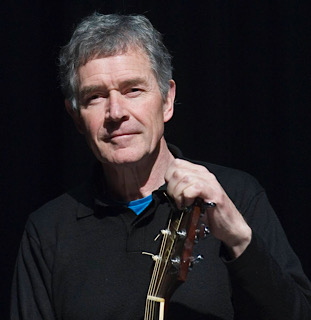
Duhan is one of nine children, one of whom dies before Johnny is born. His parents, John and Christina (née Murphy), raise their family on Wolfe Tone Street, Limerick. He attends the Christian Brothersnational school on Sexton Street but hates it.
Duhan is writing songs from an early age. He leaves school and starts his career as the 15-year-old frontman of the Irish beat group Granny’s Intentions. After success in Limerick and Dublin, where he shares a flat with Phil Lynott and Gary Moore, the band moves to London and is signed to the Deram Records record label. His girlfriend, Maureen, leaves her job as a teacher to travel to London with him. The band releases several singles and one album, Honest Injun, with Duhan composing eight of the band’s eleven songs. Granny’s Intentions melds a bluesy rock sound with a down-home earthiness. Moore joins the band at the age of 17, and Pete Cummins (later of The Fleadh Cowboys) is also a member. The band has their sights set on a further move to Los Angeles, California, but the deal falls through. The band disbands before Duhan is twenty-one. While in London he is offered a job as lead singer with St. James Gate, but that deal falls through as well.
From there, the couple set about a different kind of life, with Duhan growing his own vegetables and embarking on a path as a solo singer-songwriter in earnest. He has a cry in his voice that is plaintive and highly distinctive. An advance from Arista Records allows him and Maureen to put a deposit on their first home in Sandyvale Lawn on Headford Road in Galway. Later they move to Barna, where he enjoys a quiet but very orderly, some might say even regimental life: rising daily before dawn, attending daily Mass, reading vociferously and enjoying his daily swims on his beloved Silver Strand. He climbs Diamond Mountain most Sundays and Carrauntoohil annually.
Just Another Town, To the Light, Flame, and The Voyage are some of Duhan’s work. These align with the first four sections of his poetic autobiography, To The Light. His songs have been performed by Christy Moore, The Dubliners, Mary Black, and other Irish and international singers. Christy Moore states that his song “The Voyage” has been performed at over a million weddings worldwide.
His daughters, Ailbhe and Niamh, describe Duhan as a kind, gentle and selfless soul. He is a true family man. Headstrong in his beliefs, he never follows trends. He spends his life seeking meaning, delving deeply into philosophical and theological works. Mornings are devoted to reading and studying his favourite writers, making meticulous notes on whether he agrees or disagrees with their thoughts, and more importantly why. He teaches all his children to play music, and Niamh is now a music teacher.
Duhan drowns on November 12, 2024, while swimming off Silver Strand in Galway. His funeral Mass takes place at St. Killian’s New Inn Church in County Galway. He is laid to rest at Killaan Cemetery, Woodlawn.
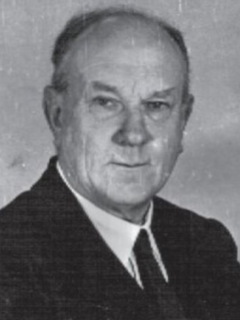
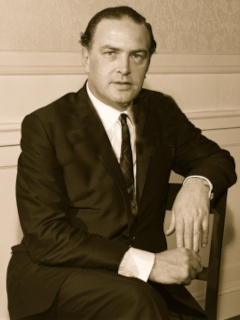
O’Malley is born on January 18, 1921, in Limerick, one of eight surviving children of Joseph O’Malley, civil engineer, and his wife, Mary “Cis” (née Tooher). Born into a wealthy middle-class family, he is educated by the Jesuits at Crescent College and later at Clongowes Wood College, County Kildare. He later studies at University College Galway (UCG), where he is conferred with a degree in civil engineering in 1943. He later returns to Limerick, where he works as an engineer before becoming involved in politics.
O’Malley plays rugby at provincial level for Munster, Leinster and Connacht and at club level for Bohemians and Shannon RFC. His chances at an international career are ruined by the suspension of international fixtures during World War II. It is at a rugby match in Tralee that he first meets Dr. Hilda Moriarty, who he goes on to marry in August 1947.
Although O’Malley runs as a Fianna Fáil candidate, he is born into a politically active family who supports Cumann na nGaedheal until a falling-out with the party in the early 1930s. He first becomes involved in local politics as a member of Limerick Corporation. He becomes Mayor of Limerick in 1961, the third O’Malley brother to hold the office (Desmond from 1941-43 and Michael from 1948-49). He is a strong electoral performer, topping the poll in every general election he runs in.
O’Malley is first elected to Dáil Éireann as a Fianna Fáil TD for Limerick East at the 1954 Irish general election. Fianna Fáil is not returned to government on that occasion. He spends the rest of the decade on the backbenches. However, his party is returned to power in 1957. Two years later, the modernising process begins when Seán Lemass takes over from Éamon de Valera as Taoiseach. Lemass introduces younger cabinet ministers, as the old guard who has served the party since its foundation in 1926 begin to retire.
In 1961, O’Malley joins the government as Parliamentary Secretary to the Minister for Finance. He is part of a new, brasher style of politician that emerges in the 1960s, sometimes nicknamed “the men in the mohair suits.” It is expected that this generation of politician, born after the Irish Civil War, will be a modernising force in post-de Valera Ireland.
Although his sporting background is in rugby and swimming, it is association football which O’Malley gets involved in at a leadership level, becoming President of the Football Association of Ireland despite never having played the sport.
Following Fianna Fáil’s retention of power in the 1965 Irish general election, O’Malley joins the cabinet as Minister for Health. He spends just over a year in this position before he is appointed Minister for Education, a position in which he displays renowned dynamism. Having succeeded Patrick Hillery, another dynamic young minister, he resolves to act swiftly to introduce the recommendations of an official report on education.
As Minister for Education, O’Malley extends the school transport scheme and commissions the building of new non-denominational comprehensive and community schools in areas where they are needed. He introduces Regional Technical Colleges (RTCs), now called Institutes of Technology, in areas where there is no third level college. The best example of this policy is the University of Limerick, originally an Institute of Higher Education, where O’Malley is credited with taking the steps to ensure that it becomes a university. His plan to merge Trinity College Dublin and University College Dublin arouses huge controversy, and is not successful, despite being supported by his cabinet colleague Brian Lenihan. Access to third-level education is also extended, the old scholarship system being replaced by a system of means-tested grants that give easier access to students without well-off parents.
Mid-twentieth century Ireland experiences significant emigration, especially to the neighbouring United Kingdom where, in addition to employment opportunities, there is a better state provision of education and healthcare. Social change in Ireland and policies intending to correct this deficit are often met with strong resistance, such as Noël Browne‘s proposed Mother and Child Scheme. As a former Health Minister, O’Malley has first-hand experience of running the department which had attempted to introduce this scheme and understood the processes that caused it to fail, such as resistance from Department of Finance and John Charles McQuaid. This influences his strategy in presenting the free-education proposal.
Shortly after O’Malley is appointed, he announces that from 1969 all education up to Intermediate Certificate level will be without cost, and free buses will bring students in rural areas to their nearest school, seemingly making this decision without consulting other ministers. However, he does discuss it with Lemass. Jack Lynch, who, as Minister for Finance, has to find the money to pay for the programme, is not consulted and is dismayed at the announcement.
By announcing the decision first to journalists and on a Saturday (during a month when the Dáil is in recess), the positive public reaction tempers resistance to the idea before the next cabinet meeting. O’Malley’s proposals are hugely popular with the public, and it is impossible for the government to go back on his word.
Some Irish commentators consider that O’Malley’s extension of education, changing Ireland from a land where the majority are schooled only to the age of 14 to a country with universal secondary-school education, indirectly leads to the Celtic Tiger boom of the 1990s-2000s when it is followed for some years by an extension of free education to primary degree level in university, a scheme that is launched in 1996 by the Labour Party and axed in 2009 by Fianna Fáil’s Batt O’Keeffe.
In 1967, O’Malley appoints Justice Eileen Kennedy to chair a committee to carry out a survey and report on the reformatory and industrial school systems. The report, which is published in 1970, is considered ground-breaking in many areas and comes to be known as the Kennedy Report. The Report makes recommendations about a number of matters, including the Magdalene laundries, in relation to which they are not acted upon. The report recommends the closure of a number of reformatories, including the latterly infamous reformatory at Daingean, County Offaly.
O’Malley’s reforms make him one of the most popular members of the government. He is affectionately known as “the School Man” for his work in education. His sudden death in Limerick on March 10, 1968, before his vision for the education system is completed, comes as a shock to the public. He is buried with a full Irish state funeral.
Following O’Malley’s death, his widow, Hilda O’Malley, does not run in the subsequent by-election for the seat he has left vacant. It is won narrowly by their nephew Desmond O’Malley. Hilda seeks the Fianna Fáil nomination for the 1969 Irish general election, but Fianna Fáil gives the party nomination to Desmond, as the sitting TD. Hilda runs as an Independent candidate in that election. After what proves a bitter campaign against her nephew, she fails to get the fourth seat in Limerick East by just 200 votes.
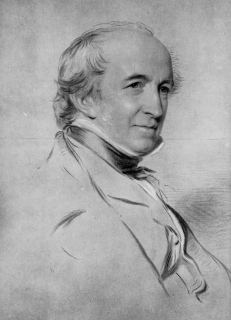
Spring Rice is educated at Trinity College, Cambridge, and later studies law at Lincoln’s Inn, but is not called to the Bar. His family is politically well-connected, both in Ireland and Great Britain, and he is encouraged to stand for Parliament by his father-in-law, Lord Limerick.
Spring Rice first stands for election in Limerick City in 1818 but is defeated by the Tory incumbent, John Vereker, by 300 votes. He wins the seat in 1820 and enters the House of Commons. He positions himself as a moderate unionist reformer who opposes the radical nationalist politics of Daniel O’Connell and becomes known for his expertise on Irish and economic affairs. In 1824 he leads the committee which establishes the Ordnance Survey in Ireland.
Spring Rice’s fluent debating style in the Commons brings him to the attention of leading Whigs and he comes under the patronage of the Marquess of Lansdowne. As a result, he is made Under-Secretary of State for the Home Department under George Canning and Lord Goderich in 1827, with responsibility for Irish affairs. This requires him to accept deferral of Catholic emancipation, a policy which he strongly supports. He then serves as joint Secretary to the Treasury from 1830 to 1834 under Lord Grey. Following the Reform Act 1832, he is elected to represent Cambridge from 1832 to 1839. In June 1834, Grey appoints him Secretary of State for War and the Colonies, with a seat in the cabinet, a post he retains when Lord Melbourne becomes Prime Minister in July. A strong and vocal unionist throughout his life, he leads the Parliamentary opposition to Daniel O’Connell’s 1834 attempt to repeal the Acts of Union 1800. In a six-hour speech in the House of Commons on April 23, 1834, he suggests that Ireland should be renamed “West Britain.” In the Commons, he also champions causes such as the worldwide abolition of slavery and the introduction of state-supported education.
The Whig government falls in November 1834, after which Spring Rice attempts to be elected Speaker of the House of Commons in early 1835. When the Whigs return to power under Melbourne in April 1835, he is made Chancellor of the Exchequer. As Chancellor, he has to deal with crop failures, a depression and rebellion in North America, all of which create large deficits and put considerable strain on the government. His Church Rate Bill of 1837 is quickly abandoned and his attempt to revise the charter of the Bank of Ireland ends in humiliation. Unhappy as Chancellor, he again tries to be elected as Speaker but fails. He is a dogmatic figure, described by Lord Melbourne as “too much given to details and possessed of no broad views.” Upon his departure from office in 1839, he has become a scapegoat for the government’s many problems. That same year he is raised to the peerage as Baron Monteagle of Brandon, in the County of Kerry, a title intended earlier for his ancestor Sir Stephen Rice. He is also Comptroller General of the Exchequer from 1835 to 1865, despite Lord Howick‘s initial opposition to the maintenance of the office. He differs from the government regarding the exchequer control over the treasury, and the abolition of the old exchequer is already determined upon when he dies.
From 1839 Spring Rice largely retires from public life, although he occasionally speaks in the House of Lords on matters generally relating to government finance and Ireland. He vehemently opposes John Russell, 1st Earl Russell‘s policy regarding the Irish famine, giving a speech in the Lords in which he says the government had “degraded our people, and you, English, now shrink from your responsibilities.”
Spring Rice is well regarded in Limerick, where he is seen as a compassionate landlord and a good politician. An advocate of traditional Whiggism, he strongly believes in ensuring society is protected from conflict between the upper and lower classes. Although a pious Anglican, his support for Catholic emancipation wins him the favour of many Irishmen, most of whom are Roman Catholic. He leads the campaign for better county government in Ireland at a time when many Irish nationalists are indifferent to the cause. During the Great Famine of the 1840s, he responds to the plight of his tenants with benevolence. The ameliorative measures he implements on his estates almost bankrupts the family and only the dowry from his second marriage saves his financial situation. A monument in honour of him still stands in the People’s Park in Limerick.
Even so, Spring Rice’s reputation in Ireland is not entirely favourable. In a book regarding assisted emigration from Ireland, a process in which a landlord pays for their tenants’ passage to the United States or Australia, Moran suggests that Spring Rice was engaged in the practice. In 1838, he is recorded as having “helped” a boat load of his tenants depart for North America, thereby allowing himself the use of their land. However, he is also recorded as being in support of state-assisted emigration across the British Isles, suggesting that his motivation is not necessarily selfish.
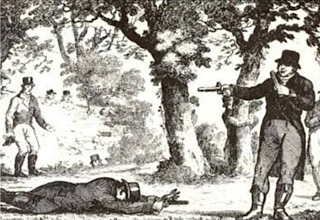
Daniel O’Connell (1775-1847) kills John D’Esterre in a duel on February 1, 1815.
O’Connell is sometimes referred to as an equivalent to Martin Luther King, Jr. or Mahatma Gandhi. Like King and Gandhi, O’Connell attempts to change the circumstances of his people, Irish Catholics in this case, through the use of nonviolence. He can take a great deal of credit for the passage of the Roman Catholic Relief Act 1829, which revokes the remaining discriminatory Penal Laws. This political success is achieved in significant part through mass protest and is notable for the absence of violence. O’Connell, however, is not always non-violent. He is known for being hot-tempered and capable of violence in his early days.
Rosmanagher Bridge and Toll Gate are built by D’Esterre in 1784 at his own expense. The large inscription stone on the bridge commemorates this piece of engineering. He owns extensive lands in the region and the Ratty River hinders both farming and communication, especially as the nearest bridge is at Sixmilebridge, County Clare. Despite objections that the structure will interfere with navigation on the river, he builds his bridge and then tries to recover his costs by erecting toll gates on the western side of the river. O’ Connell refuses to pay the toll according to local tradition and this leads to his famous duel with D’Esterre, a Limerick-born Protestant and former marine who is also a member of the Dublin Corporation. D’Esterre takes exception to O’Connell’s description of the Corporation as being “beggarly.”
D’Esterre is in difficult financial circumstances at the time of the duel. Some thought indicates that he is possibly encouraged into violent confrontation by influential figures who wish to break the forty-year-old O’Connell’s growing political power. Regardless of the motivation, the crack shot D’Esterre arranges to meet O’Connell to settle the matter on February 1, 1815, at the Bishopscourt estate in County Kildare.
D’Esterre shoots first and misses. O’Connell returns fire, wounding his opponent in the groin. The wound proves to be fatal two days later. It seems O’Connell is distressed by the deadly outcome and offers D’Esterre’s widow a pension as compensation. The offer is refused, but an allowance for D’Esterre’s daughter is accepted. O’Connell fulfills this obligation for the subsequent 30 years of his life.
(From: “OTD: O’Connell – D’Esterre Duel – 1815” by Martin Nutty, Irish Stew Podcast, http://www.irishstewpodcast.com, February 1, 2022)