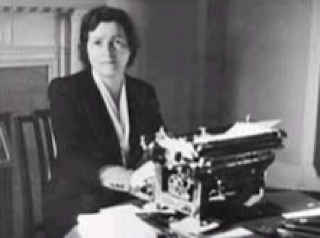
O’Connell is one of eleven children of farmer John O’Connell and Mary Ann O’Connell (née O’Sullivan). She is educated in County Kerry, and emigrates to Chicago in 1904 where she trains to be a secretary. She leaves a well-paid commercial job in 1912 to become secretary to the American delegation of the Gaelic League in New York City. She works closely with Thomas Ashe and Diarmuid Lynch on fund-raising and handles their secret Irish Republican Brotherhood (IRB) correspondence. She returns to Ireland briefly in 1915 to attend the Gaelic League Oireachtas na Gaeilge and ardfheis, voting in favour of the politicisation of the organisation. During the same visit she brings money and messages to the Irish Volunteers from John Devoy. She attends the New York Irish Race Convention, going on to work for the Friends of Irish Freedom. In this position she organises and collects for the “victory fund” for Irish independence. She is also a typist for Clan na Gael. After the 1916 Easter Rising, she becomes a member of Cumann na mBan in the United States, raising money for the widows and children of those killed or wounded during the Rising. It is through this work that she becomes a close friend of Arthur Griffith and his family.
Éamon de Valera requests that O’Connell join his “consular staff” on October 2, 1919, to support his tour of the United States. She works closely with him during this tour, traveling with him, assisting with speeches and dealing with his private and public correspondence. She is privy to secrets of the independence movement due to handling Harry Boland‘s correspondence as well. In November 1920, she returns to Ireland with de Valera and goes into hiding immediately. From February 1921 she lives at his secret headquarters at Strand Road, living in dangerous conditions until a truce is called in the Irish War of Independence. After this she lives with de Valera at Dr. Farnan’s house at Merrion Square and later in Blackrock. On June 22, 1921, she is arrested with him, and they are both released the next day. She is a member of the delegation that meets David Lloyd George in July 1921, and shares de Valera’s opposition to the Anglo-Irish Treaty. She joins de Valera and her sister Teresa in Suffolk Street in June 1922 when the Irish Civil War breaks out.
When fighting ends in Dublin in July 1922, she travels south, working closely with Dorothy Macardle, Robert Brennan, and Erskine Childers establishing a publicity department and publishing Poblacht na hÉireann. In September 1922, she returns to Dublin, and goes into hiding at 11 Upper Mount Street. She is a loyal follower of de Valera throughout the civil war, and is present at his arrest in Ennis in August 1923. She acts as his messenger and agent during his imprisonment, working with him on an Irish translation of shorthand which they later abandon. During this time she also works for the Sinn FéinTD for Mayo NorthP. J. Ruttledge.
O’Connell is present at the first meeting of the provisional organising committee of de Valera’s new political party, Fianna Fáil. During this time she continues to travel with de Valera, nationally and internationally. There are rumours regarding the nature of their relationship, leading to de Valera vehemently denying any impropriety in Dáil Éireann in 1928. The letter between O’Connell and de Valera’s wife, Sinéad, are cited as evidence there is no intimate relationship between O’Connell and de Valera. She resigns from her permanent civil service position of personal secretary to the Taoiseach when de Valera is defeated in 1948, returning in 1951 when he regains power. For her involvement in the Irish War of Independence, she is awarded an Irish military pension.
The Irish Civil War (June 28, 1922 – May 24, 1923) is fought between Pro-Treaty forces (led by Michael Collins and Arthur Griffith) who support the Anglo-Irish Treaty, creating the Irish Free State within the British Empire and Anti-Treaty IRA (led by Éamon de Valera and Liam Lynch) who reject the Treaty, seeing it as a betrayal of the 1919 Irish Republic.
By mid-1922, the Free State controls only Dublin and parts of the east, while anti-Treaty forces hold much of the south and west, including Cork, Limerick, and Waterford, forming the self-styled “Munster Republic.”
On September 15, 1922, Anti-Treaty IRA units in Dundalk attack Free State troops stationed in the area and seize control of the local power station, cutting off the town’s electricity supply.
This is a typical example of anti-Treaty tactics: using sabotage and localized attacks to disrupt Free State operations, weaken their hold on territory, and maintain control over key infrastructure. Such actions are part of a wider pattern of resistance in areas not yet recaptured by the National Army.
While Dundalk is not a major strategic city, the attack reflects the guerrilla and sabotage phase of the Civil War, which follows the Free State’s July–September 1922 offensive that retakes major towns in Munster and the west. The Free State’s victory in that offensive ends the conventional phase, but anti-Treaty forces continue to resist through hit-and-run raids, sabotage, and control of rural areas.
In summary, the Dundalk incident of September 15, 1922, is a localized but symbolic act of anti-Treaty resistance, illustrating the ongoing struggle to control infrastructure and disrupt Free State operations in the months after the decisive military phase of the Irish Civil War.
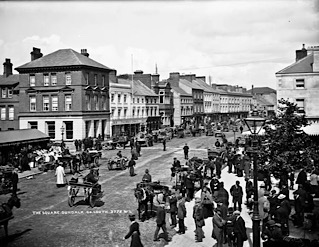
(Pictured: Dundalk, County Louth, in the early 20th century)
By 1947, de Valera’s government has begun drafting legislation to repeal the Act. Initially, the bill does not mention a republic, but by January 1948 it includes a reference to the state as a republic. Costello, as Taoiseach, introduces the bill in November 1948, citing irritation over the British invitation to King George VI to open the Canadian Parliament — seen as a slight to Irish sovereignty.
On September 7, 1948, Costello tells reporters in Ottawa that Ireland will repeal the External Relations Act, thereby ending the Crown’s role in Irish external affairs. The British government is not informed until a month later, and relations remain cordial until Ireland formally leaves the Commonwealth in April 1949.
The Republic of Ireland Act 1948 is passed by the Oireachtas in December 1948 and signed by PresidentSeán T. O’Kelly on December 21, 1948. It repeals the External Relations Act 1936, declares the state’s description as the Republic of Ireland and vests executive power in the President for external relations on the advice of the Government. The Act takes effect on April 18, 1949 (Easter Monday), marking the symbolic completion of Ireland’s transition from dominion to republic.
The Parliament of the United Kingdom passes the Ireland Act 1949, acknowledging Ireland’s new status, preserving Northern Ireland’s constitutional position, and maintaining rights of Irish citizens in Britain. This ensures continuity in trade, travel, and citizenship without major disruption.
The significance of the 1948–1949 process is a definitive assertion of Irish sovereignty, aligning Ireland’s legal framework with its de facto republican governance. It ends the last constitutional vestige of the British monarchy in Ireland and marks Ireland’s formal departure from the Commonwealth.
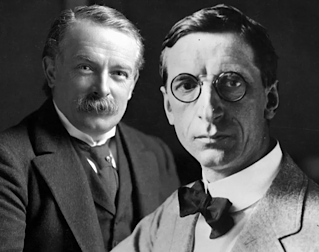
On August 30, 1921, Éamon de Valera sends a sharp reply to British Prime MinisterDavid Lloyd George as the two sides move closer to formal peace negotiations. The letter comes during a tense period when the British have presented their “Proposals of the British Government for the Irish Settlement” — offering Ireland “within the Empire…in allegiance to His Majesty’s throne” with Northern Ireland’s Unionist government remaining in place, full British naval access, and other imperial arrangements.
De Valera’s response is a stinging rebuke to Lloyd George’s approach. He reiterates Ireland’s determination to be “free from Imperialistic entanglements,” while still offering “reasonable guarantees not inconsistent with Irish sovereignty.” He makes clear that Ireland could enter a treaty of free association with the British Commonwealth but could not accept the British government’s right to “mutilate our country.” This is a direct challenge to the British insistence on loyalty to the Crown and continued imperial ties.
The exchange reflects the core conflict in the talks. The British position requires that Ireland must remain part of the Empire, with some form of association and recognition of the King’s sovereignty. The Irish position maintains that Ireland must be fully independent, with no coercion of Northern Ireland, and with sovereignty intact.
By August 30, both sides have softened their initial positions enough for Lloyd George to send a revised invitation to negotiate in person. De Valera’s letter is part of the diplomatic back-and-forth that culminates in his acceptance of the conference on September 30, 1921, marking the start of the most consequential peace talks in Irish history.
In essence, the August 30 letter is both a political statement and a diplomatic signal — asserting Irish sovereignty while leaving room for a negotiated settlement, and setting the tone for the negotiations that would soon begin.
The consecration is a major ecclesiastical event attended by PresidentÉamon de Valera, who lights the sanctuary candle, and by Cardinal William Conway, Archbishop of Armagh and Primate of All Ireland, who celebrates Mass. Bishop Michael Browne, Bishop of Galway and Kilmacduagh, is accompanied at the altar by four archbishops, underscoring the cathedral’s importance as the mother church of the Diocese of Galway and Kilmacduagh. Thousands of people gather for the blessing, which begins with a procession from the Convent of Mercy to the cathedral’s front entrance.
Galway Cathedral is built on the site of the old city prison, with construction starting in 1958 and completion in 1965. Designed by architect John J. Robinson, it is a striking example of Renaissance Revival architecture, with influences from Romanesque and Gothic styles. Constructed almost entirely of local limestone, it features an octagonal dome 44.2 metres (145 ft.) high, supported by eight pillars each adorned with a mosaic of one of the Beatitudes.
The consecration marks the opening of the cathedral as the last great stone cathedral to be built in Europe. The dedication to Our Lady Assumed into Heaven reflects both Marian devotion and the city’s maritime heritage, while the building itself stands as a testament to Galway’s cultural and religious identity.
In summary, August 15, 1965, is a historic day for Galway, when Cardinal Richard Cushing’s consecration of the new cathedral brings together national and international religious figures, Irish political leadership, and the faithful in a celebration of faith, heritage, and architecture.
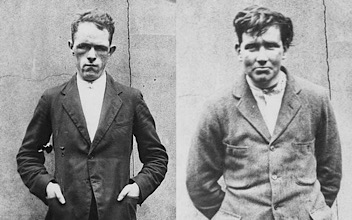
The killing is widely seen as a political act, with Dunne and O’Sullivan claiming to have acted in defence of Irish nationalist principles, blaming Wilson for the “Orange Terror” and the deployment of the Ulster Special Constabulary (USC). Some historians suggest the assassination may have been intended to pressure Michael Collins to attack the Four Courts garrison, though no conclusive evidence of orders was ever established.
After the shooting, Dunne escapes but O’Sullivan is captured by a hostile crowd. Dunne attempts to rescue him but is himself arrested after wounding two police officers and a passerby. Both are tried quickly, found guilty after just three minutes of deliberation, and sentenced to death by Justice Montague Shearman.
Despite petitions from 45,000 people and appeals from figures like George Bernard Shaw, both men are executed on August 10, 1922, and buried within the prison grounds.
The executions are a major political flashpoint. It is only after the abolition of hanging that the law is changed and Joseph’s brother, with the assistance of the Irish National Graves Association, is able to arrange for the bodies of the two men to be repatriated to Ireland.
Dunne’s trial speech, reprinted in the Irish Independent, remains a notable piece of republican political rhetoric, framing the act as a necessary stand for Irish rights.
(Pictured: Joseph O’Sullivan (left) and Reginald Dunne (right))
Born at Hillside Terrace in Howth, County Dublin, on May 5, 1898, Gilmore is the second son of Philip Gilmore, an accountant originally from County Antrim, and Fanny Angus. Despite his father primarily working for Unionist landlords, and being educated at home, George and his brothers Harry and Charlie all turn toward Irish republicanism. By 1916, Gilmore has become a member of Fianna Éireann, the Republican boy scouts, and later a member of the South County Dublin battalion of the Irish Volunteers.
Gilmore fights in the Irish Republican Army in the Irish War of Independence and in the Irish Civil War on the Anti-Treaty IRA side. During the civil war he is captured and imprisoned, but manages to escape custody in August 1923, the aftermath of which causes riots as the remaining prisoners are placed in solitary confinement.
Following the end of the civil war, Gilmore serves as the secretary of future TaoiseachSeán Lemass, as well alongside Frank Aiken. During the early 1920s, he, Lemass and Aiken regularly meet with the IRA army council to represent the emerging political leadership of Irish republicanism that coalesces as Fianna Fáil in 1926. The trio regularly sits opposite IRA leaders Frank Ryan, Peadar O’Donnell, and Seán Russell.
In October 1925, Gilmore and Lemass organise the escape of nineteen IRA prisoners from Mountjoy Prison in Dublin. As part of the jailbreak, Gilmore impersonates a member of Garda Síochána. None of the nineteen escapees are subsequently recaptured, and their escape serves as a major propaganda coup. However, the following month, Gilmore is involved in a riot that takes place on Armistice Day and he is subsequently arrested and sentenced to eighteen months in prison. He resists the entire duration; first resisting the arrest and then, once imprisoned, refusing to wear a prison uniform and going on hunger strike. Early in 1928, members of the IRA attack Mountjoy Prison where he is being held and shoot the warden after a story emerges that Gilmore had previously been the victim of a vicious beating by the guards. He is released in 1929 but re-arrested and re-imprisoned almost immediately, resulting in a retaliatory beating by the guards that leaves him unconscious.
Sometime between 1929 and 1930, Gilmore is sent by the IRA to Russia to receive military training and to seek aid.
Gilmore is arrested yet again upon his return to Ireland in April 1931, charged with having resisted arrest ten months previously. In October he tries to escape with the help of his brother Charlie and almost succeeds, using a plot involving mock pistols wrapped in silver to intimidate the guards. In the aftermath of the failed escape, his treatment in Arbour Hill Prison from 1931-32 is abysmal. He once again refuses to wear prison clothing because of his political status and remains naked in a windowless cell from October 1931 until February 1932. In June 1931, of a cache of weapons are discovered near his home at Killakee in the Dublin Mountains, which results in him and his brother Charlie being placed before a military tribunal which sentences him to five years in prison and Charlie to three (in 1932 Fianna Fail comes to power and the brothers are released). Neither recognises the authority of the court, with George stating, “I do not want anybody to think I excuse myself for such a charge as having arms, I am admittedly hostile to British imperialism and international capitalism.”
Gilmore’s fortunes are dramatically altered when Fianna Fáil emerges victorious in the 1932 Irish general election. In the aftermath, Frank Aiken, former Chief of Staff of the IRA and new Minister for Defence goes to see Gilmore on March 9 and on the next day all republican prisoners are released as part of a general amnesty. Thirty thousand supporters greet the prisoners at College Green, Dublin.
Finally out of long-term imprisonment, Gilmore is eager to resume working toward a socialist Ireland. He has supported Peadar O’Donnell’s shortlived socialist republican group Saor Éire from prison, but in the aftermath of its demise, he concludes that the group has spent too much time imagining what it might do if in government, and not enough time considering what the immediate aims of the IRA should be. With his close personal ties to their leadership, Gilmore has a positive view of Fianna Fáil, and at this point in time believes their goals differ little from his own and those of the IRA. Nevertheless, He encourages the IRA to not become too closely associated with Fianna Fáil, fearing the IRA will become a subservient body. He himself has ascended to the IRA’s army council upon his release, and in March 1932 is among representatives of the Army Council that liaises with Éamon de Valera about a possible partnership between the IRA and Fianna Fáil.
On August 14, 1932, Gilmore and fellow Irish republican T. J. Ryan are beaten badly, shot and wounded by plain-clothes members the Garda Síochána (Criminal Investigation Department) in Kilrush, County Clare. This incident is blamed on the police by an official Tribunal of Inquiry report one month later.
In March 1934, Gilmore, alongside Frank Ryan and Peadar O’Donnell, refuse to continue on as members of the IRA executive as part of a deepening rift over the direction of the IRA. Left-wing members of the IRA such as Gilmore, Ryan and O’Donnell insist that the IRA needs to tie their activity to social agitation in addition to their military aims, but this is a minority viewpoint, with the majority believing the IRA should have a “strictly military” outlook. The rift ultimately spirals into Gilmore, Ryan and O’Donnell being court-martialed and expelled in April.
In the aftermath, Gilmore works with Roddy Connolly, Nora Connolly O’Brien and Peadar O’Donnell to found the Republican Congress, a left-wing socialist Irish republican group. The group breaks up in 1935 over internal differences. Gilmore, Ryan and O’Donnell believe that the Republican Congress should be a united front, an alliance of all republican groups in Ireland. Roddy Connolly and other members of the Communist Party of Ireland believe that the Congress should be a vanguard party. A conference is held by the Republican Congress in Rathmines, Dublin, in September 1934 to vote on the issue. Before the vote is taken, Gilmore gives a speech in which he accuses Fianna Fáil of using republicanism as a means to promote Irish capitalism. When the votes are taken on whether the Republican Congress should be a united front or a vanguard party, Gilmore’s united front faction wins. However, supporters of the vanguard party concept such as Roddy Connolly immediately resign from the Congress in protest and walk out on the group. It proves to be a blow that the Congress never recovers from and the group is defunct by 1936. Gilmore makes a last-ditch effort to save the Congress by traveling to the United States to seek funds from Irish American groups but is not successful.
Upon the outbreak of the Spanish Civil War in July 1936, Gilmore and O’Donnell become supporters of the International Brigades. Both men travel to Spain personally, during which they are involved in a plane crash and Gilmore’s leg is broken.
Following the outbreak of World War II in September 1939, Gilmore writes an appeal pleading with the IRA to dump arms until the war in Europe is over and denounces them for flirting with fascism by seeking aid from Germany.
During the 1960s, when the republican movement once again moves to the left, Gilmore and O’Donnell are once again in demand as speakers and as writers in republican publications. In 1966, for the 50th anniversary of the Easter Rising, Gilmore releases a pamphlet entitled “Labour and the republican movement” in which he espouses the principles of James Connolly. Additionally, he appeals to young republicans not to repeat the mistake older republicans had made in being too rigid in their views and too short on policy.
Gilmore dies on June 29, 1985, at the age of 87, in a nursing home in Howth, County Dublin.
Rice joins the Irish Volunteers in 1913 but does not take part in the 1916 Easter Rising. For a time, he shares lodgings in Rock Street, Tralee, with Austin Stack, and like Stack he is a Gaelic Athletic Association (GAA) member, playing hurling with Kenmare. At the outbreak of the Irish War of Independence (1919-1921), he becomes Officer Commanding of the 5th Battalion of the Kerry No. 2 Brigade. He also holds the post of second in command of that brigade, under Humphrey Murphy. On April 26, 1921, he attends the meeting in Kippagh, County Tipperary, that sees the establishment of the First Southern Division. After the truce, Murphy is transferred to command Kerry No. 1 Brigade, and Rice becomes commanding officer of Kerry No. 2.
Rice opposes the Anglo-Irish Treaty and leads the brigade throughout the Irish Civil War (1922-1923). When Michael Collins comes to Killarney on April 22, 1922, to speak in favour of the agreement, he is met at the train station by a group of fifty men, led by Rice, who attempt to prevent him from speaking. The meeting goes ahead despite several attempts by the group to stop it. During the civil war he leads his men into Limerick, briefly seizing Rathkeale, but for the most part they are on the defensive. In September he commands a force of seventy republicans to take Kenmare. This is a rare and morale-boosting success. When the First Southern Division council meets on February 26-28, 1923, he is one of only two senior officers, among a group of eighteen, who feel that it is worth fighting on.
Shortly after the civil war, Rice marries Nora Aherne, a Cumann na mBan member; they have one son, George. After the war he continues to be active in the Irish Republican Army (IRA) and Sinn Féin. He attends IRA executive meetings in 1923 and is involved in attempts to reorganise the IRA in 1924. He is a delegate to the Sinn Féin ardfheis in 1926, opposing the proposal of Éamon de Valera that abstention be a matter of policy rather than principle. He is elected as a Sinn Féin TD for the Kerry South constituency at the 1957 Irish general election. He does not take his seat in the Dáil due to the Sinn Féin policy of abstentionism. He is one of four Sinn Féin TDs elected at the 1957 Irish general election, the others being Ruairí Ó Brádaigh, John Joe McGirl and Eighneachán Ó hAnnluain. During his time as a TD, he campaigns against the Special Powers Act, which grants the Irish state extra abilities to deal with and punish suspected members of the IRA. He is defeated at the 1961 Irish general election.
In 1966, Rice and fellow Kerry Republican John Joe Sheehy are expelled from Sinn Féin, as are many others, by the new Marxist-Leninist party leadership that had recently come into power. This move both foreshadows and fuels the split in 1969/1970 of both the IRA and Sinn Féin, which leads to the creation of the Marxist-Leninist Official IRA and the more traditional but still left-wing Provisional IRA, and in parallel Sinn Féin – The Workers’ Party and “Provisional” Sinn Féin. Rice gives his support to the Provisionals.
Rice drives an oil lorry for a time and then becomes manager of the Tralee branch of Messrs Nash, mineral water manufacturers and bottlers. He remains in this position until his retirement in 1965. He dies on July 24, 1970, at his son’s residence in Oakview, Tralee.
Rice’s sister, Rosalie, is a member of Cumann na mBan during the 1916 Easter Rising and is arrested for sending a telegram alerting the Irish Republican Brotherhood (IRB) in the United States to the rising. His cousins Eugene and Timothy Ring are members of the IRB and are also involved with the telegram. His grandfather, Timothy Ring, was a Fenian who fought in the uprising. Two of his cousins are members of the Royal Irish Constabulary (RIC) who both help the republican side during the Irish revolutionary period.
Boland is enrolled in the IRB along with his younger brothers Harry in 1904, following in the footsteps of his father. He and his brothers Harry and Ned subsequently join the Irish Volunteers when that organisation is established in 1913, serving in the same company as Arthur Griffith. When news breaks out of the Easter Rising in 1916 he immediately leaves his job, however, he is bitterly disappointed when he finds out that the order has been countermanded. When the rebellion begins in earnest on Easter Monday, he makes his way to Jacob’s Mill where he fights under Thomas MacDonagh. Following the official surrender, he is arrested and interned at Frongoch internment camp in Wales, where he comes into contact with other notable revolutionary leaders, including his brother Harry’s friend Michael Collins.
Boland is released after a general amnesty in December 1916, however, he remains involved in revolutionary circles, although he declines to rejoin the IRB, believing the organisation is no longer needed. He is arrested and imprisoned in Belfast from May to December 1918 for practising military drills in the Dublin Mountains. Meanwhile, a number of his colleagues secure their release by winning seats in the 1918 United Kingdom general election.
Boland and his brothers are opposed to the Anglo-Irish Treaty of 1921. He is Battalion Commandant of 3 Battalion, 2 Dublin Brigade (South Dublin) in Blessington, County Wicklow, but is captured early on in the Irish Civil War on July 7, 1922, and is interned until his release in July 1924. On the outside, his brother Harry dies some days after being shot, in August 1922, after two National Army officers attempt to arrest him at the Grand Hotel in Skerries, County Dublin. Boland applies to the Irish government for a service pension under the Military Service Pensions Act of 1934 and is awarded 11 and 5/12 years of service at Grade C for his service with the Irish Volunteers and the IRA between April 1, 1916 and September 30, 1923.
Following the end of the Irish Civil War, Boland helps to build up Sinn Féin as the main Republican party. While still imprisoned, he is selected to stand for Dáil Éireann as the Teachta Dála (TD) for Roscommon, Harry’s old seat, for the 1923 Irish general election, in which he is successful. He is among those in Kilmainham Gaol who go on hunger strike in October 1923. The hunger strike does not result in his release and he credits his practice of yoga with keeping him alive at the time.[3]
Boland is eventually released from the custody of the state in July 1924. Upon his release, he becomes secretary of Sinn Féin and stands on the executive of the party.
Boland is among the first in Sinn Féin to call for an end to the party’s abstentionism from DáilÉireann, believing it to be a political dead end. Party leader Éamon de Valera proposes that the party abandon this policy and take their seats in the Dáil if changes are made to the oath of allegiance to the British monarch. His proposal is defeated and de Valera and his supporters, including Boland, leave Sinn Féin. Shortly after this split, a new party emerges called Fianna Fáil, with de Valera acting as leader and the other disillusioned Republican TDs joining. Boland is vital in transferring many members from Sinn Féin to Fianna Fáil. Fianna Fáil briefly also has an abstentionist policy but in 1927 a new law forces Fianna Fáil TDs to take the oath of allegiance and take their seats in the Dáil. Fianna Fáil dismisses the oath as “an empty formula.”
Boland works alongside Seán Lemass in building up Fianna Fáil’s grassroots support and organisation, giving particular attention to the party’s rural apparatus. In the September 1927 Irish general election Fianna Fáil comes within four seats of the ruling Cumann na nGaedheal party. The latter forms a coalition of sorts with the Farmers’ Party and returns to government.
Following the 1932 Irish general election, Fianna Fáil forms a new government. Boland is appointed Government Chief Whip, a position which allows him to attend cabinet meetings but not vote at them.
Fianna Fáil remains in power with an increased mandate following the 1933 Irish general election and Boland is promoted to the position of Minister for Posts and Telegraphs. Despite being the Minister in charge of the postal service, he does not own a telephone until some time later. During his tenure, the postal service makes considerable progress. It is also during this time that the Post Office becomes a paying concern. During his time as minister, he oversees a major expansion of the telephone service in Ireland, improvements in the transmission capacity of Radio Éireann, and construction of new provincial post offices and a new central postal sorting office.
Boland is acting Minister for Justice briefly for a time when P. J. Ruttledge is ill. It is during this time that he declares the Irish Republican Army a proscribed organisation.
A cabinet reshuffle in 1936 sees Boland become Minister for Lands. The Land Act 1939 reforms land distribution, broadening the criteria by which the state can take control over undeveloped land while offering the tenant of the land more favourable terms of compensation. He is critical of the policy of the Minister for Industry and Commerce, Seán Lemass, of centralising industrial development in Dublin. He instead wishes to see a more decentralised economy based around food production. The differing viewpoint causes a rift between Boland and Lemass, but despite this Boland favoured Lemass’s policy of state intervention in the economy over Seán MacEntee‘s more laissez-faire approach.
In 1937 Boland is highly vocal during the drafting of a new constitution of Ireland by Fianna Fáil against any word which would give the Catholic Church special status, something heavily considered at the time. He declares that if the constitution elevates the position of the Catholic Church above others, it would be sectarian, anti-republican, and a hindrance to any prospects of Irish reunification. As a compromise, the term “special position” is used in the approved text of the Constitution.
Following the outbreak of World War II in 1939, known in Ireland as the Emergency, there is a cabinet reshuffle, and Boland is appointed as Minister for Justice. He takes over at a time when the IRA has once again declared war against the British state and has begun their Sabotage Campaign. He is charged with the task of crushing the organisation and preventing the IRA from drawing the Irish state into conflict with the United Kingdom. Although he always considers himself a republican, he takes a hardline against the IRA and uses his powers to order the internment of hundreds of IRA members before introducing military courts and special criminal courts.
In 1940, several imprisoned IRA members go on hunger strike but Boland refuses to grant their release. Two of the men eventually die, one of whom is the nephew of one of his Fianna Fáil colleagues. Tony D’Arcy dies at the age of 32 on April 16, 1940, as a result of a 52-day hunger strike, and Jack McNeela dies three days later after 55 days on hunger strike. These deaths spark reprisals by the IRA on the Garda Síochána. Boland subsequently introduces tougher measures by setting up a military court with the death penalty and no provision for appeal except for a review by the government. In all, twelve men are found guilty with six of them facing death and the remaining six having their sentences changed to imprisonment. Among those executed is Charlie Kerins, an acting Chief of Staff of the IRA.
As Minister of Justice, Boland is also asked to enforce policies of wartime censorship, however, finding the idea of the state censorship distasteful he establishes a censorship board to avoid accusations of bias.
During the Emergency, Boland is also responsible for the detention of several foreign agents in pursuit of Ireland’s strict policy of neutrality. During this time some 500 individuals are interned and 600 are sentenced under the newly introduced Offences against the State Act, 1939. By 1943 the IRA is in disarray, particularly after the Chief of Staff is arrested and imprisoned, leaving the organisation without leadership. Boland and Fianna Fáil feel their hardline is backed by the electorate following strong returns for the party at the 1944 Irish general election.
In 1947, Boland is among four leading Fianna Fáil figures (including de Valera) involved in the “Locke’s Distillery Scandal”, an accusation brought by Oliver J. Flanagan that foreign businessmen are bribing members of Fianna Fáil to gain the right to purchase the distillery. A tribunal of inquiry finds no evidence to support the claims, but the event taints the public’s view of Fianna Fáil.
By 1948, Fianna Fáil has been in government for an uninterrupted 16 years. With World War II finally over, the electorate seeks change and a fresh start. Arising to meet this desire is the new political party Clann na Poblachta. Led by Seán MacBride, this new party seeks to kick off a new post-war political era in Ireland, and to do this means removing Fianna Fáil from power. Many in Clann na Poblachta have republican backgrounds and in some ways, the party can be partially described as an organic reaction to Fianna Fáil and Boland’s hardline stance during the war years. Many in political circles, including inside Fianna Fáil, believe Clann na Poblachta can be a new force to reckon with.
However, de Valera always holds a reputation for being cunning in selecting the dates of general elections, and he once again cements that notion, when he calls for a general election in early 1948 before Clann na Poblachta is completely ready to contest a national election. At the 1948 Irish general election Clann na Poblachta and other Fianna Fáil opponents do well, but not as well as expected. To remove Fianna Fáil from government, every single party in the Dáil and several independents have to form the unwieldy “First Inter-Party Government.” The coalition sees Clann na Poblachta forced to work with Fine Gael, considered the traditional “enemy” of Irish republicanism. By 1951, the coalition collapses and Fianna Fáil returns to government following that year’s election, with Boland re-appointed Minister for Justice.
Boland does not seek ministerial office in 1957 when Fianna Fáil returns to power after its defeat in 1954. However, his son, Kevin, is appointed to the cabinet as Minister for Defence at the beginning of his first term in the Dáil. By this stage, Boland is beginning to be seen as an aging warhorse, with his base in Roscommon starting to slip and Fianna Fáil unhappy that he is unable to get a Fianna Fáil running mate elected alongside himself.
At the 1961 Irish general election, Boland is defeated for the first time in fourteen general election campaigns. Despite losing his Dáil seat, he subsequently secures election to Seanad Éireann. Four years later in 1965, he returns to the Seanad, this time as a nominee by the Taoiseach Seán Lemass.
In 1970, the outbreak of the Arms Crisis sees Kevin Boland resign as a Minister and as Secretary of Fianna Fáil in protest at the government’s policy on Northern Ireland and in response to the sackings of Charles Haughey and Neil Blaney from the cabinet over allegations they had arranged for weapons to be provided to the Provisional IRA. Gerald Boland, in a similar protest, resigns as a vice president and as a trustee of Fianna Fáil, although he remains a member of the party. He also articulates his loss of confidence in the leadership of TaoiseachJack Lynch.
Boland dies in Dublin at the age of 87 on January 5, 1973. He is buried in the republican plot in Glasnevin Cemetery, Glasnevin, County Dublin. His wife, Annie Boland, predeceases him in 1970. He is survived by his three daughters and four sons.
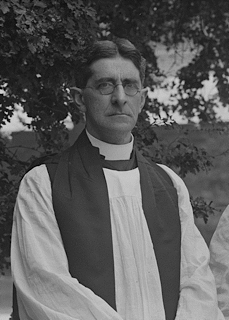
Though Gregg is instinctively conservative, his awareness of contemporary trends make him responsive to demands for change: he supports the resolution for women to hold parochial office and presents a petition to the General Synod in 1914, signed by 1,400 women. Though the motion is lost, he perseveres undaunted, and a bill for the ecclesiastical enfranchisement of women is finally carried in 1920. A unionist, he is also one of three Anglican and seventeen Catholic bishops to sign the declaration against partition in 1917, which is organised by the Catholic Bishop of Derry, Charles McHugh.
From the 1920s the Irish church is dominated by Gregg, first as Archbishop of Dublin (1920–39) and later as Archbishop of Armagh and Primate of All Ireland (1939–59). He provides stability to the church during a turbulent period of political and social change and is outspoken in defence of its interests, pragmatically espousing policies that will lead to the greater integration of the Protestant community into the new Irish state, as in his acceptance of the teaching of compulsory Irish in national schools. Despite a declining Protestant community in the south of Ireland, he maintains the unity of the church, overcoming the political division of the country into two entities. He regrets constitutional change but pledges the loyalty of the church to the Irish Free State. While recognising that the Protestant ethos is different from that of the majority of Irishmen, he maintains that “whatever our religious or political outlook may be, here is our home, and we have a right to be here.” He is elected to the first Irish Free State senate, and is subsequently consulted by Éamon de Valera, who later describes him as “a most learned and kindly gentleman, and . . . a highly valued friend,” in framing the text of the 1937 constitution. In 1949, he adapts, albeit with sadness, the state prayers to fit the republican form of government, observing that “the republic is a fact” and that “in our prayers, above all, there must be reality.”
Gregg is an able administrator, and his courage and integrity in facing difficult situations and his scholarship and devotion to the church earn him respect in the councils of the wider Anglican communion. He is known as “the churchman’s bishop” for his emphasis on doctrinal orthodoxy, ecclesiastical discipline, and loyalty to the clergy. Though conservative in his approach to church unity, he seeks closer relations between the Christian churches and frequently visits the reformed churches of the Iberian Peninsula, where a portrait plaque is unveiled in 1950 in St. John’s Church, Vila Nova de Gaia, Portugal. A baptistry in St. Paul’s Cathedral, Lisbon, is dedicated to his memory. Well known in England as a writer and preacher, he is appointed select preacher at the University of Cambridge (1916, 1930, 1936) and the University of Oxford (1946, 1947) and supports the institution of annual theological lectures at Queen’s University Belfast (QUB). His publications include Epistle of St. Clement of Rome (1899) and The Primitive Faith and Roman Catholic Developments (1909) – a minor classic which is used as a textbook for ordinands of the Church of England. He writes the introduction and notes to the revised version of the Wisdom of Solomon for the Cambridge Bible for Schools (1909) and publishes sermons and articles in religious journals. Elected Member of the Royal Irish Academy (MRIA) in 1914, he is elected to honorary fellowship in 1934 by Christ’s College, Cambridge, is awarded an honorary Doctor of Divinity (DD) in 1949 by QUB, and is created Order of the Companions of Honour (CH) in 1957.
A commanding figure, tall, thin, with raven-black hair, piercing eyes, and fine features, Gregg has an air of sacerdotal austerity, lightened on occasion by his dry sense of humour. He maintains a well regulated daily timetable and keeps a diary, writing his most personal thoughts in Greek. He makes time for recreation, a daily walk of two miles, tennis, and (from 1929) sailing, and holidays in Ireland and on the Continent. He has a great love of English literature and church music. In 1959, he retires to the Woodhouse, Rostrevor, County Down. Though incapacitated by blindness, deafness, and lameness, he never complains, and according to his wife, his life of prayer is enriched. He dies on May 2, 1961, at his home and is buried in Enniskerry, County Wicklow, beside his first wife and son.
Gregg marries Anna Alicia Jennings on November 26, 1902. They have two sons and two daughters. Anna dies in 1945. On January 22, 1947, he marries secondly Leslie Alexandra, daughter of the Rev. T. J. McEndoo, dean of Armagh, who officiates at the marriage of his daughter and of his archbishop.
(From: “Gregg, John Allen Fitzgerald” by Helen Andrews, Dictionary of Irish Biography, http://www.dib.ie, October 2009)