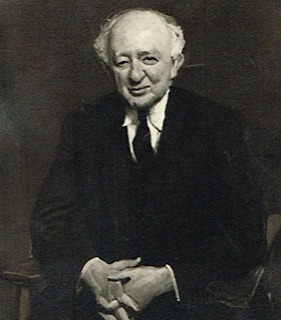
Noyk is born on August 12, 1884, in Telšiai, Lithuania, to a Jewish family. His father is from Kovno and his mother from Berlin. His family moves to Dublin when he is one year old. He is educated at Dublin’s The High School and later attends Trinity College Dublin (TCD) as a sizar in Hebrew, winning a classics scholarship and graduating with a Bachelor of Laws (LLB) in 1907. Shortly after graduation, he becomes a practicing solicitor in Dublin.
Noyk becomes closely associated with the Irish republican movement through his friendship with Arthur Griffith and joins Sinn Féin shortly after the 1916 Easter Rising. He serves as Griffith’s personal solicitor until Griffith’s death in 1922. He is particularly renowned for defending republican prisoners during the Irish War of Independence, including notable figures like General Seán Mac Eoin, Thomas Whelan, Patrick Moran, James Boyce, and Frank Teeling.
During the Irish War of Independence, Noyk frequently coordinates with Michael Collins on intelligence and administrative matters. He helps investigate British officials’ actions that threaten Dáil finances and provides legal cover for IRA operations. On Bloody Sunday (November 21, 1920), he defends IRA members in British court-martials, arranging alibis and expert witnesses to mitigate convictions where possible.
Throughout his career, Noyk demonstrates a delicate balance between legal practice and revolutionary activity. He is involved in confidential operations to protect assets, people, and information vital to the republican cause.
Noyk marries Mabel Stein, the sister of artist Stella Steyn, and they have four children, living for many years on Wellington Road in Dublin. He is also a prominent figure in Dublin social life, involved in sports as a solicitor for Shamrock Rovers Football Club and in horse racing circles.
Noyk is remembered as a key figure in Ireland’s struggle for independence. His legal skill, political activism, and work with Republican courts and the Department of Finance made him an indispensable ally of Michael Collins and a defender of Irish republicans during some of the most turbulent years in Ireland’s history. His life demonstrates the vital role of legal professionals in revolutionary movements, balancing official channels with clandestine support for political aims.
Mullen is first elected to Seanad Éireann (the Irish Senate) in 2007 for the National University of Ireland constituency, and has been continuously re-elected in 2011, 2016, 2020, and 2025, often topping the poll among NUI graduates. In 2018, he founds the Human Dignity Alliance, an anti-abortion political party. He is also affiliated with the European Christian Political Party (ECPP).
Mullen has built his career around social conservative causes:
Anti-abortion advocacy: He opposes the repeal of the Eighth Amendment and seeks stronger protections for conscientious objection among medical staff.
Opposition to same-sex marriage: He is prominent during the 2015 referendum opposing constitutional changes related to marriage.
Human rights and palliative care: He introduces bills and motions promoting hospice care and the protection of vulnerable adults.
Freedom of conscience and family values: He advocates policies emphasizing parental rights in education, ethical protections, and support for families.
International advocacy: He criticizes human rights abuses in China, the treatment of religious minorities, and European Union (EU) bureaucratic overreach, while seeking Ireland’s engagement on human dignity standards internationally.
A lifelong practicing Roman Catholic, Mullen emphasizes the principle of human dignity in both politics and daily life, integrating faith and reason in his ethical framework. He maintains a connection to Irish culture and the Irish language, and has engaged in public discussions on moral and social issues, grounding his positions in Catholic teaching without seeking to impose religious law.
In summary, Mullen is a long-standing independent Irish senator influential in debates on social policy, ethics, and human rights. His career is marked by consistent advocacy for pro-life positions, family integrity, and freedom of conscience, alongside active engagement in European and international policy discussions on human dignity and social justice.
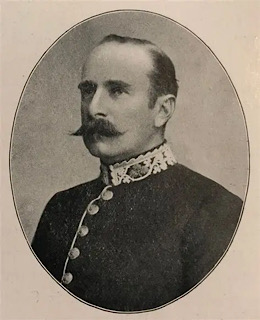
Watt is born on November 4, 1853, to Samuel Watt of Thornhill House, then on the northern outskirts of Derry, and his wife Jane Newman, daughter of Captain Robert Newman, R.N.. He is educated at Foyle College in Derry and then at home by tutors. The Watt family are Ulster Scots gentry who had arrived at Claragh, on the outskirts of Ramelton in the north of County Donegal, during the Plantation of Ulster.
Watt is the owner of Watt’s Distillery, located on Abbey Street in the Bogside in Derry, one of the largest distilleries in Ireland, and the creator of many whiskies, including the famous Tyrconnell, which he names after his racehorse that wins the National Produce Stakes against the odds of 100 to 1. The horse itself is named after Tyrconnell (Irish: Tír Chonaill), the ancient túath or Gaelic kingdom that once covered most of what is now County Donegal in the west of Ulster.
During industrial unrest in 1921, brought about by World War I, prohibition in the United States, and the Irish War of Independence, Watt’s workers at the distillery in Derry are made redundant after challenging his authority. He is said to have stood on a barrel outside the gates to his distillery in the Bogside, while the workers are on strike, and shouted, “Well men, I shall put it to you like this …what is it to be? Will you open the gates?” To which the workers retorted, “The gates stay shut!” This prompts Watt to reply, “Shut they are, and shut they shall remain!” He subsequently closes down Watt’s Distillery, at great economic expense to Derry and neighbouring areas of County Donegal.
On October 7, 1875, Watt marries Violet Flora de Burgh, daughter of George de Burgh and Constance Matthews, with whom he had four sons and two daughters.
Watt serves as High Sheriff of County Londonderry from 1886 to 1887. He is a member of Boodle’s. He dies at Easton Hall in Lincolnshire, where he lives in England after he left Ireland. Easton Hall is later demolished in 1951.
Mills’s mother, Winifred (née Wills), is from Inchicore and her father, Thomas, is from Glanmire, County Cork. Her father works for Great Southern Railways. She has three siblings, Gertrude, Ada and Robert. Her mother dies when she is just eighteen months old, leaving her to be raised by her maternal grandmother, Charlotte Wills, who lives at 1 Abercorn Terrace, Inchicore. She is educated at St. Vincent’s Industrial School, Goldenbridge, where she plays table tennis and association football as well as doing gymnastics. However, camogie is her first love, which she starts playing at age five. She leaves school at a young age, and goes to work in Lamb’s jam factory.
Through her father, Mills is able to participate in and avail of the sporting activities in the GSR Athletic Union. Two pence per week are deducted from the worker’s wages to go toward the financing of the sports activities in the Railway. In 1947, she marries George Hill. They run the Red Seal Handbag Company from the North Circular Road, and later Hill Street. Later they become vintners, running the Seventh Lock public house on the Grand Canal, Ballyfermot.
Mills makes her camogie debut with the Great SouthernRailways club in Dublin in 1938 at the age of fourteen, and is promoted to the senior team for her second match. Three years later she makes her debut for Dublin while still sixteen and plays in Dublin’s unsuccessful 1941 All-Ireland Senor Camogie Championship final against Cork, winning her first All-Ireland medal after a replay against Cork a year later in the 1942 All-Ireland Senior Camogie Championship final.
In 1943, the same counties meet in the All-Ireland final for the third consecutive year. Once again Mills ends up claiming an All-Ireland medal, her goal from fifty yards range being described as the highlight of the match. The following year, 1944, brings a third All-Ireland medal. In 1945 and 1946, a dispute in the camogie association keeps Dublin out of the All-Ireland championship in spite of being Leinster champions in both years. In 1948, Dublin is back on form and Mills captures a fourth All-Ireland medal. She takes no part in the 1949 championship, however, the 1950s brings much success to Mills.
From 1950 to 1955, Mills captures six consecutive All-Ireland titles. In 1956, “the Dubs” surrender their crown to Antrim but it is soon reclaimed in 1957. In 1958, she is appointed captain of the Dublin camogie team. Led by her, Dublin defeats Tipperary to capture yet another All-Ireland title. She captures three more All-Ireland medals in 1959, 1960 and 1961. The occasion of the 1961 final is special as it is her 38th birthday and her last outing in a Dublin jersey.
In her playing days Mills is regarded as one of the all-time greats. She is regarded as camogie’s first superstar she has often been described as the Christy Ring, Mick Mackey, Nicky Rackard and Lory Meagher of the camogie world. With a haul of fifteen senior All-Ireland medals, she is the most decorated player in the history of Gaelic games at the time of her retirement. Since then Rena Buckley and Briege Corkery have won more than Mills.
Mills-Hill dies on August 11, 1996, from undisclosed causes, at her home on the Naas Road, Dublin. She is buried in Palmerstown Cemetery. In 2010, the camogie trophy for the annual inter-county All-Ireland Junior Camogie Championship is named in her honour. The Kay Mills Cup is a replica of the O’Duffy Cup. A plaque to Mills is erected at her former home, 1 Abercorn Terrace, Inchicore.
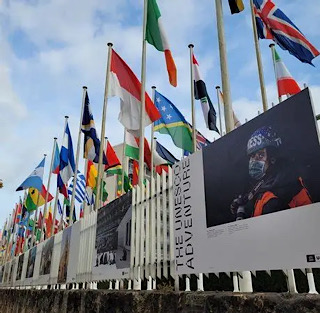
Ireland becomes a member of the United Nations Educational, Scientific and Cultural Organization (UNESCO) on October 3, 1961, joining the European and North American Group of Member States.
UNESCO is established in November 1945 with the goal of promoting peace through international cooperation in education, science, and culture. Ireland’s accession in 1961 reflects its long-standing commitment to these fields, as well as its interest in contributing to global education and cultural initiatives, especially in the developing world.
Ireland’s role in UNESCO includes:
National Commission: The Irish National Commission for UNESCO is the Department of Education and Skills, which coordinates Irish governmental and non-governmental bodies in education, sciences, culture, and communication with UNESCO’s programmes.
Delegation: Ireland’s Permanent Delegation to UNESCO in Paris follows the General Conference (every two years) and the Executive Board (twice a year), as well as participating in committees and working groups.
Heritage Engagement: Ireland has a strong UNESCO heritage profile, with multiple UNESCO Chairs, intangible heritage inscriptions, and World Heritage Tentative List entries.
UNESCO membership allows Ireland to contribute to and benefit from global programmes in education, science, and culture; protect and promote its own cultural and natural heritage, including UNESCO World Heritage Sites on the island of Ireland; and engage in international cooperation on issues like sustainable development, gender equality, and intercultural dialogue.
In summary, Ireland’s UNESCO membership on October 3, 1961, marks a formal commitment to global cultural and educational cooperation, a role it continues to play today through active participation in UNESCO’s programmes and heritage initiatives.
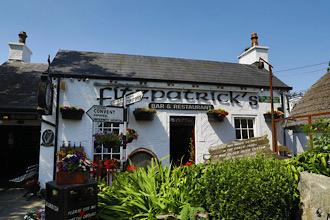
On October 1, 2001, Fitzpatrick’s Bar & Restaurant in Jenkinstown, County Louth, is named the Black & White Pub of the Year County Award winner for County Louth. This recognition is part of the 26th year of the prestigious Black & White Pub of the Year Awards scheme, which evaluates a large number of entries across Ireland.
The award is given to Fitzpatrick’s based on high standards of hygiene, staff efficiency, friendliness, an inviting appearance, and a well‑served range of drinks — all vital criteria for any award‑winning pub. Winning the County Louth title makes Fitzpatrick’s eligible to compete for the overall Black & White Pub of the Year national award, which is announced later in the year.
Fitzpatrick’s, located at the foot of the Cooley Mountains overlooking the Irish Sea, has long been known for its fine dining, traditional Irish hospitality, and scenic surroundings. The 2001 win adds to its growing list of accolades, which include multiple Louth Best Pub awards and other hospitality recognitions.
This award is a significant milestone in the pub’s history, cementing its reputation as one of Ireland’s top dining pubs and a favourite among both locals and visitors to the Cooley Peninsula.
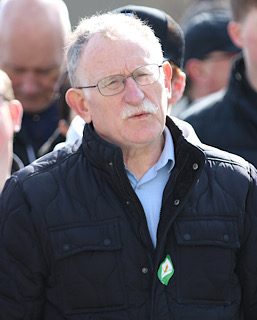
Ellis is from an Irish republican family, and both of his grandfathers fought in the Easter Rising in 1916. He later owns a television repair business.
Ellis is a former Provisional Irish Republican Army prisoner. He is arrested in 1981, when explosives and bomb making equipment are found under his bed. He is charged with possession of explosives. He jumps bail, but is arrested in Buffalo, New York in February 1982 and extradited to the Republic of Ireland, where in April 1983, he is sentenced to ten years’ imprisonment in Portlaoise Prison. He is convicted of possessing multiple power-timer units for IRA bombs, including those suspected of being used in the Hyde Park and Regent’s Park bombings. In 1983, his fingerprints are found on a huge cache of IRA explosives found in a forest outside the Berkshire town of Pangbourne. The cache is linked to the Harrods and Hyde Park bombings. On November 14, 1990, after thirty-five days on hunger strike, he becomes the first person extradited from the Republic of Ireland to the United Kingdom under the 1987 Extradition Act. He goes on hunger strike to protest efforts to send him to Britain, but is extradited in the sixth week of his fast. His hunger strike draws considerable domestic and international attention, and at one point TaoiseachCharles Haughey intervenes, asking Ellis’ parents to ask him to give it up, but they refuse. He is acquitted at his trial in London in October 1991.
Ellis is first elected to Dublin City Council in 1999, for the Finglas local electoral area. He unsuccessfully contests the 2002 Irish general election in the Dublin North-West constituency, and receives 4,781 first-preference votes (18.3%). He is again unsuccessful at the 2007 Irish general election in the same constituency, receiving 4,873 votes (15.7%). At the 2011 Irish general election, he is elected to the 31st Dáil with 7,115 (21.7%) of the first-preference votes.
In October 2014, following claims made by Máiría Cahill that she had been raped as a 17-year-old by a member of the Provisional IRA, Ellis states that “If an allegation was made against a volunteer it would have to be investigated [internally]…To be honest they were not qualified to deal with something like sexual abuse”. Based on this, Philip Ryan of the Irish Independent accuses Ellis of admitting that the IRA ran “kangaroo courts.”
In September 2016, a bill is put forward, which if passed would criminalise hare coursing. Sinn Féin supports the legalisation of hare coursing and decides to apply the party whip. As Ellis opposes it he declines to vote. He defies party instructions by not informing party whip Aengus Ó Snodaigh that he will not be taking part in the vote so he could be excused. He is subsequently given a written warning.
In December 2016, during a session of the Dáil, Ellis and his fellow Sinn Féin TD Martin Ferris are accused by Fine Gael TD Alan Farrell of having information in relation to the shooting of Brian Stack, the chief prison officer at PortlaoisePrison, in 1983. Sinn Féin leader Gerry Adams had just delivered an address to the Dáil in relation to Stack when Farrell rises and uses Dáil privilege to state Gerry Adams had listed Ellis and Ferris as amongst people who may have information about the Stack death in an e-mail to the Garda Commission in February 2014, and ask that the two should also address the Dáil on the matter. Ellis immediately responds by stating, “I refute [sic] any allegations. For the information, the man in question claims to be a solicitor, I was actually in jail for the period. In Portlaoise, and before that in America, so you should check your facts. You’re a disgrace.” Ferris follows Ellis, and states, “On the record of this house; In 2013, I met with gardaí at their request regarding the death of Brian Stack, I co-operated fully with them and I have nothing to answer for, and it’s a disgrace what you have come in here naming. You should be ashamed of yourself.” In December 2016, Ellis states he had received death threats following the exchange in the Dáil.
In February 2018, Ellis is censured by Sinn Féin after he states publicly that fellow party member and councillor for Ballymun Noeleen Reilly is “not fit to represent Sinn Féin” and that she had waged a social media campaign against him. For her part, Reilly is suspended by the party for six months.
At the 2020 Irish general election Ellis is again elected with 14,375 first-preference votes (44.4%). He is a poll topper in the 2020 general election along with many Sinn Féin TDs in the 2020 election. He is criticised for joining his supporters singing “Come Out, Ye Black and Tans” at the count, but he dismisses the suggestion it is inappropriate.
In 2012, the Irish Independent, citing released internal documents held by the British government that were previously sealed for 30 years, alleges that by 1982 British authorities believe Ellis to be linked to “50 murders” as part of his time in the Provisional IRA. The allegation specifically cites a telegraph from the British embassy in Washington, D.C., to American counterparts in which they claim that Ellis is linked by “forensic evidence to some 50 murders” across Northern Ireland and the Republic of Ireland. The Irish Independent claims another document states that Ellis is a “leading member” of the Provisional IRA.
Sinn Féin denounces the allegations as an “Indo Smear” and releases a statement declaring, “This is not the first time such unsubstantiated allegations have been made and Dessie Ellis rejects them as he has repeatedly done. Following a prolonged hunger strike in the 1990s to protest his extradition to Britain, Dessie successfully beat these trumped-up charges in court. Dessie Ellis has made no secret of his involvement in the republican struggle over many decades, including within the ranks of the IRA. Dessie has also been an important persuader for the Peace Process for many years.” Ellis does not make any personal statement on the allegations and refers journalists to Sinn Féin’s official statement.
Ellis is proficient in karate, holding a black belt, and teaches martial arts to young people. He is married to Anne Ellis (née Dunne) with grown up children.
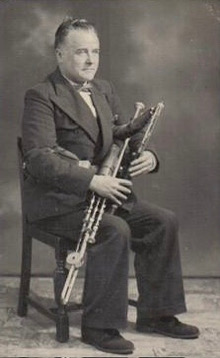
Rowsome, born Martin Leo Rowsome on April 5, 1903, in Harold’s Cross, Dublin, is the third son among seven sons and one daughter of William Rowsome, a carpenter, and Bridget Ann Rowsome (née Murphy). He comes from a distinguished line of uilleann pipers. His grandfather, Samuel Rowsome, ensures that his sons receive formal musical training from a German teacher in Ferns, County Wexford. Observing his father’s craftsmanship, he learns the art of pipe making and instrument repair from an early age.
Rowsome’s talent develops rapidly, and by 1919, at the age of sixteen, he is appointed teacher of the uilleann pipes at Dublin’s Municipal School of Music (now Dublin Institute of Technology Conservatory of Music and Drama), a position he holds for fifty years. He also teaches at Dublin’s Pipers’ Club, where he is a founder member and president, contributing to the formation of Comhaltas Ceoltóirí Éireann in 1950.
He is the first uilleann piper to perform on Irish National Radio in the early 1920s, both solo and in duets with other musicians, and later performs with his “All Ireland Trio.” He is a multiple All-Ireland prizewinner in the 1920s and frequently broadcasts lectures on piping, helping preserve and promote traditional Irish music.
Rowsome is also a master pipe maker and reed maker, known for his meticulous craftsmanship and ability to maintain instruments in perfect tune. His workshop in Dublin is a hub of creativity, where he combines traditional knowledge from his father and grandfather with his own innovations. He trains numerous pupils, including notable musicians like Paddy Moloney and Liam O’Flynn, ensuring the continuation of the uilleann piping tradition.
Rowsome dies suddenly while adjudicating The Fiddler of Dooney Competition in Riverstown, County Sligo, on September 20, 1970. To commemorate the centennial of his birth in 2003, his daughter, Helena Grimes, has some of his original manuscripts published by Waltons; “The Leo Rowsome Collection of Irish Music” consists of 428 reels, jigs, airs, and hornpipes.
Rowsome is remembered as a cheerful, patient, and dedicated father, who creates a lively and musical household. His daughter recalls the vibrant atmosphere of his workshop and the care he took in crafting and testing his instruments.
Rowsome’s style is free and flowing, leaving a lasting impact on contemporary Irish music and uilleann piping. He is one of the last of a small group of traditional pipe makers, and his expertise in tuning, reed making, and performance has been widely celebrated. Even decades after his death his name remains synonymous with the uilleann pipes and Irish musical heritage.
The Irish Civil War (June 28, 1922 – May 24, 1923) is fought between Pro-Treaty forces (led by Michael Collins and Arthur Griffith) who support the Anglo-Irish Treaty, creating the Irish Free State within the British Empire and Anti-Treaty IRA (led by Éamon de Valera and Liam Lynch) who reject the Treaty, seeing it as a betrayal of the 1919 Irish Republic.
By mid-1922, the Free State controls only Dublin and parts of the east, while anti-Treaty forces hold much of the south and west, including Cork, Limerick, and Waterford, forming the self-styled “Munster Republic.”
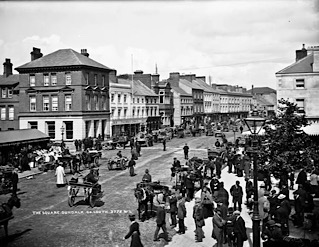
On September 15, 1922, Anti-Treaty IRA units in Dundalk attack Free State troops stationed in the area and seize control of the local power station, cutting off the town’s electricity supply.
This is a typical example of anti-Treaty tactics: using sabotage and localized attacks to disrupt Free State operations, weaken their hold on territory, and maintain control over key infrastructure. Such actions are part of a wider pattern of resistance in areas not yet recaptured by the National Army.
While Dundalk is not a major strategic city, the attack reflects the guerrilla and sabotage phase of the Civil War, which follows the Free State’s July–September 1922 offensive that retakes major towns in Munster and the west. The Free State’s victory in that offensive ends the conventional phase, but anti-Treaty forces continue to resist through hit-and-run raids, sabotage, and control of rural areas.
In summary, the Dundalk incident of September 15, 1922, is a localized but symbolic act of anti-Treaty resistance, illustrating the ongoing struggle to control infrastructure and disrupt Free State operations in the months after the decisive military phase of the Irish Civil War.
(Pictured: Dundalk, County Louth, in the early 20th century)
The alarm is raised around 2:30 BST when the vessel begins taking on water rapidly. Captain Colm Newport reports a sudden ingress of water that causes a critical loss of stability. Despite emergency pumps, the flooding is uncontrollable, and the crew and trainees abandon the ship in an orderly evacuation.
Five crew members and twenty trainees (most Irish, but also including Britons and Italians) transfer to life rafts within minutes. The evacuation is completed in about four to five minutes, with all twenty-five people safely moved away from the sinking vessel.
French coastguard vessels, along with assistance from Haldoz and Arklow Venus, rescue everyone. They are taken to a hotel on Belle-Île, where they are cared for and contact their families. The Irish Ambassador to France, Anne Anderson, also arrives to meet them.
The exact cause of the sinking remains unclear. The Marine Casualty Investigation Board finds the vessel well-maintained beyond statutory requirements and no evidence of negligence. One theory, supported by some accounts, is that the ship may have collided with a submerged container, fracturing its keel timbers. However, the captain and officials refuse to speculate.
Plans are made to raise the ship, with an estimated cost of €3.8 million, but by February 2009 the Irish government decides against recovery, citing the risk of further damage from storms and fishing nets. The wreck rests upright on a sandy seabed at about eighty metres depth, with one hull plank damaged.
The loss of Asgard II is a significant blow to Ireland’s sail training tradition, prompting discussions about replacing the vessel.