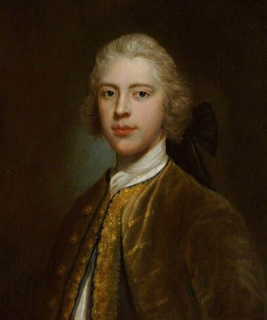
As a result of Boyle’s death before his father the Irish Viscountcy of Dungarvan and the English Barony of Clifford pass to his eldest son,Charles Boyle (bef. 1669–1704), who later becomes the 3rd Earl of Cork and 2nd Earl of Burlington upon the death of his grandfather in 1698. By his mother Lady Elizabeth Clifford’s death in 1691, he has already inherited the Barony of Clifford, which then also passes to his son.
At the time of his death, Charles leaves behind six children from his two marriages:
Arethusa Boyle (born 1688), daughter of his second wife Lady Arethusa Berkeley, married James Vernon
Boyle’s death In 1694 ensures the continuation of the Boyle family legacy through his children, particularly his eldest son, who consolidates the family’s English and Irish peerages. He is buried in Londesborough later that same month.
Although Boyle has a distinguished career as a Member of Parliament and as a Fellow of the Royal Society, his early death precludes him from inheriting the earldoms. Nevertheless, through strategic marriages and succession, the Boyle family maintains their prominent position in Anglo-Irish nobility.
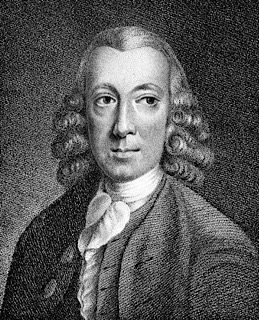
Brooke is the son of The Reverend William Brooke, the well-off Church of Ireland Rector of Killinkere and Mullagh within the Church of Ireland Diocese of Kilmore. He first begins his career as a poet. His now forgotten philosophical poem Universal Beauty is published in 1735, and Alexander Pope thinks its sentiments and poetry fine. He then turns dramatist by adapting extant plays, such as The Earl of Essex. He writes from the Tory point of view and becomes one of the most important figures in Augustan drama, although not for his successes.
Brooke’s Gustavus Vasa (1739) has the distinction of being the first play banned by the Licensing Act 1737. The play concerns the liberation of Sweden from Denmark in 1521 by Riksföreståndare (Protector of the Realm or Regent) Gustav Vasa (who later becomes King Gustav I of Sweden). Sir Robert Walpole believes that the villain of the play resembles him. Further, a facetious “attack” on it is the first public writing of Samuel Johnson, whose A Complete Vindication of the Licensers of the English Stage feigns support for Walpole while it drives the censor’s argument to reductio ad absurdum.
Brooke lives in Ireland most of his life, but he spends time in London when his plays are on the stage. In politics, he is somewhat radical in arguing publicly for loosening the laws persecuting Roman Catholics in the United Kingdom. His daughter, Charlotte Brooke, is herself an important figure in the history of Irish literature, publishing Reliques of Irish Poetry (1789) and working to increase the profile of Irish language poetry.
Later, Brook’s Earl of Essex comes back to the boards in a revival. Again, Samuel Johnson offers his public support of Brooke, but when he hears the Earl saying at the end of Act II, “Who rules o’er free men must himself be free,” Johnson replies, “Who drives fat oxen must himself be fat.” Although Johnson is objecting to the misuse and overuse of “freedom” and is at that time in a vexatious debate over the American Revolutionary War (saying, “Why is it that we hear the loudest cries for liberty from the drivers of Negroes?”), Brooke is mortified by Johnson’s parody and changes the line for his Collected Works.
Brooke has a difficult life and makes a very poor living. The Licensing Act 1737 robs him of his primary avenue to making a living, for, after the Act, he is the first man banned by it. Whatever fame this lends him is made up for by his inability to get new plays performed. His greatest commercial successes come from the Earl of Essex and his two novels, The Fool of Quality (1760-1772) and Juliet Grenville (1774), which are two of the finest sentimental novels. John Wesley is so fond of The Fool of Quality, in which Brooke declares his belief in universal salvation, that he seeks to have a copy of it given out to all new Methodist churches.
Brooke has twenty-two children. Of these, only Charlotte survives adolescence. She shepherds his Works through the press after his death.
The death of Brooke’s wife after a long illness and the loss of so many of his children, leaves Brooke’s physical and mental health increasingly unstable. His decline is evident in the last volume of The Fool of Quality and his final three-volume novel Juliet Grenville. He dies in Dublin on October 10, 1783, and is buried in his father’s churchyard in Mullagh.
Lennox is the daughter of Charles Lennox, 2nd Duke of Richmond, an illegitimate grandson of King Charles II, and Lady Sarah Cadogan. She is renowned for her beauty, vivacity, and intellectual curiosity, and is considered the most attractive and socially adept of the Lennox sisters. She is presented at court at the age of thirteen and becomes engaged to James FitzGerald, 20th Earl of Kildare, in 1745.
James FitzGerald becomes Marquess of Kildare and then Duke of Leinster in recognition of his political influence. The couple’s financial arrangements are generous, leaving FitzGerald a substantial jointure and properties, which later strains the resources of her surviving children.
After the Duke of Leinster’s death in 1773, FitzGerald marries her children’s tutor, William Ogilvie, on August 26, 1774, having already begun an affair. Ogilvie is nine years her junior and the likely biological father of her youngest son from her first marriage. She and Ogilvie have three additional children together, two of whom survive into adulthood. She spends time in France and Ireland before eventually settling in London to oversee her daughters’ marriages and engage in social affairs.
FitzGerald is a keen reader, politicized, and culturally active. She has a strong interest in literature, politics, and Enlightenment ideas, influenced by thinkers such as Jean-Jacques Rousseau. She actively manages her estates and interiors, notably Carton House and its gardens, and pursues educational and outdoor activities for her children, demonstrating innovation in child-rearing and estate management.
FitzGerald is deeply affectionate and attentive to her children, particularly Lord Edward FitzGerald, a key figure in the Irish republican movement. She is involved in mourning and supporting her children, enduring the deaths of fourteen of her 22 children across both marriages. She also navigates complex social and financial challenges, ensuring her families’ estates and alliances endure despite societal pressures.
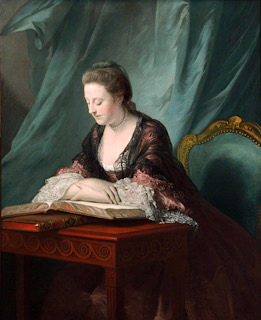
FitzGerald’s life and correspondence exemplify the culture, politics, and familial dynamics of eighteenth-century Anglo-Irish aristocracy. She has been depicted in numerous portraits by artists including Sir Joshua Reynolds, Allan Ramsay (pictured above), and Arthur Devis. Her story, and that of the Lennox sisters, is popularized in Stella Tillyard’s 1994 book Aristocrats and the six-part BBC/PBS television series adapted in 1999, highlighting her role in history, society, and culture.
In summary, Emily FitzGerald, Duchess of Leinster, is remembered as a central figure of aristocratic Ireland and Britain, a mother to a large and influential family, and a socially and politically engaged noblewoman whose life bridged familial devotion, political awareness, and cultural sophistication.
Tone is a French Army officer serving under GeneralJean Joseph Amable Humbert in the Irish expedition of 1798. He leaves Ireland for France in 1794, later moves to the United States, and rejoins Humbert in Paris in November 1797. At Ballinamuck, the French-led Irish forces are decisively defeated by British troops. Disguised as a peasant, he is captured on September 8, 1798.
Tone is imprisoned in the Provost prison at Dublin barracks and put on trial before a court-martial on September 21, 24 and 26, 1798. In his defence, he claims he had left Ireland before war was declared, that his imprisonment in France proved his innocence, and that he had tried to prevent the rebels from committing acts of revenge and plunder. He is, however, found guilty of high treason.
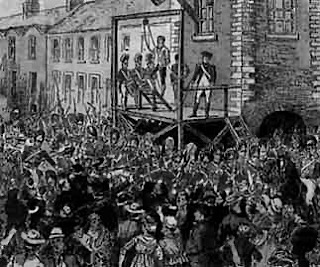
On September 29, 1798, Tone is hanged at Arbour Hill Prison and buried at Bodenstown Graveyard, County Kildare. He is unmarried but has a daughter raised by his sister Margaret.
Tone is one of roughly 200 Irish prisoners hanged after the Battle of Ballinamuck, alongside other United Irishmen and French sympathisers. The battle marks a turning point in the Irish Rebellion of 1798, leading to the repatriation of most French soldiers but the summary execution of many Irish insurgents.
In summary, Matthew Tone’s execution on September 29, 1798, is a direct consequence of his role in the French-led Irish expedition, his capture at the Battle of Ballinamuck, and the British government’s harsh response to the defeat, which sees widespread executions of captured rebels.
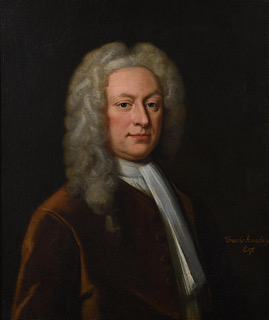
Annesley is a prominent figure in Irish politics during the late 1690s. Initially aligned with the Whig faction, he later moves closer to Tory interests, particularly in his opposition to Catholic influence and the growing presence of ScottishPresbyterians in Ulster. His political stance and actions in the Irish Parliament draw criticism from certain factions.
The “Report of the Commissioners” is a formal parliamentary document produced by a committee tasked with examining Ireland’s governance, economic conditions, and political tensions. Annesley’s involvement in drafting or presenting parts of this report is seen by some as politically damaging or controversial. The exact nature of his contribution is not fully detailed in surviving records, but it is sufficient to trigger his expulsion.
The early 1700s in Ireland are marked by ongoing sectarian tensions between Protestants and Catholics, political maneuvering between Whig and Tory factions in the Irish Parliament and economic hardship and poor governance conditions, which are themes in the commissioners’ report.
Annesley’s expulsion reflects the sensitivity of political discourse in Ireland at the time, where even well-intentioned inquiries can be used to target opponents.
Following his expulsion, Annesley continues his political career in England, being returned as MP for Preston in 1705 and later for Westbury. He remains active in Parliament until 1734, when he does not stand for re-election in the 1734 British general election.
In summary, on September 28, 1703, Francis Annesley is expelled from the Irish House of Commons for his part in the “Report of the Commissioners,” a move that underscores the political risks of engaging in sensitive parliamentary inquiries during a volatile period in Irish history.
The Battle of Castlebar takes place on August 27, 1798. A combined force of about 800 French troops under GeneralJean Joseph Amable Humbert and 2,000 United Irishmen rebels defeat a much larger British Crown force of 3,000 to 5,000 men led by General Gerard Lake. The French, though exhausted from long marches, exploit the disorganisation of Lake’s militia-heavy army, routing it in what becomes known as the “Castlebar Races” or “Races of Castlebar.” The British suffer heavy casualties — around 400 killed or wounded and 800 captured, while the French lose about 200 to 220.
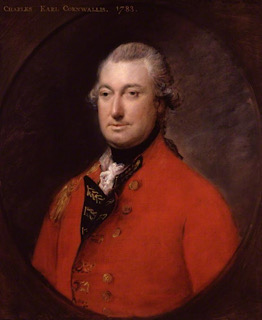
The victory at Castlebar is a significant boost to the rebels, but it also alarms the British government. Cornwallis, commanding the Crown forces in the west, is tasked with reasserting control and preventing further advances into Ulster. By September 4, he has moved from Tuam to threaten Castlebar, aiming to recapture the town and disrupt Humbert’s plans to push north into County Sligo and beyond.
Anticipating Cornwallis’s move, Humbert evacuates Castlebar with his remaining troops — roughly 800 French soldiers and 1,000 Irish insurgents — and marches north into County Sligo. His objective is to ignite further rebellion in Ulster, continuing the momentum of the short-lived “Republic of Connacht.” This evacuation leaves the town vulnerable to British reoccupation.
While Humbert’s force is retreating, fresh risings broke out in counties Longford and Westmeath, showing the insurrection’s reach. However, these uprisings are ultimately suppressed, and the British, under commanders like Cornwallis, work to mop up rebel strongholds across Ireland.
In summary, on September 4, 1798, Cornwallis’s advance from Tuam is a direct response to the rebel victory at Castlebar, aiming to regain a key rebel-held town and halt Humbert’s northern push. The move reflects the British strategy of localized offensives to counter the momentum of the Irish Rebellion of 1798.
(Pictured: Charles Cornwallis, 1st Marquess Cornwallis)
The Julian calendar, introduced by Julius Caesar in 45 BCE, has a leap year rule that adds a day every four years. This makes the average year 365.25 days long, about 11 minutes and 14 seconds longer than the true solar year. Over centuries, this small error accumulates, causing the calendar to drift out of sync with the seasons. By 1752, the Julian calendar is 11 days ahead of the equinoxes, affecting the date of Easter and other seasonal events.
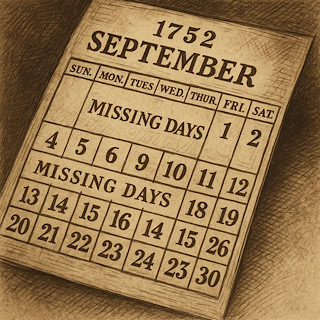
The Calendar (New Style) Act 1750 mandates the switch. To correct the drift, the Act declares that Wednesday, September 2, 1752, is immediately followed by Thursday, September 14, 1752 — effectively skipping September 3–13. This also adjusts the leap year rules to match the Gregorian system, omitting leap years in century years not divisible by 400.
The change is controversial. Britain and Ireland have been on the Julian calendar since 1582, with the New Year starting on March 25 (Lady Day). Adopting the Gregorian system means shortening 1751 to 282 days (March 25 to December 31) and aligning with Continental Europe, which had already made the switch in the 16th century.
Political debates, especially between the Whigs and Tories, reflect fears of losing sovereignty and of embracing “Popery.” While there are rumors of “calendar riots” demanding the return of the “lost” 11 days, these are likely exaggerated.
There are several impacts with making the change. There is historical confusion as dual dating (e.g., “Feb 10, 1750/51”) is common for decades. There are economic and social effects as birthdays, rent payments, and holidays are thrown off. The change also allows for international alignment as the change facilitates trade and communication with Europe.
The 1752 switch marks a turning point in British and Irish history, bringing the calendar into line with most of Europe and setting the stage for the Gregorian calendar’s eventual global dominance. Today, the Gregorian calendar is the world’s standard civil calendar, a legacy of this 18th-century reform.
Humbert is the eldest of six children of Jean-Joseph Humbert, a farmer and trader, and Catherine (née Privat), who dies when he is three years old. From a modest rural background, he works briefly as a hatter and rabbit hunter before entering the military in July 1789 amid the early stages of the French Revolution.
In 1796, Humbert is assigned to prepare for an expedition to Ireland. In the ill-fated Expédition d’Irlande, his ship Droits de l’Homme is wrecked off the Bay of Audierne in January 1797, but he survives. In 1798, he leads about 1,000 French troops to Ireland, landing at Killala. His forces fight and win at Ballina and the Races of Castlebar, proclaiming a Republic of Connacht before being defeated and captured at the Battle of Ballinamuck. He is exchanged for British prisoners.
In 1810, Humbert emigrates to New Orleans, where he becomes acquainted with French pirate Jean Lafitte. He joins the Buenos Aires rebellion in 1814 before returning home. In 1815, he fights the British at the Battle of New Orleans in the War of 1812, earning thanks from General Andrew Jackson. He later lives as a schoolteacher in New Orleans until his death on January 3, 1823.
Humbert’s career spans revolutionary France, Napoleonic campaigns, and post-Napoleonic adventures, making him a notable figure in late 18th- and early 19th-century military history.
The Irish Rebellion of 1798 has been suppressed in the east by British forces, but unrest continues in the west. The French Directory, influenced by Enlightenment ideals and shared revolutionary sympathies with the United Irishmen, see an opportunity to strike a blow against Britain and inspire Irish republicanism. The plan is to land French troops in Ireland to provide military aid to the rebels, incite a general uprising and potentially use Ireland as a staging ground for further operations against Britain.
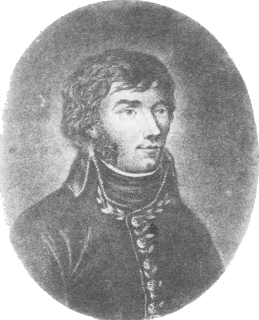
The July 19 authorization marks the final political clearance for the operation. The first expedition is entrusted to GeneralJean Joseph Amable Humbert (pictured), a veteran of irregular warfare against the Vendéen insurgents. The force is small—about 1,025 French troops, three light field cannons, 3,000 muskets, and 400 sabres—but includes Irish allies such as Bartholomew Teeling and Fr. Henry O’Kane, who help spread the news of the landing.
On August 6, 1798, Humbert’s three frigates—La Concorde, La Franchise, and La Médée—sail from La Rochelle, taking a circuitous route to avoid British naval detection. They land at Killala Bay, County Mayo, where they quickly take control of the town, hoisting the French flag and rallying local Irish recruits.
Humbert’s landing in Killala, known locally as Bliadhan na bhFrancach (“The Year of the French”), sparks a brief but significant phase of the Rising. His forces achieve notable victories, such as the Races of Castlebar, but ultimately cannot sustain momentum against the British response. Humbert surrenders to British forces at Ballinamuck, County Longford, on September 8, 1798.
In summary, the July 19, 1798, authorization by the French Directory is the decisive political step that enables Humbert’s small but symbolic invasion of Ireland, which, though militarily limited, becomes a potent symbol of French-Irish revolutionary solidarity.
On July 5, 1790, the Irish mail coach service makes its first run from Dublin to Waterford, marking a significant milestone in Ireland’s postal history. This is part of the broader expansion of the General Post Office’s (GPO) mail coach network, which had been introduced in Ireland in 1789.
A twice-weekly mail coach service operates between Dublin and Drogheda to the north, Kilkenny to the south and Athlone to the west as early as 1737 and for a short period from 1740, a Dublin to Belfast mail coach exists. In winter, this route takes three days, with overnight stops at Drogheda and Newry. In summer, travel time is reduced to two days. In 1789, mail coaches begin a scheduled service from Dublin to Belfast. They meet the mail boats coming from Portpatrick in Scotland at Donaghadee, County Down.
The Irish mail coach system is modeled on the successful English service introduced in 1784 by John Palmer, which uses specially built coaches to carry the Royal Mail under contract to independent operators. These coaches are designed for speed and efficiency, stopping only for mail collection and delivery, and are protected by armed guards. The Dublin–Waterford route is one of the early inland services added to the network, complementing other major routes such as London–Norwich, Liverpool–Leeds, and London–Dover.
The July 5, 1790 run from Dublin to Waterford is notable because it is the first scheduled mail coach service on that route, replacing slower and less secure methods like mounted riders or carts. It demonstrates the GPO’s ability to extend its network to key inland towns, improving communication between Dublin and the southeast of Ireland. It also reflects the rapid expansion of the mail coach system in Ireland by 1790, with many towns already having daily mail delivery and collection.
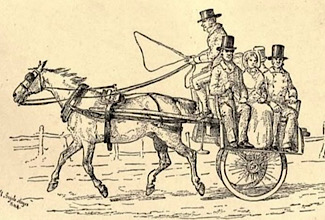
While the primary purpose is to carry the Royal Mail, passengers can also travel at a premium fare. The coaches can carry four seated passengers inside and more standing outside, with the driver and guard occupying the front seats. The journey from Dublin to Waterford is relatively short for the time, but still requires careful scheduling to meet the strict post office timetable.
This first run lays the foundation for a regular mail service that becomes a vital part of Ireland’s transport and communication infrastructure until the advent of railways in the 1830s. By the mid-19th century, most of the mail coaches in Ireland are eventually out-competed by Charles Bianconi’s country-wide network of open carriages, before this system in turn succumbs to the railways. The Dublin–Waterford route, like others, is eventually replaced by the faster rail services, but its role in modernizing Ireland’s postal system is crucial.