Although O’Connell begins calling for repeal in the early 1830s, the formal Association is only established in 1840. Prior to this, candidates supporting repeal contest the 1832 United Kingdom general election and between 1835 and 1841, form an electoral pact with the Whigs. Repealer candidates, unaffiliated with the Whigs also contest the 1841 and 1847 general elections.
Following the movement’s decline in the late 1840s, nationalists, including members of the Young Ireland movement, emerge from its ranks.
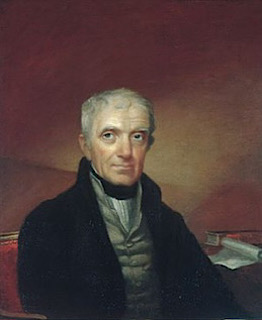
Walker is born in Dublin, son of Cooper Walker, merchant, and educated by Thomas Ball. He suffers from asthma, which prevents him from attending college. Instead he travels to Italy, where he possibly receives some private tuition in Latin, Greek, French, Italian, and Spanish. He takes a special interest in Italian literature and Irish antiquities, and on his return to Ireland (where he is employed in the Irish treasury as third clerk in the upper department) resides in an Italianate villa, St. Valerie, on the road from Bray to Enniskerry.
In 1785, Walker is elected one of the original members of the Royal Irish Academy (RIA) and on March 17, 1786, is requested to sit on its committee of antiquities. In this capacity he submits several essays to the Academy’s Transactions. However, his best-known work is Historical Memoirs of the Irish Bards (1786). His interest in poetry, and in eighteenth-century vernacular survivals of the ancient bardic tradition, suggests important new contemporary and literary dimensions for what had previously been antiquarian and scholarly pursuits. He also breaks new ground by considering modern as well as historical Irish culture, and introduces it to an Anglo-Irish audience by providing English translations of Gaelic songs and poems.
The authorities Walker cites covers the entire range of Irish and Anglo-Irish scholarship on Irish antiquities. He includes excerpts from his correspondence with Charles O’Conor, Charles Vallancey, and Sylvester O’Halloran and carries out an extensive correspondence with Thomas Percy after he becomes Bishop of Dromore in 1782. He focuses on both poetry and music, which according to the popular eighteenth-century view has been the two traditional pursuits of the Irish bards. He presents a historical outline of their progress from the earliest times to the eighteenth century and ends with nine appendices, which are almost as lengthy as the main text. In these, his appreciation of what he considers to be the contemporary survivals of the ancient Irish bardic tradition is apparent in his including an account of Cormac Common, a blind eighteenth-century poet from Mayo, as well as a lengthy biographical notice of Turlough O’Carolan, together with translations of several of his songs. The book brings together many of the literary, scholarly, popular, Celtic, antiquarian, political, and musical dimensions of eighteenth-century Irish culture and prefigures the synthesis of literary modes, cultural theories, and musical styles that would occur in the literary productions of the United Irishmen.
Despite his linguistic skills, Walker has little knowledge of the Irish language, yet he (a member of the Anglo-Irish elite) is consistent in his praise of Gaelic culture, portraying it as sophisticated and literate and, although he highly romanticises his work, he does help to challenge negative appraisals of the Irish character. By the standards of the time it is a work of great erudition. However, today the book is judged to be of limited academic merit as Walker is severely hampered by a shortage of primary documents and by his limited grasp of the Irish language. This is illustrated by his ambiguous use of James Macpherson‘s volumes of Ossianic poems, published in the 1760s, which he quotes as authentic in the text while hinting in the footnotes that they are unreliable.
Charlotte Brooke translates three poems, and in return Walker encourages her to produce her Reliques of Irish Poetry (1789). Her work reflects Walker’s influence and she thanks him in the preface for affording her “every assistance which zeal, judgment and extensive knowledge, could give” as well as for prevailing on people to subscribe to her work and for being a subscriber himself. He is part of a literary circle that includes Edward Ledwich, Charles O’Conor, Edward Berwick, John Philpot Curran, and Henry Grattan. He also writes Historical essay on the dress of the ancient and modern Irish (1788), dedicated to his friend James Caulfeild, 1st Earl of Charlemont, for which he interviews the older generation, consults manuscripts, and even visits tombs to examine the clothing of corpses, and admits he has received copious aid from Elizabeth Rawdon, Countess of Moira. The English Review receives it warmly but Richard Gough, the reviewer for TheGentleman’s Magazine, states he is “much disappointed in the perusal of this high priced history.” Other works by Walker include “an historical essay on the Irish stage,” RIA Trans., ii (1788), Historical Memoir on Italian Tragedy (1799) and contributions to Vallancey’s Collectanea de rebus Hibernicis (Dublin, 1770–1804). In the 1790s he subscribes to Anthologia Hibernica: a monthly collection of science, belles lettres and history and in December 1794 submits an “Historical essay on the Irish stage” which surveys Irish drama from bardic times through to contemporary folk plays.
Walker dies on April 12, 1810, in Enniskerry, County Wicklow, leaving a fine gallery of pictures, a library containing Irish manuscripts, and a collection of antiquities. He is buried on April 14 in St. Mary’s Churchyard, Dublin. His memoirs of Alessandro Tassoni are published posthumously in London in 1815 (with a lengthy preface by his brother Samuel), as is the second edition of Historical Memoirs of the Irish Bards (2 vols., Dublin, 1818).
(From: “Walker, Joseph Cooper” by Rosemary Ritchie, Dictionary of Irish Biography, http://www.dib.ie, October 2009)
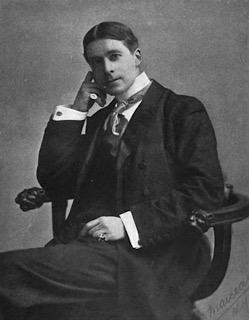
Barrington is born in 1756 or 1757 in Knapton, Abbeyleix, Queen’s County (now County Laois), the third son of John Barrington, an impoverished Protestantgentleman landowner in Queens’s County and his wife Sibella French of Peterswell, County Galway. He is raised and schooled by his grandparents in Dublin and enters Trinity College Dublin (TCD) in 1773, aged 16, but leaves TCD without a degree.
Barrington joins the Irish Volunteers and supports the Irish Patriot Party in the early 1780s. His father raises and commands two Corps: the Cullenagh Rangers and the Ballyroan Light Infantry.
Barrington’s elder brother commands both the Kilkenny Horse and the Durrow Light Dragoons. Through his correspondence with General Hunt Walsh, Barrington’s father secures him a commission in Walsh’s regiment. Upon learning that the regiment is to be sent to America to fight in the American Revolution, and fearful of dying on some foreign battlefield, he writes to Walsh asking him to present the commission to another candidate instead, claiming that he himself is too tender to be of any real use. His fears prove well founded when his replacement, the only child of one of Walsh’s friends, is killed in his first engagement.
Barrington is called to the Irish bar in 1788 and in 1789 he marries Catherine, daughter of Dublin mercer, Edward Grogan. They ultimately have seven children. The following year he enters by the purchase of the seat the pre-1801 Parliament of Ireland as MP for Tuam. He accepts a sinecure post in 1793 at the Dublin customhouse worth £1,000 p.a. generally supporting Henry Grattan and he takes silk the same year. He is a member of the Kildare Street Club in Dublin. Appointed an Admiralty court judge in 1798, he re-enters parliament the same year as member for Clogher and votes against the Act of Union in 1799–1800, rejecting John FitzGibbon, 1st Earl of Clare‘s offer of the solicitor-generalship in 1799. In 1802, he unsuccessfully contests a seat for Dublin City in the Parliament of the United Kingdom.
Barrington’s comments on the Act of Union has a continuing resonance with the Young Ireland, Fenian and Irish Parliamentary Party movements, which hope to re-establish “Grattan’s Parliament” in some way. In particular, his Rise and Fall of the Irish Nation (1833) provides the basis for this romantic idealisation of Grattan’s Parliament adopted by the Irish Parliamentary Party from the 1880s.
Appointed an Admiralty court judge in 1798 at a salary of £500, Barrington finds there is little work to be done and his lack of a degree restricts other opportunities to support extravagant tastes. His award of a knighthood in 1807 brings no increased income. His court orders the sale of two derelict vessels and he gives instructions that the proceeds are to go to his own bank account. In 1810 or 1811 he takes his wife and family to England and from that time on his work in Ireland is carried out by surrogates. Still retaining his judgeship and salary, he moves to France in 1814 to escape his creditors and never returns to Ireland.
In 1828, commissioners learn of Barrington’s financial irregularities. He crosses the channel to London and protests that he is innocent but does not answer the charges based on the documentary evidence produced by the commissioners. In 1830, a parliamentary commission recommends that he be removed from office, finding misappropriations of court funds in 1805, 1806 and 1810. Pursuant to a provision of the Act of Settlement 1701, which seeks to protect the independence of the judiciary, both Houses of the Parliament of the United Kingdom vote for an Address to King William IV praying for his removal, and the King duly dismisses Barrington from office. By then, Barrington’s first 1827 volume of memoirs has sold successfully, and they are republished and expanded. He is the first judge removed from office under the Act of Settlement, and to this day, is the only judge in the United Kingdom to be so removed.
According to one of Barrington’s sometimes spurious personal memoirs, on March 20, 1780, he travels to Donnybrook, Dublin, to duel with Richard Daly. Daly has fought 16 duels in three years – three with swords and thirteen with pistols. Remarkably, he, and his opponents, have always escaped serious injury. Barrington has no pistols so he and his second, Richard Crosbie, spend the previous night constructing a pair “from old locks, stocks and barrels.” At Donnybrook, Daly’s second, Jack Patterson, a nephew of the Chief Justice, approaches Crosbie, explains that it is all a mistake and asks that the two shake hands. Barrington is in favour, but Crosbie has none of it. Taking out a duelling handbook, he points to rule No.7 – “No apology can be received after the parties meet, without a fire.”
Taking up their positions, Barrington loses no time in pressing the trigger and Daly staggers back, puts his hand to his chest, and cries, “I’m hit, Sir.” The ball does not penetrate but does drive part of a brooch slightly into his breastbone. Barrington only then thinks to inquire why the duel is even taking place. This time the rule book notes: “If a party challenged accepts the challenge without asking the reason for it, the challenger is never bound to divulge it afterwards.”
Barrington is most notable today for his memoirs which include scathing but humorous thumbnail portraits of contemporary Irish lawyers, judges and politicians during the last years of the Protestant Ascendancy. Personal sketches also includes vignettes on Irish people from every background. His works are reprinted with frequent additions and renamings.
Since his death, Barrington’s work has been quoted by a wide selection of editors, primarily following two themes: the political drama surrounding the Act of Union and the colourful nature of life in 1700s Ireland.
Fisher is the sixteenth of seventeen children to Jane and Abraham Fisher. The Fishers are a Quaker family with a business in Youghal. They are noted for their charitable works, especially during the Great Famine.
Fisher and Haslam marry on March 20, 1854, in Cork Registry Office. Their marriage is mainly celibate as a result of them not wanting to have children. In later writings Thomas argues in favour of chastity for men. The couple shares a belief in equality for men and women and he supports her campaigns.
Both of the Haslams are expelled from the Society of Friends due to their interests in social reform but both maintain links with the community. Thomas is said to have been disowned for harbouring ideas contrary to Quaker teachings. In 1868, he publishes a pamphlet called “The Marriage Problem,” in which he raises and supports the idea of family limitation and outlines a number of contraceptive methods including the safe period. He dies on January 30, 1917, in his ninety-second year.
Haslam is best remembered today for her work for votes for women. She is a pioneer in every 19th century Irish feminist campaign and fights for votes for women from the year 1866. In 1872, she organises the “General Meeting of the members and friends of the Irish Society for Women’s Suffrage” in Blackrock, Dublin, which is chaired by George Owens and attended by MPs Maurice Brooks (a Home Ruler) and William Johnston (a northern Orangeman) and by the future Liberal Unionist Party MP Thomas Spring Rice, 2nd Baron Monteagle of Brandon. The Haslams are founding members of the Dublin Women’s Suffrage Association (DWSA) in 1876. This marks the start of a remarkable campaign in Dublin for votes for women. Haslam, along with the writing of her husband, continues the campaign and in 1896 women in Ireland win the right to be elected as Poor Law Guardians, members of the official bodies which administer the Poor Law. Ireland’s early women’s rights activists have a close relationship with their English correlatives and share the same discrimination in education, employment, sexual freedom and political participation. The DWSA organises the introduction of a private member’s bill to remove disqualification “by sex or marriage” for election or serving as a poor law guardian. The bill passes in 1896 and the association immediately writes to the newspapers and publishes leaflets explaining the process on how to register to vote and stand for election and encouraged qualified women to go forward as candidate.
By 1900, there are nearly 100 women guardians. Haslam then leads a campaign to encourage qualified women to stand for election in 1898. Women win eligibility to vote in local government elections, and to stand for elections as rural and urban district councillors. In 1913, she steps down as secretary of the Association and is elected life-president.
One of Haslam’s longest campaigns, working alongside the Belfast suffragist Isabella Tod, is for repeal of the Contagious Diseases Acts of 1864. The acts allow for state regulation of prostitutes in areas in which the army is stationed. The act permits compulsory internment of women for up to three months, which is later extended to one year. Medical treatment is also enforced on the women. The act seeks only to reduce the spread of sexually transmitted diseases among the military. She opposes the act as she feels it legitimises prostitution, commoditises women and undermines family life. It is finally repealed following eighteen years of campaigning.
Haslam is involved in the 1866 petition and gathers 1,499 signatures to extend suffrage to women as well as men. In 1867, male suffrage is extended but it is not until 1911 that the Suffrage movement achieves the significant victory of securing the right of women to stand for election as local councillors.
In 1918, a woman of almost ninety, Haslam goes to the polls “surrounded by flowers and flags,” with women who unite in her honour to celebrate the victory of the vote. This display of unity by activist women from all shades of political opinion acknowledge her role in the fight for the right to vote. The same year in which she dies, in 1922, the Irish Free State extends the vote to all men and women over the age of 21.
Haslam dies on November 28, 1922, at her home in Carlton Terrace, Dublin, of “cardiac dropsy” at the age of 93. She is buried next to her husband in the Quaker burying ground at the Friends Burial Ground in Temple Hill, Blackrock, Dublin.
A memorial seat to Anna and Thomas Haslam is erected in 1923 in St. Stephen’s Green, Dublin, with the inscription “in honour of their long years of public service chiefly devoted to the enfranchisement of women.”
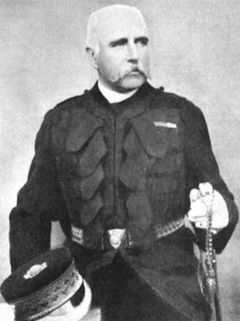
Shillington originally plans to join the Northern Ireland Civil Service, however he wants a more varied career. He joins the Royal Ulster Constabulary on February 8, 1933, as a cadet officer. He completes his training at the Newtownards depot in County Down. He is promoted to district inspector in 1935, and serves as officer in charge of D District in Belfast. In 1944, he is promoted to 1st Class District Inspector and is posted to Derry, County Londonderry.
In 1953, after nine years in Derry, Shillington is promoted to County Inspector and returns to Belfast. There, he joins the Inspector General’s Headquarters and serves in an administrative post. On January 16, 1961, he is appointed Commissioner of Belfast City.
In 1969, Shillington is appointed Deputy Inspector-General of the RUC, as second-in-command to the Inspector-General, Anthony Peacocke, who, like Shillington, had been educated at Sedbergh and Cambridge. When the Battle of the Bogside breaks out in Derry in August 1969, he requests permission to use CS gas for the first time in the United Kingdom. When that does not halt the rioting, he requests that the British Army be brought in. He telephones Peacocke on August 13 in order to persuade him of this. Peacocke, who has long denied the need for army involvement, eventually agrees, but his reputation never recovers and following the publication of the Hunt Report in October he resigns as Inspector-General.
Shortly thereafter, Sir Arthur Young is seconded from the City of London Police to be the last Inspector-General and the first Chief Constable of the RUC. James Callaghan, then Home Secretary, sends him to implement the Hunt Report. Young’s measures introduce the standard British rank system for police officers in Northern Ireland and disbands the Ulster Special Constabulary (USC). Shillington remains as Young’s deputy, and when the latter returns to the mainland in 1970 he succeeds him to become the RUC’s second Chief Constable.
Shillington marries Mary (Peggy) Bulloch in 1935. They have two sons and a daughter. He dies on August 14, 2001, at the age of 90, in a County Armagh nursing home.
Originally, North Tipperary County Council holds its meetings in Nenagh Courthouse. The county council relocates to a new facility, known as the Civic Offices, in 2005.
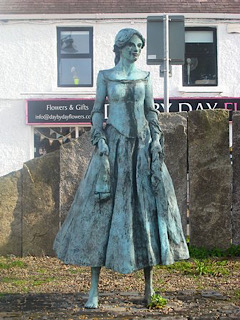
Katherine Wilmot, Irish traveler and diarist, dies in Paris, France, on March 28, 1824. She makes a Grand Tour from 1801 to 1803 and documents her experiences through letters, including encounters with notable figures like Napoleon Bonaparte. She later travels to Russia to join her sister Martha Wilmot and lives there from 1805 to 1807. She later moves to France and dies in Paris in 1824. Her writings, letters, and diaries provide insight into the Napoleonic era, on Russian society and on travel in the 19th century. Her works also include her sister’s transcript of the memoirs of Princess Yekaterina Vorontsova-Dashkova.
Wilmot is born around 1773 in Drogheda, County Louth, to Edward and Martha Wilmot (née Moore). She is the eldest daughter of six daughters and three sons. Her father is the port surveyor in Drogheda, having previously served as captain in the 40th Regiment of Foot. He is transferred to a similar post in County Cork in 1775, where Wilmot is raised. The family settles in Glanmire, near the seat of the Earl Mount Cashell in Moore Park. The earl’s family uses the surname Moore.
Wilmot is friendly with Lady Mountcashell, formerly Margaret King, an early and eager pupil of Mary Wollstonecraft. She is invited to accompany the party of Stephen Moore, 2nd Earl Mount Cashell, and his wife on a grand tour of the continent. Her letters from the time survive, in France from November 1801 to October 1802, and in Italy until July 1803. The Mount Cashells entertain lavishly, especially during the first nine months in Paris, and through them she meets Napoleon Bonaparte, and becomes friends with the Austrian painter Angelica Kauffman. She also meets the French diplomat and politician Charles Maurice de Talleyrand-Périgord, and the Irish republicanRobert Emmet fleetingly. She recounts her meeting in Rome with the English aristocrat Frederick Augustus Hervey, and her audience with Pope Pius VII. She returns to London from Italy in October 1803, via Germany and Denmark, after England and France resume hostilities.
Wilmot then goes to Russia to bring home her sister Martha, and ends up spending two years there. Martha is in the country as a favourite of Princess Dashkova, one of the key figures of the Russian Enlightenment and a close friend of Catherine the Great. Martha is living at the Princess’s estate in Troitskoe on the Oka River, about 100 km from Moscow. Wilmot arrives on August 4, 1805, having set out from Cork on June 5. Her writings from this time record the Russian aristocracy‘s opulence and attitudes to the servile classes (the serfs). The sisters come to know the customs of the Russian elite, as well as the festivals and religious rites of the country people. She leaves Moscow on July 4, 1807, a combination of passport problems, wars and storms at sea, resulting in delays and in her reaching Yarmouth on September 7, 1807, and returning to Ireland in October 1807.
Wilmot moves to France to live in a warmer, drier climate than Ireland. Her health declines when she moves to Paris, and she dies there on March 28, 1824. Her nephew by Martha, Wilmot Henry Bradford, lives to be “Father of the Army.”
Wilmot had taken Martha’s transcript of the memoirs of the Princess Dashkova when she left Russia. These are published by Martha in 1840, as she had burned the original manuscript before her departure from Russia in 1808.
Wilmot’s letters are published a century later, and have been described as a unique portrayal of the Napoleonic period. They describe the social scene, as well as the experience of traveling by coach and ship at that time. The family makes transcriptions of the letters. The collection belonging to Martha is donated to the library of the Royal Irish Academy by Elisabeth van Dedem Lecky, the historian and writer. Among these Russian letters are a number written by Eleanor Cavanagh, who describes the lives of servants. Wilmot’s diaries are published in 1920 by Thomas Sadleir, and later by H. Montgomery Hyde and Edith Vane-Tempest-Stewart, Marchioness of Londonderry.
TheGrand Tours of Katherine Wilmot, France 1801-1803, and Russia 1805-07(Weidenfeld & Nicolson, 1992)
An Irish Peer on the Continent, 1801-03 (1920)
The Russian Journals of Martha and Catherine Wilmot (1934)
More letters from Martha Wilmot; Vienna 1819-29 (1935)
On March 21, 1881, the Peace Preservation (Ireland) Act of 1881, a significant piece of legislation, is enacted by the British Parliament, led by Prime MinisterWilliam Ewart Gladstone, during a period of political turbulence in Ireland.
This act is part of a series of legislative measures introduced by the British government to address the rise of agrarian agitation and unrest in Ireland, particularly in response to the activities of the Irish National Land League. The Act grants extensive powers to the authorities to combat perceived threats to public order and security. It allows for the arrest and detention of individuals suspected of being involved in agrarian crimes, as well as the suppression of public meetings and the imposition of curfews in troubled areas. It is part of the broader response by the British government to the Land War, a period of agrarian agitation and tenant-landlord conflicts in Ireland during the late 19th century. The legislative measures during this time are controversial and lead to increased tensions between the Irish population and the British authorities.
William Ewart Gladstone, a member of the Liberal Party, is the prime minister of the United Kingdom of Great Britain and Ireland on four separate occasions between 1868 and 1894. He is noted for his moralistic leadership and his emphasis on world peace, economical budgets, political reform and efforts to resolve the Irish question.
Gladstone sees himself as a national leader driven by a political and almost religious mission, which he tries to validate through elections and dramatic appeals to the public conscience. His approach sometimes divides the Liberal Party, which he dominates for three decades. Finally, he splits his party on the issue of Irish Home Rule, which he sees as mandated by the true public interest regardless of the political cost.
In 1881, Gladstone is convinced that to pass a Land Bill for Ireland, law and order should be restored. In February 1881, the government therefore passes the Peace Preservation (Ireland) Act 1881 which gives the Lord Lieutenant of Ireland powers to suspend habeas corpus, and gives him in effect the power to lock up anyone he likes for as long as he likes. This is the Act used to arrest Irish Nationalist leader Charles Stewart Parnell.
On August 22, 1881, Parliament passes the Land Law (Ireland) Act 1881 which gives Irish tenants “the three Fs”: fair rent, fixity (security) of tenure, and the right to freely sell their holdings.
Gladstone’s government also passes the Arrears of Rent (Ireland) Act 1882, which cancels rent arrears for Irish tenants occupying land worth less than £30 per annum who were unable to pay.
(From: “The Peace Preservation Act, Controlling Possession and Importation of Arms, Is Enacted,” Today In Celtic History, http://www.todayinceltichistory.com | Pictured: William Ewart Gladstone, Prime Minister of the United Kingdom)
Mitchel is born in Camnish, near Dungiven, County Derry, on November 3, 1815, the son of a Presbyterian minister. At the age of four, he is sent to a classical school, run by an old minister named Moor, nicknamed “Gospel Moor” by the students. He reads books from a very early age. When a little over five years old, he is introduced to Latin grammar by his teacher and makes quick progress. In 1830, not yet 15 years old, he enters Trinity College, Dublin (TCD) and obtains a law degree in 1834.
In the spring of 1836, Mitchel meets Jane Verner, the only daughter of Captain James Verner. Though both families are opposed to the relationship, they become engaged in the autumn and are married on February 3, 1837, by the Rev. David Babington in Drumcree Church, the parish church of Drumcree.
Mitchel works in a law office in Banbridge, County Down, where he eventually comes into conflict with the local Orange Order. He meets Thomas Davis and Charles Gavan Duffy during visits to Dublin. He joins the Young Ireland movement and begins to write for The Nation. Deeply affected by the misery and death caused by the Great Famine, he becomes convinced that nothing will ever come of the constitutional efforts to gain Irish freedom. He then forms his own paper, United Irishmen, to advocate passive resistance by Ireland’s starving masses.
In May 1848, the British tire of Mitchel’s open defiance. Ever the legal innovators in Ireland, they invent a crime especially for the Young Irelanders – felony-treason. They arrest him for violating this new law and close down his paper. A rigged jury convicts him, and he is deported first to Bermuda and then to Australia. However, in June 1853, he escapes to the United States.
Mitchel works as a journalist in New York City and then moves to the South. When the American Civil War erupts, he is a strong supporter of the Southern cause, seeing parallels with the position of the Irish. His family fully backs his commitment to the Southern cause. He loses two sons in the war, one at the Battle of Gettysburg in 1863 and another at the Battle of Fort Sumter in 1864, and another son loses an arm. His outspoken support of the Confederacy causes him to be jailed for a time at Fort Monroe, where one of his fellow prisoners is Confederate PresidentJefferson Davis.
In 1874, the British allow Mitchel to return to Ireland and in 1875 he is elected in a by-election to be a member of the Parliament of the United Kingdom representing the Tipperary constituency. However, his election is invalidated on the grounds that he is a convicted felon. He contests the seat again in the resulting by-election and is again elected, this time with an increased vote.
Unfortunately, Mitchel, one of the staunchest enemies to English rule of Ireland in history, dies in Newry on March 20, 1875. He is buried in his parents’ grave in the unitarian cemetery, High Street, Newry, where a monument is later erected by his widow. He is also commemorated by a statue in Newry. Thirty-eight years later, his grandson, John Purroy Mitchel, is elected Mayor of New York City.
Shannon is the eldest child of solicitor George William Shannon and Emily Shannon (née Goodman). She has two sisters and two brothers. She attends Alexandra College, and later lectures for women at Trinity College Dublin (TCD). On July 27, 1875, she marries Maurice Dockrell, eldest son of Thomas Dockrell, a well known Dublin merchant, and Anne Morgan Dockrell (née Brooks). The couple has seven children, one daughter and six sons. She goes on to become a director and member of the board of her husband’s family company: Messrs Thomas Dockrell & Sons & Co. Ltd.[1]
Dockrell is an active member of the committee of the Dublin Women’s Suffrage and Local Government Association, later known as the Irish Women’s Suffrage and Local Government Association (IWSLGA), founded in 1876 to promote women’s suffrage by democratic methods. She attends international women’s suffrage conferences in Stockholm in 1911 and Budapest in 1913. She is also a committee member of the London Women’s Suffrage Society, speaking on the role of women in local government at the International Congress of Women in London in 1899. The Irish Citizen lists her as a suitable woman candidate to run for the senate seat proposed by the Home rule bill in 1912.
Dockell is a member of the National Union of Women Workers, sitting as a member of its public services committee. Like many of her contemporaries, she believes that women are best placed to address issues around health, societal moral well-being, and housing. From 1898, the Local Government (Ireland) Act, allows women to be candidates for local government elections. Dockrell first runs as a candidate in the Urban District Council (UDC) of the Monkstown ward of Blackrock, Dublin in the 1898 local elections, where she is returned as the third of nine elected, becoming one of only four women councillors elected in Ireland.
Dockrell describes herself as a unionist and a Protestant, sitting as a council on the Blackrock UDC until her death. She is the only woman councillor on that UDC until 1925 and the election of Ellen O’Neill. She is also the first woman chair of a UDC when she is elected to the position in 1906.
Despite the political and societal turmoil of the early 20th century in Ireland and the establishment of the Irish Free State, Dockrell continues in her commitment to local politics. This includes being the first woman to be elected to a Dublin county council in 1920. Despite remaining a committed unionist, she works with the Free State government. Following her husband’s knighthood, she is also known as Lady Dockrell.