Moore is born in 1701, the second son of Charles Moore, Lord Moore, son of Henry Hamilton-Moore, 3rd Earl of Drogheda, and Jane Loftus, daughter of Lord Loftus. He serves in the Irish House of Commons as the Member of Parliament for Dunleer between 1725 and 1727 when he succeeds to his elder brother’s titles and takes his seat in the Irish House of Lords. In 1748 he is invested as a member of the Privy Council of Ireland and made a Governor of Meath.
Moore marries, firstly, Lady Sarah Ponsonby, daughter of Brabazon Ponsonby, 1st Earl of Bessborough, and Sarah Margetson, in 1727, with whom he has six sons and two daughters. Following her death on January 19, 1736, he married, secondly, Bridget Southwell, daughter of William Southwell and Lucy Bowen, on October 13, 1737.
Moore and his son Edward are lost in a storm at sea while travelling between Holyhead and Dublin on October 28, 1758. He is succeeded by his eldest son, Charles, who is created Marquess of Drogheda in 1791.
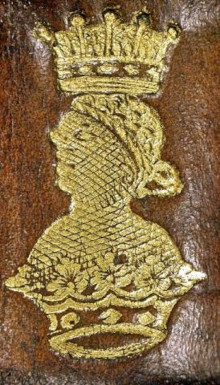
(Pictured: Stamp of Edward Moore, 5th Earl of Drogheda)
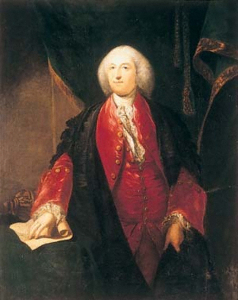
Ponsonby is born on March 29, 1713, the second son of Brabazon Ponsonby, 1st Earl of Bessborough. In 1739, he enters the Irish House of Commons for Newtownards, becoming its speaker in 1756. He also serves as First Commissioner of the Revenue and he becomes a member of the Privy Council of Ireland in 1746. In 1761, he is elected for Kilkenny County and Armagh Borough, and sits for the first. In 1768, he stands also for Gowran and Newtownards, and in 1776 for Carlow Borough, but chooses each time Kilkenny County, which he represents until 1783. Subsequently Ponsonby is again returned for Newtownards and sits for this constituency until his death in 1787.
Belonging to one of the great families which at this time monopolizes the government of Ireland, Ponsonby is one of the principal “undertakers,” men who control the whole of the king’s business in Ireland, and he retains the chief authority until George Townshend, 1st Marquess Townshend, becomes lord-lieutenant in 1767. A struggle for supremacy follows between the Ponsonby faction and the party dependent on Townshend, one result of this being that Ponsonby resigns the speakership in 1771.

 seamus dubhghaill