seamus dubhghaill

Promoting Irish Culture and History from Little Rock, Arkansas, USA


Leave a comment

Death of David Neligan, Intelligence Agent & Police Detective

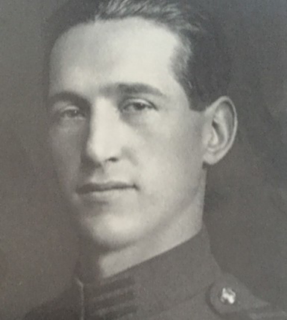
David Neligan, intelligence agent, police detective and superintendent known by his sobriquet “The Spy in the Castle,” dies on October 6, 1983, at St. Vincent’s Hospital in Dublin. He is a figure involved in the Irish War of Independence (1919–21) and subsequently becomes Director of Military Intelligence for the Irish Army after the Irish Civil War (1922–23).

Neligan is born on October 14, 1899, at TempleglantineCounty Limerick, where his parents, David and Elizabeth Neligan (née Mullan), are primary school teachers. He is an accomplished hurler with his local Templeglantine GAA club. In 1917, he joins the Irish Volunteers, the military organisation established in 1913 by Irish nationalists.

Against his father’s wishes, Neligan joins the Dublin Metropolitan Police (DMP) – also in 1917. Picking up travel documentation from the local Royal Irish Constabulary barracks, he declines a suggestion that he enlist in this armed rural force. After service as a uniformed constable with the DMP, he is promoted to Detective and transferred into the Department’s widely hated counterintelligence and anti-political-subversion unit, the G Division, in 1919. In May 1920, his elder brother Maurice (1895–1920), an Irish Republican Army (IRA) member and friend of Michael Collins, persuades him to resign from the DMP.

After his resignation, Neligan returns to his native County Limerick with the intention of joining the Limerick IRA. Shortly afterward, Maurice is killed in a motorcycle accident, near their home in Templeglantine. In the meantime, Neligan also receives word from a family friend that Michael Collins wishes to meet with him in Dublin. Collins is outraged that Neligan has been allowed to resign and persuades him to rejoin the DMP as a mole for the intelligence wing of the IRA. Along with Detectives Eamon Broy and James McNamara, Neligan acts as a highly valuable agent for Collins and passes on reams of vital information. He leaks documents about the relative importance of police and military personnel and also warns insurgents of upcoming raids and ambushes. There are unconfirmed rumors that Neligan might be a double agent working for British interests.

In 1921, Collins orders Neligan to let himself be recruited into MI5 and he uses the opportunity to memorise their passwords and the identities of their agents. All of this is passed on to Collins. After Broy and McNamara are dismissed in 1921, Neligan becomes Collins’ most important mole inside Dublin Castle.

On the outbreak of the Irish Civil War in June 1922, Neligan joins the Irish Army in Islandbridge Barracks with the rank of Commandant, and is attached to the Dublin Guard. He is involved in the seaborne assault on Fenit, County Kerry, and spends the remainder of the war serving as a military intelligence officer operating between Ballymullen BarracksTralee and Killarney. He is involved in atrocities alongside Paddy Daly including the Ballyseedy massacre, mock executions and the torture of prisoners using crowbars and is sometimes referred to as the “Butcher of Kerry.” In 1923, he is posted to Dublin, where he is promoted to Colonel and succeeds Diarmuid O’Hegarty as the Irish Army’s Director of Military Intelligence.

In 1924, Neligan hands over his post to the youthful Colonel Michael Joe Costello and takes command of the DMP, which still continues as a force separate from the newly established Garda Síochána, with the rank of Chief Superintendent. The next year he transfers to the Garda when the two police forces are amalgamated, and is instrumental in the foundation of the Garda Special Branch. When Éamon de Valera becomes head of government in 1932, his republican followers demand Neligan’s dismissal. Instead, Neligan is transferred to an equivalent post in the Irish Civil Service. In June 1935, he is married to fellow civil servant Sheila Maeve Rogan. They have one son and three daughters, and reside at 15 St. Helen’s Road, Booterstown, Dublin.

Neligan draws pensions from the DMP, the British MI5, the Garda Síochána and the Irish Civil Service. He also receives an “Old IRA” pension through the Department of Defence.


Leave a comment

Paintings Again Stolen from Russborough House

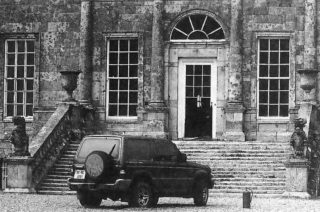
russborough-house-theft-2001A pair of paintings valued at more than £3,000,000 are stolen by an armed gang from Russborough House in County Wicklow on June 26, 2001. The stolen paintings are Thomas Gainsborough‘s Madame Baccelli, the more valuable of the pair, and Bernardo Belotto‘s Scene of Florence.

Three masked men burst their way into the house after ramming the front door with a Mitsubishi at midday. After grabbing the paintings the men set fire to their getaway vehicle and attempt to hijack a car at gunpoint but its driver refuses to give it up. They are last seen running from the scene.

Chief Superintendent Sean Feely says that there were people in the house at the time of the robbery but no one was hurt. He adds that, because they are so well known, the paintings will be near impossible to sell. Raymond Keaveney, the Director of the National Gallery of Ireland, describes the theft as “an outrage.”

The robbery is a case of history repeating itself for Russborough House, twenty miles from Dublin, which has been the scene of two previous major art thefts.

In 1974, an Irish Republican Army (IRA) gang which includes Dr. Rose Dugdale, the British heiress, steal 19 paintings, valued at IR£8 million, from Russborough House which, at the time, is the home of the late Sir Alfred Beit, a member of the De Beers diamond family, and his wife. The couple are bound and gagged during the raid. The paintings are later found in County Cork. Dugdale and the others involved are ultimately jailed.

In 1986, a 13-strong gang headed by Martin Cahill, the Dublin crime chief who is later shot dead by the IRA, steals 18 works including some of those taken and recovered in the earlier raid. The paintings taken on this occasion include those by Johannes Vermeer, Gabriël Metsu, Francisco Goya, Thomas Gainsborough and Peter Paul Rubens. All but three of the paintings are recovered over a period of years at a number of locations, including London, Belgium, Holland and Turkey, after apparent unsuccessful attempts to sell them. The Gainsborough painting stolen on June 26 was also taken in the 1986 raid.

The Beit collection is made over to the Irish nation and many of the works are still on display at Russborough House.

(Pictured: The Mitsubishi used to ram the entrance of Russborough House sits near the front steps. The thieves torch this car before fleeing in another car. Note the gas can to the right of the car.)


Leave a comment

Birth of RUC Chief Constable Hugh Annesley

hugh-annesley

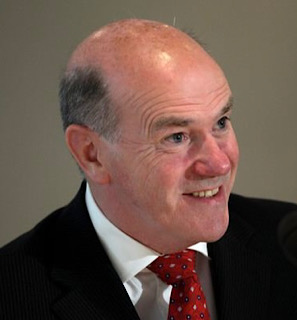
Sir Hugh Norman Annesley, retired Royal Ulster Constabulary (RUC) Chief Constable, is born in Dublin on June 22, 1939. He serves as Chief Constable of the RUC from June 1989 to November 1996.

Annesley is educated at St. Andrew’s Preparatory School and the Avoca School for Boys in Blackrock. He joins the Metropolitan Police in London as a constable in 1958. Rising through the ranks to chief superintendent in 1974, he attends the Special Course (1963), Intermediate Command Course (1971) and Senior Command Course (1975) at the Police Staff College, Bramshill, before transferring to Sussex Police as Assistant Chief Constable (Personnel & Operations) in 1976.

Annesley attends the Royal College of Defence Studies in 1980 and the following year returns to the Metropolitan Police as Deputy Assistant Commissioner (Central & North West London). In 1983 he becomes Deputy Assistant Commissioner (Personnel) and in 1984 is director of the Force Re-organisation Team.

In April 1985, under the new organisational structure, Annesley is appointed Assistant Commissioner Personnel and Training (ACPT) and in 1987 becomes Assistant Commissioner Specialist Operations (ACSO). In 1986 he graduates from the FBI National Executive Institute in the United States. In 1989 he takes up command of the RUC, despite the post being widely expected to go to Geoffrey Dear. He holds the post until his retirement in 1996.

Annesley is awarded the Queen’s Police Medal (QPM) in the 1986 New Year Honours and is knighted in the 1992 New Year Honours.