French attends Trinity College Dublin, and trains in acting. She settles in Ireland and has lived in Dublin since 1990. She and her husband have two daughters.
French is enthralled by both acting and writing since her childhood but eventually focuses more on acting. She grows up reading mystery and crime novels. She trains as a professional actor at Trinity, and she works in theatre, film, and voice-over.
In her later 30s, her passion for writing is rekindled. She begins writing her debut novel in the months-long lulls between castings. In the Woods is published in 2007 to international acclaim and receives rave reviews from many publications. Publishers Weekly praises her, saying she “expertly walks the line between police procedural and psychological thriller in her debut” and that “Ryan and Maddox are empathetic and flawed heroes, whose partnership and friendship elevate the narrative beyond a gory tale of murdered children and repressed childhood trauma.” It receives several literary prizes, is a bestseller in hardcover and paperback, and has been termed a “dream debut.” In 2014, Flavorwire includes it in their 50 of the Greatest Debut Novels Since 1950. As of 2015 more than one million copies of In the Woods have been sold.
French’s second novel, The Likeness (2008), presents the story of the first novel’s co-lead, Cassie Maddox. It quickly achieves high positions on bestseller lists in various countries and stays on The New York Times Best Seller list for several months. In its reviews of the novel, Kirkus Reviews praises its mix of “police procedures, psychological thrills and gothic romance beautifully woven into one stunning story.” In an interview with The Guardian, French states that Donna Tartt‘s The Secret History was an influence on The Likeness, opening up the “landscape of friendship as something worthy of exploration and something that could be powerful enough to trigger a murder.”
French’s first six novels are part of the Dublin Murder Squad series. After publishing The Trespasser in 2016, she publishes two standalone novels. Both The Witch Elm and The Searcher also take place in Ireland.
In 2015, Euston Films & Veritas acquire TV production rights. Sarah Phelps writes the screenplay, which she bases on both In the Woods and The Likeness, for the eight-episode series of Dublin Murders, commissioned by the BBC for BBC One and Starz, with RTÉ later joining the project. Filming commences in 2018 in Belfast and Dublin and continues in Dublin to late February 2019. Broadcast begins on BBC One on October 14, 2019, on RTÉ One on October 16, 2019, and on Starz on November 10, 2019.
Cleeve is the second of three sons to Charles Edward Cleeve and his wife Josephine (née Talbot). His father, who was born in Limerick, County Limerick, is a scion of a famous and wealthy family that runs several successful Irish enterprises in the late-nineteenth and early twentieth centuries. His mother is a native of Essex. The Cleeves came from Canada originally and emigrated to Ireland in the mid-nineteenth century. As a result of labour troubles and the effects of the Irish Civil War, the Cleeve business fails, and the family moves to England.
Cleeve’s mother dies in 1924 and his maternal grandparents, Alfred and Gertrude Talbot, take over responsibility for his upbringing. At age eight, he is sent as a boarder to Selwyn House in Kent, followed at age 12 by three years at St. Edward’s School, Oxford. He is by nature a free-thinker and rejects the assumptions and prejudices that are then part of upper-middle class English life. His unwillingness to conform means that school life is very difficult for him. In the late summer of 1938, he decides not to return to St. Edward’s for his final year. Instead, he runs away to sea.
In 1945, Cleeve takes an Irish passport and comes to Ireland where, in the space of three weeks, he meets and marries Veronica McAdie. A year later, they leave Ireland with baby daughter Berenice on a protracted odyssey that takes them to London, Sweden, the West Indies, and finally South Africa. In 1948, the family settles in Johannesburg where they set up their own perfume business. A second daughter, Tanga, is born to the couple there in 1953. As a result of his friendship with Fr. Trevor Huddleston, he witnesses the conditions in which the black population has to live in townships such as Sophiatown. He becomes an outspoken critic of Apartheid, and, in 1954, he is branded by the authorities as a ‘political intractable’ and ordered to leave South Africa. He returns to Ireland where he lives for the remainder of his life.
Cleeve starts writing poems in his teens, a few of which are published in his school paper, the St. Edward’s Chronicle. During the war he continues to produce poems of a spiritual or metaphysical nature, most of which are never published. In 1945, he turns to novel-writing. After his first two attempts are rejected, his third novel, The Far Hills, is published in 1952. Two further novels about South Africa follow and their unvarnished descriptions of the reality of life for the native population probably contributes to his eventual expulsion from the country.
In the mid-1950s, Cleeve begins to concentrate on the short story form. During the next 15 years over 100 of his short stories are published in magazines and periodicals across five continents. He sells nearly thirty to The Saturday Evening Post alone. In 1966, his story Foxer is honoured with a scroll at the annual Edgar Awards.
During the 1960s and 1970s, Cleeve returns to writing novels with considerable success. He produced a series of well-received mystery and spy thrillers that do not sacrifice character to plot. In 1971, he publishes Cry of Morning, his most controversial and successful novel to date. It is a panoramic depiction of the economic and social changes that affected Ireland during the 1960s as seen through the eyes of a disparate collection of well-drawn characters. He subsequently achieves even greater commercial success, especially in the United States, with a number of historical novels featuring a strong female character as protagonist.
Cleeve also writes several works of non-fiction, principally the Dictionary of Irish Writers. This is a 20-year project to provide to scholars and the general public alike a comprehensive resource on Irish writers at an affordable price. It is a labour of love that consumes a great deal of his time and is effectively subsidised by his more commercial pursuits. The last edition is published in 1985.
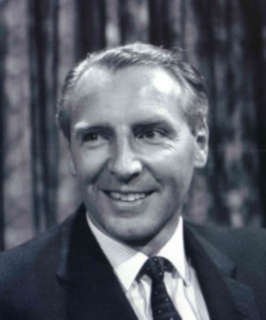
On December 31, 1961, Telefís Éireann is launched as the Republic of Ireland‘s first indigenous television station. Cleeve joins the station as a part-time interviewer on the current affairs programme, Broadsheet. Following appearances on two additional programmes, Telefís Éireann does not renew his contract when it expires in 1973.
Following his wife’s death in 1999, Cleeve moves to the village of Shankill, Dublin. His health deteriorates rapidly following a series of small strokes. In November 2001, he marries his second wife, Patricia Ledwidge, and she cares for him during his final months. He suddenly dies of a heart attack on March 11, 2003. His body now lies under a headstone bearing the inscription “Servant of God.”


 seamus dubhghaill