

The RMS Titanic, four days into her maiden voyage from Southampton to New York City, sinks in the north Atlantic Ocean at 2:20 AM on the morning of April 15, 1912, after striking an iceberg just before midnight on April 14.
Titanic, the largest ship afloat at the time it enters service on April 2, 1912, is the second of three Olympic class ocean liners operated by the White Star Line, and is built by the Harland & Wolff shipyard in Belfast, Northern Ireland.
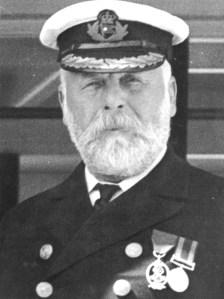
Titanic‘s maiden voyage, commanded by 62-year-old Captain Edward John Smith, begins shortly after noon on April 10, 1912 when she leaves Southampton on the first leg of her journey to New York City. A few hours later she reaches Cherbourg in France, where she takes on passengers. Her next port of call is Queenstown (now Cobh) in Ireland, which she reaches around midday on April 11. After taking on more passengers and stores, Titanic departs in the afternoon with an estimated 2,224 people on board.
Titanic receives six warnings of sea ice on April 14 but is traveling near her maximum speed when her lookouts sight the iceberg. Unable to turn quickly enough, the ship suffers a glancing blow that buckles her starboard side and opens five of her sixteen compartments to the sea. Titanic has been designed to stay afloat with four of her forward compartments flooded but not more, and the crew soon realises that the ship is going to sink. They use distress flares and wireless radio messages to attract help as the passengers are put into lifeboats. However, in accordance with existing practice, Titanic‘s lifeboat system is designed to ferry passengers to nearby rescue vessels, not to hold everyone on board simultaneously. With the ship sinking quickly and help still hours away, there is no safe refuge for many of the passengers and crew. Compounding this, poor management of the evacuation means many boats are launched before they are totally full.
At about 2:15 AM, Titanic‘s angle in the water begins to increase rapidly as water pours into previously unflooded parts of the ship through deck hatches. Her suddenly increasing angle causes a giant wave to wash along the ship from the forward end of the boat deck, sweeping many people into the sea. Titanic‘s stern lifts high into the air as the ship tilts down in the water, reaching an angle of 30–45 degrees. After another minute, the ship’s lights flicker once and then permanently go out, plunging Titanic into darkness. Shortly after the lights go out, the ship splits apart at one of the weakest points in the structure, the area of the engine room hatch. The submerged bow likely remains attached to the stern by the keel for a short time, pulling the stern to a high angle before separating and leaving the stern to float for a few minutes longer. The forward part of the stern floods very rapidly, causing it to tilt and then settle briefly before sinking.
Titanic sinks with over a thousand passengers and crew still on board. Almost all those who jump or fall into the water die from hypothermia within minutes. RMS Carpathia arrives on the scene about 90 minutes after the sinking and has rescued the last of the survivors by 9:15 AM on April 15, some nine and a half hours after the collision with the iceberg.
The death toll has been put at 1,513, including many Irish, although the number of casualties remains somewhat unclear due to a number of factors, including confusion over the passenger list, which includes some names of people who cancelled their trip at the last minute, and the fact that several passengers traveled under aliases for various reasons and were double-counted on the casualty lists.
The disaster causes widespread outrage over the lack of lifeboats, lax regulations, and the unequal treatment of the three passenger classes during the evacuation. Subsequent inquiries recommend sweeping changes to maritime regulations, leading to the establishment in 1914 of the International Convention for the Safety of Life at Sea (SOLAS), which still governs maritime safety today.

 seamus dubhghaill