seamus dubhghaill

Promoting Irish Culture and History from Little Rock, Arkansas, USA


Leave a comment

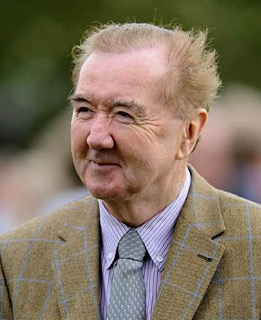
Birth of Dermot Weld, Former Jockey & Successful Racehorse Trainer

Dermot K. Weld, former jockey, and one of Ireland’s most successful racehorse trainers, is born on July 29, 1948, in Kildare, County Kildare. He sets the record in 2000 for the most winners trained in Ireland with 2,578. He wins the Irish Flat Training Championship eight times in 1983, 1985, 1989, 1990, 1993, 1994, 1996, and 1998. As a trainer, he wins the Melbourne Cup in Australia twice, all five of the Irish Classics, the Epsom Derby and Epsom Oaks, the Hong Kong MileDerby ItalianoAmerican Derby, and Breeders’ Cup Turf.

Weld is educated at Newbridge College and University College Dublin (UCD), becoming a qualified veterinarian in 1970, at the time, the youngest qualified vet in Ireland. In 2016, he is awarded UCD Alumnus of the Year in Veterinary Medicine.

Weld starts his career as an amateur jockey, obtaining a training licence in 1972. He then takes over the stable at Rosewell House, in The Curragh, from his father, Charlie Weld, who is also a successful racehorse trainer. He goes on to win the Irish Flat Training Championship eight times in 1983, 1985, 1989, 1990, 1993, 1994, 1996 and 1998.

Weld sets a new record for the most winners trained in Ireland with 2,578 in August 2000, holding the record until Willie Mullins overtakes it in May 2024. During his training career, he saddles over 4,000 winners (to 2016).

Weld is played by Brendan Gleeson in the feature film The Cup (2011).


2 Comments

The Ballytrain Barracks Attack

An Irish Republican Army (IRA) unit commanded by Ernie O’Malley and Eoin O’Duffy captures a Royal Irish Constabulary (RIC) barracks at Ballytrain, County Monaghan, on February 14, 1920 during the Irish War of Independence.

After a month of intense IRA activity across the country, the War of Independence continues unabated in February 1920. Becoming more daring in the process, the IRA continues to target the RIC and their barracks. Elsewhere, local issues and tensions also surface, and in some cases, they become embroiled in the struggle for Independence. February 1920 is a month of chaos across the country.

Described by the newspapers of the day as a ‘fierce affray’ the three-hour assault on the RIC barracks at Ballytrain, County Monaghan is a significant engagement for the Monaghan IRA during the War of Independence. Launched at 2:00 AM on a Sunday morning and led by Eoin O’Duffy, later a Commissioner of An Garda Siochana, the attack had been carefully planned.

Located eight miles from Castleblayney, the RIC barracks in Ballytrain is manned by Sergeants Lawson and Graham and four constables, Roddy, Gallagher, Murtagh, and Nelson, all of whom it is said fight against the odds for over three hours. At 5:00 AM, when ‘the leader’ of the IRA party demands the officers surrender it is met by continued firing from the police. O’Duffy then gives the order to plant explosives at the gable wall, which instantly collapses. Four RIC officers are buried in the rubble of the building and are later transferred to Carrickmacross hospital for treatment. About fifty men then rush the building carrying off a quantity of weapons.

A house belonging to a man named Mitchell is raided before the attack, where four members of the family are held hostage throughout the night. The IRA smashes all of the windows in the house allowing them to fire on the barracks. As many as 150 men take part in the raid, which also sees some men taking up position in cattle byres, which had been cleaned out in order to give protection. It is later alleged that O’Duffy had told the RIC men that he was glad no one had been killed in the exchange, saying, “We did not come here to do injury, but only for arms.” It is hardly the welcome Sergeant Graham had expected having only arrived in the barracks three days earlier.

(From: Irish Newspaper Archives, irishnewsarchive.com, February 17, 2020)