seamus dubhghaill

Promoting Irish Culture and History from Little Rock, Arkansas, USA


Leave a comment

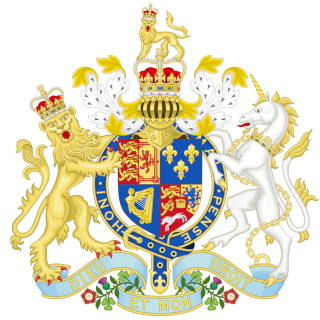
Repeal of the Declaratory Act 1719

The Declaratory Act 1719, which had given Great Britain the right to legislate for Ireland and had denied the appellate jurisdiction of the Irish House of Lords, is repealed on June 21, 1782.

An Act for the better securing the dependency of the Kingdom of Ireland on the Crown of Great Britain (long title) is an Act passed by the Parliament of Great Britain which declares that it has the right to pass laws for the Kingdom of Ireland, and that the British House of Lords has appellate jurisdiction for Irish court cases. It becomes known as the Declaratory Act, and opponents in the Irish Patriot Party refer to it as the Sixth of George I, from the regnal year it is passed. Legal and political historians have also called it the Dependency of Ireland on Great Britain Act 1719 or the Irish Parliament Act, 1719. Prompted by a routine Irish lawsuit, it is aimed at resolving the long-running dispute between the British and the Irish House of Lords as to which is the final court of appeal from the Irish Courts. Along with Poynings’ Law, the Declaratory Act becomes a symbol of the subservience of the Parliament of Ireland, and its repeal is long an aim of Irish statesmen, which is finally achieved for Anglican Irish as part of the Constitution of 1782.

In 1709, the Irish Court of Exchequer hears a lawsuit between Maurice Annesley and his cousin Hester Sherlock over which of them have the right to possession of certain lands at Naas, County Kildare. The court finds in Annesley’s favour. Mrs. Sherlock appeals to the Irish House of Lords which upholds her appeal. Annesley then invokes the long-disputed jurisdiction of the British House of Lords to hear appeals from the Irish courts, and that house pronounces in his favour. The Court of Exchequer duly complies with the decree of the British House, but Mrs. Sherlock appeals again to the Irish house, which orders the Barons of the Exchequer to comply with its own decree and, when they refuse, imprison them for contempt of Court. The political uproar is out of all proportion to the importance of the lawsuit itself.

The bill has its second reading in the Commons on March 4, 1719, where it is chiefly opposed on the grounds that it appears to have no purpose beyond increasing the power of the House of Lords. Other objections include an argument that the preamble and the enacting section of the bill are contradictory, and that Ireland has historically had an independent judiciary. It is supported by Joseph Jekyll and Philip Yorke, and carries 140 votes to 83. It is then passed on March 26, 1719.

Section I of the Act notes that the Irish House of Lords had recently “assumed to themselves a Power and Jurisdiction to examine, correct and amend” judgements of the Irish courts, which it holds to be illegal. As such, it declares that the Kingdom of Ireland is subordinate to and dependent upon the British crown, and that the King, with the advice and consent of the Parliament of Great Britain, has “full power and authority to make laws and statutes of sufficient validity to bind the Kingdom and people of Ireland.” Section II declares that the House of Lords of Ireland has no jurisdiction to judge, affirm or reverse any judgement, sentence or decree made in any court within the Kingdom of Ireland, and that all proceedings before the House upon any such matter are declared to be null and void to all intents and purposes whatsoever.

The Irish House of Lords is understandably infuriated by the curtailment of its powers, and the Barons of the Exchequer, though they are soon released from custody, are subject to intense vilification. While many people think that the Irish House of Lords had brought about the crisis by its own high-handed behaviour, the “Sixth of George I” remains a source of grievance for decades.

The Declaratory Act 1719 provides a model for the American Colonies Act 1766, which is also known as the “Declaratory Act” and is a similar source of grievance in the Thirteen Colonies. The British defeat in the subsequent American Revolutionary War prompts a more conciliatory tone towards Ireland, and the Declaratory Act 1719 is repealed in its entirety when the Repeal of Act for Securing Dependence of Ireland Act 1782 receives royal assent on June 21, 1782.


Leave a comment

Birth of Hugh Kennedy, Politician, Barrister & Judge

File source: http://commons.wikimedia.org/wiki/File:Hugh_Kennedy.jpg

Hugh Edward Kennedy, Fine Gael politician, barrister and judge, is born in Abbotstown, Dublin on July 11, 1879. He serves as Attorney General of Ireland from 1922 to 1924, a Judge of the Supreme Court of Ireland from 1924 to 1936 and Chief Justice of Ireland from 1924 to 1936. He serves as a Teachta Dála (TD) for the Dublin South constituency from 1923 to 1927. As a member of the Irish Free State Constitution Commission, he is also one of the constitutional architects of the Irish Free State.

Kennedy is the son of the prominent surgeon Hugh Boyle Kennedy. His younger sister is the journalist Mary Olivia Kennedy. He studies for the examinations of the Royal University of Ireland while a student at University College Dublin and King’s Inns, Dublin. He is called to the Bar in 1902. He is appointed King’s Counsel in 1920 and becomes a Bencher of King’s Inn in 1922.

During 1920 and 1921, Kennedy is a senior legal adviser to the representatives of Dáil Éireann during the negotiations for the Anglo-Irish Treaty. He is highly regarded as a lawyer by Michael Collins, who later regrets that Kennedy had not been part of the delegation sent to London in 1921 to negotiate the terms of the treaty.

On January 31, 1922, Kennedy becomes the first Attorney General in the Provisional Government of the Irish Free State. Later that year he is appointed by the Provisional Government to the Irish Free State Constitution Commission to draft the Constitution of the Irish Free State, which is established on December 6, 1922. The functions of the Provisional Government are transferred to the Executive Council of the Irish Free State. He is appointed Attorney General of the Irish Free State on December 7, 1922.

In 1923, Kennedy is appointed to the Judiciary Commission by the Government of the Irish Free State, on a reference from the Government to establish a new system for the administration of justice in accordance with the Constitution of the Irish Free State. The Judiciary Commission is chaired by James Campbell, 1st Baron Glenavy, who had also been the last Lord Chancellor of Ireland. It drafts the Courts of Justice Act 1924 for a new court system, including a High Court and a Supreme Court, and provides for the abolition, inter alia, of the Court of Appeal in Ireland and the Irish High Court of Justice. Most of the judges are not reappointed to the new courts. Kennedy personally oversees the selection of the new judges and makes impressive efforts to select them on merit alone. The results are not always happy. His diary reveals the increasingly unhappy atmosphere, in the Supreme Court itself, due to frequent clashes between Kennedy and his colleague Gerald Fitzgibbon, since the two men prove to be so different in temperament and political outlook that they find it almost impossible to work together harmoniously. In a similar vein, Kennedy’s legal opinion and choice of words could raise eyebrows amongst legal colleagues and fury in the Executive Council e.g. regarding the Kenmare incident.

Kennedy is also a delegate of the Irish Free State to the Fourth Assembly of the League of Nations between September 3-29, 1923.

Kennedy is elected to Dáil Éireann on October 27, 1923, as a Cumann na nGaedheal TD at a by-election in the Dublin South constituency. He is the first person to be elected in a by-election to Dáil Éireann. He resigns his seat when he is appointed Chief Justice of Ireland in 1924.

On June 5, 1924, Kennedy is appointed Chief Justice of Ireland, thereby becoming the first Chief Justice of the Irish Free State. He is also the youngest person appointed Chief Justice of Ireland. When he is appointed, he is 44 years old. Although the High Court of Justice and the Court of Appeal had been abolished and replaced by the High Court and the Supreme Court respectively, one of his first acts is to issue a practice note that the wearing of wigs and robes will continue in the new courts. This practice is still continued in trials and appeals in the High Court and the Supreme Court (except in certain matters). He holds the position of Chief Justice until his death on December 1, 1936, in Goatstown, Dublin.

In September 2015, a biography by Senator Patrick Kennedy (no relation) is written about Kennedy called Hugh Kennedy: The Great but Neglected Chief Justice.