seamus dubhghaill

Promoting Irish Culture and History from Little Rock, Arkansas, USA


1 Comment

Birth of Former IRA Chief of Staff Seán McBride

sean-macbride

Seán McBride, Irish government minister, prominent international politician, and a former Chief of Staff of the Irish Republican Army (IRA), is born in Paris on January 26, 1904. He is the son of Major John MacBride and Maud Gonne.

After his father’s execution for his participation in the Easter Rising of 1916, Seán is sent to school at Mount St. Benedict’s, Gorey, County Wexford in Ireland. In 1919, at the age of 15, he joins the Irish Volunteers, which fights as part of the Irish Republican Army, and takes part in the Irish War of Independence. He is imprisoned by the Irish Free State but is released in 1924 and resumes his IRA activities. He returns to Dublin in 1927 and becomes the Director of Intelligence of the IRA.

Toward the end of the 1920s, after many supporters have left the IRA to join Fianna Fáil, some members start pushing for a more left-wing agenda. After the IRA Army Council votes down the idea, MacBride launches a new movement, Saor Éire (“Free Ireland”), in 1931. Although it is a non-military organisation, Saor Éire is declared unlawful along with the IRA, Cumann na mBan, and nine other organizations.

In 1936, MacBride becomes Chief of Staff of the IRA after Moss Twomey is sent to prison for three years. At the time, the movement is in a state of disarray, with conflicts between several factions and personalities. In 1937, MacBride is called to the bar and then resigns from the IRA when the Constitution of Ireland is enacted later that year. As a barrister, MacBride frequently defends IRA political prisoners, but is not unsuccessful in stopping the execution of Charlie Kerins in 1944 who is convicted of killing Garda Detective Dennis O’Brien in 1942. In 1946, during the inquest into the death of Seán McCaughey, MacBride embarrasses the authorities by forcing them to admit that the conditions in Portlaoise Prison are inhumane.

In 1946, MacBride founds the republican/socialist party Clann na Poblachta, hoping it would replace Fianna Fáil as Ireland’s major political party. In October 1947, he wins a seat in Dáil Éireann at a by-election in the Dublin County constituency. However, at the 1948 general election Clann na Poblachta wins only ten seats.

MacBride is serving as Minister of External Affairs when the Council of Europe drafts the European Convention on Human Rights. He serves as President of the Committee of Ministers of the Council of Europe from 1949 to 1950 and is credited with being a key force in securing the acceptance of this convention, which is finally signed in Rome on November 4, 1950. He is instrumental in the implementation of the Repeal of the External Relations Act and the Declaration of the Republic of Ireland in 1949.

In 1951, Clann na Poblachta is reduced to only two seats after the general election. MacBride keeps his seat and is re-elected again in 1954. Opposing the internment of IRA suspects during the Border Campaign (1956–62), he contests both the 1957 and 1961 general elections but fails to be elected both times. He then retires from politics but continues practicing as a barrister. He expresses interest in running as an independent candidate in the 1983 Irish presidential election but does not receive sufficient backing and ultimately does not enter the contest.

Throughout the 1950s, 1960s, and 1970s, MacBride works tirelessly for human rights worldwide. He is a founding member of Amnesty International and serves as its international chairman from 1961 until 1975. During the 1980s, he initiates the Appeal by Lawyers against Nuclear War which is jointly sponsored by the International Peace Bureau and the International Progress Organization.

MacBride is awarded the Nobel Peace Prize in 1974 as a man who “mobilised the conscience of the world in the fight against injustice.” He later receives the Lenin Peace Prize (1975–76) and the UNESCO Silver Medal for Service (1980).

Seán MacBride dies in Dublin on January 15, 1988, just eleven days shy of his 84th birthday. He is buried in a simple grave in Glasnevin Cemetery, Dublin.

Leave a comment

Birth of Mother Mary Frances Aikenhead

mary-aikenhead

Mother Mary Frances Aikenhead, founder of the Catholic religious institute, the Religious Sisters of Charity, and of St. Vincent’s Hospital in Dublin, is born in Daunt’s Square off Grand Parade, County Cork, on January 19, 1787.

Aikenhead is baptised in the Anglican Communion on April 4, 1787. Since she is quite frail and possibly asthmatic, it was recommended that she be fostered with a nanny named Mary Rourke who lives on higher ground on Eason’s Hill, Shandon, Cork. It is believed that she is secretly baptised a Catholic by Mary Rourke, who is a devout Catholic. Aikenhead’s parents visit every week until 1793 when her father, Dr. David Aikenhead, decides he wants her to rejoin the family in Daunt’s Square.

By the early 1790s, Aikenhead’s father has become imbibed by the principles of the United Irishmen. On one occasion Lord Edward FitzGerald, disguised as a Quaker, seeks refuge in the Aikenhead home. He is enjoying dinner with the family when the house is surrounded by troops. Fitzgerald manages to slip away but the house is searched but no incriminating documents are found.

On June 6, 1802, at age of fifteen, Aikenhead is officially baptised a Roman Catholic. In 1808, she goes to stay with her friend Anne O’Brien in Dublin. Here she witnesses widespread unemployment and poverty and soon begins to accompany her friend in visiting the poor and sick in their homes. After many years in charity work and feeling the call to religious life, she looks in vain for a religious institute devoted to outside charitable work.

Aikenhead is chosen by Archbishop Murray, Bishop Coadjutor of Dublin, to carry out his plan of founding a congregation of the Sisters of Charity in Ireland. From 1812 – 1815 she is a novitiate in the Convent of the Institute of the Blessed Virgin at Micklegate Bar, York. It is there she assumes the name Sister Mary Augustine, which she keeps for the rest of her life.

On September 1, 1815, the initial members of the Convent of the Institute take their vows and Sister Mary Augustine is appointed Superior-General. The following sixteen years are filled with arduous work – organizing the community and extending its sphere of labor to every phase of charity, chiefly hospital and rescue work.

In 1831, overexertion and disease take a toll Sister Mary Augustine’s health, leaving her an invalid. Her activity is unceasing, however, as she directs her sisters in their work during the plague of 1832, places them in charge of new institutions, and sends them on missions to France and Australia. She also founds St. Margaret’s Hospice, which has been known as St. Margaret of Scotland Hospice since 1950.

Sister Mary Augustine dies in Dublin on July 22, 1858 at 71 years of age. She leaves her institute in a flourishing condition, in charge of ten institutions, besides innumerable missions and branches of charitable work. She is buried in the cemetery adjacent to St. Mary Magdalen’s, Donnybrook.


Leave a comment

Birth of Dr. Douglas Hyde, First President of Ireland

douglas-hyde

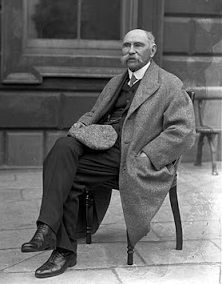
Dr. Douglas Hyde, Gaelic scholar and the first President of Ireland, is born at Longford House in Castlerea, County Roscommon, on January 17, 1860. In 1867, his father is appointed prebendary and rector of Tibohine, and the family moves to neighbouring Frenchpark, in County Roscommon. He is home schooled by his father and his aunt due to a childhood illness. While a young man, he becomes fascinated with hearing the old people in the locality speak the Irish language.

Rejecting family pressure to follow previous generations with a career in the Church, Hyde instead becomes an academic. He enters Trinity College, Dublin, where he gains a great facility for languages, learning Latin, Greek, Hebrew, French, and German, but his great passion in life is the preservation of the Irish language.

After spending a year teaching modern languages in Canada, Hyde returns to Ireland. For much of the rest of his life he writes and collects hundreds of stories, poems, and folktales in Irish, and translates others. His work in Irish helps to inspire many other literary writers, such as W.B. Yeats and Lady Gregory.

In 1892, Hyde helps establish the Gaelic Journal and in November of that year writes a manifesto called The necessity for de-anglicising the Irish nation, arguing that Ireland should follow her own traditions in language, literature, and even in dress.

In 1893, Hyde founds the Gaelic League (Conradh na Gaeilge) along with Eoin MacNeill and Fr. Eugene O’Growney and serves as its first president. Many of the new generation of Irish leaders who play a central role in the fight for Irish independence in the early twentieth century, including Patrick Pearse, Éamon de Valera, Michael Collins, and Ernest Blythe first become politicised and passionate about Irish independence through their involvement in the Gaelic League. Hyde does not want the Gaelic League to be a political entity, so when the surge of Irish nationalism that the Gaelic League helps to foster begins to take control of many in the League and politicize it in 1915, Hyde resigns as president.

Hyde takes no active part in the armed upheaval of the 1910s and 1920s, but does serve in Seanad Éireann, the upper house of the Irish Free State’s Oireachtas, as a Free State senator in 1925-26. He then returns to academia, as Professor of Irish at University College Dublin, where one of his students is future Attorney General and President of Ireland Cearbhall Ó Dálaigh.

In 1938, Hyde is unanimously elected to the newly created position of President of Ireland, a post he holds until 1945. Hyde is inaugurated on June 26, 1938, in the first inaugural ceremony in the nation’s history. Despite being placed in a position to shape the office of the presidency via precedent, Hyde by and large opts for a quiet, conservative interpretation of the office. In April 1940 he suffers a massive stroke and plans are made for his lying-in-state and state funeral, but to the surprise of everyone he survives, albeit paralysed and confined to a wheelchair. One of Hyde’s last presidential acts is a visit to the German ambassador Eduard Hempel on May 3, 1945 to offer his condolences on the death of Adolf Hitler, a visit which remains a secret until 2005.

Hyde leaves office on June 25, 1945, opting not to nominate himself for a second term. He opts not return to his Roscommon home due to his ill-health, but rather moves into the former Secretary to the Lord Lieutenant’s residence in the grounds of Áras an Uachtaráin, where he lived out the remaining four years of his life.

Hyde dies in Dublin on July 12, 1949 at age 89. As a former President of Ireland he is accorded a state funeral which, as a member of the Church of Ireland, takes place in Dublin’s Church of Ireland St. Patrick’s Cathedral. Since contemporary rules of the Roman Catholic Church in Ireland at the time prohibit Roman Catholics from attending services in non-Catholic churches, all but one member of the Catholic cabinet remain outside the cathedral grounds while Hyde’s funeral takes place. Hyde is buried in Frenchpark, County Roscommon at Portahard Church.


Leave a comment

Michael Collins Accepts Control of Dublin Castle

michael-collins-castle-handoverMichael Collins, the Chairman of the Provisional Government of Ireland created under the Anglo-Irish Treaty, accepts control of Dublin Castle from Lord Lieutenant Edmund Bernard FitzAlan-Howard on January 16, 1922.

Once the Treaty is signed and ratified by Dail Eireann on January 7, the British quickly prepare to leave the Irish Free State and hand over this sprawling monument to British rule in Ireland. The new rulers of Ireland are advised to be ready to take over Dublin Castle in mid-January. The turn over symbolizes the end of British rule in Ireland, although the Irish Free State remains part of the Commonwealth until 1949.

Dublin Castle is first founded as a major defensive work by Meiler Fitzhenry on the orders of King John of England in 1204 and is largely complete by 1230. For centuries Ireland has been governed from “The Castle.” Everything British that moves and has its being in Ireland has emanated from the Castle.

It was from the Bermingham Tower in the Castle that the legendary escape of Red Hugh O’Donnell and Art O’Neill takes place in January 1592. Art O’Neill perishes in the Dublin Mountains but O’Donnell manages to make his way to the sanctuary of the O’Byrnes in Glenmalure, County Wicklow.

Just over two hundred years later, in 1907, the Insignia of the Order of St.Patrick, known as the Irish Crown Jewels, are stolen from the Bedford Tower in an audacious robbery that has never been solved.

The Castle could have fallen during the upheavals of 1641 but it did not succumb to rebel control. Robert Emmett could have taken it in 1803 but failed to do so. The Castle was even more vulnerable during the 1916 Easter Rising but the Volunteers failed to capitalize on it.

Considering the 700-year history of the Castle, Michael Collins, dressed impressively in his military uniform, must have savoured the moment when his staff car drives into the precincts of the complex of buildings whose fabric he has successfully managed to infiltrate during the Anglo-Irish war while, all the while managing to keep himself out of the clutches of its more sinister and homicidal operatives.

When Collins steps out of his staff car at the Castle, Lord Lieutenant FitzAlan-Howard is reported to say, “You are seven minutes late, Mr. Collins” to which Collins replies, “We’ve been waiting over seven hundred years, you can have the extra seven minutes.”


Leave a comment

Sinn Féin Splits in 1970

sinn-fein

On January 11, 1970, at Sinn Féin‘s Ard Fheis at the Intercontinental Hotel in Ballsbridge, Dublin, the proposal to end abstentionism and take seats, if elected, in the Dáil, the Northern Ireland Parliament, and the Parliament of the United Kingdom is put before the members. A similar motion had been adopted at an Irish Republican Army (IRA) convention the previous month, leading to the formation of a Provisional Army Council by Seán Mac Stíofáin and other members opposed to the leadership.

There are allegations of malpractice and that some supporters cast votes to which they are not entitled. In addition, the leadership has also refused voting rights to a number of Sinn Féin cumainn (branches) known to be in opposition, particularly in the north and in County Kerry. The motion is debated all of the second day, and when it was put to a vote at 5:30 PM the result is 153:104 in favour of the motion, failing to achieve the necessary two-thirds majority.

The Executive attempts to circumvent this by introducing a motion in support of the IRA Army Council, led by Tomás Mac Giolla, which only requires a simple majority. In protest of the motion, Ruairí Ó Brádaigh and his minority group walks out of the meeting. These members reconvene at a hall in 44 Parnell Square, which they had already booked in anticipation of the move by the leadership. They appoint a Caretaker Executive, and pledged allegiance to the Provisional Army Council.

irish-republican-army

The Caretaker Executive declares itself in opposition to the ending of abstentionism, the drift towards Marxism, the failure of the leadership to defend the nationalist people of Belfast during the 1969 Northern Ireland riots, and the expulsion of traditional republicans by the leadership during the 1960s. At the October 1970 Ard Fheis, it is announced that an IRA convention has been held and has regularised its structure, bringing the “provisional” period to an end.

At the end of 1970 the terms “Official IRA” and “Regular IRA” are introduced by the press to differentiate the two factions. During 1971, the rival factions play out their conflict in the press with the Officials referring to their rivals as the Provisional Alliance, while the Provisionals refer to the Officials (IRA and Sinn Féin) as the National Liberation Front (NLF).

The Falls Road Curfew, coupled with internment in August 1971, and Bloody Sunday in Derry in January 1972, boosts the Provisionals in Belfast. These events produce an influx into the Provisionals on the military side, making them the dominant force and finally eclipsing the Officials everywhere. Despite becoming the dominant group and the dropping of the word “provisional” at the convention of the IRA Army Council in September 1970, they are still known to the mild irritation of senior members as Provisionals, Provos, or Provies.


Leave a comment

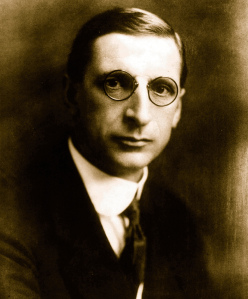
Éamon de Valera Resigns as President of the Republic

eamon-de-valeraThe Anglo-Irish Treaty is introduced to replace the Republic with a dominion of the British Commonwealth with the King represented by a Governor-General of the Irish Free State. The Treaty is finally signed on December 6, 1921.
Éamon de Valera does not join in on the negotiations. His opponents say that he does so because he knows that the British will only allow an Irish dominion, not a republic, and does not want to be blamed for giving up the idea of a republic. De Valera says he is angry because the delegates working out the treaty had not asked him before signing the treaty. But at a secret session of the Dáil during the Treaty debates and publicised in January 1922, de Valera’s ideas for a treaty include dominion status, the “Treaty Ports,” a veto by the parliament in Belfast, and the king as head of the Commonwealth. Ireland would pay a share of the imperial debt.

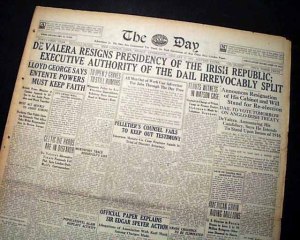
On January 9, 1922, when the Treaty is accepted by a vote of 64 to 57, de Valera resigns as President of the Republic and a large minority of Sinn Féin Teachta Dálas (TDs) leave Dáil Éireann. De Valera  states, “In view of the vote that was taken here on Saturday and which I had definitely to oppose as one that was tending to subvert the Republic which I was elected to my present position to defend and maintain; and as it appeared to me also to be a vote which would tend to subvert the independence of the country, I could no longer continue— as I was beaten in that — I could no longer continue in my present office feeling I did not have the confidence of the House. I therefore wish to place my resignation in the hands of the Assembly.”the-day-01-09-1922

A motion to re-elect De Valera as President is defeated along pro and anti-treaty lines by 60 votes to 58. Arthur Griffith, de Valera opponent and former colleague, is elected President of Dáil Éireann in his place.

Following the vote, Griffith says, “Before another word is spoken I want to say: I want the Deputies here to know, and all Ireland to know, that this vote is not to be taken as against President de Valera. It is a vote to help the Treaty, and I want to say now that there is scarcely a man I have ever met in my life that I have more love and respect for than President de Valera. I am thoroughly sorry to see him placed in such a position. We want him with us.”