seamus dubhghaill

Promoting Irish Culture and History from Little Rock, Arkansas, USA


Leave a comment

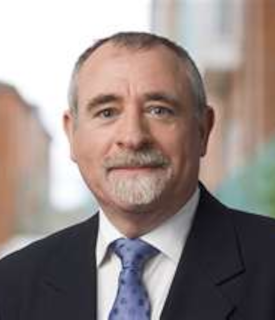
Birth of Eric Byrne, Former TD and Labour Party Politician

Eric Joseph Byrne, former Labour Party politician who serves as a Teachta Dála (TD) for the Dublin South-Central constituency from 1989 to 1992, 1994 to 1997 and 2011 to 2016, is born in Dublin on April 21, 1947. He is formerly a member of Official Sinn Féin, the Workers’ Party and Democratic Left.

Byrne is educated at Synge Street CBS and the Bolton Street College of Technology. A carpenter before entering politics, he stands unsuccessfully for election to Dáil Éireann as a Workers’ Party candidate for Dublin Rathmines West at the 1977 Irish general election and Dublin South-Central at the 1981, February 1982, November 1982 and 1987 Irish general elections.

He is elected in 1985 as a Workers’ Party member of Dublin City Council for CrumlinKimmage area, and is re-elected at subsequent local elections until 2011, when he is forced to resign his seat due to dual mandate. He is finally elected at the 1989 Irish general election. He joins with Workers’ Party members who form Democratic Left in 1992. He unexpectedly loses his seat at the 1992 Irish general election. Labour’s Pat Upton is unexpectedly returned on the first count, with Byrne finally losing the last seat to Fianna Fáil‘s Ben Briscoe by five votes after a marathon 10-day count.

Byrne is elected to the 27th Dáil at a by-election on June 9, 1994, following the resignation of long-serving Fianna Fáil TD John O’Connell, who had previously been a Labour TD for the same constituency. He is a backbench supporter of the Rainbow government led by Fine Gael‘s John Bruton.

He loses his seat again at the 1997 Irish general election. Although the Labour Party and the Democratic Left merge in 1999, he is not selected to contest the Dublin South-Central by-election which follows Pat Upton‘s death later that year. Upton’s sister Mary is elected for the Labour Party.

Byrne contests the 2002 Irish general election on the Labour Party ticket as Mary Upton’s running-mate but is unsuccessful. Along with Upton, he contests the Dublin South-Central constituency at the 2007 Irish general election advocating a Labour Party/Fine Gael government but misses the final seat by 69 votes. He is nominated by the Labour Party to contest the Seanad election in the Labour panel but is not elected. In 2009, he is re-elected to Dublin City Council. At the 2011 Irish general election he is re-elected to the Dáil, after a fourteen-year absence.

In January 2015, Byrne becomes involved in an altercation with Sinn Féin TD, Jonathan O’Brien. During ministers’ questions, O’Brien criticises Tánaiste Joan Burton over homelessness in Ireland, citing the experiences of his brother, a recovering heroin addict. Byrne asks of O’Brien, “Why doesn’t his good family give him a home?” This infuriates O’Brien. The Irish Times journalist Miriam Lord criticizes Byrne, remarking that “You sense the relief rising in the chamber. They don’t like it when the real world intrudes. These sort of things don’t really happen to TDs.”

Byrne loses his seat at the 2016 Irish general election.


Leave a comment

The 23rd Government of Ireland is Formed

The 23rd Government of Ireland is formed on January 12, 1993, following the 1992 Irish general election to the 27th Dáil held on November 25, 1992. It is a coalition of Fianna Fáil, with leader Albert Reynolds as Taoiseach, and the Labour Party, with leader Dick Spring as Tánaiste. It is the first time that these two parties are in government together. On each previous occasion Labour was in government, it was a junior coalition party with Fine Gael. The government lasts for 675 days from its appointment until its resignation on November 17, 1994, and continues to carry out its duties for an additional 28 days until the appointment of its successor, giving a total of 703 days.

The 27th Dáil lasts until 1997, but the first government falls in 1994 following the breakdown of relations between the two parties. It is succeeded in December 1994 by the 24th Government, a coalition of Fine Gael, with leader John Bruton as Taoiseach, Labour, with Dick Spring serving again as Tánaiste, and Democratic Left, led by Proinsias De Rossa. This is the only time a government with a new coalition of parties is formed within a single Dáil term.

The 27th Dáil first meets on December 14, 1992. In the debate on the nomination of Taoiseach, Fianna Fáil leader and outgoing Taoiseach Albert Reynolds, Fine Gael leader John Bruton and Labour Party leader Dick Spring are each proposed. None of these proposals are passed by the Dáil: Reynolds receives 68 votes in favour with 94 against, Bruton receives 55 in favour to 107 against, and Spring receives 39 in favour to 122 against. Reynolds resigns as Taoiseach and continues in a caretaker capacity.

On January 12, 1993, Albert Reynolds and John Bruton are again proposed for the nomination of the Dáil for the position of Taoiseach, and on this occasion, the nomination of Reynolds is successful by 102 votes to 60. Reynolds is then appointed as Taoiseach by President Mary Robinson.

After his appointment as Taoiseach by the president, Reynolds proposes the members of the government, and they are approved by the Dáil. They are appointed by the president on the same day.

Harry Whelehan SC is appointed by the president as Attorney General on the nomination of the Taoiseach. He resigns as Attorney General on November 11, 1994, on his nomination as President of the High Court, a position he serves in for only two days. Following Whelehan’s resignation, Eoghan Fitzsimons SC is appointed by the president as Attorney General on the nomination of the Taoiseach.

The Government on the nomination of the Taoiseach appoints Noel Dempsey to the post of Minister of State at the Department of the Taoiseach with special responsibility as Government Chief Whip. The Government on the nomination of the Taoiseach appoints the other Ministers of State as well.

After the sum of European Structural and Investment Funds allocated to Ireland is lower than previously announced, a motion of no confidence is proposed in the government. This is then debated on October 28, 1993, as a motion of confidence in the government, proposed by the Taoiseach. It is approved by a vote of 94 to 55.

In November 1994, following the resignation of Attorney General Harry Whelehan, it emerges that he had failed to expedite the extradition of Fr. Brendan Smyth to Northern Ireland for sexual offences committed against children. The appointment of Whelehan to the court despite this leads to a motion of no confidence in the government. Reynolds responds on November 16 by proposing a motion reaffirming the confidence of the Dáil in the Taoiseach and the Government.

On the following day, November 17, Labour withdraws from the government and Reynolds resigns as Taoiseach. The motion of confidence in the government is withdrawn. Reynolds and the Fianna Fáil ministers continue to carry on their duties until their successors are appointed on December 15.


Leave a comment

Birth of Proinsias De Rossa, Labour Party Politician

File source: http://commons.wikimedia.org/wiki/File:Proinsias_De_Rossa.jpg

Proinsias De Rossa, former Irish Labour Party politician, is born in Dublin on May 15, 1940. He serves as Minister for Social Welfare from 1994 to 1997, leader of Democratic Left from 1992 to 1999 and leader of the Workers’ Party from 1988 to 1992. He serves as Member of the European Parliament (MEP) for the Dublin constituency from 1989 to 1992 and 1999 to 2012. He is a Teachta Dála (TD) for the Dublin North-West constituency from 1989 to 2002.

Born as Francis Ross, he is educated at Marlborough Street National School and Dublin Institute of Technology. He joins Fianna Éireann at age 12. Soon after his sixteenth birthday he joins the Irish Republican Army (IRA) and is politically active in Sinn Féin from an early age. During the IRA Border Campaign, he is arrested while training other IRA members in Glencree in May 1956. He serves seven months in Mountjoy Prison and is then interned at the Curragh Camp.

De Rossa takes the Official Sinn Féin side in the 1970 split. In 1977, he contests his first general election for the party. He is successful on his third attempt and is elected at the February 1982 general election as a Sinn Féin TD for the Dublin North-West constituency. He retains his seat until the 2002 general election when he stands down in order to devote more time to his work in the European Parliament.

In 1988, De Rossa succeeds Tomás Mac Giolla as president of the Workers’ Party. The party had been growing steadily in the 1980s and has its best-ever electoral performance in the general and European elections held in 1989. The party wins 7 Dáil seats with 5% of the vote. De Rossa himself is elected to the European Parliament for the Dublin constituency, where he tops the poll, and the party almost succeeds in replacing Fine Gael as the capital’s second-largest party. However, the campaign results in a serious build-up of financial debt by the Workers’ Party, which threatens to greatly inhibit the party’s ability to ensure it will hold on to its gains.

Long-standing tensions within the Workers’ Party come to a head in 1992. Disagreements on policy issues are exacerbated by the desire of the reformers to ditch the democratic centralist nature of the party structures, and to remove any remaining questions about alleged party links with the Official IRA. De Rossa calls a special Ardfheis to debate changes to the constitution. The motion fails to get the required two-thirds majority, and subsequently he leads the majority of the parliamentary group and councillors out of a meeting of the party’s Central Executive Committee the following Saturday, splitting the party.

De Rossa and the other former Workers’ Party members then establish a new political party, provisionally called New Agenda. At its founding conference in March 1992, it is named Democratic Left and De Rossa is elected party leader. Later that year he resigns his European Parliament seat, in favour of Democratic Left general secretary Des Geraghty.

Following the collapse of the Fianna Fáil–Labour Party coalition government in 1994, Fine Gael, Labour and Democratic Left negotiate a government programme for the remaining life of the 27th Dáil, which becomes known as the “Rainbow Coalition.” De Rossa becomes Minister for Social Welfare, initiating Ireland’s first national anti-poverty strategy, a commission on the family, and a commission to examine national pension policy.

The 1997 general election results in the defeat of the outgoing coalition. At this point, Democratic Left, having accumulated significant, merges with the Labour Party. Labour leader Ruairi Quinn becomes leader of the unified party. De Rossa takes up the symbolic post of party president, which he holds until 2002.

In 1999, De Rossa is elected at the European Parliament election for the Dublin constituency. He is re-elected at the 2004 European Parliament election. He does not contest his Dáil seat at the 2002 general election.

As a member of the European Parliament, De Rossa takes a strong pro-integration approach from a distinctly social democratic perspective, as well as a keen interest in foreign policy and social policy. He is a member of the European Convention which produces the July 2003 draft European constitution. He is chair of the European Parliament’s delegation for relations with the Palestinian Legislative Council, a member of the Committee on Employment and Social Affairs and the Conference of Delegation Chairs, and a substitute member of the Committee on Development and the delegation to the Euro-Mediterranean Parliamentary Assembly.

On January 16, 2012, De Rossa announces his decision to resign as an MEP and steps down on February 1.