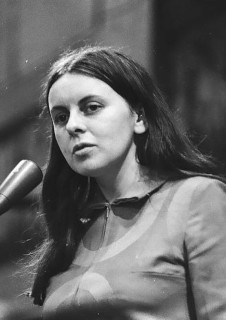
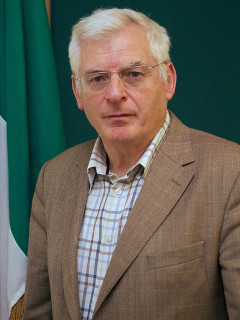
Devlin is born into a Roman Catholic family and attends St. Patrick’s Girls Academy in Dungannon. She is studying Psychology at Queen’s University Belfast (QUB) in 1968 when she takes a prominent role in a student-led civil rights organisation, People’s Democracy. She is subsequently excluded from the university.
After engaging on the side of the residents in the Battle of the Bogside, Devlin is convicted of incitement to riot in December 1969, for which she serves a short jail term.
Having witnessed the events of Bloody Sunday, Devlin is infuriated that she is consistently denied the floor in the House of Commons by the Speaker Selwyn Lloyd, despite the fact that parliamentary convention decrees that any MP witnessing an incident under discussion would be granted an opportunity to speak about it. She slaps Reginald Maudling, the Home Secretary in the Conservative government, across the face when he states in the House of Commons that the paratroopers had fired in self-defence on Bloody Sunday.
In 1971, Devlin gives birth to a daughter, Róisín, which costs her some political support because she is unmarried. She later marries Róisín’s father, Michael McAliskey, on her 26th birthday on April 23, 1973.
McAliskey stands as an independent candidate in support of the prisoners at Long Kesh prison in the 1979 European Parliament elections in Northern Ireland and wins 5.9% of the vote. She is a leading spokesperson for the Smash H-Block Campaign, which supports the hunger strikes of 1980 and 1981.
On January 16, 1981, McAliskey and her husband are shot by members of the Ulster Defence Association (UDA), who break into their home near Coalisland, County Tyrone. She is shot fourteen times in front of her children. British soldiers are watching the McAliskey home at the time but fail to prevent the assassination attempt. The couple are taken by helicopter to a hospital in nearby Dungannon for emergency treatment and then transported to the Musgrave Park Hospital, Military Wing, in Belfast, under intensive care. The attackers, all three members of the South Belfast UDA, are captured by the army patrol and subsequently jailed.
In 1982, McAliskey twice fails in an attempt to be elected to the Dublin North–Central constituency of Dáil Éireann. In 2003, she is barred from entering the United States and is deported on the grounds that the United States Department of State has declared that she “poses a serious threat to the security of the United States,” apparently referring to her conviction for incitement to riot in 1969.
On May 12, 2007, McAliskey is the guest speaker at Éirígí‘s first Annual James Connolly commemoration in Arbour Hill, Dublin. She currently co-ordinates a not-for-profit community development organisation based in Dungannon, the South Tyrone Empowerment Programme, and works with migrant workers to improve their treatment in Northern Ireland.
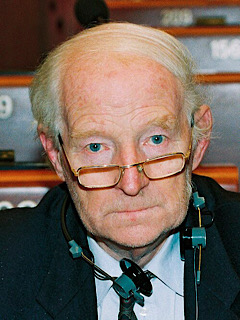
Maher is born on April 29, 1922, at Castlemoyle, Boherlahan, Cashel, County Tipperary, the seventh child of Thomas Maher, farmer, and his wife Julianne Maher. Raised on the family’s forty-five-acre holding and educated locally at Ardmaylenational school and at the Christian Brothers school and VEC school in Cashel, he takes over the farm in 1948 when ill health forces his father into retirement. He subsequently enlarges it to 120 acres. Mechanically adept, a talented sportsman, and a member of Cashel Dramatic Society, he joins Macra na Feirme and is a founder member of the National Farmers’ Association (NFA) in January 1955.
Maher is a member and chairman of the dairy committee of the NFA before coming to national attention through his participation in the historic farmers’ rights march to Dublin led by Rickard Deasy (October 7-19, 1966), part of the militant campaign for fairer agricultural prices and for reform of taxation and rates on farmland. His part in the subsequent three-week sit-down protest and meeting with incoming minister Neil Blaney, at the Department of Agriculture, confirms his reputation as a tenacious campaigner for agricultural causes. In August 1967, shortly after 100 farmers have served prison sentences for withholding rates, he succeeds Deasy as NFA president. Charismatic, articulate, and decisive, he also has a strong sense of personal responsibility, which governs his expectations of colleagues and associates. With exhausting rounds of travel and meetings, he is impossible to ignore and grist to the media mill, with his apparently impromptu but, in reality, carefully rehearsed speeches criticising politicians, parties, bureaucracy, and tardy national policy. He warns of national economic failure unless government and public services take radical modernising initiatives. He is at once nationalist, internationalist, and a revolutionary campaigner for change, an idealistic firebrand who is essentially conservative in social matters.
Maher’s campaign for agriculture is tempered by a wider interest in the social and economic future of Ireland ahead of crucial negotiations for membership of the European Economic Community (EEC). He becomes a household name, gadfly of bureaucrats and hero of farmers. In November 1967 he attends the European Congress of the International Federation of Agricultural Producers in Rome as an advance action prior to taking part in the subsequent negotiations leading to Ireland’s “entry to Europe” in January 1973. He is re-elected president of the NFA in 1970.
Amalgamating the NFA with several of the agricultural producers’ organisations, Maher oversees its reemergence as the Irish Farmers’ Association (IFA) in January 1971 and remains president until 1976. Strengthened by his pro-European leadership, the IFA withstands the counter-propaganda which, in the referendum of May 1972, urges rejection of the EEC on economic, social, and religious grounds. Despite his own moderately conservative social views and unequivocal opposition to abortion in Ireland, his commitment to European integration is not in question.
Maher is a director of prestigious state-sponsored bodies including Bord Bainne, the Irish Sugar Company, and the B & I shipping line. He also serves six terms between 1976 and 1983 as president of the Irish Co-operative Organisation Society (ICOS). Such relative sinecures are balanced by adherence to humanitarian causes that occupy most of his subsequent life. Passionate about practical support for developing countries, he becomes a founder and chairman of Bóthar, the Irish self-help relief agency for supply of livestock overseas. He urges prison reform and supports Amnesty International in its prisoners’ rights campaigns. Running as an independent candidate, he is elected Member of the European Parliament (MEP) for Munster in 1979, beating the strong Fine Gael candidate Alan Dukes. Describing himself as a public representative rather than a politician, he sits in the Liberal and Democratic parliamentary group and continues to fly agricultural and other kites as a non-party deputy. Typically, he criticises the scale of Irish embassies abroad, suggesting alternative teams of trade and tourism personnel. He advocates fairer agricultural policies towards developing countries in spite of prevailing European attitudes of self-interest, and urges the transfer of Northern Ireland from British jurisdiction to European protectorate status. At home he seeks all-party consensus on economic recovery from the depressed condition of the mid 1980s, well intentioned and lonely causes that fail to draw significant political support.
Maher’s habit of traveling with tools to unlock sealed hotel windows is an example of his sometimes eccentric practicality. His unsuccessful attempt to win a Dáil seat for Tipperary South in the 1981 Irish general election postpones his return to Ireland, although he is twice reelected an MEP before retiring in 1994. During his time in Strasbourg he is a quaestor of the European Parliament and a member of its committees on rural development, regions and petitions. He advocates decentralisation of power in Ireland while also criticising local authorities for laxity in their commitment to environmental protection.
For all his outspokenness, Maher is widely respected for the courageous positions he adopts. When time permits, he is an avid reader of history. He maintains his rural pastimes, especially attendance at Gaelic sports, where he can test the political pulse of his constituents. Following a short illness, he dies on April 19, 2002, aged 79, at St. Vincent’s Hospital, Dublin. He is buried at Boherlahan cemetery following a Requiem Mass, celebrated by his surviving brother, the Rev. Michael Maher CSSp (a former veterinary surgeon), and his cousin Denis.
Maher marries Elizabeth (Betty) Kennedy from Bansha, near Cashel, on January 8, 1958. They live at Castlemoyle and have one daughter, Julianne, and two sons, Thomas and Denis. His brother James (Jamesie), who predeceases him in October 1975, had been a medical consultant at St. Vincent’s and consultant surgeon to the Irish Rugby Football Union (IRFU).
(From: “Maher, Thomas Joseph” by Patrick Long, Dictionary of Irish Biography, http://www.dib.ie, October 2009)
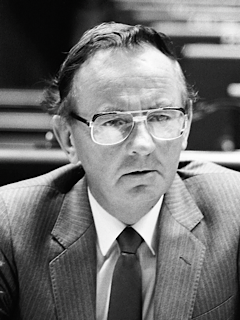
After qualifying, Ryan works for several solicitors’ firms before establishing a private practice in Dame Street in Dublin, in which he remains an active partner until appointed to ministerial office in 1973.
In opposition, Ryan serves as Fine Gael Spokesperson on Health and Social Welfare (1966–70) and on Foreign Affairs and Northern Ireland (1970–73). During this period he is involved in several important pro bono legal cases, including the 1963 challenge in the High Court, and then, on appeal, in the Supreme Court of Ireland in 1964, by Gladys Ryan (no relation) on the constitutionality of the fluoridation of the water supply. While the court rules against Gladys Ryan, the case remains a landmark, for it establishes the right to privacy under the Constitution of Ireland (or, perhaps more precisely, the right to bodily integrity under Article 40.3.1.). The case also raises a legal controversy, owing to the introduction by Justice Kenny of the concept of unenumerated rights. Other notable cases involving Ryan include a challenge to the rules governing the drafting of constituency boundaries, and an unsuccessful attempt to randomise the order of candidates on ballot papers (owing to a preponderance of TDs with surnames from the first part of the alphabet).
Fine Gael comes to power in a coalition with the Labour Party in 1973, and Ryan becomes Minister for Finance. He presides over a tough four years in the National Coalition under Liam Cosgrave, during the 1970s oil crisis when, in common with most Western economies, Ireland faces a significant recession. He is variously lampooned as “Richie Ruin” on the Irish satire show Hall’s Pictorial Weekly, and as “Red Richie” for his government’s introduction of a wealth tax. Following the 1977 Irish general election Fine Gael is out of power, and he once again becomes Spokesperson on Foreign Affairs.
On being appointed to the European Court of Auditors in 1986, he resigns his seat and is succeeded by Chris O’Malley. He serves as a member of the Court of Auditors from 1986 to 1994, being replaced by Barry Desmond. After retirement, he continues in several roles, including as a Commissioner of Irish Lights (until 2004) and a time as Chairman of the Irish Red Cross in 1998.
Ryan is the father of the economist and academic Cillian Ryan. He dies in Dublin at the age of 90 on March 17, 2019. He is buried at Newlands Cross Cemetery and Crematorium in Dublin.
European Movement Ireland (EM Ireland) (Irish: Gluaiseacht na hEorpa in Éirinn) is founded in Dublin on January 11, 1954. EM Ireland is an independent not-for-profit organisation that campaigns for every Irish person to get involved in the European Union (EU) and by doing so, help shape it. It is the oldest Irish organisation dealing with the EU, pre-dating Ireland’s membership of the European Economic Community (EEC) in 1973 by almost twenty years. The organisation is headed by Chief Executive Officer (CEO), Noelle Connell. Julie Sinnamon acts as Chair of the EM Ireland Board.
These seven signatories lay the first stone paving Ireland’s way to full membership of the EU. The aim of the Irish Council is to inform Irish individuals and organisations about the EU. One of its primary objectives is for Ireland to gain membership of the European Communities (EC) (principally the European Economic Community (EEC), as the EU is then known). Former TaoisighGarret FitzGerald and Jack Lynch, and former PresidentMary Robinson back the initiative. After a referendum is held on the Third Amendment of the Irish Constitution, which is overwhelmingly approved by voters in May 1972, Ireland joins the European Communities as a full member state on January 1, 1973.
The Irish Council later becomes European Movement Ireland. Today the organisation claims to act as source of information for Irish citizens regarding the work of the EU and its stated aim is to promote reasoned robust and fair debate about EU in Ireland.
EM Ireland is part of a pan-European network. European Movement International is a lobbying association that coordinates the efforts of associations and national councils with the goal of promoting European integration, and disseminating information about it. It seeks to encourage and facilitate the active participation of citizens and civil society organisations in the European Union as it develops. The European Movement network is represented in over 41 countries and has over 20 international organisations as members. The current President of European Movement is the former MEP from Belgium, Guy Verhofstadt. For a full list of all European Movement offices, and an outline of the history of the international network visit the EM International website at http://www.europeanmovement.eu/
The Traditional Unionist Voice (TUV), a unionistpolitical party in Northern Ireland, is founded on December 7, 2007, by Jim Allister after he and others had resigned from the Democratic Unionist Party (DUP) in March of that year. In common with all other Northern Irish unionist parties, the TUV’s political programme has as its sine qua non the preservation of Northern Ireland’s place within the United Kingdom. A founding precept of the party is that “nothing which is morally wrong can be politically right.”
Prior to the St. Andrews Agreement, the DUP presents itself as an “anti-Agreement” unionist party opposed to numerous aspects of the Good Friday Agreement, e.g., the release of paramilitary prisoners before the end of their jail sentences, and the participation of Sinn Féin in the Northern Ireland government without complete decommissioning of Provisional Irish Republican Army (IRA) weapons and cessation of all IRA activity. The TUV has been an exception among Northern Irish unionist parties in consistently opposing the presence of Sinn Féin in the Northern Ireland government. After Allister’s resignation from the DUP, he continues to occupy his European Parliament seat, sitting as an Independent MEP until the 2009 European Parliament election in the United Kingdom, when he is not re-elected.
In terms of electoral success and financial income, Traditional Unionist Voice is the third largest unionist party in Northern Ireland, behind the Democratic Unionist Party and the Ulster Unionist Party (UUP). It is usually considered by political commentators to be a small party and characterised as being more hardline than other Northern Irish unionist parties.
Since 2011, the TUV has occupied one seat in the Northern Ireland Assembly. In 2024, they win their first seat in the United Kingdom House of Commons. The party also holds some seats on local councils in Northern Ireland. Its most prominent elected representative and best-known figure remains Jim Allister whose North Antrim constituency is the heartland of the party.
In March 2024, the party forms an electoral pact with Reform UK, stating that the two parties will stand mutually agreed candidates in Northern Ireland constituencies in the 2024 United Kingdom general election. In this election, the party wins its first Westminster Member of Parliament (MP), electing Jim Allister as MP for North Antrim.
An opinion poll, released by LucidTalk in August 2025, shows the TUV as the third most popular party for the first time, coming ahead of both the Alliance Party and Ulster Unionists, with 13%.
In March 1917, Ryan passes his final medical examinations. That June he sets up medical practice in Wexford. In 1921, he moves to Dublin where he opens a doctor’s practice at Harcourt Street, specialising in skin diseases at the Skin and Cancer Hospital on Holles Street. He leaves medicine in 1925, after he purchases Kindlestown, a large farm near Delgany, County Wicklow. He lives there and it remains a working farm until his death.
In July 1919, Ryan marries Máirín Cregan, originally from County Kerry and a close friend of Sinéad de Valera throughout her life. Cregan, like her husband, also fought in the Easter Rising and is subsequently an author of children’s stories in Irish. They have three children together.
While studying at university in 1913, Ryan joins the Gaelic League at Clonmel. The company commander recruits the young Catholicnationalist, who becomes a founder-member of the Irish Volunteers and is sworn into the Irish Republican Brotherhood (IRB) the following year. In 1916, he goes first to Cork to deliver a message from Seán Mac Diarmada to Tomás Mac Curtain that the Easter Rising is due to happen on Easter Sunday, then to Cork again in a 12-hour journey in a car to deliver Eoin MacNeill‘s cancellation order, which attempts to stop the rising. When he arrives back on Tuesday, he serves as the medical officer in the General Post Office (GPO) and treats many wounds, including James Connolly‘s shattered ankle, a wound which gradually turns gangrenous. He is, along with Connolly, one of the last people to leave the GPO when the evacuation takes place. Following the surrender of the garrison, he is deported to HM Prison Stafford in England and subsequently Frongoch internment camp. He is released in August 1916.
Ryan rejoins the Volunteers immediately after his release from prison, and in June 1917, he is elected Commandant of the Wexford Battalion. His political career begins the following year when he is elected as a Sinn Féin candidate for the constituency of South Wexford in the 1918 United Kingdom general election in Ireland. Like his fellow Sinn Féin MPs, he refuses to attend the Westminster Parliament. Instead he attends the proceedings of the First Dáil on January 21, 1919. As the Irish War of Independence goes on, he becomes Brigade Commandant of South Wexford and is also elected to Wexford County Council, serving as chairman on one occasion. In September 1919, he is arrested by the British and interned on Spike Island and later Bere Island. In February 1921, he is imprisoned at Kilworth Internment Camp, County Cork. He is later moved on Ballykinlar Barracks in County Down and released in August 1921.
In 1926, Ryan is among the Sinn Féin TDs who follow leader Éamon de Valera out of the party to found Fianna Fáil. They enter the Dáil in 1927 and spend five years on the opposition benches.
In 1947, after spending fifteen years as Minister for Agriculture, Ryan is appointed to the newly created positions of Minister for Health and Minister for Social Welfare. Following Fianna Fáil’s return to power at the 1951 Irish general election, he returns as Minister for Health and Social Welfare. Following the 1954 Irish general election, Fianna Fáil loses power and he moves to the backbenches once again.
Following the 1957 Irish general election, Fianna Fáil are back in office and de Valera’s cabinet has a new look to it. In a clear message that there will be a change to economic policy, Ryan, a close ally of Seán Lemass, is appointed Minister for Finance, replacing the conservative Seán MacEntee. The first sign of a new economic approach comes in 1958, when Ryan brings the First Programme for Economic Development to the cabinet table. This plan, the brainchild of T. K. Whitaker, recognises that Ireland will have to move away from self-sufficiency toward free trade. It also proposes that foreign firms should be given grants and tax breaks to set up in Ireland.
When Lemass succeeds de Valera as Taoiseach in 1959, Ryan is re-appointed as Minister for Finance. Lemass wants to reward him for his loyalty by also naming him Tánaiste. However, the new leader feels obliged to appoint MacEntee, one of the party elders to the position. Ryan continues to implement the First Programme throughout the early 1960s, achieving a record growth rate of 4 percent by 1963. That year an even more ambitious Second Programme is introduced. However, it overreaches and has to be abandoned. In spite of this, the annual growth rate averages five percent, the highest achieved since independence.
Ryan does not stand in the 1965 Irish general election, after which he is nominated by the Taoiseach to Seanad Éireann, where he joins his son, Eoin Ryan Snr. At the 1969 dissolution he retires to his farm at Kindlestown, County Wicklow, where he dies at age 77 on September 25, 1970. He is buried at Redford Cemetery, Greystones, County Wicklow. His grandson, Eoin Ryan Jnr, serves in the Oireachtas from 1989 to 2007 and later in the European Parliament from 2004 to 2009.
Molloy’s father, Michael Edward Molloy, is originally from Ballyhaunis, County Mayo, and runs a successful wholesale drapery business in the city. His mother, Rita Stanley, hails from Clifden, County Galway. He is educated at Coláiste Iognáid and University College Galway. Before entering politics, he works for several years in printing, the clothing industry and his family’s drapery firm.
Molloy’s early political career is marked by his loyalty to Fianna Fáil’s leadership under TaoiseachJack Lynch. He quickly rises through the ranks and is appointed Minister for Local Government in 1970, a position he holds until 1973. His tenure as Minister for Local Government is characterised by his efforts to modernise and streamline local government structures in Ireland. His tenure in Fianna Fáil sees him as a stalwart of the party’s establishment, though tensions with its leadership grow over the years, particularly with Charles Haughey.
In opposition from 1973, Molloy serves as the frontbench spokesman, where he becomes involved in a high-profile dispute with James Tully, the Labour Minister for Local Government, over the controversial redrawing of constituencies, known as the “Tullymander.” Molloy, along with fellow Fianna Fáil member Brendan Crinion, used Dáil privilege to accuse Tully of having an improper commercial relationship with a builder in County Meath. The accusation is strongly denied by Tully and Molloy and Crinion later withdraw the charge. Despite this, Molloy faces severe repercussions, being forced to resign from his frontbench position. He is subsequently condemned by a judicial tribunal and censured by the Dáil for abusing parliamentary privilege.
When Fianna Fáil returns to office in 1977, Molloy becomes Minister for Defence in the final government of Jack Lynch.
In 1986, Molloy resigns from Fianna Fáil and joins the newly formed Progressive Democrats, spearheaded by Haughey’s arch-rival Desmond O’Malley. Molloy’s move is seen as a major break from the political establishment, as the Progressive Democrats advocate for low-tax, market-oriented economic policies and a more liberal economic agenda. His decision is driven by his dissatisfaction with the direction of Fianna Fáil under Haughey’s leadership and his belief that the party has become increasingly alienating.
In 1989, Molloy contests the European Parliament elections but is unsuccessful in his attempt. Following the 1989 Irish general election, Molloy, along with newly elected MEP for MunsterPat Cox, represents the Progressive Democrats in the lengthy negotiations with Fianna Fáil to form a coalition government. Once the negotiations conclude, he is reinstated in the Cabinet as Minister for Energy under Taoiseach Charles Haughey, who had previously caused Molloy’s political humiliation a decade earlier. Over the following three years, Molloy and his Progressive Democrat colleague Desmond O’Malley have a working relationship with their former Fianna Fáil colleagues, though tensions grow due to resentment over their presence in the Cabinet. The issue comes to a head when Molloy and O’Malley make it clear they will not serve in a Cabinet that includes Brian Lenihan Snr, following his controversial remarks during the 1990 Irish presidential election about alleged phone calls to PresidentPatrick Hillery from 1982.
In January 1992, Haughey faces further complications when Seán Doherty reveals information about the phone tapping of journalists dating back to 1982. Despite this, the coalition government ends when Albert Reynolds, Haughey’s successor, calls for a general election after accusing O’Malley of giving “dishonest” evidence to the Beef Tribunal. Molloy strongly denounces Reynolds’ accusation, describing it as “outrageous,” and criticises him for what he perceives as a “lack of generosity” in recent North-South negotiations, in which Molloy had represented the Progressive Democrats in talks with British Unionists.
Molloy stands at the European Parliament elections again in 1994 but is again unsuccessful.
Molloy resigns as a minister and quits politics just before the 2002 Irish general election amid controversy surrounding his involvement in the rape case of Barbara Naughton. The controversy stems from a letter Molloy sent to then Minister for Justice, John O’Donoghue, on behalf of a constituent whose relative had been convicted of rape. The letter, which requests the temporary release of the individual pending an appeal, leads to public criticism. The case is high-profile, involving a Connemara man sentenced to eleven years for the systematic abuse of his young daughter. During the trial, the judge, Philip O’Sullivan, notes that someone acting on Molloy’s behalf had tried to contact him in his chambers to clarify whether he had received certain correspondence from the victim’s sister, which the judge describes as “quite improper.” In response to the backlash, Molloy resigns, describing the letter as a “human error of judgment,” but insisting it was not intended to be dishonest. He retires from politics after the election.
Molloy is a member of Fianna Fáil for over 20 years, but his views are not always in line with the mainstream of the party, particularly under the leadership of Charles Haughey. His decision to leave Fianna Fáil in 1986 and join the Progressive Democrats is motivated by ideological differences, notably the party’s move toward a more conservative, state-controlled economy. Molloy, on the other hand, embraces a platform of fiscal conservatism, with an emphasis on reducing taxes, deregulation, and the liberalisation of the economy.
In terms of social issues, Molloy is ahead of his time in advocating for progressive policies, particularly on women’s rights. In a survey conducted in 1976 by the Women’s Political Association (WPA), Molloy scores among the highest of any member of the Dáil for his progressive stance on issues affecting women. He supports measures such as divorce, contraception, and family law reform, which are seen as highly controversial at the time. His responses to the WPA’s questions reveal that he holds views that are in stark contrast to many of his colleagues within Fianna Fáil. His progressive views on women’s rights are notable, as he is the only member of Jack Lynch’s cabinet who consistently supports reformist policies on issues like family law and the role of women in public life.
In 1972, Molloy marries Phyllis Barry, a Montessori teacher from Foxrock, County Dublin, whose father is a cousin of the executed revolutionary Kevin Barry. The couple meet while campaigning in a by-election in mid-Cork. Together, they have four children: Sinead, Sorcha, Donnacha, and Dara.
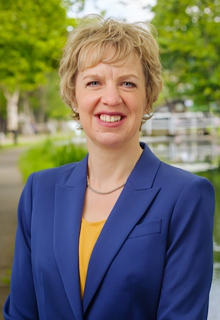
In 2004, Bacik’s book Kicking and Screaming: Dragging Ireland into the 21st Century, is published by The O’Brien Press.
In 2007, she contested the Seanad Éireann elections for the third time in the Dublin University constituency, and is elected to the third seat, behind sitting Independent senators Shane Ross and David Norris. She initially sits as an Independent senator.
In February 2009, Bacik is included in an ‘All Star Women’s Cabinet’ in the Irish Independent. In March 2009, she confirmed claims made on a TV programme that she had taken two voluntary pay cuts of 10% in addition to a pension levy. In June 2009, she is the Labour Party candidate for the Dublin Central by-election. She comes in third with 17% of the first preference votes. She joins the Labour Party group in the Seanad in September 2009, and becomes Labour Party Seanad spokesperson for both Justice and Arts, Sports and Tourism. In November 2009, a feature by Mary Kenny of the Irish Independent includes Bacik in a list of women who “well deserved their iconic status.”
In May 2010, Bacik seeks Labour’s nomination to contest the next election in the Dublin South-East constituency but is not selected. In December 2010, she is added to the ticket as the second candidate beside Labour Party leader, Eamon Gilmore, in the Dún Laoghaire constituency for the 2011 Irish general election. Gilmore tops the poll, with Bacik receiving 10.1% of first preference votes but she is not elected. She is re-elected to Seanad Éireann at the subsequent election, after which she becomes Deputy Leader of the Seanad. She holds her seat in the Seanad in 2016 and in 2020.
On April 27, 2021, after the resignation of Eoghan Murphy from his Dáil seat in Dublin Bay South, Bacik announces her intention to stand in the upcoming by-election. She campaigns with an emphasis on providing affordable housing, as well as improving healthcare and childcare, tackling climate change, and achieving “a true republic in which church and state are separated.” During the campaign, she describes herself as having “more bills passed into law than any other Senator, on issues such as workers’ conditions, women’s health rights, and LGBT equality”. She also campaigns on increasing the number of sports amenities for children in the area, calling for unused Defence Forces football fields at the Cathal Brugha Barracks to be freed up for local sports, with the suggestion rejected by Fine GaelMinister for DefenceSimon Coveney. Fine Gael complains to RTÉ after she features prominently on National Treasures, a prime-time TV show broadcast by RTÉ during the campaign. RTÉ has strict rules about fair coverage of candidates during campaigns. The national broadcaster blames an “inadvertent error” for the programme being shown three days before the election. A steering group within the broadcaster tells Fine Gael that “the broadcast should not have happened.” Consequentially, RTÉ has to show a special report on the by-election on Prime Time to “ensure fair coverage is given to all candidates.”
Bacik wins this election, receiving 8,131 (30.2%) first-preference votes. It is her fourth attempt as a Labour candidate, and she expresses her delight at the success at the count centre in the RDS. Following the election, she is described by The Irish Times as “a formidable activist and public intellectual” and that Fine Gael’s perceived antipathy towards their former TD, Kate O’Connell, may have contributed to the surge in support to Bacik from women voters. The newspaper claims that her election is “a long overdue morale boost” for Labour.
In March 2022, Bacik confirms she will run to succeed Alan Kelly as Labour Party leader. Kelly states that he believes that Bacik will succeed him. On March 24, 2022, she is confirmed as Labour Party leader unopposed at a party conference in Dublin. In a speech, she says she will focus on the rising cost of living and the serious and global problems facing the country. She pledges that Labour will fight the next election as a “standalone party” rather than joining any left-wing alliance.
Keating is born in Dublin on January 7, 1930, a son of the noted painter Seán Keating and campaigner May Keating. He is educated at Sandford Park School, and then at University College Dublin (UCD) and the University of London. He becomes a lecturer in anatomy at the UCD veterinary college from 1955 until 1960 and is senior lecturer at Trinity College Dublin from 1960 until 1965. He is RTÉ‘s head of agricultural programmes for two years before returning to Trinity College in 1967. While at RTÉ, he scripts and presents Telefís Feirme, a series for the agricultural community, for which he wins a Jacob’s Award in 1966.
In the 1950s and 1960s Keating is a member of the communist Irish Workers’ Party. He is first elected to the Dáil as a Labour Party Teachta Dála (TD) for the Dublin County North constituency at the 1969 Irish general election. From 1973 to 1977 he serves in the National Coalition government under Liam Cosgrave as Minister for Industry and Commerce. In 1973 he is appointed a Member of the European Parliament from the Oireachtas, serving on the short-lived first delegation.
During 1975 Keating introduces the first substantial legislation for the development of Ireland’s oil and gas. The legislation is modelled on international best practice and intended to ensure the Irish people would gain substantial benefit from their own oil and gas. Under his legislation the state could by right acquire a 50% stake in any viable oil and gas reserves discovered. Production royalties of between 8% and 16% with corporation tax of 50% would accrue to the state. The legislation specifies that energy companies would begin drilling within three years of the date of the issue of an exploration license.
In the aftermath of President of IranMahmoud Ahmadinejad‘s “World Without Zionism” speech in 2005, Keating publishes an op-ed in The Dubliner magazine, expressing his views on Israel. The article starts by claiming that “the Zionists have absolutely no right in what they call Israel.” He then proceeds to explain why he thinks Israel has no right to exist, claiming that the Ashkenazi Jews are descended from Khazars.
Keating dies at Ballymore Eustace, County Kildare, on December 31, 2009, at the age of 79, one week before his 80th birthday. Tributes come from the leaders of the Labour Party and Fine Gael at the time of his death, Eamon Gilmore and Enda Kenny, as well as former Fine Gael leader and TaoiseachJohn Bruton.
Higgins returns to Ireland and attends University College Dublin (UCD), studying English and French. For several years he is a teacher in several Dublin inner city schools. While at university he joins the Labour Party and becomes active in the Militant Tendency, an entryistTrotskyist group that operates within the Labour Party. Throughout his time in the Labour Party, he is a strong opponent of coalition politics, along with TDs Emmet Stagg and Michael D. Higgins. He is elected to the Administrative Council of the Labour Party by the membership in the 1980s. In 1989, he is expelled alongside 13 other members of Militant Tendency by party leader Dick Spring. The group eventually leaves the party and forms Militant Labour, which becomes the Socialist Party in 1996.
Higgins speaks out against the Iraq War while a TD, and addresses the Dublin leg of the March 20, 2003 International Day of Action. He is also prominent in the successful 2005 campaign to bring Nigerian school student Olukunle Eluhanla back to Ireland after he had been deported. He remains an opponent of the deportation policy.
Higgins uses his platform in the Dáil to raise the issue of exploitation of migrant and guest workers in Ireland. He and others claim that many companies are paying migrants below the minimum wage and, in some cases, not paying overtime rates. He expresses opposition in the Dáil to the jailing of the Rossport Five in July 2005. He raises the outsourcing of jobs by Irish Ferries in the Dáil in November 2005, requesting new legislation to regulate what he describes as “these modern slavers.”
Higgins is elected again as TD for Dublin West at the 2011 Irish general election. He wins the third seat (of four) with 8,084 first preference votes. In his first speech in the 31st Dáil, he opposed the nomination of Fine Gael‘s Enda Kenny as Taoiseach. On May 4, 2011, Kenny is forced to apologise to Higgins in the Dáil after falsely accusing him of being a supporter of Osama bin Laden after Higgins offers criticism of his assassination by the CIA. He had asked the Taoiseach, “Is assassination only justified if the target is a reactionary, anti-democratic, anti-human rights obscurantist like bin Laden?”
In the Dáil, Higgins accuses TánaisteEamon Gilmore of doing nothing for the 14 Irish citizens being held “incommunicado” by Israel in November 2011. In December 2011, he describes as a disgraceful campaign of intimidation the fines imposed by the government on people who are unable to pay a new household charge brought in as part of the latest austerity budget and says to Enda Kenny that he will be “the new Captain Boycott of austerity in this country.” He asks that Minister for FinanceMichael Noonan provide EBS staff with the 13th month end-of-year payment they are being denied.
In September 2012, Higgins publicly disagrees with former Socialist Party colleague Clare Daly, saying it is “unfortunate” that she has resigned from the party, but that it is impossible for Daly under the banner of the Socialist Party to continue to offer political support to Mick Wallace, who is at that time embroiled in scandal.
Higgins announces in April 2014 that he will not contest the next Dáil election. At the time he states his belief that the “baton of elected representation” should be carried by another generation of Socialist Party politicians — like Ruth Coppinger and Paul Murphy.