seamus dubhghaill

Promoting Irish Culture and History from Little Rock, Arkansas, USA


Leave a comment

Birth of Gerald Griffin, Novelist & Playwright

gerald-griffin

Gerald Griffin, Irish novelist, poet, and playwright, born in Limerick on December 12, 1803.

Griffin is the twelfth of the fifteen surviving children in his family. His father, Patrick Griffin, is a brewery farmer, and his mother, Ellen Griffin, of the ancient Gaelic family of the O’Briens, is very cultivated and much interested in literature.

Griffin goes to London in 1823 and becomes a reporter for one of the daily papers. He later turns to writing fiction. One of his most famous works is The Collegians, a novel based on a trial he has reported on, that of John Scanlan, a Protestant Anglo-Irish man who murdered Ellen Hanley, a young Irish Catholic girl. The novel is adapted to the stage as The Colleen Bawn, by Dion Boucicault.

In September 1838, Griffin informs his family of his intention of joining the Congregation of Christian Brothers. He enters the novitiate at North Richmond Street, Dublin, on September 8. He embarks on his new career with intense dedication, abandoning his literary work entirely. He is then admitted to the religious habit on the feast of St. Theresa and embarks on a two-year novitiate. His distaste for his earlier vocation is allayed to the extent that he is willing to undertake the composition of a few tales of a pious nature, but he is also desperately determined to avoid as much as possible the renewal of old contacts and the reopening of painful associations. Griffin burns most all of his unpublished manuscripts, preserving only a few poems and the tragedy, Gisippus.

Griffin dies at the North Monastery, Cork, from typhus fever on June 12, 1840. He is buried in the community’s graveyard on June 15.

Gerald Griffin has a street named after him in Limerick City and another in Cork City. Loughill/Ballyhahill GAA club in west Limerick plays under the name of Gerald Griffins.

Leave a comment

Birth of Edward “Ned” Daly in Limerick

edward-ned-daly

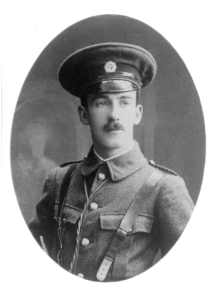
Edward “Ned” Daly, commandant of Dublin’s 1st battalion during the Easter Rising of 1916, is born on February 25, 1891, at 26 Frederick Street in Limerick.

Daly is the only son among the ten children born to Edward and Catherine Daly (née O’Mara). He is the younger brother of Kathleen Clarke whose husband, Tom Clarke, an active member of the Irish Republican Brotherhood. Daly’s father, Edward, a Fenian, dies five months before his son’s birth at the age of forty-one. His uncle, John Daly, is a prominent republican who had taken part in the Fenian Rising. It is through John Daly that Clarke meets his future wife.

Daly is educated by the Presentation Sisters at Sexton Street, the Congregation of Christian Brothers at Roxboro Road, and at Leamy’s commercial college. He spends a short time as an apprentice baker in Glasgow before returning to Limerick to work in Spaight’s timber yard. He later moves to Dublin where he eventually takes up a position with a wholesale chemist. He lives in Fairview with Kathleen and Tom Clarke.

Daly joins the membership of the Irish Republican Brotherhood, although the exact date is not known. In November 1913, Daly joins the newly founded Irish Volunteers and soon reaches the rank of captain. He is assiduous in his study of military manuals and the professionalism of his company gains the admiration of senior officers in actions such as the Howth gun-running of 1914. In March 1915, he is promoted to the rank of commandant of the 1st Battalion.

During the Easter Rising of 1916, Daly’s battalion is stationed in the Four Courts and areas to the west and north of the centre of Dublin. His battalion sees the most intense fighting of the rising. He surrenders his battalion on Saturday, April 29 after Patrick Pearse orders the surrender. He is held at Kilmainham Gaol.

Daly is given the same quick sham court-martial at Richmond Barracks as the other leaders of the Rising. In his trial, he claims that he was just following orders. Daly is convicted and is executed by firing squad on May 4, 1916, at the age of 25.

Bray railway station was renamed Bray Daly railway station in his honour in 1966.