Christopher James “Kit” Colles, Irish-born engineer, surveyor, and inventor notable for his contributions to early American surveying, waterworks, and infrastructural innovation in the late 18th century, dies on October 4, 1816, in the Manhattan borough of New York City.
Colles is born in Dublin around 1739. He emigrates to the American colonies before the American Revolutionary War, where he becomes known for his skills in engineering, surveying, and mathematics. His education and early interests equip him for projects requiring practical application of technical knowledge in a colonial context.
Colles is best remembered for his work in designing and constructing water supply systems, such as aqueducts and canals. In New York City, he proposes plans to improve the city’s water distribution, anticipating modern municipal water infrastructure.
Colles also works extensively as a surveyor and cartographer. One of his major projects is a comprehensive survey of roads, settlements, and natural features across parts of New York State, aimed at promoting economic development and providing practical maps for settlers and entrepreneurs. These maps are notable for their detail and practical utility in an era when accurate geographic information is scarce.
In addition to engineering, Colles is an innovator in education and public information. He seeks to publish a tourist map of New York State, combining cartographic detail with travel guidance. Later in life, he develops ideas for mechanical inventions, such as improvements to water-lifting devices and surveying instruments, although many of his designs remain conceptual or are implemented only on a limited scale.
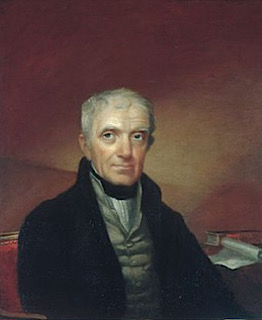
Colles dies at the age of 77 on October 4, 1816, in Manhattan, New York County, New York. He is buried in St. Paul’s Chapel and Churchyard in the Financial District of Manhattan. His portrait, painted by James Frothingham, is preserved in the Metropolitan Museum of Art in New York.
Colles is remembered as a forward-thinking engineer who attempted to bring systematic planning and technological innovation to the early United States. His work in surveying and water systems helped lay the groundwork for later infrastructural developments and inspired future engineers. Despite facing financial difficulties and limited recognition during his lifetime, his contributions reflect the blend of practical engineering and visionary thinking that characterized American technical pioneers of his era.
Colles’s maps and published plans remain valuable records of early American geography and urban planning, illustrating both the challenges and ambitions of post-colonial infrastructure development.