seamus dubhghaill

Promoting Irish Culture and History from Little Rock, Arkansas, USA


Leave a comment

Death of Chicago Mobster Charles Dean O’Banion

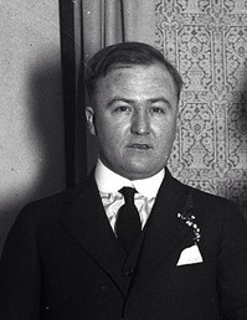
Charles Dean O’Banion, better known as Dion O’Banion, is murdered by Frankie Yale, John Scalise, and Albert Anselmi in Chicago, Illinois, on November 10, 1924. He graduates from the violent newspaper wars of early 20th century Chicago to become the chief bootlegging rival of mobsters Al Capone and Johnny Torrio.

O’Banion is born to Irish Catholic parents in Maroa, Illinois on July 8, 1892. After the death of his mother in 1901, he moves with his family to a North Side neighborhood populated largely by other Irish Americans. The neighborhood, then known as Kilgubbin after an Irish place name and now called Goose Island, is notorious for its high crime rate, and by all accounts he fits easily into that environment. In his teens, he forms a street gang with Earl “Hymie” WeissVincent “The Schemer” Drucci and George “Bugs” Moran with whom he continues to associate throughout his life.

Chicago of the period is, according to Mayor William Hale “Big Bill” Thompson, a “wide open city.” Wide open for rackets such as prostitution and gambling, and wide open for violent competition among gangsters. Bombings and murder are met with token official resistance but are often settled by uneasy truces among the rivals.

The violence extends to the press. O’Banion and his friends are “sluggers” for, first, the Chicago Tribune and later for the Tribune’s rival, the Chicago Examiner. Sluggers intimidate sellers and readers of the wrong newspaper. Although played for laughs in stage and film in productions such as The Front Page, the Chicago newspaper wars are quite violent and include lethal gunfights in saloons and on the streets.

In 1909, O’Banion is arrested and convicted of robbery and assault.

The newspapers wars are a good warm-up for O’Banion’s work as a bootlegger when Prohibition comes into effect in 1920. Chicago, with its large population of immigrants from Ireland, GermanyItaly and Eastern Europe, is a town that loves its beer, wine and liquor. Almost from the start, O’Banion’s North Side Gang is at odds with the South Side outfit led at the time by Torrio.

About 1921, O’Banion and Torrio, who actively wants peace with his rival, work out a deal that seems to satisfy both the South Side gangsters and O’Banion’s group. O’Banion not only keeps the North Side and the Gold Coast, a wealthy neighborhood on Lake Michigan, but he even gets a slice of Cicero, a suburb controlled by Torrio and Capone on the South Side of Chicago, and they all share profits from a lakefront casino called The Ship.

Eventually the peace breaks down. O’Banion is enraged by efforts of a third gang, the Genna crime family’s West Side Gang, to expand its bootlegging and rackets operations into his territory. The Gennas are allied with Torrio’s South Side gang. O’Banion seals his fate when he refuses to forgive a gambling debt that one of the Gennas had racked up at The Ship.

On the morning of November 10, 1924, O’Banion is in his North Side flower shop, Schofield’s, a front for his mob activities. A Torrio associate from New York City, Frankie Yale, enters the shop with Genna gunmen John Scalise and Albert Anselmi. When O’Banion and Yale shake hands, Yale grasps O’Banion’s hand in a tight grip. At the same time, Scalise and Anselmi step aside and fire two bullets into O’Banion’s chest and two into his throat. One of the killers fires a final shot into the back of his head as he lies face down on the floor.

Since O’Banion is a major crime figure, the Catholic Church denies him burial in consecrated ground. However, a priest O’Banion has known since childhood recites the Lord’s Prayer and three Hail Marys in his memory. Despite this restriction, his funeral is the biggest anyone can remember. Among those attending are Al Capone and members of the South Side Gang. But there soon will be other funerals. The Beer Wars, as they become known, are just beginning.

Torrio escapes an assassination attempt in 1925 and turns over his operation to Capone, the greatest gangster of all. O’Banion’s friend and conspirator Hymie Weiss, who is fingered as one of those who tried to kill Torrio, is gunned down in 1926. In 1929, in an effort to permanently put down the North Side Gang, led then by Bugs Moran, seven of the North Side mobsters are killed in the infamous Saint Valentine’s Day Massacre, but Moran survives through the end of Prohibition in 1933.


Leave a comment

Birth of Con Colbert, Irish Rebel & Fianna Éireann Pioneer

Cornelius Bernard “Con” Colbert, Irish rebel and pioneer of Fianna Éireann, is born on October 19, 1888, in the townland of Moanleana, Mahoonagh, County Limerick. For his part in the Easter Rising of 1916, he is shot by firing squad in Kilmainham Gaol, Dublin, on May 8, 1916.

Colbert is the fourth youngest of thirteen children of Michael Colbert, a farmer, and Honora McDermott. His family moves to the village of Athea when he is three years old. He is educated at the local national school. In 1901, his family is living in the townland of Templeathea West. A younger brother, James, and a cousin, Michael Colbert, later serve as Teachtaí Dála (TDs).

Colbert leaves Athea at the age of 16 and goes to live with his sister Catherine in Ranelagh, County Dublin. He continues his education at a Christian Brothers school in North Richmond Street. He is employed as a clerk in the offices of Kennedy’s Bakery in Dublin. In 1911, he is living with Catherine, two other siblings and two boarders at a house on Clifton Terrace, Rathmines. He is a deeply religious Catholic and refrains from smoking or drinking.

Colbert is sworn into the Irish Republican Brotherhood (IRB) by his cousin Art O’Donnell in Art’s home in 1908. He joins Fianna Éireann at its inaugural meeting in 1909 and rises to Chief Scout. The following year he becomes a drill instructor at St. Enda’s School, founded by Patrick Pearse. In 1912, he becomes head of an IRB circle within the Fianna started by Bulmer Hobson. During 1913 he is one of a number of Fianna who conduct military training at the Forester’s Hall in Rutland Square (now Parnell Square), and in November of that year he joins the Provisional Committee of the newly formed Irish Volunteers.

In the weeks leading up to the Rising, Colbert acts as bodyguard for Thomas Clarke. Before the Rising, because he lives out of the city, he stays with the Cooney family in the city centre. During Easter Week, he fights at Watkin’s Brewery, Jameson’s Distillery and Marrowbone Lane. Thomas MacDonagh surrenders to Brigadier General William Lowe at 3:15 p.m. on Sunday, April 30. MacDonagh then goes around the garrisons under his command to arrange for their surrender.

Colbert surrenders with the Marrowbone Lane Garrison along with the South Dublin Union Garrison, which had been led by Éamonn Ceannt. When the order to surrender is issued, he assumes the command of his unit to save the life of his superior officer, who is a married man.

They are marched to Richmond Barracks, where Colbert is later court-martialed. Transferred to Kilmainham Gaol, he is told on Sunday, May 7, that he is to be shot the following morning. He writes no fewer than ten letters during his time in prison. During this time in detention, he does not allow any visits from his family. Writing to his sister, he says a visit “would grieve us both too much.”

The night before his execution Colbert sends for Mrs. Ó Murchadha, who is also being held prisoner. He tells her he is “proud to die for such a cause. I will be passing away at the dawning of the day.” Holding his Bible, he tells her he is leaving it to his sister. He hands her three buttons from his volunteer uniform, telling her, “They left me nothing else.” He then asks her to say a Hail Mary for the souls of the departed when she hears the volleys of shots in the morning for Éamonn Ceannt, Michael Mallin and himself. The soldier who is guarding the prisoner begins crying according to Mrs. Ó Murchadha, and records him as saying, “If only we could die such deaths.”

The next morning, May 8, 1916, Colbert is shot by firing squad.

Colbert Railway Station in Limerick, Con Colbert Road in Dublin and the Fianna Fáil cumann in the University of Limerick are named in his honor. Colbert Street in his native Athea, County Limerick, is named after him, as is the local community hall. Colbert Avenue and Colbert Park Janesboro, Limerick, are also named after him.

On May 4, 1958, a plaque is erected over a bed in Barringtons Hospital, County Limerick. The plaque has since disappeared.

In May 2016, one hundred years after his execution, a full-scale limestone sculpture of Colbert is unveiled at the gable of his one-time house in Moanleana, County Limerick.


Leave a comment

Birth of Chicago Mobster Charles Dean O’Banion

charles-o-banion

Charles Dean O’Banion, better known as Dion O’Banion, is born to Irish Catholic parents in Maroa, Illinois on July 8, 1892. He graduates from the violent newspaper wars of early 20th century Chicago to become the chief bootlegging rival of mobsters Al Capone and Johnny Torrio.

After the death of his mother in 1901, O’Banion moves with his family to a North Side neighborhood populated largely by other Irish Americans. The neighborhood, then known as Kilgubbin after an Irish place name and now called Goose Island, is notorious for its high crime rate, and O’Banion by all accounts fit easily into that environment. In his teens, he forms a street gang with Earl “Hymie” Weiss, Vincent “The Schemer” Drucci and George “Bugs” Moran with whom he continues to associate throughout his life.

Chicago of the period is, according to Mayor William Hale “Big Bill” Thompson, a “wide open city.” Wide open for rackets such as prostitution and gambling, and wide open for violent competition among gangsters. Bombings and murder are met with token official resistance but are often settled by uneasy truces among the rivals.

The violence extends to the press. O’Banion and his friends are “sluggers” for, first, the Chicago Tribune and later for the Tribune’s rival, the Chicago Examiner. Sluggers intimidate sellers and readers of the wrong newspaper. Although played for laughs in stage and film in productions such as The Front Page, the Chicago newspaper wars are quite violent and include lethal gunfights in saloons and on the streets.

In 1909, O’Banion is arrested and convicted of robbery and assault.

The newspapers wars are a good warm-up for O’Banion’s work as a bootlegger when Prohibition comes into effect in 1920. Chicago, with its large population of immigrants from Ireland, Germany, Italy and Eastern Europe, is a town that loves its beer, wine and liquor. Almost from the start, O’Banion’s North Side Gang is at odds with the South Side outfit led at the time by Torrio.

About 1921, O’Banion and Torrio, who actively wants peace with his rival, works out a deal that seems to satisfy both the South Side gangsters and O’Banion’s group. O’Banion not only keeps the North Side and the Gold Coast, a wealthy neighborhood on Lake Michigan, but he even gets a slice of Cicero, a suburb controlled by Torrio and Capone on the South Side of Chicago, and they all share profits from a lakefront casino called The Ship.

Eventually the peace breaks down. O’Banion is enraged by efforts of a third gang, the Genna crime family’s West Side Gang, to expand its bootlegging and rackets operations into his territory. The Gennas are allied with Torrio’s South Side gang. O’Banion seals his fate when he refuses to forgive a gambling debt that one of the Gennas had racked up at The Ship.

On the morning of November 10, 1924, O’Banion is in his North Side flower shop, Schofield’s, a front for his mob activities. A Torrio associate from New York City, Frankie Yale, enters the shop with Genna gunmen John Scalise and Albert Anselmi. When O’Banion and Yale shake hands, Yale grasps O’Banion’s hand in a tight grip. At the same time, Scalise and Anselmi step aside and fire two bullets into O’Banion’s chest and two into his throat. One of the killers fires a final shot into the back of his head as he lies face down on the floor.

Since O’Banion is a major crime figure, the Catholic Church denies him burial in consecrated ground. However, a priest O’Banion has known since childhood recites the Lord’s Prayer and three Hail Marys in his memory. Despite this restriction, his funeral is the biggest anyone can remember. Among those attending are Al Capone and members of the South Side Gang. But there soon will be other funerals. The Beer Wars, as they become known, are just beginning.

Torrio escapes an assassination attempt in 1925 and turns over his operation to Capone, the greatest gangster of all. O’Banion’s friend and conspirator Hymie Weiss, who is fingered as one of those who tried to kill Torrio, is gunned down in 1926. In 1929, in an effort to permanently put down the North Side Gang, led then by Bugs Moran, seven of the North Side mobsters are killed in the infamous Saint Valentine’s Day Massacre, but Moran survives through the end of Prohibition in 1933.