seamus dubhghaill

Promoting Irish Culture and History from Little Rock, Arkansas, USA


Leave a comment

Death of Henry Capell, 1st Baron Capell of Tewkesbury

Henry Capell, 1st Baron Capell of Tewkesbury KB, PC, English politician who sits in the House of Commons of England between 1660 and 1692, dies in Chapelizod, Dublin, on May 30, 1696.

Capell is born in Little Hadham, Hertfordshire, England, in 1638. He is the son of Arthur Capell, 1st Baron Capell of Hadham, and Elizabeth Morrison. He is baptised on March 6, 1638. His father is raised to the peerage in 1641, and he dies fighting for the King in the English Civil War in 1649 as one of the commanders of the Colchester garrison. His eldest brother is Arthur Capell, 1st Earl of Essex.

Capell founds the Kew Gardens at Kew, a district in the London Borough of Richmond upon Thames. Later he is elected Member of Parliament for Tewkesbury in the Convention Parliament. He is invested as a Knight of the Order of the Bath, on April 23, 1661. In 1661, he is re-elected MP for Tewkesbury in the Cavalier Parliament. He is a member of the Privy Council of Ireland from April 1673 to March 1684/85. He is re-elected MP for Tewkesbury in the two elections of 1679, is a member of the Privy Council of England from April 22, 1679, to January 31, 1680, and is First Lord of the Admiralty, between 1679 and 1680.

In 1689, Capell is elected MP for Cockermouth and is Lord of the Treasury, between 1689 and 1690. He is invested again as Privy Councillor, on February 14, 1689. He is elected MP for Tewkesbury in 1690, and sits until April 11, 1692, when he is ennobled as Baron Capell of Tewkesbury, in the County of Gloucester. One year later, he becomes Lord Justice of Ireland and in turn a Privy Councillor of Ireland, in June 1693. In 1695 and 1696, he is Lord Deputy of Ireland. His term as Lord Deputy is not considered successful because of him being a firm Whig and presiding over an administration which is deeply divided between Whigs and Tories. He does nothing to help change this situation.

Capell dies at the age of 58 in Chapelizod, County Dublin, on May 30, 1696. He is buried on September 8, 1696, in Little Hadham, Hertfordshire. The barony dies with him.

On February 16, 1659, Capell marries Dorothy Bennet, daughter of Richard Bennet. The marriage is childless but does bring part of what later becomes Kew Palace into the Capell family, leading to its becoming known as Capel House. Dorothy dies in 1721, and through her will endows a number of charities.

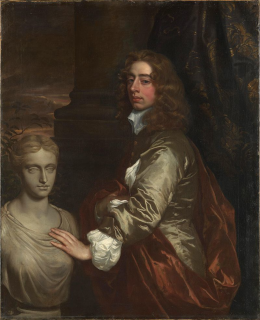
(Pictured: “Sir Henry Capel (1638-1696),” oil on canvas by Peter Lely, Metropolitan Museum of Art)


Leave a comment

John Asgill Expelled from the Irish House of Commons

John Asgill, eccentric English writer and newly elected Member of Parliament (MP) for Enniscorthy, is expelled from the Irish parliament on October 11, 1703, on account of a pamphlet he published in Dublin in 1698, arguing that man may pass into eternal life without dying. The pamphlet is burned by the common hangman and he spends much of the rest of his life in prison in England for blasphemy or for matters arising from land speculation in Ireland.

John Asgill is born at Hanley Castle, Worcestershire, England, on March 25, 1659, the son of Edward and Hester Asgill. Little is known of his early life but in 1686 he becomes a student at the Middle Temple and is called to the bar in 1692. He founds the first land bank in 1695 with Nicholas Barbon, which, after proving to be a profitable venture, merges with the land bank of John Briscoe in 1696. However, after profits drop, the bank closes in 1699. He is then elected that year as Member of Parliament for Bramber.

In 1700 Asgill publishes An Argument Proving, that … Man may be Translated, a pamphlet aiming to prove that death is not obligatory upon Christians. Within days of its publication, he leaves England to travel to Ireland, where he hopes to profit from the Williamite confiscation, acting on behalf of individuals affected by the 1699 resumption act. He is reasonably successful but is unable to gain the profits that he had anticipated. He becomes involved in lengthy litigation with the estate of the Jacobite Nicholas Browne, which continues until the early 1730s.

In an attempt to further his interests Asgill enters the Irish House of Commons in 1703, representing Enniscorthy. His Irish parliamentary career is to be short. On September 25, the first day of the session, his pamphlet on death is discussed and voted “wicked and blasphemous” and ordered to be burned by the common hangman. He is allowed to make a personal defence of his work on October 11, but this proves insufficient. He is expelled and the Commons order that “he be forever hereafter incapable of being chosen, returned or sitting a member of any succeeding parliament in this kingdom.”

While in Ireland Asgill is re-elected to the English House of Commons for Bramber in 1702 and so returns to England. On June 12, 1707 he is arrested and imprisoned at Fleet Prison for debt. He claims parliamentary immunity as a member of a current parliament despite the confusion whether the last English parliament and the first Parliament of Great Britain are the same body, and in December the House of Commons agrees. Nevertheless, two days after ordering his release from prison, he is expelled from the Commons both for his religious views and because he is a declared bankrupt.

Asgill falls on hard times and spends the rest of his life imprisoned in the Fleet or within the bounds of the King’s Bench but his zeal as a pamphleteer continues unabated.

Asgill dies on November 10, 1738, in the parish of Southwark, and is survived by his sister Martha.