In the mid-17th century, Ireland is embroiled in the Irish Confederate Wars (1641–1653), a conflict between Irish Catholics, English and Scottish Protestants, and Royalist forces loyal to Charles I. Irish Catholics, through the Confederation of Kilkenny, seek the free exercise of their religion, recovery of church lands, and greater political autonomy. Their movement is internally divided between moderate “Old English” landowners advocating compromise with the Royalists, and hardline Gaelic-Irish factions demanding full Catholic control.
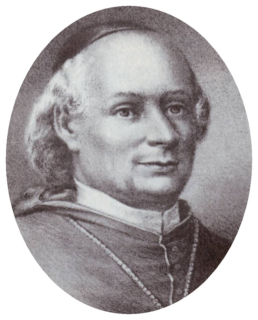
On September 15, 1644, Pope Innocent X seeks to bolster the Irish Catholic cause amid the English Civil War. He appoints Giovanni Battista Rinuccini, Archbishop of Fermo, as Papal Nuncio to Ireland, giving him authority to deliver arms, ammunition, and financial support directly to the Confederates. Rinuccini’s mission aligns with the wider Catholic Counter-Reformation strategy, aiming to strengthen Catholic influence politically and militarily.
Rinuccini lands at Kenmare Bay, County Kerry, on October 21, 1645, with a retinue of Italians and Irish officers, as well as a substantial shipment of weapons and funds:
Rinuccini’s entry symbolizes direct papal intervention in Irish affairs, demonstrating both spiritual and temporal support for Catholic aspirations. Rinuccini proceeds to Kilkenny, the Confederate capital, where he is officially received by the Confederate president, Richard Butler, 3rd Viscount Mountgarret, and addresses the Assembly in Latin.
Rinuccini influences Confederate politics by controlling the distribution of arms and money, strengthening the hardline clerical and militant factions, who oppose compromise with the Royalists. He insists on the full restoration of Catholic churches and lands, and opposes treaties offering only religious toleration without Catholic political power. His arrival intensifies divisions between moderates (Old English) and radicals (Gaelic Irish and clergy). This factionalism undermines Confederate unity and contributes to eventual defeats in 1647-1648.
Rinuccini’s arrival marks a turning point in the Irish Confederate Wars. It exemplifies foreign papal support in local conflicts during the Counter-Reformation. Militarily, it temporarily enhances the Confederates’ capacity, exemplified later at the Battle of Benburb (1646). Politically, it deepens internal divisions, which ultimately hinders successful negotiations with Royalist and Parliamentarian forces, leading to the collapse of Confederate resistance.
In summary, Archbishop Giovanni Battista Rinuccini lands in Ireland on October 21, 1645, delivering arms and funds. The significance of his visit is symbolic and practical papal support for Irish Catholics, strengthening of hardline factions, direct influence of military campaigns and political negotiations and the highlighting of the entanglement of religion, diplomacy, and civil war in mid-17th-century Ireland.
The event demonstrates the intersection of international Catholic interests and Irish nationalist-religious aspirations, shaping the course of the Irish Confederate Wars and influencing the fate of the Catholic Church in Ireland for decades.
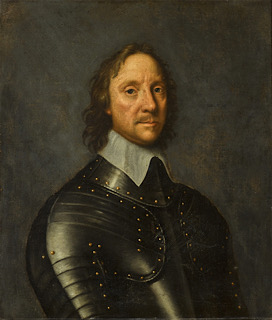
Cromwell’s death is the result of a painful urinary tract infection that leads to blood poisoning. He has been in declining health for some time, and his final days are marked by illness and discomfort. His death comes just over nine years after the Siege of Drogheda in Ireland, which begins in August 1649 and becomes one of the most infamous episodes of his military career.
The Siege of Drogheda, in which Cromwell’s forces execute thousands of Irish defenders, remains a major point of controversy in his legacy. His death in 1658 is met with celebration by many in England, as it paves the way for the restoration of the monarchy under Charles II in 1660. After his death, his body is exhumed in 1661 and publicly hanged in chains before being thrown into a pit to ensure he is dead.
Cromwell is remembered as a decisive military leader who helps restore England’s status as a leading European power, but also as a controversial figure whose actions in Ireland leave a lasting scar on Anglo-Irish relations. His death on September 3, 1658, thus marks both the end of his political and military influence and a turning point in the post-Civil War period in Britain.
Oliver Cromwell, English statesman, farmer and soldier, sets sail from Milford Haven, Pembrokeshire, Wales, on August 13, 1649, with a fleet of about 35 ships, accompanied by a second and third flotilla that arrives days later. The invasion marks the beginning of the Cromwellian conquest of Ireland, a brutal four-year campaign (1649–1653) that reshapes the island’s political and demographic landscape.
Cromwell’s landing at Dublin is swift but not without hardship—seasickness plagues him during the voyage. He lands with around 9,000–20,000 troops, stores, and £20,000 in cash. His early actions include the Siege of Drogheda (September 10, 1649) where, following a prolonged cannonade, his forces breach the town’s defenses. On September 11, the entire garrison—about 8,000 men, including English troops, Irish soldiers, and civilians—is massacred, including commander Sir Arthur Aston. Early actions also include the Sack of Wexford (October 1649). Despite Cromwell’s public justification for the slaughter, Wexford’s garrison and civilians are killed in a similar manner.
Over the next four years, Cromwell’s forces defeat the Irish Confederacy by late 1650, engage in widespread plunder, executions, and displacement of Catholic populations, confiscate large tracts of Catholic land for Protestant settlers under the Cromwellian Plantation, and introduce the Act for the Settlement of Ireland 1652, barring Catholics from most public offices and redistributing land.
Modern estimates suggest 15–40% of Ireland’s pre-1641 population perishes due to warfare, famine, and disease. The campaign entrenches Protestant dominance in Ireland and leaves deep scars in Irish memory.
Cromwell’s invasion is remembered in Ireland as a symbol of English conquest and sectarian violence. While some historians argue his actions are within contemporary military norms, many see them as part of a broader pattern of colonial subjugation. The detailed land surveys he orders—mapping every parish and barony—become a tool for land redistribution, shaping Ireland’s political and economic structure for centuries.
In short, August 13, 1649, is the start of a campaign that not only ends Irish Catholic political power but also alters the island’s demographic and cultural fabric for generations.
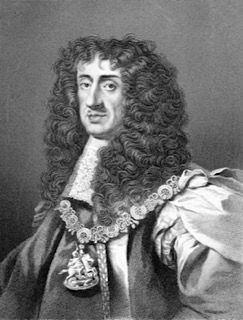
Charles is the eldest surviving son of Charles I and Henrietta Maria of France. His early years are unremarkable, but before he is twenty his conventional education has been completely overshadowed by the harsh lessons of defeat in the English Civil War against the Puritans and subsequent isolation and poverty. Thus he emerges into precocious maturity, cynical, self-indulgent, skilled in the sort of moral evasions that make life comfortable even in adversity.
Though the early years of tawdry dissipation tarnish the romance of Charles’s adventures, not all his actions are discreditable. He tries to fight his father’s battles in the west of England in 1645. He resists the attempts of his mother and his sister Henrietta Anne to convert him to Catholicism and remains openly loyal to his Protestant faith. In 1648, he makes strenuous efforts to save his father, and when, after Charles I’s execution in 1649, he is proclaimed Charles II by the Scots in defiance of the English republic. He is prepared to go to Scotland and swallow the stringently anti-Catholic and anti-Anglican Presbyterian Covenant as the price for alliance. But the sacrifice of friends and principles was futile and leaves him deeply embittered. The Scottish army is routed by the English under Oliver Cromwell at Dunbar in September 1650, and in 1651 Charles’s invasion of England ends in defeat at Worcester. The young king becomes a fugitive, hunted through England for forty days but protected by a handful of his loyal subjects until he escapes to France in October 1651.
Charles’s safety is comfortless, however. He is destitute and friendless, unable to bring pressure against an increasingly powerful England. France and the Dutch Republic are closed to him by Cromwell’s diplomacy, and he turns to Spain, with whom he concludes a treaty in April 1656. He persuades his brother James to relinquish his command in the French army and gives him some regiments of Anglo-Irish troops in Spanish service, but poverty dooms this nucleus of a royalist army to impotence. European princes take little interest in Charles and his cause, and his proffers of marriage are declined. Even Cromwell’s death does little to improve his prospects. But George Monck, one of Cromwell’s leading generals, realized that under Cromwell’s successors the country is in danger of being torn apart and with his formidable army creates the situation favourable to Charles’s restoration in 1660.
Most Englishmen now favour a return to a stable and legitimate monarchy, and, although more is known of Charles II’s vices than his virtues, he has, under the steadying influence of Edward Hyde, his chief adviser, avoided any damaging compromise of his religion or constitutional principles. With Hyde’s help, Charles issues in April 1660 his Declaration of Breda, expressing his personal desire for a general amnesty, liberty of conscience, an equitable settlement of land disputes, and full payment of arrears to the army. The actual terms are left to a free parliament, and on this provisional basis Charles is proclaimed king in May 1660. Landing at Dover on May 25, he reaches a rejoicing London on his 30th birthday.
The unconditional nature of the settlement that takes shape between 1660 and 1662 owes little to Charles’s intervention and likely exceeds his expectations. He is bound by the concessions made by his father in 1640 and 1641, but the Parliament elected in 1661 is determined on an uncompromising Anglican and royalist settlement. The Militia Act of 1661 gives Charles unprecedented authority to maintain a standing army, and the Corporation Act 1661 allows him to purge the boroughs of dissident officials. Other legislation places strict limits on the press and on public assembly, and the Act of Uniformity 1662 creates controls of education. An exclusive body of Anglican clergy and a well-armed landed gentry are the principal beneficiaries of Charles II’s restoration.
But within this narrow structure of upper-class loyalism there are irksome limitations on Charles’s independence. His efforts to extend religious toleration to his Nonconformist and Roman Catholic subjects are sharply rebuffed in 1663, and throughout his reign the House of Commons thwarts the more generous impulses of his religious policy. A more pervasive and damaging limitation is on his financial independence. Although the Parliament votes the king an estimated annual income of £1,200,000, Charles has to wait many years before his revenues produce such a sum, and by then the damage of debt and discredit is irreparable. He is incapable of thrift and finds it painful to refuse petitioners. With the expensive disasters of the Second Anglo-Dutch War of 1665–67 the reputation of the restored king sinks to its lowest level. His vigorous attempts to save London during the Great Fire of September 1666 cannot make up for the negligence and maladministration that leads to England’s naval defeat in June 1667.
Charles clears himself by dismissing his old adviser, Edward Hyde, and tries to assert himself through a more adventurous foreign policy. So far, his reign has made only modest contributions to England’s commercial advancement. The Navigation Acts of 1660 and 1663, which are prompted by the threat to British shipping by the rise of the Dutch carrying trade, are valuable extensions of Cromwellian policies, and the capture of New York in 1664 is one of his few gains from the Dutch. Although marriage to Princess Catherine of Braganza of Portugal in 1662 brings him the possession of Tangier and Bombay, they are of less strategic value than Dunkirk, which he sells to Louis XIV in 1662. He Is, however, prepared to sacrifice much for the alliance of his young cousin. Through his sister Henrietta Anne, Duchess of Orléans, he has direct contact with the French court, and it is through her that he negotiates the startling reversal of the Protestant Triple Alliance (England, the Dutch Republic, Sweden) of 1668. By the terms of the so-called Secret Treaty of Dover of May 1670, not only does England and France join in an offensive alliance against the Dutch, but Charles promises to announce his conversion to Roman Catholicism. If this provokes trouble from his subjects, he is assured of French military and financial support. He sees to it that the conversion clause of the treaty is not made public.
This clause, which is the most controversial act of Charles II’s reign, can be explained as a shortsighted bid for Louis XIV’s confidence. In this, however, it fails. Louis neither welcomes Charles’s intentions nor believes in them, and, in the event, it is only upon his deathbed that Charles is received into the Roman Catholic Church. But he has now fatally compromised himself. Although he subsequently attempts to pursue policies independent of Louis, he remains bound to him by inclination as well as by the fear of blackmail. More seriously, he has lost the confidence of his subjects, who deplore the French alliance and distrust the whole tendency of his policies.
Other circumstances deepen Englishmen’s discontent with their king. By the 1670s the miscarriages of the queen have reduced hopes that Charles will have a legitimate heir, and in 1673 the second marriage of his brother James, Duke of York, to Mary of Modena, increases the possibility of the Catholic line of succession, for James’s conversion to the Roman church is well known. But it is for his autocratic character as much as for his religion that James is feared as his brother is not, and it is on his brother’s behalf that Charles eventually has to face the severest political storm of his reign.
The Popish Plot of 1678 is an elaborate tissue of fictions built around a skeleton of even stranger truths. The allegations of Titus Oates, a former Anglican cleric who has been expelled from a Jesuit seminary, that Roman Catholics plan to murder Charles to make James king, seem to be confirmed by scraps of evidence of which Charles is justifiably skeptical. But he is obliged to bow before the gusts of national hysteria that seek to bar his brother from the line of succession. Between 1679 and 1681, Charles very nearly loses control of his government. Deprived of his chief minister, the Earl of Danby, who has been compromised by his negotiations with France, he has to allow Anthony Ashley-Cooper, 2nd Earl of Shaftesbury, and his Whig supporters, who uphold the power of the Parliament—men whom he detests—to occupy positions of power in central and local government. Three general elections produce three equally unmanageable parliaments, and, although Charles publicly denies the legitimacy of his first son, the Protestant Duke of Monmouth, he has to send his Catholic brother James out of the country and offer a plan of limitations that will bind James if he comes to the throne. The plan proves to be unacceptable both to the Whigs and to James, and, when Charles falls seriously ill in the summer of 1679, there is real danger of civil conflict.
But Charles keeps his nerve. He defends his queen against slanders, dismisses the intractable parliaments, and recovers control of his government. His subjects’ dread of republican anarchy proves stronger than their suspicion of James, and from March 1681, when he dissolves his last Parliament, Charles enjoys a nationwide surge of loyalty almost as fervent as that of 1660. He has made yet another secret treaty with France and in addition to a French subsidy can now count upon a healthy public revenue. Reforms at the Treasury, which he inaugurates in 1667, provide the crown with a firm basis of administrative control that is among Charles II’s most valuable legacies to English government.
As a result of these actions, Charles, who dies on February 6, 1685, at Whitehall in London, is able to end his reign in the kind of tranquil prosperity he has always sought.
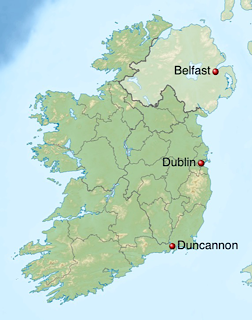
At the outbreak of the Irish Rebellion of 1641, most of south-eastern Ireland falls to the Catholic insurgents. Roughly 1,000 rebels blockade Duncannon, which is heavily fortified and contains an English garrison of about 300 men. Around 150 of the English troops are killed in forays against the Irish at nearby Redmond’s Hall, but without siege artillery, or expertise in siege warfare, the rebels are unable to take Duncannon.
Hostilities continue throughout 1642, as the Irish, now organised as the Irish Confederacy raid the town’s hinterland. As in much of Ireland, the conflict is bitter. In one incident, Laurence Esmonde, 1st Baron Esmonde, the Royalist commander, hangs 16 Irish prisoners who have been taken at nearby Ramsgrange. In response, the Irish execute 18 English prisoners whom they have been holding.
In 1643, because of his need for troops to fight in the English Civil War, Charles I signs a ceasefire with the Irish Confederates. As a result, hostilities between Duncannon and the Catholic-held surrounding area are suspended.
However, in 1644, the English garrison of Cork, under Murrough O’Brien, 1st Earl of Inchiquin, unhappy with the Royalist truce with the Irish Confederates, declares for the English Parliament, who are to remain hostile to Irish Catholic forces throughout the 1640s. Esmonde, under pressure from elements of his garrison, also changes to the side of Parliament and effectively re-declares war on the Catholic Confederates. His motives are unclear: though he is a Protestant convert, the Esmonde family are Anglo-IrishRoman Catholics, and he owes his entire advancement to the Crown.
Duncannon is a strategically important town for two reasons. Firstly, it has formidable defences. Secondly and more importantly, its guns overlook the sea route to Waterford and New Ross, two of the most important Catholic-held towns and also ports at which the Confederates receive military aid from Catholic Europe.
Needing to keep this channel open and also fearing the presence of an English garrison deep in their territory, the Confederates’ Supreme Council in Kilkenny despatches Thomas Preston, general of their Leinster Army, to take Duncannon in January 1645. Preston has at his disposal 1,300 men, four cannons and a mortar. The mortar, the first of its kind to be used in Ireland has been donated by Spain the previous year and is commanded by a French military engineer named Nicholas La Loue. La Loue had served with Preston in Flanders and is chief of engineering in the Leinster Army.
Duncannon possesses formidable defences. For one thing, it is located on a peninsula and can only be approached from the north, the other three sides jutting out into the sea. Just off the town are docked four Parliamentarian ships, which are supplying Duncannon with food and reinforcements. Secondly, it possesse two lines of fortifications, the outer line being a more modern low deep rampart protected by a dry ditch and the inner wall being a medieval curtain wall, complete with three towers. However, it has two grave weaknesses, first, it is overlooked by a hill to the north, from which an attacker can fire into the town and, secondly, the water supply is located outside the walls.
Preston arrives at Duncannon on January 20 and proceeds to construct a ring of trenches which cut off Duncannon on its landward side. From the hill that overlooks the town to the north, his guns are able to fire on a squadron of four Parliamentarian ships that are docked off Duncannon and providing the town with supplies. The flagship, the Great Louis, is badly damaged, its mast wrecked by cannon fire, and it takes several more hits from the mortar as it tries to get away. The ship sinks in deep water, drowning its crew and 200 soldiers who are on board.
Having cut off Duncannon’s supply from the sea, Preston proceeds to dig saps closer to the walls, the ultimate aim being to bring his cannon close enough to the walls in order to blast a breach and open the way for an assault. His engineers also dig a mine underneath one of the town’s bastions. All the while, the town’s defenders are kept under a bombardment by the mortar and, as the Confederate troops get closer to the walls, by sharpshooters. On March 12, one such sniper kills the fort’s second in command, one Captain Lurcan, who is hit in the head by a bullet.
On March 16, by which time the Irish trenches are “within pistol shot of the walls,” Preston orders the mine to be exploded, opening a breach in Duncannon’s outer walls. The Irish infantry then assault the town, but are beaten off with some losses. The following day, Saint Patricks Day, Preston tries again and this time his troops succeed in taking the town’s outer, more modern walls but are stopped at Duncannon’s inner, medieval ramparts. They succeed in occupying one of the town’s towers for an hour before being beaten back. Geoffrey Baron, a Confederate politician, who keeps a diary of the siege, reports that 24 Irish soldiers are killed in the two assaults.
At this point, Preston summons Esmonde to surrender, before he has to “proceed to extremities.” This is a delicate threat, implying that if the town falls to an assault, its defenders will be put to the sword – as is customary in contemporary siege warfare. Esmonde is also advised to surrender by the Parliamentarian vice admiral, William Smith, who is anchored offshore with seven ships, but cannot break through to relieve the town. In a letter that reaches Esmonde on March 11, Smith warns him that “if the rebels take the fort by storming it, they will undoubtedly put you all to death…you should agree with thy adversary while thou art in the way.” Esmond has Smith’s letter publicly read to his troops after the assaults of March 16-17 to discourage those who favour holding out.
Alongside the risk of massacre, the English garrison is also very low on gunpowder and water. The town’s only source of fresh water, a well, is behind the Confederate siege lines.
In light of these facts, Esmonde formally surrenders Duncannon to Preston on March 18. The Confederates take possession of the town but its garrison is allowed to march away to Youghal, which is in Protestant hands. However, they have to leave behind the town’s 18 artillery pieces. Esmonde himself dies a feways after the end of the siege. Preston goes on to briefly besiege Youghal, but bad weather, a lack of supplies and squabbling with James Tuchet, 3rd Earl of Castlehaven, the Confederate Munster general, puts an end to his campaign for the winter.
The siege is of importance in that it reopens the sea route into Waterford and eliminates a hostile English garrison in Confederate territory. Preston, who had for many years been the Spanish military governor of Leuven, is highly experienced in siege warfare and his conduct of the siege draws widespread praise. Not only does he take the town, but he does so at a relatively low cost. Sixty-seven Confederate soldiers die in the siege, of whom roughly 30 die of disease. Given that the campaign is conducted in mid-winter, in an age when disease routinely kills many more soldiers than combat, this represents a considerable logistical achievement on the part of the Irish general.
The Great Lewis, the Parliamentarian ship sunk during the siege, is rediscovered in 1999 and raised in 2004.
Following the trial and execution of the Lord Deputy of Ireland, Thomas Wentworth, 1st Earl of Strafford, in May 1641, Ireland is in a state of turmoil. There is growing tension between Catholics and Protestants (particularly those of a Puritan tendency) with the former generally sympathetic to King Charles while the latter supports the English Parliament and the ScottishCovenanters in the dispute that shortly leads to the outbreak of the English Civil War. This forms part of the wider War of the Three Kingdoms.
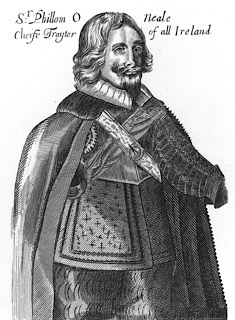
On October 23, a major uprising breaks out in Ulster organised by leading members of the Gaelic aristocracy. The rebels attack Protestant plantation settlements as well as native Irish Protestants and take garrison towns held by the Irish Army. Irish government authorities in Dublin struggle to contain the insurgency with the limited number of troops they have at their disposal. A last-minute warning saves Dublin Castle from a surprise attack, although O’Neill is clearly unaware of the failure of the Dublin plot when he issues his proclamation.
After seizing several key strategic points in Ulster over the previous twenty-four hours, O’Neill makes his proclamation in Dungannon, a town that has symbolic importance as the traditional capital of the O’Neill dynasty.
In support of his actions, O’Neill claims to have a document from King Charles commissioning him. The Commission is supposedly signed under the Great Seal of Scotland. By declaring their loyalty to the Crown and defence of the Catholic religion, O’Neill and his followers adopt a political stance which is taken up by the subsequent Irish Confederation which governs rebel-controlled territory in the name of the King from 1642 until 1649. The Proclamation encourages many Catholics to believe they can lawfully join the rising with the King’s blessing, while Protestants are left demoralised.
O’Neill’s second and more trenchant proclamation is made “from our camp at Newry” on November 4, 1641 alongside Rory Maguire. He also publishes the actual royal commission that gives authority for his earlier proclamation. It is subtly different, in that it empowers him to arrest and seize property from all of Charles’s English Protestant subjects living in Ireland, but exempts his Irish and Scottish subjects.
Until the late nineteenth century historians generally accept that the commission is genuine, or at the very least Charles had secretly encouraged the Irish Catholics to launch a rising. Since then, for a variety of reasons, it has been considered to be a forgery produced by O’Neill and his associates without the knowledge of the King. They may well have acquired a copy of the Great Seal of Scotland when they captured the garrison town of Charlemont on October 23.
The historian David Stevenson notes that it would be unlikely that the commission would have been addressed to O’Neill. Had it been genuine it would almost certainly have been issued to more senior Irish Royalists such as the James Butler, 1st Duke of Ormond, or the leading Catholic noble of Ulster, Randal MacDonnell, 1st Marquess of Antrim. It is also unlikely to have been issued at Edinburgh as O’Neill claimed. However, King Charles was in Edinburgh on October 1, dealing with Scottish political matters.
Forgery or not, King Charles publicly proclaims all the Irish rebels as traitors on January 1, 1642.
That the Commission is genuine is widely accepted in England and Scotland by the King’s opponents and even some of his own supporters. It seems to tie in with earlier rumours of an army plot which had suggested that Charles might bring over the New Irish Army, made up largely of Ulster Catholics, to impose his will on England and Scotland. Anger at the King’s alleged links with the insurgents grow – particularly as horror stories of atrocities committed, such as the Portadown Massacre, begin to filter across the Irish Sea. Tensions arising from news of the Irish rebellion is a factor in the English push to Civil War in early 1642.
The Scottish authorities dispatch an Army which quickly retakes much of Ulster from the insurgents. Once the English Civil War breaks out in October 1642, Charles’ emissaries begin negotiations with the Irish rebels for their support, which seems to present further evidence to his opponents of his links with the Catholic Ulster leaders. Many of these later dealings are exposed when Charles private letters are captured during the Battle of Naseby (1645) and published as King’s Cabinet Opened.
When O’Neill is captured in 1653 following the Cromwellian conquest of Ireland, he is put on trial for his life. The authorities offer to spare him if he will repeat his earlier claims that Charles had ordered the Catholics to rise in 1641. O’Neill now refuses to implicate the King, who had been executed four years earlier, and is put to death himself. Nonetheless, the English Republicans continue to use O’Neill’s earlier claims of the King’s involvement to justify their decision to commit regicide.
Talbot is born likely in 1630, probably in Dublin. He is one of sixteen children, the youngest of eight sons of William Talbot and his wife Alison Netterville. His father is a lawyer and the 1st Baronet Talbot of Carton, County Kildare. His mother is a daughter of John Netterville of Castletown, Kildare. The Talbots are descended from a Norman family that had settled in Leinster in the 12th century. They adhere to the Catholic faith, despite the founding of the Reformed Church of Ireland under Henry VIII. Little is recorded of Talbot’s upbringing. As an adult he grows to be unusually tall and strong by standards of the time.
Talbot marries Katherine Baynton in 1669, and they have two daughters, Katherine and Charlotte. Katherine dies in 1679. In 1681, he marries Frances Jennings, sister of Sarah Jennings, the future Sarah Churchill, Duchess of Marlborough.
Talbot’s early career is spent as a cavalryman in the Irish Confederate Wars. Following a period on the European continent, he joins the court of James, Duke of York, then in exile following the English Civil War, becoming a close and trusted associate. After the 1660 restoration of James’s older brother, Charles, to the thrones of England, Ireland and Scotland, he begins acting as agent or representative for Irish Catholics attempting to recover estates confiscated after the Cromwellian conquest, a role that defines the remainder of his career. James converts to Catholicism in the late 1660s, strengthening his association with Talbot.
When James takes the throne in 1685, Talbot’s influence increases. He oversees a major purge of Protestants from the Irish Army, which had previously barred most Catholics. James creates him Earl of Tyrconnell and later makes him Viceroy, or Lord Deputy of Ireland. He immediately begins building a Catholic establishment by admitting Catholics to many administrative, political and judicial posts.
Talbot’s efforts are interrupted by James’s 1688 deposition by his Protestant son-in-law William of Orange. He continues as a Jacobite supporter of James during the subsequent Williamite War in Ireland, but also considers a peace settlement with William that would preserve Catholic rights. Increasingly incapacitated by illness, he dies of a stroke on August 14, 1691, shortly before the Jacobite defeat. He is thought to have been buried in St. Mary’s Cathedral, Limerick. By depriving the Jacobites of their most experienced negotiator, his death possibly has a substantial impact on the terms of the Treaty of Limerick that ends the war.
Talbot’s widow, Frances, and his daughter, Charlotte, remain in France, where Charlotte marries her kinsman, Richard Talbot, son of William Talbot of Haggardstown. Their son is Richard Francis Talbot. Talbot’s other daughter, Katherine, becomes a nun. An illegitimate son, Mark Talbot, serves as an officer in France before his death in the Battle of Luzzara in 1702. Talbot’s estate in nearby Carton, renamed Talbotstown, is uncompleted at the time of his death. Tyrconnell Tower on the site is originally intended by him as a family mausoleum to replace the existing vault at Old Carton graveyard but is also left unfinished.
Talbot is controversial in his own lifetime. His own Chief Secretary, Thomas Sheridan, later describes him as a “cunning dissembling courtier […] turning with every wind to bring about his ambitious ends and purposes.” Many 19th and early 20th century historians repeat this view. Recent assessments have suggested a more complex individual whose career was defined by personal loyalty to his patron James and above all by an effort to improve the status of the Irish Catholic gentry, particularly the “Old English” community to which he belonged.
(Pictured: Watercolour portrait of Richard Talbot by John Bulfinch (d.1728) after painting by Sir Godfrey Kneller)
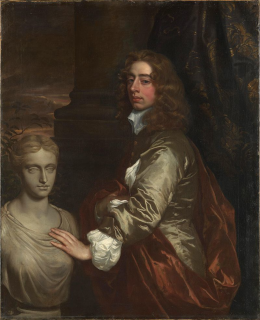
In 1689, Capell is elected MP for Cockermouth and is Lord of the Treasury, between 1689 and 1690. He is invested again as Privy Councillor, on February 14, 1689. He is elected MP for Tewkesbury in 1690, and sits until April 11, 1692, when he is ennobled as Baron Capell of Tewkesbury, in the County of Gloucester. One year later, he becomes Lord Justice of Ireland and in turn a Privy Councillor of Ireland, in June 1693. In 1695 and 1696, he is Lord Deputy of Ireland. His term as Lord Deputy is not considered successful because of him being a firm Whig and presiding over an administration which is deeply divided between Whigs and Tories. He does nothing to help change this situation.
Capell dies at the age of 58 in Chapelizod, County Dublin, on May 30, 1696. He is buried on September 8, 1696, in Little Hadham, Hertfordshire. The barony dies with him.
On February 16, 1659, Capell marries Dorothy Bennet, daughter of Richard Bennet. The marriage is childless but does bring part of what later becomes Kew Palace into the Capell family, leading to its becoming known as Capel House. Dorothy dies in 1721, and through her will endows a number of charities.
(Pictured: “Sir Henry Capel (1638-1696),” oil on canvas by Peter Lely, Metropolitan Museum of Art)
Rinuccini is born in Rome on September 15, 1592. He is educated by the Jesuits in Rome and studies law at the Universities of Bologna and Perugia. In due course, he is ordained a priest, having at the age of twenty-two obtained his doctor’s degree from the University of Pisa. He is named a camariere (chamberlain) by Pope Gregory XV and in 1625 becomes Archbishop of Fermo. In 1631 he carefully refuses an offer to be made Archbishop of Florence.
Rinuccini departs France from Saint-Martin-de-Ré near La Rochelle on October 18, 1645, on the frigate San Pietro and arrives in Kenmare, County Kerry, on October 21, 1645, with a retinue of twenty-six Italians, several Irish officers, and the Confederation’s secretary, Richard Bellings. He proceeds to Kilkenny, the Confederate capital, where Richard Butler, 3rd Viscount Mountgarret, the president of the Confederation, receives him at the castle. He speaks Latin to Montgarret, but all the official business of the Confederates is done in English. He asserts in his discourse that the object of his mission is to sustain the King, but above all to help the Catholic people of Ireland in securing the free and public exercise of their religion, and the restoration of the churches and church property to the Catholic Church.
Rinuccini had sent ahead arms and ammunition: 1,000 braces of pistols, 4,000 cartridge belts, 2,000 swords, 500 muskets and 20,000 pounds of gunpowder. He arrives twelve days later with a further two thousand muskets and cartridge-belts, four thousand swords, four hundred braces of pistols, two thousand pike-heads, and twenty thousand pounds of gunpowder, fully equipped soldiers and sailors and 150,658 livres tournois to finance the Irish Catholic war effort. These supplies give him a huge input into the Confederate’s internal politics because he doles out the money and arms for specific military projects, rather than handing them over to the Confederate government, or Supreme Council.
Rinuccini hopes that by doing so he can influence the Confederates’ strategic policy away from making a deal with Charles I and the Royalists in the English Civil War and towards the foundation of an independent Catholic-ruled Ireland. In particular, he wants to ensure that churches and lands taken in the rebellion would remain in Catholic hands. This is consistent with what happened in Catholic-controlled areas during the Thirty Years’ War in Germany. His mission can be seen as part of the Counter-Reformation in Europe. He also has unrealistic hopes of using Ireland as a base to re-establish Catholicism in England. However, apart from some military successes such as the Battle of Benburb on June 5, 1646, the main result of his efforts is to aggravate the infighting between factions within the Confederates.
The Confederates’ Supreme Council is dominated by wealthy landed magnates, predominantly of “Old English” origin, who are anxious to come to a deal with the Stuart monarchy that will guarantee them their land ownership, full civil rights for Catholics, and toleration of Catholicism. They form the moderate faction, which is opposed by those within the Confederation, who want better terms, including self-government for Ireland, a reversal of the land confiscations of the plantations of Ireland and establishment of Catholicism as the state religion. A particularly sore point in the negotiations with the English Royalists is the insistence of some Irish Catholics on keeping in Catholic hands the churches taken in the war. Rinuccini accepts the assurances of the Supreme Council that such concerns will be addressed in the peace treaty negotiated with James Butler, 1st Duke of Ormond, negotiated in 1646, now known as the First Ormond Peace.
However, when the terms are published, they grant only the private practice of Catholicism. Alleging that he had been deliberately deceived, Rinuccini publicly backs the militant faction, which includes most of the Catholic clergy and some Irish military commanders such as Owen Roe O’Neill. On the other side there are the Franciscans Pierre Marchant, and later Raymond Caron. In 1646, when the Supreme Council tries to get the Ormond Peace ratified, Rinuccini excommunicates them and helps to get the Treaty voted down in the Confederate General Assembly. The Assembly has the members of the Supreme Council arrested for treason and elects a new Supreme Council.
However, the following year, the Confederates’ attempts to drive the remaining English (mainly Parliamentarian) armies from Ireland meets with disaster at the battles of Dungan’s Hill on August 8, 1647 and Knocknanuss on November 13, 1647. As a result, the chastened Confederates hastily conclude a new deal with the English Royalists to try to prevent a Parliamentarian conquest of Ireland in 1648. Although the terms of this second deal are better than those of the first one, Rinuccini again tries to overturn the treaty. However, on this occasion, the Catholic clergy are split on whether to accept the deal, as are the Confederate military commanders and the General Assembly. Ultimately, the treaty is accepted by the Confederacy, which then dissolves itself and joins a Royalist coalition. Rinuccini backs Owen Roe O’Neill, who used his Ulster army to fight against his former comrades who had accepted the deal. He tries in vain to repeat his success of 1646 by excommunicating those who support the peace. However, the Irish bishops are split on the issue and so his authority is diluted. Militarily, Owen Roe O’Neill is unable to reverse the political balance.
Despairing of the Catholic cause in Ireland, Rinnuccini leaves the country on February 23, 1649, embarking at Galway on the ship that had brought him to Ireland, the frigate San Pietro. In the same year, Oliver Cromwell leads a Parliamentarian re-conquest of the country, after which Catholicism is thoroughly repressed. Roman Catholic worship is banned, Irish Catholic-owned land is widely confiscated east of the River Shannon, and captured Catholic clergy are executed.
Rinuccini returns to Rome, where he writes an extensive account of his time in Ireland, the Commentarius Rinuccinanus. His account blames personal vainglory and tribal divisions for the Catholic disunity in Ireland. In particular, he blames the Old English for the eventual Catholic defeat. The Gaelic Irish, he writes, despite being less civilised, are more sincere Catholics.
Rinuccini returns to his diocese in Fermo in June 1650 and dies there on December 13, 1653.
Butlers’s attempts to conclude a peace are blocked by a Catholic faction that advocates complete independence for Ireland. The situation deteriorates further, and in July 1647, he departs from Ireland, leaving the Protestant cause in the hands of the parliamentarians, who had defeated King Charles I in the First English Civil War (1642–46).
Returning to Ireland in September 1648, Butler concludes a peace with the confederacy in January 1649. He then rallies Protestant royalists and Catholic confederates in support of Charles II, son and successor of Charles I. For several months most of Ireland is under his control. But the parliamentarian general Oliver Cromwell lands at Dublin in August 1649 and swiftly conquers the country for Parliament. Butler flees to France and becomes one of Charles II’s closest advisers at his court-in-exile in Paris.
When Charles II returns to England in the Restoration of 1660, Butler, who had urged constitutional rather than military rule, is made commissioner for the treasury and the navy. Appointed Lord Lieutenant of Ireland in 1662, he makes vigorous attempts to encourage Irish commerce and industry. Nevertheless, his enemies at court persuade Charles to dismiss him in 1669. He is restored to royal favour in 1677 and is again appointed Lord Lieutenant of Ireland. Although he is created a duke in the English peerage in 1682, he is recalled from Ireland in 1684 as a result of new intrigues at Charles’s court and because of the determination of James, Duke of York, to strengthen his supporters in Ireland.
Butler dies on July 21, 1688, at the Kingston Lacy estate, Dorset. He is buried in Westminster Abbey on August 4, 1688. His eldest son, Thomas, 6th Earl of Ossory, predeceases him, but Ossory’s eldest son James succeeds as 2nd Duke of Ormonde (1665–1745).
(Pictured: “James Butler, 1st Duke of Ormond,” oil on canvas by William Wissing, National Portrait Gallery)