seamus dubhghaill

Promoting Irish Culture and History from Little Rock, Arkansas, USA


Leave a comment

Birth of Thomas Finlay, Judge, Politician & Barrister

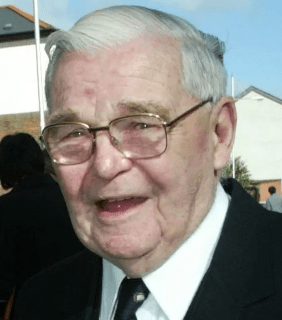
Thomas Aloysius Finlay, Irish judge, politician and barrister, is born on September 17, 1922, in Blackrock, Dublin. He serves as a Teachta Dála (TD) for the Dublin South-Central constituency from 1954 to 1957, a Judge of the High Court from 1971 to 1985, President of the High Court from 1974 to 1985 and Chief Justice of Ireland and a Judge of the Supreme Court from 1985 to 1994.

Finlay is the second son of Thomas Finlay, a politician and senior counsel whose career is cut short by his early death in 1932. He is educated at Clongowes Wood College, University College Dublin (UCD) and King’s Inns. While attending UCD, he is elected Auditor of the University College Dublin Law Society. His older brother, William Finlay, serves as a governor of the Bank of Ireland.

Finlay is called to the Bar in 1944, practicing on the Midlands circuit and becomes a senior counsel in 1961.

Finlay is elected to Dáil Éireann as a Fine Gael TD for the Dublin South-Central constituency at the 1954 Irish general election. He loses his seat at the 1957 Irish general election.

Following his exit from politics in 1957, having lost his Dáil seat, Finlay resumes practicing as a barrister. He successfully defends Captain James Kelly in the infamous 1970 arms trial.

In 1971, Finlay is tasked by the Fianna Fáil government with representing Ireland before the European Commission of Human Rights, when, in response to the ill treatment of detainees by security forces in Northern Ireland, they charge the British government with torture. Despite the notional recourse such prisoners would have within the British legal system, the Commission rules the complaint admissible.

Finlay is subsequently appointed a High Court judge and President of the High Court in January 1974. In 1985, Taoiseach Garret FitzGerald and his government nominates him to the Supreme Court and to the office of Chief Justice of Ireland. On October 10, 1985, he is appointed by President Patrick Hillery to both roles.

During this period Finlay presides over a number of landmark cases, including Attorney General v X in 1992, when he overturns a High Court injunction preventing a pregnant teenage rape victim travelling to the UK for an abortion.

When, in the same year, Judge Liam Hamilton of the High Court, chair of the Beef Tribunal, seeks disclosure of the cabinet’s minutes for a particular meeting, Chief Justice Finlay along with the majority of the Supreme Court deny the request ruling that the concept of collective government responsibility in the Constitution takes precedence.

Finlay announces his resignation as Chief Justice of Ireland and retirement as a judge in 1994.

After his retirement, Finlay presides over a number of public inquiries.

In 1996, Finlay oversees the inquiry into the violence by English fans at the aborted 1995 friendly soccer match versus the Republic of Ireland at Lansdowne Road. His report to Bernard Allen, Minister for Sport, is critical of security arrangements on the night and recommends improvements to ticketing, seat-allocation, fan-vetting and policing arrangements. The Irish Government shares his report with the British Home Office.

After the collapse of The Irish Press group in 1995, the Minister for Enterprise and Employment, John Bruton, receives a damming report from the Competition Authority that Independent Newspapers has abused its dominant position and acted in an anti-competitive manner by purchasing a shareholding in The Irish Press. In September 1995, Bruton announces the Commission on the Newspaper Industry with an extremely wide remit to examine diversity and ownership, competitiveness, editorial freedom and standards of coverage in Irish newspapers as well as the impact of the sales of the British press in Ireland. Minister Bruton appoints 21 people to the commission and appoints Finlay chair. Due to the wide remit and huge number of submissions, the commission’s report is delayed but is eventually published at the end of July recommending widespread reforms.

Following the discovery of the BTSB anti-D scandal, in 1996, Finlay is appointed the chair and singular member of the Tribunal of Inquiry into the Blood Transfusion Service Board. The speed and efficiency with which his BTSB Tribunal conducts its business, restores confidence in the Tribunal as a mechanism of resolving great controversies in the public interest.

Finlay also sits on an Irish Rugby Football Union (IRFU) panel to adjudicate on the cases of Rugby players accused of using banned performance-enhancing substances.

Finlay is married to Alice Blayney, who predeceases him in 2012. They have five children, two of whom follow in his family’s legal tradition: his son John being a Senior Counsel and his daughter Mary Finlay Geoghegan a former judge of the High Court, Court of Appeal and Supreme Court. Whenever his work schedule allows, he escapes to County Mayo where he indulges his passion for fishing.

Thomas Finlay dies at the age of 95 in Irishtown, Dublin, on December 3, 2017.

1 Comment

The Siege of Kilkenny Ends

map-of-kilkenny

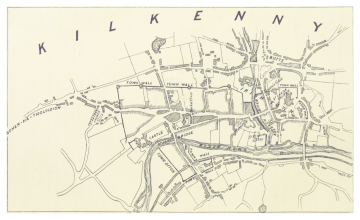
The Siege of Kilkenny ends on March 28, 1650 with the city and residents surrendering to Oliver Cromwell.

The Siege of Kilkenny takes place in what historian Patrick Little considers to be the most controversial period of the Cromwellian conquest of Ireland. The English ParliamentariansNew Model Army, commanded by Oliver Cromwell, takes the city of Kilkenny from the Irish Confederates but suffers more losses than they had in the Siege of Drogheda in September 1649.

After taking Cashel and setting his headquarters there, Cromwell marches to Kilkenny to issue a summons of surrender to the Irish Confederates holding the town. The envoy he sends there is captured and kept as a hostage. Upon this happening, Cromwell, absent siege weapons, has to return to Cashel to acquire them after being met with hostility. Cromwell is relying on an officer by the name of Tickle to betray the townspeople and relay the locations of the wall’s weakest points. Tickle’s treachery is uncovered by James Butler, 3rd Earl of Ormond and owner of Kilkenny Castle. Bulter intercepts the letters sent between Cromwell and Tickle which lead to Tickle’s execution.

Butler, learning of Cromwell’s intent, establishes 700 men and 100 horsemen to repel the puritan army. Facing this formidable force Cromwell decides to retreat to Cashel. In the space of time it takes Cromwell to acquire siege weapons and return to Kilkenny, a plague has struck. The plague is believed to have originated in Galway on a Spanish ship. Lord Castlehaven appoints James Walsh as Governor of the Castle and Sir Walter Butler as Governor of Kilkenny. In addition to this he provides 1,200 men to the Kilkenny cause. By the time Cromwell returns, the plague has decimated Kilkenny city. About 300 out of the original Garrison of 1,200 men remain to watch their posts.

On March 22, Cromwell arrives and stands a mile before Kilkenny with his men. Guns are set up on the adjacent hill and from the Black quarry, Cromwell issues a summons of surrender to Butler, Walsh and the Aldermen of Kilkenny. While the letters are traded back and fort, Cromwell sends a detachment to take Irishtown and they are defeated. A refusal letter is issued to Cromwell shortly thereafter. The artillery battery located on the adjacent hill begins to pound the south wall. A breach is made around noon and Cromwell gives orders to assault using the recently destroyed entry point, but after two attempts his men disobey as they have suffered heavy losses in the last battle. Soon after, Cromwell receives invitation from the mayor and townsmen of Irishtown asking him to stay in the town and in return he will allow his troops safe entry. Instead of replying, Cromwell sends a detachment of men led by Colonel Ewer to capture Irishtown, which is guarded by the townsmen. The townsmen flee their posts at the first sight of Colonel Ewer and his men. This results in the capturing of St. Canice’s Cathedral and parts of Irishtown. The Governor of Irishtown, Sir James Butler, surrenders not long after admitting that there is nothing he can do.

On March 27, the troops continue to attack Kilkenny to no success other than managing to breach the walls of the Franciscan abbey, causing more people to desert their posts. Governor Walsh arrives on horseback to drive Cromwell’s men from the wall. At the same time, small groups of Cromwell’s men attempt to cross St. Johns bridge to set fire to the front gates but they are killed by the garrison guards. It is at this point when reinforcements of 1,500 men from Henry Ireton arrive. Finally, Walsh calls for surrender under orders from Lord Castlehaven that were given previously. The orders are not to allow the townspeople to be exposed and massacred.

On March 28, 1650 the town of Kilkenny is handed over to Cromwell. The garrison and its leaders are marched out into the town where they are complimented by Cromwell for the gallantry in battle. Cromwell also admits that if it was not for the townspeople’s treachery, he would have passed Kilkenny and left it alone.


Leave a comment

The Battle of Rathmines

The Battle of Rathmines is fought in and around what is now the Dublin suburb of Rathmines on August 2, 1649, during the Irish Confederate Wars. It is fought between an English Parliamentarian army under Michael Jones which holds Dublin and an army composed of Irish Confederate and English Royalist troops under the command of the James Butler, 1st Duke of Ormond.

By 1649, Ireland has already been at war for eight years, since the outbreak of the Irish Rebellion of 1641. The English Parliament holds only two small enclaves, Dublin and Derry, in Ireland.

In July 1649, Ormond, marches his coalition forces of 11,000 men to the outskirts of Dublin with the intent of taking the city from its Parliamentary garrison, which had landed there in 1647. Ormond takes Rathfarnham Castle and camps at Palmerston Park in Rathgar, about 4 km south of the city. The area from Ormond’s camp to the city of Dublin is now a heavily urbanised area, but in 1649, it is open countryside. Ormond begins inching his forces closer to Dublin by taking the villages around its perimeter and to this end, sends a detachment of troops to occupy Baggotrath Castle, on the site of present-day Baggot Street bridge. For reasons which have never been clear, they take several hours to reach Baggotrath, a distance of about a mile, and they arrive to find that the Parliamentary troops have already occupied the castle.

However, Ormond is not expecting Michael Jones, the Parliamentary commander, to take the initiative and has not drawn up his troops for battle. Unfortunately for the Royalists, this is exactly what Jones does, launching a surprise attack on August 2 from the direction of Irishtown with 5,000 men and sending Ormond’s men at Baggotsrath reeling backwards towards their camp in confusion.

Too late, Ormond and his commanders realise what is going on and send units into action piecemeal to try to hold up the Parliamentarian advance, so that they can form their army into battle formation. However, Jones’ cavalry simply outflanks each force sent against them, sending them too fleeing back south through the townland of Rathmines. The battle becomes a rout as scores of fleeing Royalist and Confederate soldiers are cut down by the pursuing Roundheads. The fighting finally ends when the English Royalist troops under Murrough O’Brien, 1st Earl of Inchiquin, mounts a disciplined rearguard action, allowing the rest to get away. Ormond claims he has lost less than a thousand men. Jones claims to have killed around 4,000 Royalist or Confederate soldiers and taken 2,517 prisoners, while losing only a handful himself. Ormond certainly loses at least one leading officer, Christopher Plunkett, 2nd Earl of Fingall, who is fatally wounded and dies in Dublin Castle a few days later. Ormond also loses his entire artillery train and all his baggage and supplies.

In the aftermath of the battle, Ormond withdraws his remaining troops from around Dublin, allowing Oliver Cromwell to land in the city at Ringsend with 15,000 veteran troops on August 15. Cromwell calls the battle “an astonishing mercy,” taking it as a sign that God has approved of his conquest of Ireland. Over the next four years he completes the Cromwellian conquest of Ireland.

Without Jones’ victory at Rathmines, the New Model Army would have had no port to land at in Ireland and the Cromwellian conquest of Ireland would have been much more difficult. Ormond’s incompetent generalship at Rathmines disillusions many Irish Confederates with their alliance with the English Royalists and Ormond is ousted as commander of the Irish forces the following year.