seamus dubhghaill

Promoting Irish Culture and History from Little Rock, Arkansas, USA


Leave a comment

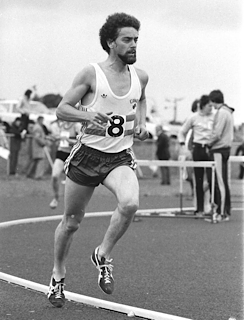
Birth of Neil Cusack, Winner of the 1974 Boston Marathon

Neil Cusack, a retired middle- and long-distance runner and the only Irish athlete to win the Boston Marathon, is born in Limerick, County Limerick, on December 30, 1951.

Cusack attends St. Munchin’s College in Limerick. He later moves to the United States to study at East Tennessee State University (ETSU), where he is recruited for the cross country team, initially as an afterthought. In 1972, he wins the NCAA Men’s Cross Country National Championship, marking him as a rising star in distance running.

Cusack wins the Peach Bowl Marathon in Atlanta, Georgia, on December 10, 1971, with a time of 2:16:18. He represents Ireland in the 1972 Summer Olympics in Munich, West Germany, competing in the 10,000 metres.

Cusack achieves his most famous victory on April 15, 1974, by winning the Boston Marathon, becoming the first and only Irishman to do so. His time of 2:13:39 is the third-fastest in Boston Marathon history at that point. His Boston win is a source of immense pride for the Irish community, especially in Boston. He recalls receiving $10 and $20 bills from Irish Americans in the mail with notes like “Have a beer on us, we’re proud of you!” His victory helps soothe the disappointment of local Irish fans who had seen fellow Irish runner Pat McMahon come close in previous years.

Cusack competes again for Ireland in the 1976 Summer Olympics in Montreal, placing 55th in the marathon. He wins the 1981 Dublin Marathon on October 26, 1981, with a time of 2:13:58.

In 2024, on the 50th anniversary of his Boston win, Cusack returns to serve as the official race starter for the professional men’s division of the Boston Marathon.

Now in his 70s, Cusack remains a celebrated figure in Irish athletics and marathon history.

Leave a comment

Record Number of Participants Take Part in the 2017 Dublin Marathon

A record 20,000 people take part in the Dublin Marathon on October 29, 2017, making it the fifth largest marathon in Europe. The first Dublin Marathon takes place in 1980 with just over 2,000 runners participating.

The Dublin Marathon is an annual 26.2 mile (42.2 km) road marathon in Dublin held on the last Sunday in October. Prior to 2016, the race takes place on the last Monday in October, which is a public holiday in Ireland. In October 2015, it is announced that from 2016 the marathon will be held on Sunday rather than the October Bank Holiday Monday to attract more overseas runners. Held each year since 1980, the marathon has a record 22,500 registrants for the 2019 race, including over 5,000 entrants from outside Ireland.

The race is founded in 1980 by a group led by Noel Carroll, who persuades the Business Houses Athletic Association (BHAA) to take up the idea. In the first year, 2,100 take part, of whom 1,420 finish. Dick Hooper of Raheny club Raheny Shamrock Athletic Club claims first place, in a time of 2:16:14. The women’s winner is Carey May who finishes in 2:42:11. That year’s runner-up is Neil Cusack, who returns in 1981 to post a winning time of 2:13:59.

Jerry Kiernan‘s 1982 time of 2:13:45 is a long-standing men’s course record. This is finally improved upon by Lezan Kipkosgei Kimutai over twenty years later in 2004, but Russian runner Aleksey Sokolov twice breaks the record with consecutive wins in 2006 and 2007, running 2:11:39 and 2:09:07 respectively. Moses Kangogo Kibet becomes the first man under 2:09 in Dublin with his win in 2:08:58. The current men’s record is 2:08:06 set by Othmane El Goumri in 2019.

Moira O’Neill is the first woman under two hours and forty minutes with her win of 2:37:06 in 1988 and home athlete Christine Kennedy improves this with a run of 2:35:56 three years later. Kenyan Ruth Kutol‘s win in 2:27:22 in 2003 is the first sub-2:30 time and Russian Tatyana Aryasova breaks this record in 2010 with her current women’s record of 2:26:13.

The participation level of the race has followed an upward trend: by 1988 the number of participants increases to 8,700 – up from 4,000 the previous year. It is not until 2000 that the 1988 participation record is finally broken when 8,900 take part. An increasing number of people take part every year in the late 2000s, with 11,000 at the 2007 edition. Entry levels have since increased significantly year-on-year with 19,500 completing the 2016 event.

In 2001 the marathon becomes part of the Dublin Race Series, which includes pre-marathon events of 5 miles, 10 kilometres, 10 miles and half marathon distance over the preceding months, run in the Phoenix Park and Swords, Dublin.

The 2020 and 2021 editions of the race are canceled due to the coronavirus pandemic, with all entries made valid for the following year and all registrants given the option of obtaining a full refund.