seamus dubhghaill

Promoting Irish Culture and History from Little Rock, Arkansas, USA


Leave a comment

The Lisburn Van Bombing

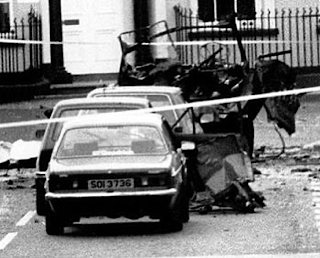
On June 15, 1988, an unmarked military van carrying six British Army soldiers is blown up by the Provisional Irish Republican Army (IRA) at Market Place in Lisburn, County AntrimNorthern Ireland. The explosion takes place at the end of a charity marathon run in which the soldiers had participated. All six soldiers are killed in the attack – four outright, one on his way to hospital and another later on in hospital.

Lisburn is the headquarters of the British Army in Northern Ireland. Four of the dead are from the Royal Corps of Signals while the other two are from the Green Howards and the Royal Army Ordnance Corps. A booby trap bomb is hidden under the Ford Transit van in which the soldiers are traveling, and is designed in such a way that the blast goes upward to cause maximum damage to the vehicle. Eleven civilian bystanders are injured, including a two-year-old child and 80-year-old man. The bombing is sometimes referred to as the Lisburn “Fun Run” bombing.

On Wednesday, June 15, 1988, at 8:50 p.m., an unmarked blue Ford Transit van carrying six off-duty British soldiers in civilian clothes drives off from a leisure centre carpark in Lisburn. The soldiers have just taken part in the “Lisburn Fun Run”, a 13-mile (21 km) charity half marathon held in the town. They leave the van unattended in the car park, which is the start and finish point for the run. It is there that an IRA active service unit (ASU), who has been following the van, hides a bomb underneath the vehicle. The half marathon and shorter “fun runs” are organised by Lisburn Borough Council, together with the YMCA, to raise funds for the disabled. There are 4,500 participants that day and at least 200 British Army personnel have been given leave to participate in the event.

Nine minutes later, the van stops at traffic lights at Market Place, in Lisburn’s town centre. As the van moves on, the seven-pound (3.2 kg) bomb detonates, turning the van into a massive fireball and instantly killing four of the soldiers as the vehicle disintegrates with the force of the blast. The Semtex device has been designed in a cone shape to channel the blast upward, thereby causing maximum damage to the vehicle and the soldiers inside. The area around Market Place is crowded with onlookers, including many teenagers and families with young children, although the biggest crowd is at the carpark. In all, about 10,000 onlookers have attended the charity run. There is pandemonium as frightened parents search for their children, while others rush to give aid to the dead and dying soldiers before fire engines and ambulances arrive.

Eleven civilian bystanders are injured in the attack, including a two-year-old child and an 80-year-old man. Another soldier dies on the way to hospital while a sixth soldier dies later that night after undergoing surgery for severe head injuries. The dead soldiers are stationed at Ebrington Barracks in Derry and are returning to base when the bomb goes off. Four of the men – Sergeant Michael Winkler (31), Signalman Mark Clavey (24), Lance Corporal Graham Lambie (22), and Corporal William Patterson (22) – are from the Royal Corps of Signals, while the other two – Corporal Ian Metcalf (36) and Lance Corporal Derek Green (20) – are from the Green Howards and Royal Army Ordnance Corps respectively.

Lisburn is a mainly Ulster Protestant town, 14 miles (23 km) southwest of Belfast. It serves as the garrison headquarters of the British Army in Northern Ireland. Six months before the van bombing, a booby trap bomb planted by the IRA kills Ulster Defence Association (UDA) leader John McMichael in the town.

The van bombing results in the greatest loss of life suffered by the British Army since eleven soldiers were killed in the Droppin Well Disco bombing on December 6, 1982.

In Belfast, on the same day as the Lisburn attack, the IRA shoots dead the Ulster Volunteer Force’s (UVF) East Belfast commander, Robert “Squeak” Seymour (33). This is retaliation for the UVF gun attack on an Irish nationalist pub in which three Catholics died.

On June 16, the Provisional IRA Belfast Brigade claims responsibility for the bombing, promising to wage “unceasing war” against the British security forces in Northern Ireland. Sinn Féin president Gerry Adams allegedly says that the IRA’s killing of the six soldiers is “vastly preferable” to killing members of the (locally recruited) Ulster Defence Regiment (UDR) or Royal Ulster Constabulary (RUC). The leisure centre is forced to remain shut for a time after the loyalist Protestant Action Force (a cover-name of the UVF) issues a warning that they regard Catholic staff working there as “legitimate targets,” inferring that they may have had a hand in the bombing. Lisburn mayor Councillor William Bleakes condemns the threats by the PAF.

That same day, Tom King, then Secretary of State for Northern Ireland, travels to Lisburn where he holds a meeting with Lieutenant General Sir John Waters, the British Army Commander in Northern Ireland, and senior RUC officers. They discuss the attack and proposals for heightened security. The soldiers had failed to follow proper security procedures, as they had left their vehicle unguarded for over two hours and had then driven off without having checked under it beforehand. After the Lisburn meeting, King flies to London where he reports directly to British Prime Minister Margaret Thatcher, who describes the attack as a “terrible atrocity.” However, she rejects demands from Conservative members of Parliament to bring back internment, regarding the proposal as “a very serious step.”

In his statement to the House of Commons, Tom King suggests that there would have been a much higher death toll had the bomb exploded in the carpark, where thousands of people had gathered after the run.

The Republic of Ireland‘s government also strongly condemns the killings and extends its sympathy to the families of the dead soldiers. The bombing is a topic of debate in the Seanad Éireann on June 16, 1988. Bishop Cahal Daly of the Roman Catholic Diocese of Down and Connor denounces the bombers and the killings in the “strongest possible terms.”

Questions are raised as to how the IRA knew the soldiers were attending the charity run in Lisburn, how they recognised their unmarked van, and how the unit was able to plant a bomb in the predominantly loyalist town without being spotted, despite the number of people in the carpark. The RUC believes that the bombers may have been wearing sports gear as they mingled with the crowd that evening. They appeal to onlookers who had attended the event to hand over any film they may have taken of the “fun run” in an attempt to identify the IRA bombers.

The following Saturday, between 1,000 and 2,000 people gather in Lisburn town centre to attend a remembrance service for the six soldiers. A book of condolences is also opened.
Leave a comment

Birth of Neil Cusack, Winner of the 1974 Boston Marathon

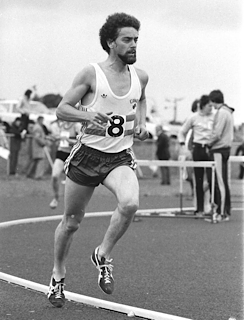
Neil Cusack, a retired middle- and long-distance runner and the only Irish athlete to win the Boston Marathon, is born in Limerick, County Limerick, on December 30, 1951.

Cusack attends St. Munchin’s College in Limerick. He later moves to the United States to study at East Tennessee State University (ETSU), where he is recruited for the cross country team, initially as an afterthought. In 1972, he wins the NCAA Men’s Cross Country National Championship, marking him as a rising star in distance running.

Cusack wins the Peach Bowl Marathon in Atlanta, Georgia, on December 10, 1971, with a time of 2:16:18. He represents Ireland in the 1972 Summer Olympics in Munich, West Germany, competing in the 10,000 metres.

Cusack achieves his most famous victory on April 15, 1974, by winning the Boston Marathon, becoming the first and only Irishman to do so. His time of 2:13:39 is the third-fastest in Boston Marathon history at that point. His Boston win is a source of immense pride for the Irish community, especially in Boston. He recalls receiving $10 and $20 bills from Irish Americans in the mail with notes like “Have a beer on us, we’re proud of you!” His victory helps soothe the disappointment of local Irish fans who had seen fellow Irish runner Pat McMahon come close in previous years.

Cusack competes again for Ireland in the 1976 Summer Olympics in Montreal, placing 55th in the marathon. He wins the 1981 Dublin Marathon on October 26, 1981, with a time of 2:13:58.

In 2024, on the 50th anniversary of his Boston win, Cusack returns to serve as the official race starter for the professional men’s division of the Boston Marathon.

Now in his 70s, Cusack remains a celebrated figure in Irish athletics and marathon history.


Leave a comment

Death of Johnny Hayes, Member of the Irish American Athletic Club

John Joseph Hayes, an American athlete and a member of the Irish American Athletic Club, dies on August 25, 1965, in Englewood, New Jersey. He is the winner of the men’s marathon race at the 1908 Summer Olympics in London. His Olympic victory contributes to the early growth of long-distance running and marathoning in the United States.

Born in New York City on April 10, 1886, to a family of Irish emigrants from NenaghCounty Tipperary, Hayes is probably best known for winning the controversial marathon race at the London Olympics. He is one of only three male American athletes to win the Olympic Marathon, the other two being Thomas Hicks in 1904 and  Frank Shorter in 1972.

In 1905, Hayes joins Bloomingdale Brothers as an assistant to the manager of the sporting goods department. At night, he trains on a cinder track on the roof of the Bloomingdale’s building in New York. He is promoted to manager of the department after returning from his Olympic victory.

Hayes starts his athletics career with a fifth-place finish at the 1906 Boston Marathon, running for the St. Bartholemew Athletic Club in a time of 2:55:38. He improves on that the following year by finishing third in Boston with a time of 2:30:38 and winning the inaugural Yonkers Marathon. In 1908, he finishes second, 21 seconds behind Thomas Morrissey in the Boston Marathon with a time of 2:26:04 and thus qualifies for the Olympic Games held in London that same year.

The British Olympic Association wants to start the race in front of Windsor Castle and finish in front of the royal reviewing stand at the White City Stadium. As a result, the distance is 26 miles and 385 yards (42.195 km). It takes until 1921 for the IAAF to codify that distance as the official length of the marathon. Prior to this, races are usually about 25 miles (40 km).

At the race itself, Dorando Pietri from Italy is the first to enter the stadium. But Pietri has depleted himself to open a more than 10 minute lead over the field and is suffering extreme fatigue and dehydration. When he enters the stadium, he takes the wrong path, and when umpires redirect him, he falls down for the first time. He gets up with their help in front of 75,000 spectators.

Pietri falls four more times, and each time, the umpires help him up. He manages to finish the race first, with a time of 2 hours, 54 minutes, 46 seconds. During all these stumbles and the direct aid from the officials, Hayes has now entered the stadium, finishing the race second, with a time of 2 hours, 55 minutes, 18 seconds.

Pietri is disqualified after the U.S. officials file a protest. Despite the official result, Pietri achieves much more fame than Hayes when Queen Alexandra awards him a special silver cup.

All of the Olympic officials are British, and the Pietri incident joins a list of other controversial calls in the 1908 Olympics, prompting the International Olympic Committee to start appointing judges from a wide variety of countries instead of only the host country.

After the dramatic Olympic battle between Pietri and Hayes, public interest is such that a match race is organized by professional promoters in November 1908 at Madison Square Garden. Pietri wins the race by 75 yards. A second match race is held on March 15, 1909, and again Pietri wins. Both Pietri and Hayes turn professional after the Olympics and achieve great fame.

Hayes is a trainer for the U.S. team for the 1912 Summer Olympics. He later teaches physical education and is a food broker. Hayes dies on August 25, 1965, in Englewood, New Jersey.

The Shore Athletic Club of New Jersey (Shore AC) holds the Johnny Hayes collection as lifetime trustees. Included in the collection are numerous trophies, as well as the 1908 Olympic gold medal for the marathon. This represents the first Olympic gold medal to be won at the modern marathon distance of 26 miles, 385 yards.

Hayes is a guest on the television show I’ve Got a Secret as one of five former Olympic champions, which airs on October 13, 1954.

In 2002, three statues honoring Olympic champions with links to Nenagh, Matt McGrath, Johnny Hayes and Bob Tisdall, are unveiled in front of the Nenagh Courthouse.


Leave a comment

The Ballygawley Bus Bombing

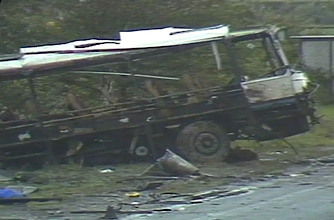
The Ballygawley bus bombing is a roadside bomb attack by the Provisional Irish Republican Army (IRA) on a bus carrying British soldiers in Northern Ireland. It occurs in the early hours of August 20, 1988, in the townland of Curr near Ballygawley, County Tyrone. The attack kills eight soldiers and wounds twenty-eight. In the wake of the bombing, the British Army begins ferrying its troops in and out of County Tyrone by helicopter.

The Irish Times reports that “This stretch of road has been a favourite ambush spot for successive generations of IRA men since the 1920s.” The Provisional IRA has been attacking British Army patrols and convoys with roadside bombs regularly since the beginning of the Troubles in the early 1970s. Most of these attacks take place in rural parts of Northern Ireland, especially eastern and southern County Tyrone (where the IRA’s Tyrone Brigade is active) and southern County Armagh (heartland of the South Armagh Brigade). In August 1979, the IRA ambushes a British Army convoy with two large roadside bombs near Warrenpoint, killing eighteen soldiers. This is the deadliest attack on the British Army in Northern Ireland during the Troubles. In December 1979, four more British soldiers are killed on Ballygawley Road in the Dungannon land mine attack. In May 1981, five British soldiers are killed when their Saracen APC is ripped apart by a roadside bomb at Altnaveigh, County Armagh. In July 1983, four Ulster Defence Regiment (UDR) soldiers are killed when their vehicle strikes an IRA land mine near Ballygawley, County Tyrone. In December 1985, the Tyrone IRA launches an assault on the police barracks in Ballygawley, shooting dead two officers and destroying the barracks with a bomb.

In June 1988, six off-duty British soldiers are killed when an IRA bomb explodes underneath their van in Lisburn. It had been attached to the van as the soldiers are taking part in a charity marathon.

On the night of August 19/20, 1988, an unmarked 52-seater bus is transporting 36 soldiers of The Light Infantry from Aldergrove Flying Station to a military base near Omagh. The soldiers, who came from England, have just finished 18 months of a two-year tour of duty in Northern Ireland and are returning to the base after a short holiday.

As it is driving along the main road from Ballygawley to Omagh, at about 12:30 a.m., IRA members remotely detonate a roadside bomb containing 200 pounds (91 kg) of Semtex. According to police, the bomb had been planted in a vehicle by the roadside and had been detonated by command wire from 330 yards (300 m) away. A statement by one of the survivors claims instead that the roadside bomb was made of “two fertilizer bags filled with Semtex.” The blast hurls the bus 30 metres down the road and throws the soldiers into neighbouring hedges and fields. It leaves a crater 6 feet deep and scatters body parts and twisted metal over a wide area. Witnesses describe finding dead, dying and wounded soldiers strewn on the road and caught in the wreckage of the bus. Others are walking around “stunned.” Some of the first to arrive on the scene and offer help are loyalist bandsmen of the Omagh Protestant Boy’s Band returning from a parade in Portadown, who have also been traveling in buses.

Eight of the soldiers are killed and the remaining 28 are wounded. The soldiers killed are: Jayson Burfitt (aged 19), Richard Greener (aged 21), Mark Norsworthy (aged 18), Stephen Wilkinson (aged 18), Jason Winter (aged 19), Blair Bishop (aged 19), Alexander Lewis (aged 18) and Peter Bullock (aged 21). This is the single biggest loss of life for the British Army from an IRA attack in Northern Ireland since the Warrenpoint ambush in 1979, although eleven off-duty British soldiers had been killed in the Droppin Well bombing in 1982, carried out by the Irish National Liberation Army (INLA). An account from one of the survivors is published in Ken Wharton‘s book A Long Long War: Voices from the British Army in Northern Ireland, 1969–98 (2008).

An inquest into the attack is told that the road is usually off-limits to military vehicles, due to the threat from the IRA. The driver of the bus, who is also a soldier, claims he had been directed on to the road by diversion signs. The inquest hears that signs had not been placed by the police or the roads service. The IRA denies placing any signs and says that military buses often use the road. The mother of one of those killed accuses the British military of negligence and claims it is “trying to conceal the truth.”

Shortly thereafter, the Provisional IRA issues a statement claiming responsibility. It says that the attack had been carried out by its Tyrone Brigade and adds: “We will not lay down our arms until the peace of a British disengagement from Ireland.” The security forces suspect that an informer may have told the IRA of the bus’s route and the time it would pass a specific spot. After the attack, the British military decides to start ferrying their troops to and from East Tyrone by helicopter to avoid any future attacks like this.

Tom King, then Secretary of State for Northern Ireland, says there is “some evidence” that the explosives used are part of a consignment from Libya. He also states that the possibility of reintroducing internment is “under review”. Libyan weaponry enables the IRA to mount some of its biggest operations during its campaign. The Ballygawley bus bombing is believed to be one of these attacks. One former IRA member later suggests that Semtex explosive was not crucial to the outcome of the attack, saying, “we were having plenty of success without Semtex… at Ballygawley we ‘only’ got eight, but it was a bus of about fifty-six. If we’d used a fertiliser bomb, the whole bus would have been destroyed.”

On August 30, 1988, three IRA members are ambushed and killed by the Special Air Service (SAS) at Drumnakilly, County Tyrone. According to author Nick Van der Bijl, the men—Gerard Harte, Martin Harte and Brian Mullin—are identified by British intelligence as the perpetrators of the bombing. Peter Taylor, instead, says that only Mullin is suspected, and that plans for the SAS operation were already underway at the time of the IRA attack.

Two months after the attack, the British Government introduces the broadcasting ban. It means that the voices of Sinn Féin and IRA members are not allowed to be broadcast on television or radio. The Ballygawley bus bombing is believed to have influenced the Government’s decision to introduce the ban.

According to state papers declassified in 2019, the attack sparks “panic” in the British Government, and tension between the Royal Ulster Constabulary (RUC) and the British Army over who is at fault for the security lapse. British Prime Minister Margaret Thatcher warns RUC chief, John Hermon, that she will no longer send British troops over “in waves to be killed.”


Leave a comment

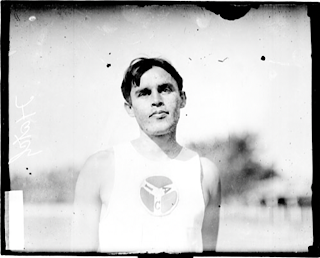
Birth of Sidney Hatch, Member of the Irish American Athletic Club

Sidney Herbert Hatch, an American athlete and a member of the Irish American Athletic Club, is born in River Forest, Illinois, on August 18, 1883. He competes for the United States in the 1904 Summer Olympics held in St. Louis, Missouri, in the 4-mile team where he wins the silver medal with his teammates Jim LightbodyFrank VernerLacey Hearn and Frenchman Albert Corey.

Hatch is also a well-known marathon runner. From 1904 through 1922 he runs more than 45 marathons with a score of victories including the Chicago Marathon in 1909 and the Yonkers Marathon in 1911, competing as a member of the Illinois State Gaelic Athletic Association (GAA). In 1910, he finishes in 5th place in the Yonkers Marathon, competing as a member of the Chicago Irish American Athletic Club.

Hatch never fails to finish a marathon. He is a six-time (1906, 1907, 1908, 1911, 1914, and 1915) winner of the Missouri Athletic Club‘s All Western Marathon in St. Louis including the 1908 marathon that qualifies him for the 1908 Summer Olympics in London. He competes in the marathon in two Olympics, placing 8th in 1904 at St. Louis and 14th in 1908 in London. He wins a silver medal in the 1904 Olympics Four-Mile team event.

On January 8, 1909, Hatch finishes third behind Matthew Maloney and James Crowley in an indoor marathon before 5,000 “wildly cheering” spectators held within the second Madison Square Garden with a time of 3:03:29.4. Maloney is reported to have set a new indoor record for the event (2:54:45.4).

On November 27, 1909, Hatch finishes sixth in the third edition of the Yonkers Marathon with a time of 3:00:24. In July of the same year, he wins a 100-mile race in Chicago, Illinois.

In March 1912, Hatch is one of “twenty of the best distance runners in the middle west” scheduled to participate in a 20-mile indoor marathon at Riverview Rink in Chicago. He also qualifies for the 1912 Summer Olympics but does not compete. He places in the top 10 in the Boston Marathon several times with a second-placed finish in 1917. He finishes third in the Boston Marathon in 1915 and 1916. In October 1916, he sets a record in the 96-mile Milwaukee to Chicago Run, completing the race in 14 hours, 50 minutes and 30 seconds.

Hatch serves as a U.S. Army messenger in World War I and is decorated for “extraordinary heroism” under fire near Brieulles, France, October 11, 1918. He is awarded the Purple Heart and Distinguished Service Cross as well as the French Croix de Guerre. After World War I, he returns to run two more Boston Marathons before retiring from marathon running. He is a letter carrier in River Forest, Illinois, from 1923 to 1953, retiring at age 70. He and Gertrude Morris are married in 1921 and have three children, Herbert, and twin girls June and Jane.

Hatch dies in Maywood, Illinois, on October 17, 1966. He is buried at the Chapel Hills Gardens West Cemetery, Oak Brook Terrace, Illinois.


Leave a comment

Record Number of Participants Take Part in the 2017 Dublin Marathon

A record 20,000 people take part in the Dublin Marathon on October 29, 2017, making it the fifth largest marathon in Europe. The first Dublin Marathon takes place in 1980 with just over 2,000 runners participating.

The Dublin Marathon is an annual 26.2 mile (42.2 km) road marathon in Dublin held on the last Sunday in October. Prior to 2016, the race takes place on the last Monday in October, which is a public holiday in Ireland. In October 2015, it is announced that from 2016 the marathon will be held on Sunday rather than the October Bank Holiday Monday to attract more overseas runners. Held each year since 1980, the marathon has a record 22,500 registrants for the 2019 race, including over 5,000 entrants from outside Ireland.

The race is founded in 1980 by a group led by Noel Carroll, who persuades the Business Houses Athletic Association (BHAA) to take up the idea. In the first year, 2,100 take part, of whom 1,420 finish. Dick Hooper of Raheny club Raheny Shamrock Athletic Club claims first place, in a time of 2:16:14. The women’s winner is Carey May who finishes in 2:42:11. That year’s runner-up is Neil Cusack, who returns in 1981 to post a winning time of 2:13:59.

Jerry Kiernan‘s 1982 time of 2:13:45 is a long-standing men’s course record. This is finally improved upon by Lezan Kipkosgei Kimutai over twenty years later in 2004, but Russian runner Aleksey Sokolov twice breaks the record with consecutive wins in 2006 and 2007, running 2:11:39 and 2:09:07 respectively. Moses Kangogo Kibet becomes the first man under 2:09 in Dublin with his win in 2:08:58. The current men’s record is 2:08:06 set by Othmane El Goumri in 2019.

Moira O’Neill is the first woman under two hours and forty minutes with her win of 2:37:06 in 1988 and home athlete Christine Kennedy improves this with a run of 2:35:56 three years later. Kenyan Ruth Kutol‘s win in 2:27:22 in 2003 is the first sub-2:30 time and Russian Tatyana Aryasova breaks this record in 2010 with her current women’s record of 2:26:13.

The participation level of the race has followed an upward trend: by 1988 the number of participants increases to 8,700 – up from 4,000 the previous year. It is not until 2000 that the 1988 participation record is finally broken when 8,900 take part. An increasing number of people take part every year in the late 2000s, with 11,000 at the 2007 edition. Entry levels have since increased significantly year-on-year with 19,500 completing the 2016 event.

In 2001 the marathon becomes part of the Dublin Race Series, which includes pre-marathon events of 5 miles, 10 kilometres, 10 miles and half marathon distance over the preceding months, run in the Phoenix Park and Swords, Dublin.

The 2020 and 2021 editions of the race are canceled due to the coronavirus pandemic, with all entries made valid for the following year and all registrants given the option of obtaining a full refund.


Leave a comment

Richard Donovan, First Person to Run Marathon at North & South Pole

richard-donovan

Richard Donovan, runner, commercial race organizer, and sports administrator, becomes the first person in history to run a marathon at both the North and South Pole, completing his North Pole run on April 5, 2002.

Donovan is born in Galway in 1966. He organises and is first to complete the inaugural South Pole Marathon in January 2002, then completes the first marathon-length run at the North Pole in April of that year in a time of 3:48:12. He uses the publicity from this to launch his North Pole Marathon venture, offering runners an adventure tourism experience, with the 2018 event costing €16,000.

Between January 30 and February 5, 2009, Donovan claims a world’s best for running seven marathons, on seven different continents, in fewer than seven days. Starting February 1, 2012 he improves on this by completing the 7 on 7 in under 120 hours.

Donovan also completes transcontinental runs across North America in 2015 and Europe in 2016, adding South America in 2017. In addition to the North Pole Marathon, he organizes a number of other commercial events.