seamus dubhghaill

Promoting Irish Culture and History from Little Rock, Arkansas, USA


Leave a comment

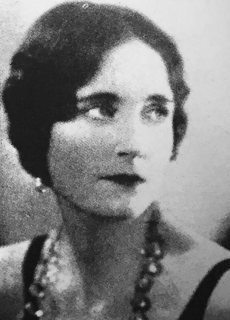
Birth of Moya Llewelyn Davies, Republican Activist & Gaelic Scholar

Moya Llewelyn Davies, born Mary Elizabeth O’Connor, an Irish Republican activist during the Irish War of Independence (1919-21) and a Gaelic scholar, is born in Blackrock, Dublin, on March 25, 1881.

O’Connor is one of five children of Irish Republican Brotherhood (IRB) Supreme Council member and later MP James O’Connor. He is IRB treasurer in 1870 and party to the discussions on the New Departure, a collaboration between constitutional and physical force nationalists, the open and the secret movements. Her uncle, John O’Connor, is a leading member of the Supreme Council.

In 1890, when O’Connor’s father is a journalist, her mother, Mary O’Connor, and four of her sisters – Annie, Aileen, Kathleen and Norah – die after eating contaminated mussels gathered on the seashore near where they lived in what became known as the Seapoint tragedy. She becomes violently ill, but survives.

O’Connor travels to London after a falling out with her stepmother six years later. She finds work as a civil servant and a paid speaker for the Liberal Party, through which she meets Crompton Llewelyn Davies, adviser to David Lloyd George and solicitor to the General Post Office, brother of Arthur Llewelyn Davies and uncle of the boys who inspire the creation of Peter Pan. They marry on December 8, 1910. The marriage produces two children: Richard and Catherine.

Davies is an orthodox home ruler but is radicalised by the 1916 Easter Rising. Davies and her husband raise funds for Roger Casement‘s legal defence and later lobby for his death sentence to be commuted. She is saluted as one of the “fond ones” in a letter from Casement to Margaret Gavan Duffy on the eve of his August 3, 1916, execution in Pentonville Prison.

Following the Easter Rising, Davies takes her two children to Ireland and purchases Furry Park, a crumbling mansion near Dublin. She collaborates with Michael Collins during the Irish War of Independence and her home in Clontarf becomes one of Collins’ many safe houses as he directs the war. She is arrested and imprisoned in 1920. Collins also stays at her Portmarnock house, using it as a safe house.

Davies says in later life that she and Michael Collins had been lovers, but the historian Peter Hart claims her to be a stalker. It has been suggested that Collins is the father of her son Richard. Historian Meda Ryan denies this saying “Letters from him and a phone call confirmed that he was born December 24, 1912, before his mother met Collins.”

Historian Tim Pat Coogan in his book Michael Collins says that Davies claimed on the night that Collins learned that Éamon de Valera was going to reject the Anglo-Irish Treaty “he was so distressed that I gave myself to him.” Coogan refuses to give a source and in the footnotes, he says, “Confidential source.”

Davies makes a lasting contribution to Irish literature with a translation, with George Thomson, of the Muiris Ó Súilleabháin book Fiche Bliain faoi Bhláth as Twenty Years a-Flowering. She is thought to have helped Collins write his book The Path to Freedom.

Davies dies from cancer in a Dublin nursing home on September 28, 1943.

Leave a comment

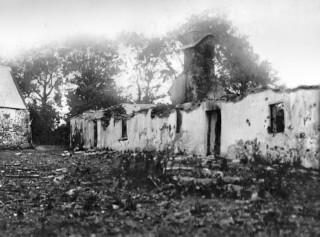
The Clonmult Ambush

The Clonmult ambush takes place on February 20, 1921, during the Irish War of Independence.

Irish Republican Army (IRA) volunteers occupying a farmhouse in Clonmult, County Cork are surrounded by a force of British Army, Royal Irish Constabulary (RIC) and Auxiliaries. In the action that follows, twelve IRA volunteers are killed, four wounded and four captured. A total of 22 people die in the ambush and subsequent executions – fourteen IRA members, two Black and Tans and six suspected informers.

The 4th battalion of the IRA First Cork Brigade, under Diarmuid O’Hurley and based around Midleton, Youghal and Cobh, had been a successful unit up until the Clonmult ambush. They had captured three RIC barracks and carried out an ambush in Midleton itself. In January 1921, the unit takes possession of a disused farmhouse overlooking the village of Clonmult. O’Hurley plans to ambush a military train at Cobh Junction on Tuesday, February 22, 1921 and at the time of the Clonmult action is scouting a suitable ambush site. However, according to historian Peter Hart, they “had become over-confident and fallen into a traceable routine.” An intelligence officer of the British Army Hampshire Regiment traces them to their billet at a farmhouse in Clonmult.

British troops, a party of the 2nd Battalion, Hampshire Regiment under the command of Lieutenant A. R. Koe, surround the house. Two IRA volunteers notice the advancing troops and open fire. Both are killed, but the shooting warns those sheltering inside the house, and a siege begins. A sortie from the house is attempted in the hope of gaining reinforcements from the local IRA company.

The acting IRA commander, Captain Jack O’Connell, manages to get away but three other volunteers are killed in the attempt. But O’Connell is unable to bring help in time. The Volunteers trapped inside make a desperate but unsuccessful attempt to escape through a narrow opening in the gable. Their hopes are dashed when British reinforcements arrive instead — regular RIC police, Black and Tans and Auxiliaries. The police also bring petrol, which an Army officer uses to set the thatched roof of the farmhouse on fire. With the farmhouse burning around them, an attempt is then made by the IRA to surrender.

What happens next is disputed. In his after-action report, Lieutenant Koe reports that at 6:30 PM six or seven rebels come out of the house with their hands up. As the Crown Forces go to meet them the remaining rebels in the house open fire. Some of the rebels outside the house are killed or wounded by the crossfire that ensues. The Crown Forces rush the house and the eight rebels inside are taken prisoner. By contrast, the surviving Volunteers claim that their men had surrendered in good faith, and had come out with their hands up, only to be shot by the police without any provocation. Opinion is divided amongst historians as to which version of the story to believe.

A total of twelve IRA Volunteers are killed in the action, with four more wounded and only four taken prisoner unscathed. Two of the IRA prisoners, Maurice Moore and Paddy O’Sullivan, are later executed in the Cork military barracks on April 28. Patrick Higgins, an IRA man who survived the killings, is sentenced to death but is reprieved due to the truce that ends the war on July 11. Hampshire Regiment historian Scott Daniell notes on the action that “like all the Irish operations, it was hateful to the British troops.”

The IRA suspects that an informer had led the British to the billet of the column wiped out at Clonmult, and over the following week, six alleged spies are executed by the IRA in the surrounding area. Mick Leahy, a local IRA officer, states that “things went to hell in the battallion” after Clonmult. Diarmuid O’Hurley, the commander of the battalion, is not at Clonmult but is later killed on May 28, 1921.