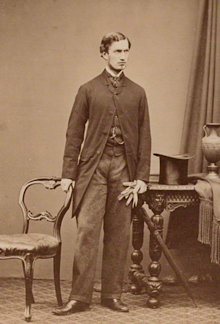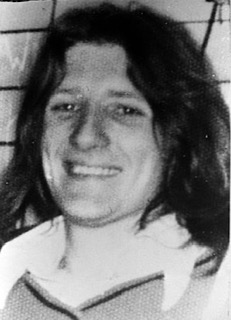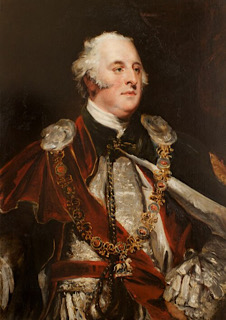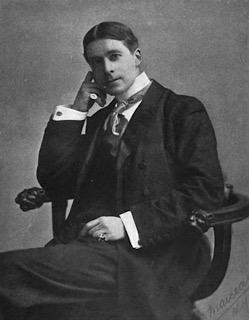
Mathew’s family spends time abroad while his father manages business interests. He comes from a Roman Catholic family. His uncle is Theobald Mathew, the famous temperance campaigner. At the age of fifteen, he enters Trinity College Dublin (TCD), where he excels as a gold medalist and senior moderator, graduating in 1850. He then studies law at Lincoln’s Inn, London, and is called to the English Bar in 1851, building a strong foundation for a legal career despite a slow start at the junior bar.
Initially, Mathew’s legal career progresses slowly, though he is active in debating as a founding member of the Hardwicke Society. He handles numerous jury cases at the Guildhall sittings in London, where he gains experience in commercial law. He becomes treasury counsel during the Tichborne Claimant prosecution in 1873, noted for his composed handling of arguments without quarrel with opposing counsel. Despite opportunities, he refrains from applying for Queen’s Counsel due to a naturally weak voice, though his legal acumen and advocacy are highly respected.
In March 1881, Mathew is appointed to the Queen’s Bench Division of the High Court of Justice and is knighted. He becomes known for his keen judgment, practical approach to legal issues, and eventual standing as one of the best nisi prius judges of his time. In 1895, he persuades fellow judges to establish a Commercial List, the precursor to today’s Commercial Court, and serves as the first judge presiding over it. He advances efficiency in commercial law by minimizing procedural delays, focusing on substantive issues, and producing concise judgments that inspire confidence in the mercantile community.
Mathew also chairs a 1892 royal commission on the evicted tenants in Ireland, despite challenges and disputes with landlords and Edward Carson. His recommendations influence the Wyndham Land Purchase Act (1903). In 1901, he is appointed to the Court of Appeal and continues to emphasize clarity and practicality in legal proceedings until a stroke in 1905 forces his resignation.
Mathew marries Elizabeth Biron in December 1861, with whom he has two sons and three daughters. His family includes notable figures, such as his daughter Elizabeth, who marries Irish MPJohn Dillon, and his grandson, James Matthew Dillon, a later politician. He has a deep cultural appreciation, enjoying music and literature, and maintains friendships across religious and political divides.
Mathew dies on November 9, 1908, at his London home, aged 78. He is buried in St. Joseph’s Cemetery, Cork. His legacy is most strongly associated with founding the Commercial Court, reforming commercial law procedures, and demonstrating a balanced mixture of legal rigor and practical common sense that influenced generations of judges and barristers. His contributions remain a cornerstone in the evolution of modern English and Welsh commercial law.
O’Conor is an active member of parliament, an effective though not an eloquent speaker, and a leading exponent of Catholic opinion. He is deeply involved in the education question, being a critic of the queen’s colleges. In 1867 he introduces a measure to extend the industrial schools act to Ireland, which becomes law the following year. He opposes William Ewart Gladstone‘s university bill of 1873, is appointed to the intermediate education board in 1878, and in May 1879 proposes the transformation of St. Patrick’s College, Maynooth, into a chartered Catholic university. He withdraws this in July, following a government bill creating the Royal University of Ireland. He is on the senate of the university for many years, and is conferred with the honorary degree of LL.D. in 1892. A leading exponent of the Irish language, in 1878 he proposes that it be introduced into secondary schools.
O’Conor is a supporter of Isaac Butt and a keen advocate of land law reform, which leads to his proposing in 1870 the extension of Ulster tenant right to the rest of the country. His brother Denis, MP for County Sligo 1868–83, is a home ruler, but Charles is only ever described as a camp follower. The Nation (October 18, 1873) observes that he “achieved the feat of speaking for two hours at a home rule meeting in Roscommon without telling his audience if he was a home ruler.” He has concrete criticisms such as the hostility of the northern counties, and wants to be allowed to take an independent stance, but Butt strongly deprecates his ambiguity. He does stand on the home rule platform in 1874 and 1880, but his tentative sympathy does nothing to protect him from the drive by Charles Stewart Parnell to establish the Irish Parliamentary Party (IPP). In March 1880, Parnell goes to Roscommon to support his candidate James O’Kelly against O’Conor, who is a popular representative. Parnell calls him a “sample of West Britonism in Ireland . . . if you deprive him of the representation of Roscommon you strike the greatest blow that has been struck against English misgovernment in Ireland since Isaac Butt was elected for the city of Limerick,” which successfully leads to O’Conor’s being ousted. Ironically, he had briefly been Parnell’s landlord when in 1860 he rented a house near Kingstown (now Dún Laoghaire) to the recently widowed Delia Parnell and her family, including the 13-year-old Charles Stewart.
Appointed to the Bessborough commission into the workings of the 1870 land act some months later, O’Conor answers Parnell by going even further than the commission’s proposal to reform land law on the basis of the “three Fs.” He supports outright peasant proprietorship as the only effective and lasting remedy. In 1883, he makes an attempt to return to parliament as a liberal candidate for Wexford Borough, but is defeated by the home ruler Willie Redmond. Always an inveterate committee member, he spends the last twenty-five years of his life on various committees, including the parliamentary committee of 1885 and the royal commission of 1894 on the financial relations between Great Britain and Ireland. He is elected to Roscommon County Council in 1899 and is Lord Lieutenant of Roscommon from 1888 until his death. In 1881 he is sworn to the Privy Council of Ireland.
An ancestor is Charles O’Conor, the noted antiquarian, and O’Conor has his own interest in this area. He is a member of the Royal Irish Academy (RIA) from 1867 and joins the Royal Society of Antiquaries of Ireland (RSAI) in 1869, is a fellow in 1888, and president 1897–9. His antiquarian research is largely confined to his own family. In 1891, he publishes The O’Conors of Connaught, an historical memoir compiled from the manuscripts of John O’Donovan. He first marries Georgina Mary, daughter of Thomas Perry of Warwickshire, England, on April 21, 1868. Secondly he marries Ellen, daughter of John Lewis More O’Ferrall of County Longford, on September 16, 1879. He has four sons by his first marriage.
O’Conor dies at Clonalis, Castlerea, County Roscommon, on June 30, 1906. He is buried in St. Joseph’s Cemetery in Castlerea.
(From: “O’Conor, Charles Owen” by Bridget Hourican, Dictionary of Irish Biography, http://www.dib.ie, October 2009)
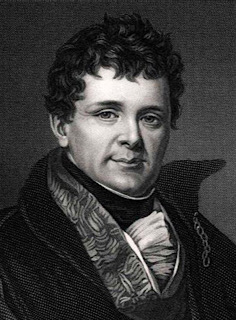
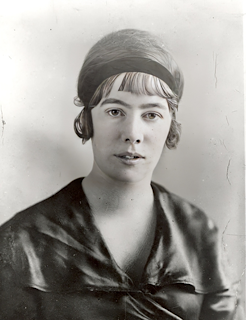
Born Helen Ruth Gifford on November 9, 1880, in Phibsborough, Dublin, to Frederick Gifford, a solicitor, and Isabella Julia Gifford (née Burton), Gifford is the fifth child and second eldest daughter of the family of six daughters and six sons. Her father is a Catholic while her mother, a niece of the painter Frederic Burton, is rigorously Protestant. All the children are brought up in the Church of Ireland. The men, emigrate and remain unionist while the women are active nationalists. Most famous are the two youngest, the artistGrace Gifford, and the journalist and broadcaster Sidney Czira.
Gifford grows up in Rathmines and goes to school at Alexandra College. She trains as a domestic economy teacher and works for seven years at a series of positions in County Meath.
Gifford experiences the living conditions of the landless rural poor while lodging in labourers’ cottages during this time. As a result, she becomes a supporter of the campaigns of the land agitator and nationalist MPLaurence Ginnell.
During the 1913 Dublin lock-out Gifford assists James Larkin enter the Imperial Hotel, on August 31 to address the crowd. He enters in disguise, that of an elderly and infirm clergyman. She poses as his niece. She speaks to the hotel staff to prevent Larkin’s strong Liverpool accent giving away his identify. This is the speech which precipitates the “Bloody Sunday” police baton charge. Gifford goes on to be a founding member of the Irish Citizen Army (ICA). This group is attractive to many women due to the feminist beliefs of James Connolly.
Gifford gives lessons on camp cookery in Liberty Hall and finds jobs for recruits coming in from abroad. As a result of this work she, very fatefully, introduces Michael Collins to her future brother-in-law Joseph Plunkett who go on to serve together in the 1916 Easter Rising. Collins is Plunkett’s aide-de-camp.
Gifford is the only one of her sisters to actively participate in the rising itself. She is with the ICA’s St. Stephen’s Green contingent alongside Countess Markievicz. Throughout the week she supervises the garrison’s provisions in the Royal College of Surgeons building, commandeering food from shops and bread vans, and by courier from other garrisons. She also ensures the delivery of provisions to troops both in the college with her and in outlying posts. She is one of the women arrested at the surrender and jailed in Kilmainham Gaol. At the same time, in the same prison her sister Grace marries Joseph Plunkett hours before his execution. Only twelve women are detained after the main release of women prisoners on May 8, 1916. Gifford is one of those transferred to Mountjoy Prison until her release on June 4, 1916. Afterward she continues to be as involved in the campaigns.
After her time in prison, Gifford travels through England to the United States where she and other women veterans of Easter week lecture throughout America. While there she marries Joseph Donnelly, of Omagh, County Tyrone in 1918. In 1921 she and their year-old daughter Maeve leave him to return to Ireland.
Frederick Gifford dies in September 1917 and leaves Gifford £800. However, she is was not well off. She becomes a broadcaster and journalist for the national radio and the Irish press. Holding to her upbringing, she remains a staunch Protestant, unlike four of her sisters, who had married Catholics.
Gifford becomes devoted to preserving the historical record of the independence movement. Noticing the huge number of visitors for the 1932 Eucharistic Congress, she organises a small exhibition there of 1916 memorabilia for the National Museum of Ireland. She is irritated by the display of Catholic religious artifacts there. She campaigns for a permanent exhibition of recent Irish nationalist history. She coordinates a substantial body of material pertinent to nationalist organisations, the Easter Rising, and the Irish War of Independence, which now forms the core of the present collection.
Over the years Gifford is secretary of the Old IRA Association, a member of the Old Dublin Society, and a founder of the Kilmainham Gaol Restoration Society. She also looks after stray and neglected dogs and cats. She dies at the age of 90 on June 23, 1971, at the Gascoigne nursing home in Rathmines, Dublin.
(Pictured: Irish nationalist Nellie Gifford taken in Boston in 1917)
The Catholic Association is the latest in a series of similar associations formed over the previous ten years or so, none of which had prospered. Like the other associations, this new association is composed mainly of the middle class elite: an annual subscription amounting to a guinea, an amount equivalent to what an average farmer would pay for six months’ rent. In 1824, the Catholic Association begins to use the money that it has raised to campaign for Catholic emancipation.
In 1824, the association creates a new category of associate members at the cost of a penny per month, the so-called Catholic Rent. The reasoning behind the creation of this new membership category is to stimulate a swelling in association numbers. This new, cheaper category ensures Catholics from a poorer background can join, and thus the association’s initial class-based entry barriers are removed. The Catholic rent transforms the association and Catholic political advocacy more broadly. In terms of the association, the rent catalyzes a transformation in a number of ways. Firstly, as previously mentioned, it gives the Catholic Association a constant source of money, which enables O’Connell to run a consistent campaign. Secondly, it facilitates easy calculation of total association membership numbers so that O’Connell can say with confidence that he has the support of so many people. This is important as it can be used to apply pressure against the British government. Third, and perhaps most importantly, however, it announces the arrival of mass mobilization politics, being the first such populist movement in Europe. O’Connell decides to add this additional membership level, at a reduced price of a penny a month, deliberately. The benefits are clear. With the membership subscription set at a relatively cheap price, a large number of the peasant and working classes can join. Affordability ensures large numbers. In effect, it becomes a universal Catholic organization that is transparent and populist. The fact that each member contributes financially to the association also ensures that they are more deeply involved in pushing the cause of Catholic emancipation. People want value for their money. Thus, this ensures a cheap method for O’Connell to get the message of Catholic emancipation spread throughout Ireland.
The Catholic Association’s funds are diffused widely in a variety of areas. Some is spent campaigning for Catholic emancipation, defraying the costs of sending petitions to Westminster, and training of priests. Following the 1826 election campaign, funds are used to support the members of the organization who had voted against their landlords. The money is used for those who have been evicted from land by the landlords because of their connection to the Catholic organization or for those who were boycottingabsentee landlord. For the Catholic peasants that are in this situation, the future would be grim as they would be unable to continue the boycott without food and money, and they would be unable to lease land from any landlord as the peasants would be boycotted against in return. The Catholic Association’s funds are used to support these boycotts so that they can continue and live well enough to have enough food to survive.
The Catholic Association is originally aristocratic in its composition, and some of the gentry (such as Richard Lalor Sheil) hold relatively conservative views. However, O’Connell holds an enormous influence over society and largely dictates the policies it pursues. It is radical in nature but also extremely loyal to the Crown in appearance. This had been the strategy of the previous major Catholic group, the Catholic Committee of the 1790s, which achieved major Catholic Relief in 1793.
Since the aims of the Catholic Association are fairly moderate and the organization remains loyal to the monarch, British MPs are conceptually more willing to pass Catholic emancipation. The matter had been discussed in London since the Acts of Union 1800, when Prime MinisterWilliam Pitt and most of his colleagues resign from the cabinet when emancipation is denied by the king. Henry Grattan continues to support the cause, and Catholic emancipation had been passed by the House of Commons previously by a majority of six, but it is rejected in the House of Lords and generally by King George III, who reigns until 1820.
The biggest strength of the Catholic Association is that the Catholic Church helps in the collection of the Catholic rent. Catholic priests also hold sermons in favor of Catholic emancipation. This means that it is easy for the members to pay the Catholic rent, and it will attract more members as the message of Catholic emancipation is being spread throughout Ireland. Sir Robert Peel believes the alliance of the Catholic Association and the Catholic Church is a “powerful combination.”
In 1826, the Catholic Association begins to use its funds to support pro-emancipation MPs in elections. They use their money and manpower to campaign for the candidate to be elected into parliament to pressure the government from within to pass Catholic emancipation.
The turning point comes in 1828, when two factors come into play. The first is that the Catholic Church takes over the collection of the Catholic Rent and effectively the Catholic Association itself. The other is that by 1828, O’Connell’s reputation has increased dramatically. He is an internationally recognized figure and is seen as one of the leading figures in liberal thinking. This successful campaign leads on to, but is distinguished from, his later efforts to end the union with Britain, to increase the franchise, and to end the payment of tithes. His particular talent is to push the emancipation process along in an organized way.
In May 1828, the Sacramental Test Act 1828 repeals the Test Acts 1673 & 1678 against non-AnglicanProtestants. This gives non-Catholic non-conformists greater political freedom and equality in Britain. The repeal has two effects: it gives Catholics hope that a similar act will be passed that will include Catholics; it also alienates Catholics, as they have become the only Christians not to have political freedom and equality.
In May 1828, William Huskisson resigns from the cabinet, and William Vesey-Fitzgerald is chosen as the President of the Board of Trade. According to the law, there is to be a by-election in his constituency of Clare. O’Connell decides to exploit a loophole in the Acts of Union 1800. It requires MPs to take the Oath of Allegiance, but the oath is not required of candidates for election. He stands in the by-election and wins. Since he is a Catholic, he cannot take his seat in parliament. Demand rises to allow him to become an MP for Clare, as it does not have representation.
Sir Robert Peel and Arthur Wellesley, 1st Duke of Wellington, see that if O’Connell is not allowed to take his seat, then there could be a revolution in Ireland. While using non-violent methods, O’Connell hints that he will get more Catholics elected to force the situation. In an emotive speech, he says, “They must crush us or conciliate us.”
Peel decides to change the government’s approach and submits the Roman Catholic Relief Act 1829 in February 1829. The bill is passed. It is a momentous victory for O’Connell and the Catholic middle class, and he becomes known as “the liberator” and the “uncrowned king of Ireland.” However, the simultaneous enactment of the Parliamentary Elections (Ireland) Act 1829 restricts the franchise in the county constituencies in Ireland. The archive of the Catholic Association is housed with the archives of Dublin Diocese in Holy Cross College, Dublin.
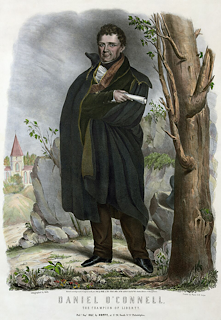
(Pictured: “Daniel O’Connell: The Champion of Liberty” poster published in Pennsylvania, 1847)
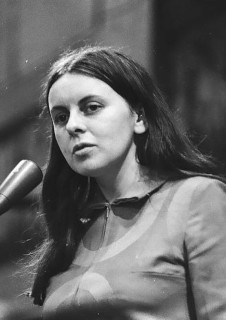
Devlin is born into a Roman Catholic family and attends St. Patrick’s Girls Academy in Dungannon. She is studying Psychology at Queen’s University Belfast (QUB) in 1968 when she takes a prominent role in a student-led civil rights organisation, People’s Democracy. She is subsequently excluded from the university.
After engaging on the side of the residents in the Battle of the Bogside, Devlin is convicted of incitement to riot in December 1969, for which she serves a short jail term.
Having witnessed the events of Bloody Sunday, Devlin is infuriated that she is consistently denied the floor in the House of Commons by the Speaker Selwyn Lloyd, despite the fact that parliamentary convention decrees that any MP witnessing an incident under discussion would be granted an opportunity to speak about it. She slaps Reginald Maudling, the Home Secretary in the Conservative government, across the face when he states in the House of Commons that the paratroopers had fired in self-defence on Bloody Sunday.
In 1971, Devlin gives birth to a daughter, Róisín, which costs her some political support because she is unmarried. She later marries Róisín’s father, Michael McAliskey, on her 26th birthday on April 23, 1973.
McAliskey stands as an independent candidate in support of the prisoners at Long Kesh prison in the 1979 European Parliament elections in Northern Ireland and wins 5.9% of the vote. She is a leading spokesperson for the Smash H-Block Campaign, which supports the hunger strikes of 1980 and 1981.
On January 16, 1981, McAliskey and her husband are shot by members of the Ulster Defence Association (UDA), who break into their home near Coalisland, County Tyrone. She is shot fourteen times in front of her children. British soldiers are watching the McAliskey home at the time but fail to prevent the assassination attempt. The couple are taken by helicopter to a hospital in nearby Dungannon for emergency treatment and then transported to the Musgrave Park Hospital, Military Wing, in Belfast, under intensive care. The attackers, all three members of the South Belfast UDA, are captured by the army patrol and subsequently jailed.
In 1982, McAliskey twice fails in an attempt to be elected to the Dublin North–Central constituency of Dáil Éireann. In 2003, she is barred from entering the United States and is deported on the grounds that the United States Department of State has declared that she “poses a serious threat to the security of the United States,” apparently referring to her conviction for incitement to riot in 1969.
On May 12, 2007, McAliskey is the guest speaker at Éirígí‘s first Annual James Connolly commemoration in Arbour Hill, Dublin. She currently co-ordinates a not-for-profit community development organisation based in Dungannon, the South Tyrone Empowerment Programme, and works with migrant workers to improve their treatment in Northern Ireland.
Recriminations over his victory begin almost immediately. Unionist parties come under fire for not mounting an effective challenge. There is also sharp criticism of the failure of the moderate CatholicSocial Democratic and Labour Party (SDLP) to contest the seat. Many believe the absence of an alternative Catholic candidate ensures victory for Sands in a seat with a Catholic majority.
Sands’ election agent, Owen Carron, says the British Government has been sent a message. “The nationalist people have voted against Unionism and against the H-blocks. It is time Britain got out of Ireland and put an end to the torture of this country,” he says.
At the time of his election, Sands, 27, has served four years of a fourteen-year sentence for firearms possession. He began his hunger strike 41 days earlier to press the republican prisoners’ claim to be treated as prisoners of war.
The government has to decide how to respond to Sands’ victory. It can try to have him expelled on the grounds that he is an “unacceptable member.” However, unless he starts to eat again, he is not expected to live for more than another few weeks. He has already lost two stone and is too weak to leave his bed in the prison’s hospital wing.
Sand’s victory is the second time the voters of Fermanagh and South Tyrone have elected a republican prisoner as their MP. The first, Philip Clarke, in 1955, is disqualified because the law then does not allow convicts to take up political office.
In spite of attempts by the European Commission of Human Rights to mediate, Sands dies on May 5, 1981. He is the first of ten republican prisoners to die after hunger strikes. They attract international media attention and sympathy for the republicans.
The hunger strikes come to an end in October 1981. However, the Conservative Government of Margaret Thatcher grants the republicans only a few minor concessions.
(From: “1981: Hunger striker elected MP” on “On The Day 1950-2005,” BBC, news.bbc.co.uk)
In 1786, Pratt’s father is created Earl Camden, at which point he becomes known by one of his father’s subsidiary titles as Viscount Bayham.
In 1793, Pratt is sworn of the Privy Council. In 1794 he succeeds his father as 2nd Earl Camden, and the following year he is appointed Lord Lieutenant of Ireland by Pitt.
Pratt resigns from office in June 1798, to be replaced with Charles Cornwallis, 1st Marquess Cornwallis, who oversees the military defeat of the rebellion. In 1804, Pratt becomes Secretary of State for War and the Colonies under Pitt, and in 1805 Lord President of the Council, an office he retains until 1806. He is again Lord President from 1807 to 1812, after which date he remains for some time in the cabinet without office. In 1812 he is created Earl of Brecknock and Marquess Camden.
The enforced resignation from the Cabinet of Robert Stewart, Viscount Castlereagh, the stepson of his sister Frances (Lady Londonderry), to whom he has always been personally close, in September 1809, leads to a series of bitter family quarrels, when it becomes clear that Pratt has known for months of the plan to dismiss Stewart, but has given him no warning. Stewart himself regards Pratt as “a weak friend,” not an enemy, and they are eventually reconciled. Other members of the Stewart family, however, never forgive Pratt for what they regard as his disloyalty.
Pratt marries Frances, daughter of William Molesworth, in 1785. She dies at Bayham Abbey, Sussex, in July 1829. He survives her by eleven years and dies at Seal, Kent, on October 8, 1840, aged 81. He is succeeded by his only son, George.
The funerals of eleven of those killed on Bloody Sunday take place on February 2, 1972. Prayer services are held across Ireland. In Dublin, over 30,000 march to the British Embassy, carrying thirteen replica coffins and black flags. They attack the Embassy with stones and bottles followed by petrol bombs. The building is eventually burned to the ground.
On the morning of Bloody Sunday, January 30, 1972, the 1st Battalion of the British Parachute Regiment enters Derry to assume their positions. The planned march is due to start at Bishop’s Field in the Cregganhousing estate and continue to the Guildhall in the city center, where the day is to end in a peaceful rally. Ten to fifteen thousand people set off at 2:45 p.m.
The march makes its way down William Street, but when it approaches the city center, the protestors find their way blocked by the British Army. At approximately 3:45 p.m., the organizers tell the protestors to change the direction of the march to go down Rossville Street, intending to hold the rally at Free Derry Corner instead. Most of the marchers follow the organizers’ instructions. At this point, some protestors break away from the march and start throwing stones at the soldiers handling the barriers. The soldiers fire rubber bullets, tear gas, and water cannons at the breakaway contingent. At this stage, witnesses report that the discord is no more violent than usual. Some of the rioters continue throwing rocks at the soldiers, but they are not close enough to the military men to inflict any damage. At about 3:55 p.m., the paratroopers start firing at the protestors. More than one hundred rounds are fired by the soldiers, who do not issue a warning before they open fire. In total, of the 26 civilians who are shot, 13 died that day, and one dies more than four months later.
On February 2, 1972, the funerals of eleven of the dead are held. Thousands of mourners gather at St. Mary’s Church for a mass funeral, with Northern IrelandMPBernadette Devlin in attendance. The event is a significant demonstration of the civil rights movement’s commitment to the cause of the victims and their families. The funeral procession is a symbol of the ongoing struggle for civil rights and justice in Northern Ireland.
The Republic of Ireland holds a national day of mourning, while a general strike is held the same day. The strike is the largest that Europe has seen since World War II in relation to the size of Ireland’s population. Catholic and Protestant churches as well as synagogues hold memorial services across Ireland. In Dublin, between 30,000 and 100,000 march to the British Embassy carrying thirteen coffins and black flags. A crowd later attacks the embassy, burning the Chancery down to the ground.
The DSWA is formally founded at a meeting on January 26, 1876, in the Exhibition Palace, Earlsfort Terrace (now the National Concert Hall). After the Poor Law Guardians (Ireland) (Women) Act 1896 allows women to be elected to the boards of guardians of poor law unions, it renames itself the Dublin Women’s Suffrage and Poor Law Guardians’ Association. After the Local Government (Ireland) Act 1898 allows women to serve on local councils, it becomes the Dublin Women’s Suffrage and Local Government Association. It establishes branches outside Dublin in the 1890s and becomes the IWSLGA in 1901.
In 1919, after the Representation of the People Act 1918 provides full franchise at local elections and partial franchise at parliamentary elections, the IWSLGA merges with the Irish Women’s Association of Citizenship to become the Irish Women Citizens’ and Local Government Association, later renamed the Irish Women’s Citizens Association, which in 1949 merges into the Irish Housewives Association.
The association confines itself to constitutional, nonsectarian and peaceful methods, and attracts support from both unionist and nationalist suffragists. Its tactics include making friends in parliament, hosting meetings with important speakers, and issuing pamphlets and periodicals. Its first secretaries are Anna Haslam and Miss McDowell. Haslam serves as secretary until 1913. In regards to membership, Haslam suggests an annual subscription of one shilling per annum as membership in the association. Other goals include appointing women to positions “such as rate collectors and sanitary inspectors, while always pursuing the association’s main objective of the parliamentary vote.” Prominent members of the association in the 20th century are Lady Margaret Dockrell, Mary Hayden, and Bridget Dudley Edwards (mother of Robert Dudley Edwards). Prominent supporters include Charles Cameron, Sir Andrew Reed, Willie RedmondMP, and William Field MP. Following the Sex Disqualification (Removal) Act 1919, Lady Dockrell is one of the first women appointed Justice of the Peace.
(Pictured: Anna Haslam, co-founder of the DWSA along with her husband, Thomas)
Maolra Seoighe (English: Myles Joyce), is an Irish man who is wrongfully convicted and hanged on December 15, 1882. He is found guilty of the Maumtrasna Murders and is sentenced to death. Though he can only speak Irish, the case is heard in English without any translation service. He is posthumously pardoned in 2018.
Seoighe is the most prominent figure in a controversial trial in 1882 that takes place while Ireland is part of the United Kingdom. Three Irish language speakers are condemned to death for the murder of a local family (John Joyce, his wife Brighid, his mother Mairéad, his daughter Peigí and son Mícheál) in Maumtrasna, on the border between County Mayo and County Galway. It is presumed by the authorities to be a local feud connected to sheep rustling and the Land War. Eight men are convicted on what turns out to be perjured evidence and three of them condemned to death: Maolra Seoighe (a father of five children), Pat Casey and Pat Joyce.
Covering the incident, The Spectator writes the following:
“The Tragedy at Maumtrasna, investigated this week in Dublin, almost unique as it is in the annals of the United Kingdom, brings out in strong relief two facts which Englishmen are too apt to forget. One is the existence in particular districts of Ireland of a class of peasants who are scarcely civilised beings, and approach far nearer to savages than any other white men; and the other is their extraordinary and exceptional gloominess of temper. In remote places of Ireland, especially in Connaught, on a few of the islands, and in one or two mountain districts, dwell cultivators who are in knowledge, in habits, and in the discipline of life no higher than Maories or other Polynesians.”
The court proceedings are carried out in a language the accused do not understand (English), with a solicitor from Trinity College Dublin (TCD), who does not speak Irish. The three are executed in Galway by William Marwood for the crime in 1882. The role of John Spencer, 5th Earl Spencer, who is then Lord Lieutenant of Ireland, is the most controversial aspect of the trial, leading most modern scholars to characterise it as a miscarriage of justice. Research carried out in The National Archives by Seán Ó Cuirreáin, has found that Spencer “compensated” three alleged eyewitnesses to the sum of £1,250, equivalent to €157,000 (by 2016 rates).
As of 2016, nobody has issued an apology or pardon for the executions, though the case has been periodically taken up by various political figures. The then MP for Westmeath, Timothy Harrington, takes up the case, claiming that the Crown Prosecutor for the case George Bolton, had deliberately withheld evidence from the trial. In 2011, two sitting members of the House of Lords, the Liberal Democrat life peers David Alton and Eric Lubbock, request a review of the case. Crispin Blunt, ToryParliamentary Under-Secretary of State for Prisons and Youth Justice, states that Seoighe was “probably an innocent man,” but he does not seek an official pardon.
Seoighe’s final words are: “Feicfidh mé Iosa Críost ar ball beag – crochadh eisean san éagóir chomh maith. … Ara, tá mé ag imeacht … Go bhfóire Dia ar mo bhean agus a cúigear dílleachtaí.” (I will be seeing Jesus Christ soon – he too was also unjustly hanged … I am leaving … the blessings of God on my wife and her five orphans.)
On April 4, 2018, Michael D. Higgins, the President of Ireland, issues a pardon on the advice of the government of Ireland saying “Maolra Seoighe was wrongly convicted of murder and was hanged for a crime that he did not commit”. It is the first presidential pardon relating to an event predating the foundation of the state in 1922 and the second time a pardon has been issued after an execution. Seoighe’s case is not an isolated one, and there are strong similarities with the case of Patrick Walsh who was hanged in the Galway jail on September 22, 1882, just three months before Seoighe for the murders of Martin and John Lydon. The same key players and political factors are active in both cases and his conviction is just as questionable as that of Seoighe.
In September 2009, the story is featured on RTÉ‘s CSI programme under an episode entitled CSI Maamtrasna Massacre. A dramatised Irish language film regarding the affair, entitled Murdair Mhám Trasna, produced by Ciarán Ó Cofaigh is released in 2017.