seamus dubhghaill

Promoting Irish Culture and History from Little Rock, Arkansas, USA


Leave a comment

The Irish Republican Army S-Plan

s-plan-coventry-attack

The S-Plan or Sabotage Campaign or England Campaign, an Irish Republican Army (IRA) campaign of bombing and sabotage against the civil, economic, and military infrastructure of the United Kingdom, begins on January 16, 1939, and lasts until March 1940. The campaign is conceived by Seamus O’Donovan in 1938 at the request of then IRA Chief of Staff Seán Russell. It is believed that Russell and Joseph McGarrity devised the strategy in 1936.

The S-Plan contains many precise instructions for acts of destruction which have as their object the paralysis of all official activity in England and the greatest possible destruction of British defence installations. It divides the IRA campaign into two main lines: propaganda and offensive (military) action.

Operations are strictly concentrated on the island of Britain, in and around centres of population where IRA volunteers can operate freely without drawing attention. No attacks on targets in Northern Ireland or other areas under British control are planned as part of the S-Plan.

Sources of funding for the campaign are not known, but once the campaign is operational, the weekly expenses for operations in the field amount to approximately £700. Operational units are expected to raise any money needed themselves, and the men who act within IRA teams are unpaid and expected to support themselves while on missions.

On January 12, 1939, the IRA Army Council sends an ultimatum, signed by Patrick Fleming, to British Foreign Secretary Lord Halifax. The communiqué duly informs the British government of “The Government of the Irish Republic’s” intention to go to “war.”

On Sunday, January 15, with no reply from the British Government, a proclamation is posted in public places throughout Ireland announcing the IRA’s declaration of war on Britain. This proclamation is written by Joseph McGarrity, leader of Clan na Gael in the United States, and is signed by six members of the Army Council – Stephen Hayes, Patrick Fleming, Peadar O’Flaherty, George Oliver Plunkett, Larry Grogan and Seán Russell.

The five deaths during the Coventry bombing on August 25, 1939, effectively ends the campaign. By late 1940 the introduction of the Treason Act 1939 and the Offences Against the State Act 1939 in Ireland, and the Prevention of Violence (Temporary Provisions) Act in Britain lead to many IRA members interned in Ireland, arrested in Britain, or deported from Britain. The granting of extra powers to the Irish Justice Minister under the Emergency Powers Act in January 1940 leads to 600 IRA volunteers being imprisoned and 500 interned during the course of World War II alone.

The final figures resulting from the S-Plan are cited as 300 explosions, ten deaths and 96 injuries.

(Pictured: The aftermath of an IRA bike bomb in Coventry on August 25, 1939)

Leave a comment

Death of Dan Keating, Last Survivor of the Irish War of Independence

dan-keating

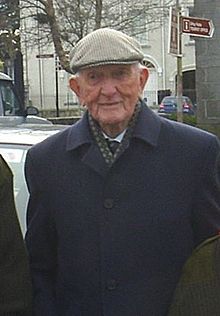
Daniel “Dan” Keating, lifelong Irish republican and patron of Republican Sinn Féin, dies in Knockbrack, County Kerry on October 2, 2007. At the time of his death, he is Ireland’s oldest man and the last surviving veteran of the Irish War of Independence.

Keating is born on January 2, 1902, in Castlemaine, County Kerry. He receives his education in local schools, including the Christian Brothers’ School in Tralee. Tralee is also the place where Keating does his apprenticeship. During this time, he becomes a skillful Gaelic football player in his native Kerry.

Keating joins Fianna Éireann in 1918. In 1920, during the Irish War of Independence, he joins the Boherbee B Company, 3rd Battalion, 1st Kerry Brigade, Irish Republican Army (IRA). He first brings a firearm of a Liverpool Irish soldier of the British Army into a public house in which he works. On April 21, 1921, Royal Irish Constabulary (RIC) Constable Denis O’Loughlin is shot dead in Knightly’s public house in Tralee. Keating, Jimmy O’Connor and Percy Hanafin are suspected of the killing and are forced to go on the run. On June 1, Keating is involved in an ambush between Castlemaine and Milltown which claims the lives of five RIC men. On July 10, a day before the truce between the IRA and British forces, his unit is involved in a gun battle with the British Army near Castleisland. This confrontation results in the deaths of four British soldiers and five IRA volunteers.

Keating opposes the 1921 Anglo-Irish Treaty and fights on the anti-treaty side in the Irish Civil War. He is involved in operations in counties Kerry, Limerick, and Tipperary, before his flying column is arrested by Free State Forces. Keating spends seven months in Portlaoise Prison and the Curragh prison before being released in March 1923.

Keating remains an IRA member for a long time after the Civil War. He is arrested several times during the 1930s on various charges. He is active in London during the 1939/1940 IRA bombing campaign.

In 1933, Keating is involved in an attempt to assassinate the leader of the Irish Blueshirts, Eoin O’Duffy, during a visit to County Kerry. The attack is to happen at Ballyseedy, where Free State forces had carried out the Ballyseedy Massacre during the Irish Civil War. However, the plot fails when the person travelling with O’Duffy refuses to divulge in which car O’Duffy would be riding.

Keating subsequently returns to Dublin and works as a barman in several public houses. He retires and returns to his native Kerry in 1978, living out the rest of his life with relatives in Knockbrack. Until his death he refuses to accept a state pension because he considers the 26-county Republic of Ireland an illegitimate state which usurps the 1916 Irish Republic.

“All the talk you hear these days is of peace. But there will never be peace until the people of the 32 counties elect one parliament without British interference.”

In 2002, Keating refuses the state’s standard €2,500 award to centenarians from President Mary McAleese. After former IRA volunteer George Harrison dies in November 2004, Keating becomes patron of Republican Sinn Féin until his own death. At the time of his death at the age of 105 on October 2, 2007, he is the oldest man in Ireland. He is buried in Kiltallagh Cemetery, Castlemaine.