
On July 19, 1798, the French Directory formally authorizes the dispatch of three expeditions to Ireland to support the United Irishmen in their rebellion against British rule. This decision comes after years of political and military planning, with the Irish republican movement—led by figures such as Theobald Wolfe Tone—urging French intervention to spark a widespread uprising.
The Irish Rebellion of 1798 has been suppressed in the east by British forces, but unrest continues in the west. The French Directory, influenced by Enlightenment ideals and shared revolutionary sympathies with the United Irishmen, see an opportunity to strike a blow against Britain and inspire Irish republicanism. The plan is to land French troops in Ireland to provide military aid to the rebels, incite a general uprising and potentially use Ireland as a staging ground for further operations against Britain.
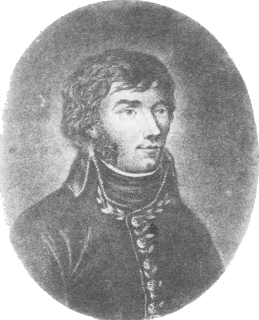
The July 19 authorization marks the final political clearance for the operation. The first expedition is entrusted to General Jean Joseph Amable Humbert (pictured), a veteran of irregular warfare against the Vendéen insurgents. The force is small—about 1,025 French troops, three light field cannons, 3,000 muskets, and 400 sabres—but includes Irish allies such as Bartholomew Teeling and Fr. Henry O’Kane, who help spread the news of the landing.
On August 6, 1798, Humbert’s three frigates—La Concorde, La Franchise, and La Médée—sail from La Rochelle, taking a circuitous route to avoid British naval detection. They land at Killala Bay, County Mayo, where they quickly take control of the town, hoisting the French flag and rallying local Irish recruits.
Humbert’s landing in Killala, known locally as Bliadhan na bhFrancach (“The Year of the French”), sparks a brief but significant phase of the Rising. His forces achieve notable victories, such as the Races of Castlebar, but ultimately cannot sustain momentum against the British response. Humbert surrenders to British forces at Ballinamuck, County Longford, on September 8, 1798.
In summary, the July 19, 1798, authorization by the French Directory is the decisive political step that enables Humbert’s small but symbolic invasion of Ireland, which, though militarily limited, becomes a potent symbol of French-Irish revolutionary solidarity.


