
Edward Michael Conolly, an Irish Member of Parliament, is born Edward Michael Pakenham on August 23, 1786.
Conolly is the son of Admiral Sir Thomas Pakenham by his wife Louisa, daughter of John Staples and niece of Thomas Conolly of Castletown. His father is the fourth son of Thomas Pakenham, 1st Baron Longford, and his wife Elizabeth, 1st Countess of Longford. Catherine Pakenham, later the Duchess of Wellington, is his first cousin.
He adopts the surname Conolly by Royal Licence on August 27, 1821, following the death of his great-aunt Lady Louisa Conolly.
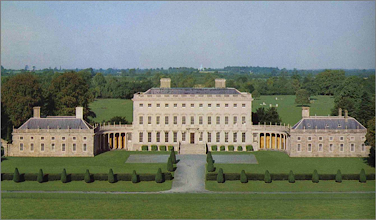
Conolly lives at Castletown House in County Kildare, which he inherits from his great-aunt Louisa, and “Cliff House” in County Donegal. He represents Donegal in the Parliament of the United Kingdom from the 1831 United Kingdom general election until his death, and is a lieutenant-colonel in the Donegal Militia. The Conolly residence “Cliff House” on the banks of the River Erne between Belleek, County Fermanagh, and Ballyshannon, County Donegal, is demolished as part of the Erne Hydroelectric scheme, which constructs the Cliff and Cathaleen’s Fall hydroelectric power stations. Cliff hydroelectric power station is constructed on the site of “Cliff House” and is commissioned in 1950.
On May 20, 1819, Conolly marries Catherine Jane, daughter of Chambré Brabazon Ponsonby-Barker. They have six sons and four daughters, including an eldest son, Chambré Brabazon, who dies in 1835; Thomas, who succeeds his father as MP for Donegal; Arthur Wellesley, who dies at the Battle of Inkerman while serving as a captain in the 30th (Cambridgeshire) Regiment of Foot; John Augustus, who also serves in the Crimean War and is awarded the Victoria Cross for his actions at Sevastopol as a lieutenant in the 49th (Princess Charlotte of Wales’s) (Hertfordshire) Regiment of Foot; Richard, who serves as Secretary of Legation at the Embassy of the United Kingdom in China; Louisa Augusta, who marries Wellington William Robert Rowley, 3rd Baron Langford, and dies of drowning in 1853; and Mary Margaret, who marries Henry Bruen.
Conolly dies in London on January 4, 1849.
(Pictured: Castletown House, Celbridge, County Kildare)
 seamus dubhghaill