seamus dubhghaill

Promoting Irish Culture and History from Little Rock, Arkansas, USA


Leave a comment

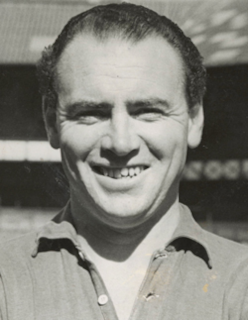
Birth of Peter Farrell, Irish Footballer

Peter Desmond Farrell, Irish footballer who plays as a right-half for, among others, Shamrock RoversEverton and Tranmere Rovers, is born in Dalkey, County Dublin, on August 16, 1922. As an international, he also plays for both Ireland teams – the FAI XI and the IFA XI. His playing career follows a similar path to that of Tommy Eglington. As well as teaming up at international level, they also play together at three clubs.

Farrell is born and raised in the Convent Road area of Dalkey and is educated at Harold Boy’s National School and the Christian Brothers in Dún Laoghaire, from which he wins a scholarship. He is playing football with Cabinteely Schoolboys when spotted by a Shamrock Rovers scout and subsequently joins Rovers on his 17th birthday in August 1939. Among his early teammates is the veteran Jimmy Dunne. With a team that also includes Jimmy Kelly, Tommy Eglington, Jimmy McAlinden and Paddy Coad, he later helps Rovers reach three successive FAI Cup finals. They win the competition in 1944 and 1945 and finish as runners up in 1946.

In July 1946, together with Tommy Eglington, Farrell signs for Everton. In eleven seasons with the club, he plays 421 league games and scores 14 goals. He also plays a further 31 games in the FA Cup and scores an additional four goals. In 1951 he is appointed Everton captain and during the 1953–54 season leads them to the runners up place in the Second Division, thus gaining promotion to the First Division. During his time with the club his teammates, apart from Eglington, also include Alex StevensonPeter CorrHarry CatterickWally FieldingTommy E. JonesBrian Labone and Dave Hickson. He is never sent off during his time at Goodison Park.

Farrell leaves Everton in October 1957 and follows Tommy Eglington to Tranmere Rovers where he becomes player-manager. He plays 114 league games for Tranmere, before leaving in December 1960. After a time as manager at Sligo Rovers, he becomes manager of Holyhead Town and, helped by a number of former Everton and Tranmere players, guides them to the Welsh Football League (North) title.

In September 1967, Farrell signs a one-year contract to manage St. Patrick’s Athletic F.C. He manages the Pats in their 1967–68 Inter-Cities Fairs Cup ties against FC Girondins de Bordeaux but resigns in March 1968.

When Farrell begins his international career in 1946 there are, in effect, two Ireland teams, chosen by two rival associations. Both associations, the Northern Ireland–based IFA and the Ireland–based FAI claim jurisdiction over the whole of Ireland and select players from the entire island. As a result, several notable Irish players from this era, including Farrell, play for both teams.

Farrell makes 28 appearances and scores three goals for the FAI XI. While still at Shamrock Rovers, he captains the FAI XI on his international debut on June 16, 1946, against Portugal. On September 21, 1949, together with Johnny Carey and Con Martin, he is a member of the FAI XI that defeats England 2–0 at Goodison Park, becoming the first non-UK team to beat England at home. After Martin puts the FAI XI ahead with a penalty in the 33rd minute, Farrell makes victory certain in the 85th minute. Tommy O’Connor slips the ball to Farrell and as the English goalkeeper Bert Williams advances, he lofts the ball into the unguarded net. He scores his second goal for the FAI XI on October 9, 1949, a in 1–1 draw with Finland, a qualifier for the 1950 FIFA World Cup. His third goal comes on May 30, 1951, as Farrell scores the opening goal in a 3–2 win against Norway.

Farrell also makes seven appearances for the IFA XI between 1946 and 1949. On November 27, 1946, he makes his debut for the IFA XI in a 0–0 draw with Scotland. Together with Johnny Carey, Con Martin, Bill Gorman, Tommy Eglington, Alex Stevenson and Davy Walsh, he is one of seven players born in the Irish Free State to play for the IFA XI on that day. The draw helps the team finish as runners-up in the 1946-47 British Home Championship. He also helps the IFA XI gain some other respectable results, including a 2–0 win against Scotland on October 4, 1947, and a 2–2 draw with England at Goodison Park on November 5, 1947.

After returning to Ireland following his retirement, Farrell settles in Dublin and follows his father into the insurance business. He dies on March 16, 1999, following a long illness. He is buried in Dean’s Grange Cemetery in DeansgrangeDún Laoghaire–Rathdown, County Dublin.


Leave a comment

Death of Peter Farrell, Irish Footballer

Peter Desmond Farrell, Irish footballer who plays as a right-half for, among others, Shamrock Rovers, Everton and Tranmere Rovers, dies in Dublin on March 16, 1999. As an international, he also plays for both Ireland teams – the FAI XI and the IFA XI. His playing career follows a similar path to that of Tommy Eglington. As well as teaming up at international level, they also play together at three clubs.

Farrell is born on August 16, 1922, and raised in the Convent Road area of Dalkey, County Dublin, and is educated at Harold Boy’s National School and the Christian Brothers in Dún Laoghaire, from which he wins a scholarship. He is playing football with Cabinteely Schoolboys when spotted by a Shamrock Rovers scout and subsequently joins Rovers on his 17th birthday in August 1939. Among his early teammates is the veteran Jimmy Dunne. With a team that also includes Jimmy Kelly, Tommy Eglington, Jimmy McAlinden and Paddy Coad, he later helps Rovers reach three successive FAI Cup finals. They win the competition in 1944 and 1945 and finish as runners up in 1946.

In July 1946, together with Tommy Eglington, Farrell signs for Everton. In eleven seasons with the club, he plays 421 league games and scores 14 goals. He also plays a further 31 games in the FA Cup and scores an additional four goals. In 1951 he is appointed Everton captain and during the 1953–54 season leads them to the runners up place in the Second Division, thus gaining promotion to the First Division. During his time with the club his teammates, apart from Eglington, also include Alex Stevenson, Peter Corr, Harry Catterick, Wally Fielding, Tommy E. Jones, Brian Labone and Dave Hickson. He is never sent off during his time at Goodison Park.

Farrell leaves Everton in October 1957 and follows Tommy Eglington to Tranmere Rovers where he becomes player-manager. He plays 114 league games for Tranmere, before leaving in December 1960. After a time as manager at Sligo Rovers, he becomes manager of Holyhead Town and, helped by a number of former Everton and Tranmere players, guides them to the Welsh Football League (North) title.

In September 1967, Farrell signs a one-year contract to manage St. Patrick’s Athletic F.C. He manages the Pats in their 1967–68 Inter-Cities Fairs Cup ties against FC Girondins de Bordeaux but resigns in March 1968.

When Farrell begins his international career in 1946 there are, in effect, two Ireland teams, chosen by two rival associations. Both associations, the Northern Ireland–based IFA and the Ireland–based FAI claim jurisdiction over the whole of Ireland and select players from the entire island. As a result, several notable Irish players from this era, including Farrell, play for both teams.

Farrell makes 28 appearances and scores three goals for the FAI XI. While still at Shamrock Rovers, he captains the FAI XI on his international debut on June 16, 1946, against Portugal. On September 21, 1949, together with Johnny Carey and Con Martin, he is a member of the FAI XI that defeats England 2–0 at Goodison Park, becoming the first non-UK team to beat England at home. After Martin puts the FAI XI ahead with a penalty in the 33rd minute, Farrell makes victory certain in the 85th minute. Tommy O’Connor slips the ball to Farrell and as the English goalkeeper Bert Williams advances, he lofts the ball into the unguarded net. He scores his second goal for the FAI XI on October 9, 1949, a in 1–1 draw with Finland, a qualifier for the 1950 FIFA World Cup. His third goal comes on May 30, 1951, as Farrell scores the opening goal in a 3–2 win against Norway.

Farrell also makes seven appearances for the IFA XI between 1946 and 1949. On November 27, 1946, he makes his debut for the IFA XI in a 0–0 draw with Scotland. Together with Johnny Carey, Con Martin, Bill Gorman, Tommy Eglington, Alex Stevenson and Davy Walsh, he is one of seven players born in the Irish Free State to play for the IFA XI on that day. The draw helps the team finish as runners-up in the 1946-47 British Home Championship. He also helps the IFA XI gain some other respectable results, including a 2–0 win against Scotland on October 4, 1947, and a 2–2 draw with England at Goodison Park on November 5, 1947.

After returning to Ireland following his retirement, Farrell settles in Dublin and follows his father into the insurance business. He dies on March 16, 1999, following a long illness. He is buried in Dean’s Grange Cemetery in Deansgrange, Dún Laoghaire–Rathdown, County Dublin.


Leave a comment

Ireland National Football Team Becomes First to Defeat England at Home

The Republic of Ireland national football team defeats the England national football team 2-0 in a friendly international at Goodison Park, Liverpool, the home of Everton F.C., on September 21, 1949. As a result, Ireland becomes the first foreign team to beat England at home. In 1953, the Hungarian team known as the Mighty Magyars defeats England 6–3, to become the second team to do so.

During the 1940s, there are in effect, two Ireland teams, chosen by two rival associations — the Northern Ireland-based Irish Football Association (IFA) and the Republic of Ireland-based Football Association of Ireland (FAI). Both organisations claim jurisdiction over the whole of Ireland and select players from the whole island. As a result, several notable Irish players from this era play for both teams. The IFA XI had played England regularly since 1882, and claim their first victory, by a score of 3–0, on English soil at Ayresome Park, Middlesbrough, on February 14, 1914, but this is only the second time England and the FAI XI have met. Despite this, several members of the FAI XI had played against England several times before while representing the IFA XI. Striker Davy Walsh had previously scored three times against England.

The FAI XI plays England for the first time at Dalymount Park on September 30, 1946. A team, featuring Johnny Carey, Con Martin and Billy Walsh, are narrowly defeated 1–0 when Tom Finney scores the winner in the 82nd minute. Two days earlier, on September 28, Carey and Tom Aherne had been included in the IFA XI that had been heavily defeated 7–2 by the same England side. The next time the IFA XI play England, on November 5, 1947, their team includes six players — Carey, Martin, Billy Walsh, Peter Farrell, Davy Walsh and Tommy Eglington — who had previously played for the FAI XI. Davy Walsh scores the opening goal in a 2–2 draw at Goodison Park. Carey, Martin, Farrell and Walsh also play for the IFA XI in their 6–2 defeat by England at Windsor Park on October 10, 1948. Davy Walsh also scores both goals that day.

The September 21, 1949, match is used by both teams as part of their preparations for forthcoming World Cup qualifiers. Despite the absence of both Stanley Matthews and Stan Mortensen, England fields a strong team, including Billy Wright, Neil Franklin, Wilf Mannion and Tom Finney. Ireland’s team includes just seven First Division players, but these include Johnny Carey who is voted FWA Footballer of the Year in 1949. Another two Irish players, Tom Aherne and Tommy Moroney, like Finney, play in the English Football League Second Division. The remaining two Irish players, goalkeeper Tommy Godwin and Tommy O’Connor both play for Shamrock Rovers F.C. in the League of Ireland.

The early pattern of the game sees England launch wave after wave of attacks. However Tommy Godwin is in inspired form and Con Martin, Tom Aherne and Johnny Carey prove too difficult for England to get past. Carey is also effective in keeping Tom Finney quiet, while wing-halves Billy Walsh and Tommy Moroney gradually take the sting out of the English front line. Ireland takes the lead in the 33rd minute when Peter Desmond, after collecting a pass from Tommy O’Connor, bursts into the England penalty area and is brought down. Con Martin then converts the subsequent penalty kick. During the second half the wave of England attacks continues. Peter Harris hits the bar and Jesse Pye also goes close. However, Peter Farrell, playing at his club Everton’s home ground, makes victory certain in the 85th minute. O’Connor slips the ball to Farrell and as the English goalkeeper Bert Williams advances, Farrell lofts the ball into the net.

(Pictured: The Irish team which beat England 2-0 at Goodison Park in 1949. Back Row (L to R): Con Martin, Tommy Aherne, Tommy Godwin, Tommy Moroney and Willie Walsh. Seated (L to R): Peter Corr, Tommy O’Connor, Johnny Carey, Peter Desmond, Peter Farrell and Davy Walsh.)