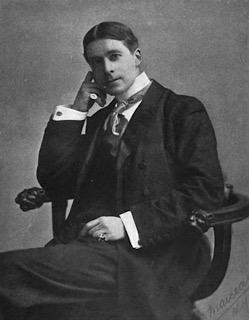
McCarthy’s early career was meteoric: his first book, An outline of Irish history from the earliest times, appears in 1883 and is a fast-moving, strongly worded, nationalist sketch of Irish history. This is followed by a heavy-handed dramatic poem, Serapion (1883), about the early Christian era. In June of the following year he is returned as the Home Rule LeagueMP for Athlone on the death of the sitting member, and also publishes, to excellent reviews, England under Gladstone, which runs to a second edition within a year. In November 1884, his first play, The Candidate, is an overnight success in the Criterion Theatre in London. Its plot is thin but the humour and political badinage ensures it a long run.
At the 1885 United Kingdom general election McCarthy is elected nationalist MP for Newry, and he holds this seat until 1892. In the two years after his election he writes a number of novels, translates works from Persian, and writes Ireland Since the Union (1887), which is well researched, nationalist and impassioned in tone, showing a flair for biographical sketches. During this period he is known for his good attendance in the House of Commons though he does not speak much – throughout his life he is more an observer than a participator – and he is said by William O’Brien to conceal “under the gentlest of exteriors the fire of the ‘Spirit of the Nation’ ballad” (New Ireland Review, 523). In London he is well known for his controversial drama reviews in The Gentleman’s Magazine and the Sunday Sun, and in Dublin for his numerous verse and prose contributions to United Ireland. Although he makes a name for himself as a brilliant young man, he never fulfills his early promise.
In later years McCarthy continues to publish prolifically but produces only ephemeral works, and his parliamentary attendance slackens off. His political commitment is soured possibly by the party’s split in 1890. He originally sides with Charles Stewart Parnell, emphasizing in a speech on December 1, 1890, that he believes in the old-fashioned theory of personal loyalty to a leader. However, five days later he causes a minor drama by rising at the last minute to follow his father and the forty-three other anti-Parnellites, claiming that he feels he must abide by the decision of the majority. Two years later he leaves politics for good without standing in the 1892 United Kingdom general election. A sympathetic profile of him in the New Ireland Review in 1894 remarks that “no man of equal talents made so slight an impression on the political world.”
Thereafter McCarthy has less involvement in Irish affairs and writes no more Irish history books, though his novels continue to have Irish themes. He lives in London in Putney Common, and continues to travel widely. In 1894, he marries in some haste a popular comic actress, Cecilia Loftus, and the event is widely reported in the English press. However, the marriage is dissolved in the United States five years later. In 1908, his second marriage is to Loullie, daughter of Henry Killick of Budapest. He continues to enjoy success as a dramatist and has five plays, four sketches, and three duologues performed in London in the 1890s. However, he concentrates increasingly on historical fiction, which he produces at breakneck speed. In the first decade of the twentieth century he writes over twelve novels based on periods in English, Italian, French, and Irish history. The Illustrious O’Hagan (1906), The O’Flynn (1910), and The King Over the Water (1911) pointedly contradict English stereotypes of the “stage Irishman.” The Fair Irish Maid (1911) is an allegory of the Irish Parliamentary Party‘s political marriage to the ordinary Irish people rather than to the Anglo-Irishascendancy.
McCarthy dies at home in Putney on March 20, 1936 aged 79, although his obituaries all put his age at 75.
(From: “McCarthy, Justin Huntly” by Bridget Hourican, Dictionary of Irish Biography, http://www.dib.ie, October 2009)
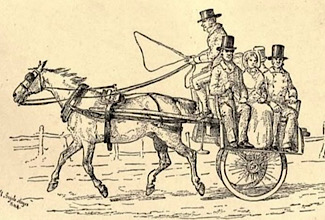
On July 5, 1790, the Irish mail coach service makes its first run from Dublin to Waterford, marking a significant milestone in Ireland’s postal history. This is part of the broader expansion of the General Post Office’s (GPO) mail coach network, which had been introduced in Ireland in 1789.
A twice-weekly mail coach service operates between Dublin and Drogheda to the north, Kilkenny to the south and Athlone to the west as early as 1737 and for a short period from 1740, a Dublin to Belfast mail coach exists. In winter, this route takes three days, with overnight stops at Drogheda and Newry. In summer, travel time is reduced to two days. In 1789, mail coaches begin a scheduled service from Dublin to Belfast. They meet the mail boats coming from Portpatrick in Scotland at Donaghadee, County Down.
The Irish mail coach system is modeled on the successful English service introduced in 1784 by John Palmer, which uses specially built coaches to carry the Royal Mail under contract to independent operators. These coaches are designed for speed and efficiency, stopping only for mail collection and delivery, and are protected by armed guards. The Dublin–Waterford route is one of the early inland services added to the network, complementing other major routes such as London–Norwich, Liverpool–Leeds, and London–Dover.
The July 5, 1790 run from Dublin to Waterford is notable because it is the first scheduled mail coach service on that route, replacing slower and less secure methods like mounted riders or carts. It demonstrates the GPO’s ability to extend its network to key inland towns, improving communication between Dublin and the southeast of Ireland. It also reflects the rapid expansion of the mail coach system in Ireland by 1790, with many towns already having daily mail delivery and collection.
While the primary purpose is to carry the Royal Mail, passengers can also travel at a premium fare. The coaches can carry four seated passengers inside and more standing outside, with the driver and guard occupying the front seats. The journey from Dublin to Waterford is relatively short for the time, but still requires careful scheduling to meet the strict post office timetable.
This first run lays the foundation for a regular mail service that becomes a vital part of Ireland’s transport and communication infrastructure until the advent of railways in the 1830s. By the mid-19th century, most of the mail coaches in Ireland are eventually out-competed by Charles Bianconi’s country-wide network of open carriages, before this system in turn succumbs to the railways. The Dublin–Waterford route, like others, is eventually replaced by the faster rail services, but its role in modernizing Ireland’s postal system is crucial.
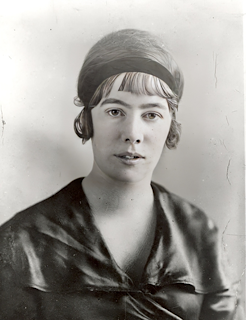
Born Helen Ruth Gifford on November 9, 1880, in Phibsborough, Dublin, to Frederick Gifford, a solicitor, and Isabella Julia Gifford (née Burton), Gifford is the fifth child and second eldest daughter of the family of six daughters and six sons. Her father is a Catholic while her mother, a niece of the painter Frederic Burton, is rigorously Protestant. All the children are brought up in the Church of Ireland. The men, emigrate and remain unionist while the women are active nationalists. Most famous are the two youngest, the artistGrace Gifford, and the journalist and broadcaster Sidney Czira.
Gifford grows up in Rathmines and goes to school at Alexandra College. She trains as a domestic economy teacher and works for seven years at a series of positions in County Meath.
Gifford experiences the living conditions of the landless rural poor while lodging in labourers’ cottages during this time. As a result, she becomes a supporter of the campaigns of the land agitator and nationalist MPLaurence Ginnell.
During the 1913 Dublin lock-out Gifford assists James Larkin enter the Imperial Hotel, on August 31 to address the crowd. He enters in disguise, that of an elderly and infirm clergyman. She poses as his niece. She speaks to the hotel staff to prevent Larkin’s strong Liverpool accent giving away his identify. This is the speech which precipitates the “Bloody Sunday” police baton charge. Gifford goes on to be a founding member of the Irish Citizen Army (ICA). This group is attractive to many women due to the feminist beliefs of James Connolly.
Gifford gives lessons on camp cookery in Liberty Hall and finds jobs for recruits coming in from abroad. As a result of this work she, very fatefully, introduces Michael Collins to her future brother-in-law Joseph Plunkett who go on to serve together in the 1916 Easter Rising. Collins is Plunkett’s aide-de-camp.
Gifford is the only one of her sisters to actively participate in the rising itself. She is with the ICA’s St. Stephen’s Green contingent alongside Countess Markievicz. Throughout the week she supervises the garrison’s provisions in the Royal College of Surgeons building, commandeering food from shops and bread vans, and by courier from other garrisons. She also ensures the delivery of provisions to troops both in the college with her and in outlying posts. She is one of the women arrested at the surrender and jailed in Kilmainham Gaol. At the same time, in the same prison her sister Grace marries Joseph Plunkett hours before his execution. Only twelve women are detained after the main release of women prisoners on May 8, 1916. Gifford is one of those transferred to Mountjoy Prison until her release on June 4, 1916. Afterward she continues to be as involved in the campaigns.
After her time in prison, Gifford travels through England to the United States where she and other women veterans of Easter week lecture throughout America. While there she marries Joseph Donnelly, of Omagh, County Tyrone in 1918. In 1921 she and their year-old daughter Maeve leave him to return to Ireland.
Frederick Gifford dies in September 1917 and leaves Gifford £800. However, she is was not well off. She becomes a broadcaster and journalist for the national radio and the Irish press. Holding to her upbringing, she remains a staunch Protestant, unlike four of her sisters, who had married Catholics.
Gifford becomes devoted to preserving the historical record of the independence movement. Noticing the huge number of visitors for the 1932 Eucharistic Congress, she organises a small exhibition there of 1916 memorabilia for the National Museum of Ireland. She is irritated by the display of Catholic religious artifacts there. She campaigns for a permanent exhibition of recent Irish nationalist history. She coordinates a substantial body of material pertinent to nationalist organisations, the Easter Rising, and the Irish War of Independence, which now forms the core of the present collection.
Over the years Gifford is secretary of the Old IRA Association, a member of the Old Dublin Society, and a founder of the Kilmainham Gaol Restoration Society. She also looks after stray and neglected dogs and cats. She dies at the age of 90 on June 23, 1971, at the Gascoigne nursing home in Rathmines, Dublin.
(Pictured: Irish nationalist Nellie Gifford taken in Boston in 1917)
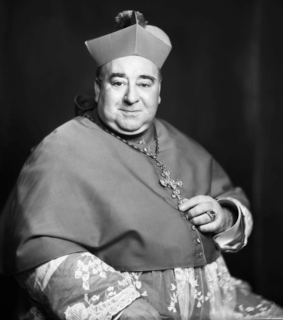
Downey’s tenure sees the construction and dedication of the crypt of Liverpool Metropolitan Cathedral, built to a design by Sir Edwin Lutyens, although the Cathedral itself is never completed as he had envisaged. A picture of Lutyens proposed cathedral is printed on postcards sold to raise funds.
In 1929, before the actual construction begins, Downey states, “Hitherto all cathedrals have been dedicated to saints. I hope this one will be dedicated to Christ himself with a great figure surmounted on the cathedral, visible for many a mile out at sea.” He also declares that while the Cathedral will not be medieval and Gothic, neither will it be as modern as the works of Jacob Epstein, a statement somewhat at odds with the design that is finally realised after his death.
Downey dies in Liverpool at the age of 72 on June 16, 1953, having served as Liverpool’s archbishop for twenty-four years. His remains are interred in a crypt at Liverpool Metropolitan Cathedral, Liverpool.
Pilkington is born to John Pilkington and Margaret Mary Pilkington (née Torsney), the second of twelve children born to the couple. Only nine of his siblings survive into adulthood. He receives his education at the local Marist Brothers convent school and the Day Trades Preparatory School. Later he is a student at the Department of Agriculture Forestry College in County Wicklow. When the Irish War of Independence begins, the college is closed and he is forced to return to Sligo. He then gains employment with Wehrly Brothers Ltd., a jewelry and watchmaking store in Sligo.
Several notable incidents occur in Pilkington’s military career. On October 25, 1920, at Moneygold, eight miles from Sligo (between Grange and Cliffoney), IRA men led by him ambush a nine-man Royal Irish Constabulary (RIC) patrol, killing four (Sergeant Patrick Perry, Constables Patrick Keown, Patrick Laffey, Patrick Lynch) and wounding two others (Constables Clarke and O’Rourke). In January 1922, he makes clear his opposition to the IRAs General Headquarters (GHQ) support for the Anglo-Irish Treaty. “We intend to cut away from this headquarters, all of you (pointing to the staff and officers of the GHQ) want to build up a Free State Army so you can march in step into the British Empire. Do it openly. We stand by the Republic.” On April 6, 1922, a meeting addressed by Arthur Griffith in Sligo, is proclaimed illegal by Pilkington, who is the local Anti-Treaty IRA divisional commander. His troops take over a number of buildings in the town. Seán Mac Eoin brings Provisional Government troops from Athlone and on the day of the meeting, he is joined by further troops led by J. J. “Ginger” O’Connell. A tense situation ensues but, at the last minute, Pilkington backs down and the meeting goes ahead. On September 4, 1922, an Anti-Treaty IRA unit under Pilkington takes the Dromhaire barracks in County Sligo after the Free State garrison surrenders.
On August 27, 1923, Pilkington runs unsuccessfully in the general election for the 4th Dáil as a Republican candidate, polling 2,089 first preference votes.
Pilkington is a prominent member of the Anti-Treaty IRA for many years, but his most important role as part of the Anti-Treaty IRA comes on April 20, 1923. The Executive of the Anti-Treaty IRA meets in Poulacappal (four miles southwest of Callan and three miles from Mullinahone). Present in addition to Pilkington (who is replacing Liam Lynch) are Frank Aiken, Sean Hyde, Sean Dowling, Bill Quirke, Tom Barry, Tom Ruane (replacing Michael Kilroy), Tom Sullivan (replacing Sean Lehane), Sean McSwiney, Tom Crofts, P. J. Ruttledge and Sean O’Meara (substitute for Séumas Robinson). Frank Aiken is elected Chief-of-Staff and an Army Council of Aiken, Pilkington and Barry is appointed. Aiken proposes that peace should be made with the Pro-Treaty Government on the basis that “the sovereignty of the Irish Nation and the integrity of its territory is inalienable.” This is passed by nine votes to two.
Pilkington becomes a Catholic priest after his foray into politics and due to the disillusionment of the Irish War of Independence. He joins the Redemptorist Order and becomes known as Father William Pilkington CSsR. He serves as a priest in the Archdiocese of Cape Town, South Africa, priest of Monmouthshire, Wales, and retires to Bishop Eton Monastery, Liverpool.
In 1954, Pilkington is guest of honour at a dinner sponsored by Clan na Gael and the IRA Veterans of America in New York City where he says he is returning to the mission fields of Africa, but he remains faithful to the All Ireland Republic. He dies at Bishop Eton Monastery on March 26, 1977, and is buried in Liverpool.
Stanford is born in Dublin into a well-off and highly musical family on September 30, 1852, the only son of John James Stanford, a prominent Dublin lawyer, Examiner to the Court of Chancery in Ireland and Clerk of the Crown for County Meath, and his second wife, Mary (née Henn). He is educated at the University of Cambridge before studying music in Leipzig and Berlin. He is instrumental in raising the status of the Cambridge University Musical Society, attracting international stars to perform with it.
While still an undergraduate, Stanford is appointed organist of Trinity College, Cambridge. In 1882, at the age of 29, he is one of the founding professors at the Royal College of Music, where he teaches composition for the rest of his life. From 1887 he is also Professor of Music at Cambridge. As a teacher, he is skeptical about modernism and bases his instruction chiefly on classical principles as exemplified in the music of Johannes Brahms. Among his pupils are rising composers whose fame go on to surpass his own, such as Gustav Holst and Ralph Vaughan Williams. As a conductor, he holds posts with the Bach Choir and the Leeds Triennial Music Festival.
Stanford composes a substantial number of concert works, including seven symphonies, but his best-remembered pieces are his choral works for church performance, chiefly composed in the Anglican tradition. He is a dedicated composer of opera, but none of his nine completed operas has endured in the general repertory. Some critics regard him, together with Hubert Parry and Alexander Mackenzie, as responsible for a renaissance in music from the British Isles. However, after his conspicuous success as a composer in the last two decades of the 19th century, his music is eclipsed in the 20th century by that of Edward Elgar as well as former pupils.
In September 1922, Stanford completes the sixth Irish Rhapsody, his final work. Two weeks later he celebrates his 70th birthday and thereafter his health declines. On March 17, 1924, he suffers a stroke and dies on March 29 at his home in London, survived by his wife and children. He is cremated at Golders Green Crematorium on April 2 and his ashes are buried in Westminster Abbey the following day.
Stanford’s last opera, The Travelling Companion, composed during World War I, is premiered by amateur performers at the David Lewis Theatre, Liverpool in 1925 with a reduced orchestra. The work is given complete at Bristol in 1928 and at Sadler’s Wells Theatre, London, in 1935.
Johnson is born on May 17, 1872, in Liverpool, England. He works on the docks for an Irish fish merchant, spending much of his time in Dunmore East and Kinsale. It is this way that he picks up ideas about socialism and Irish nationalism, joining a Liverpool branch of the Independent Labour Party in 1893. In 1900 he starts work as a commercial traveller, then moves in 1903 with his family to Belfast where he becomes involved in trade union and labour politics.
In 1907, Johnson helps James Larkin organise a strike in the port, but has to watch in dismay as the strike, which begins with remarkable solidarity between labour, Orange, and nationalist supporters, collapses in sectarian rioting. At various times he is the president, treasurer and secretary of the Irish Trades Union Congress (ITUC) which is, at the time, also the Labour Party in Ireland, until officially founded in 1912 by James Connolly and James Larkin. Johnson becomes Vice-President of the ITUC in 1913, and President in 1915.
Johnson sympathizes with the Irish Volunteers, many of whom are sacked from their jobs, for illegal activities. During the Easter Rising, he notes in his diary that people in Ireland paid little heed to the fate of the defeated revolutionaries. He succeeds as leader of the Labour Party from 1917, when the party does not contest the 1918 Irish general election. When the British government tries to enforce conscription in Ireland in 1918, he leads a successful strike in conjunction with other members of the Irish anti-conscription movement.
Johnson is later elected a TD for Dublin County to the Third Dáil at the 1922 Irish general election and remains leader of the Labour Party until 1927. As such, he is Leader of the Opposition in the Dáil of the Irish Free State, as the anti-treaty faction of Sinn Féin refuses to recognise the Dáil as constituted. He issues a statement of support for the Government of the 4th Dáil when the Irish Army Mutiny threatens civilian control in March 1924.
Johnson is the only Leader of the Labour Party who serves as Leader of the Opposition in the Dáil. He loses his Dáil seat at the September 1927 Irish general election, and the following year he is elected to Seanad Éireann, where he serves until the Seanad’s abolition in 1936.
In 1896 he meets Marie Tregay, then a teacher in St. Multose’s National school, outside Kinsale. A native of Cornwall, she has advanced political views. They marry in 1898 in Liverpool. Their only son, Frederick Johnson, is born in 1899, and becomes a well-known actor. Johnson dies on January 17, 1963, at 49 Mount Prospect Avenue, Clontarf, Dublin.
Each summer, Labour Youth holds the “Tom Johnson Summer School” to host panel discussions, debates and workshops.
In June 1846, Sir Robert Peel‘s Tory Ministry falls, and the Whigs under Lord John Russell comes to power. Daniel O’Connell, founder of the Repeal Association which campaigns for a repeal of the Acts of Union 1800 between Great Britain and Ireland, simultaneously attempts to move the Association into supporting the Russell administration and English Liberalism.
The intention is that Repeal agitation is to be damped down in return for a profuse distribution of patronage through Conciliation Hall, home of the Repeal Association. On June 15, 1846, Thomas Francis Meagher denounces English Liberalism in Ireland saying that there is a suspicion that the national cause of Repeal will be sacrificed to the Whig government and that the people who are striving for freedom will be “purchased back into factious vassalage.” Meagher and the other “Young Irelanders” (an epithet of opprobrium used by O’Connell to describe the young men of The Nation newspaper), as active Repealers, vehemently denounce in Conciliation Hall any movement toward English political parties, be they Whig or Tory, so long as Repeal is denied.
The “Tail” as the “corrupt gang of politicians who fawned on O’Connell” are named, and who hope to gain from the government places decide that the Young Irelanders must be driven from the Repeal Association. The Young Irelanders are to be presented as revolutionaries, factionists, infidels and secret enemies of the Church. For this purpose, resolutions are introduced to the Repeal Association on July 13 which declare that under no circumstances is a nation justified in asserting its liberties by force of arms. The Young Irelanders, as members of the association, have never advocated the use of physical force to advance the cause of repeal and oppose any such policy. Known as the “Peace Resolutions,” they declare that physical force is immoral under any circumstances to obtain national rights. Meagher agrees that only moral and peaceful means should be adopted by the Association, but if it is determined that Repeal cannot be carried by those means, a no less honourable one he would adopt though it be more perilous. The resolutions are again raised on July 28 in the Association and Meagher then delivers his famous “Sword Speech.”
Addressing the Peace Resolutions, Meagher holds that there is no necessity for them. Under the existing circumstances of the country, any provocation to arms will be senseless and wicked. He dissents from the Resolutions because by assenting to them he would pledge himself to the unqualified repudiation of physical force “in all countries, at all times, and in every circumstance.” There are times when arms will suffice, and when political amelioration calls for “a drop of blood, and many thousand drops of blood.” He then “eloquently defended physical force as an agency in securing national freedom.” Having been at first semi-hostile, Meagher carries the audience to his side and the plot against the Young Irelanders is placed in peril of defeat. Observing this he is interrupted by O’Connell’s son, John, who declares that either he or Meagher must leave the hall. William Smith O’Brien then protests against John O’Connell’s attempt to suppress a legitimate expression of opinion, and leaves with other prominent Young Irelanders, and never returns.
After negotiations for a reunion have failed, the seceders decide to establish a new organisation which is to be called the Irish Confederation. Its founders determine to revive the uncompromising demand for a national Parliament with full legislative and executive powers. They are resolute on a complete prohibition of place-hunting or acceptance of office under the existing Government. They wish to return to the honest policy of the earlier years of the Repeal Association, and are supported by the young men, who have shown their repugnance for the corruption and insincerity of Conciliation Hall by their active sympathy with the seceders. There are extensive indications that many of the previously Unionist class, in both the cities and among land owners, are resentful of the neglect of Irish needs by the British Parliament since the famine began. What they demand is vital legislative action to provide both employment and food, and to prevent all further export of the corn, cattle, pigs and butter which are still leaving the country. On this there is a general consensus of Irish opinion according to Dennis Gwynn, “such as had not been known since before the Act of Union.”
The first meeting of the Irish Confederation takes place in the Rotunda, Dublin, on January 13, 1847. The chairperson for the first meeting is John Shine Lawlor, the honorary secretaries being John Blake Dillon and Charles Gavan Duffy. Duffy is later replaced by Meagher. Ten thousand members are enrolled, but of the gentry there are very few, the middle class stand apart and the Catholic clergy are unfriendly. In view of the poverty of the people, subscriptions are purely voluntary, the founders of the new movement bearing the cost themselves if necessary.
Following mass emigration by Irish people to England, the Irish Confederation then organises there also. There are more than a dozen Confederate Clubs in Liverpool and over 700 members of 16 clubs located in Manchester and Salford.
In the 19th century, association football outside of Ulster is largely confined to Dublin and a few provincial towns. The British Army teams play a role in the spread of the game to these areas, especially in Munster, as local clubs are initially reliant on them to form opposition teams, leading to the nickname “the garrison game.” Association football is played in relatively few Catholic schools as middle-class schools favour rugby union while others favour Gaelic games. The Irish Football Association (IFA) had been founded in 1880 in Belfast as the football governing body for the whole of Ireland, which was then a part of the United Kingdom and considered a Home Nation. The Leinster Football Association was an affiliate, founded in 1892 to foster the game in Leinster, outside of the Ulster heartlands. This was followed by the establishment of the Munster Football Association in 1901.
By 1913, the Leinster FA becomes the largest divisional association within the IFA, displacing the North East Ulster Football Association, yet all but two clubs in the 1913–14 Irish League are based in Ulster. While this largely reflects the balance of footballing strength within Ireland, southern members feel the IFA is doing little to promote the game outside of the professional clubs in its northern province. In the other provinces, association football is also under pressure from the Gaelic Athletic Association (GAA), which has banned members from playing or watching the sport as it is considered a “foreign” game. Furthermore, there is a growing feeling in Dublin of alleged Belfast bias when it comes to hosting matches and player selection for internationals. This view is not helped by the composition of the IFA’s sub-committees, with over half of the membership consisting of delegates hailing from the North-East, and the International Committee, who chooses the national team, containing just one member from Leinster. The Belfast members are mainly unionist, while the Dublin members are largely nationalist. World War I increases the gulf between the northern teams and the clubs in the south as the Irish League is suspended and replaced by regional leagues, foreshadowing the ultimate split. Tensions are then exacerbated by the Irish War of Independence of 1919–21, which disrupts contact between northern and southern clubs further and prevents resumption of the Irish League. The security situation prompts the IFA to order the March 1920-21 Irish Cup semi-final replay between Glenavon and Shelbourne to be replayed in Belfast, rather than in Dublin as convention dictates. This proves to be the final straw and the Leinster FA confirms their decision to disaffiliate from the IFA at a meeting on June 8, 1921.
The Football Association of Ireland (FAI) is formed in Dublin on September 2, 1921, by the Leinster FA. The Free State League (originally the Football League of Ireland and now the League of Ireland) is founded in June of that year when the Leinster FA withdraws from the IFA. This is the climax of a series of disputes about the alleged Belfast bias of the IFA. Both bodies initially claim to represent the entire island. The split between Southern Ireland (which becomes the Irish Free State in December 1922) and Northern Ireland (which comes into existence as a jurisdiction in 1921) does not produce a split in the governing bodies of other sports, such as the Irish Rugby Football Union (IRFU). The Munster Football Association, originally dominated by British Army regiments, falls into abeyance on the outbreak of World War I, and is re-established in 1922 with the help of the FAI, to which it affiliates. The Falls League, based in the Falls Road of nationalist West Belfast, affiliates to the FAI, and from there Alton United wins the FAI Cup in 1923. However, when the FAI applies to join FIFA in 1923, it is admitted as the Football Association of the Irish Free State (FAIFS) based on a 26-county jurisdiction. (This jurisdiction remains, although Derry City, from Northern Ireland, are given an exemption, by agreement of FIFA and the IFA, to join the League of Ireland in 1985.) Attempts at reconciliation followed. At a 1923 meeting, the IFA rejects an FAIFS proposal for it to be an autonomous subsidiary of the FAIFS. A 1924 meeting in Liverpool, brokered by the English FA, almost reaches agreement on a federated solution, but the IFA insists on providing the chairman of the International team selection committee. A 1932 meeting agrees on sharing this role, but founders when the FAIFS demands one of the IFA’s two places on the International Football Association Board (IFAB). Further efforts to reach agreement are made through a series of conferences between the IFA and FAI from 1973 to 1980 during the height of the Troubles in Northern Ireland.
The IFA does not feel obliged to refrain from selecting Free State players for its international team. The name Football Association of Ireland is readopted by the FAIFS in 1936, in anticipation of the change of the state’s name in the pending Constitution of Ireland, and the FAI begins to select players from Northern Ireland based on the Constitution’s claim to sovereignty there. A number of players play for both the FAI “Ireland” (against FIFA members from mainland Europe) and the IFA “Ireland” (in the British Home Championship, whose members had withdrawn from FIFA in 1920). Shortly after the IFA rejoins FIFA in 1946, the FAI stops selecting Northern players. The IFA stops selecting southern players after the FAI complains to FIFA in 1950.
From the late 1960s, association football begins to achieve more widespread popularity. Donogh O’Malley, TD and then Minister for Education, begins a new programme of state-funded schools in 1966, many with association football pitches and teams. The Gaelic Athletic Association’s ban on members playing “foreign” games is lifted in 1971. RTÉ television, founded in 1962, and British television (available nearly everywhere on cable or microwave relay from the 1970s), broadcast association football regularly. Above all, the increasing success of the international side from the late 1980s gives increased television exposure, more fans, and more funds to the FAI.
However, increased media exposure also highlights some inadequacies of its hitherto largely amateur organisation. In January 1999, the FAI announces a planned national association football stadium, to be called Eircom Park after primary sponsors Eircom. This is to be a 45,000-seat stadium in City West, modeled on the GelreDome in Arnhem. It gradually becomes apparent that the initial forecasts of cost and revenue have been very optimistic. FAI and public support for the project is also undermined by the announcement of the Stadium Ireland in Abbotstown, which would have 65,000 seats and be available free to the FAI, being funded by the state. The Eircom Park project is finally abandoned in March 2001, amid much rancour within the FAI.
During preparation for the 2002 FIFA World Cup, the captain of the senior football team, Roy Keane, leaves the training camp and returns to his home. He is critical of many aspects of the organisation and preparation of the team for the upcoming games, and public opinion in Ireland is divided. As a result of the incident, the FAI commissions a report from consultants Genesis into its World Cup preparations. The “Genesis Report” makes a number of damning criticisms regarding corruption and cronyism within the association, but is largely ignored. The complete report is never published for legal reasons. The FAI subsequently produces its own report of itself titled “Genesis II” and implements a number of its recommendations.
In 2002, the FAI announces a deal with British Sky Broadcasting to sell broadcasting rights to Ireland’s international matches, as well as domestic association football, to be televised on its satellite subscription service. The general public feels it should be on RTÉ, the free-to-air terrestrial service, in spite of their offering much lower rates. Faced with the prospect of the government legislating to prevent any deal, the FAI agrees to accept an improved, but still lower, offer from RTÉ.
Following the respectable performance of the national team in the 2002 FIFA World Cup, the team’s fortunes decline under the management of Mick McCarthy, Brian Kerr and Steve Staunton.
In September 2006, Lars-Christer Olsson, CEO of UEFA, is quoted as anticipating that Lansdowne Road in Dublin (actually owned by the Irish Rugby Football Union) will stage the UEFA Cup Final in 2010, and that the FAI and the IFA will co-host the 2011 UEFA European Under-21 Championship. The 2010 final is ultimately awarded to Hamburg, but in January 2009, UEFA nameS Lansdowne Road as the host stadium for the renamed 2011 UEFA Europa League Final. In August 2010, an FAI spokesman says they will have repaid all of their stadium debt of €46 million within 10 years despite the disastrous sale of 10-year tickets for premium seats at the Aviva Stadium.
In November 2007, the FAI moves to new headquarters at the National Sports Campus in Abbotstown. Its headquarters since the 1930s had been a Georgian terraced house at 80 Merrion Square, which is sold for a sum variously reported as “in excess of €6m” and “almost €9m.”
On June 28, 1920, four men from C Company of the 1st Battalion, Connaught Rangers, based at Wellington Barracks, Jalandhar in the Punjab Province, India, protest against martial law in Ireland by refusing to obey orders. One of them, Joe Hawes, had been on leave in County Clare in October 1919 and had seen a hurling match prevented from happening by British forces with bayonets drawn. Poor accommodation conditions in the Wellington Barracks likely provide an additional cause of the dispute.
The protestors are soon joined by other Rangers, including several English soldiers, such as John Miranda from Liverpool and Sergeant Woods. By the following morning, when a rebel muster takes place, 350 Irish members of the Rangers are involved in the mutiny.
On June 30, 1920, two mutineers from the Jalandhar barracks (Frank Geraghty and Patrick Kelly) travel to Solon barracks where C Company are stationed and, despite arrest, help spark a mutiny there, led by PrivateJames Daly, whose brother William also takes part in the protest.
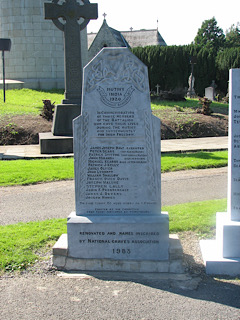
Initially, the protests are peaceful with the men involved donning green, white and orange rosettes and singing Irish nationalist songs. At Solon, however, on the evening of July 1, a party of about thirty men led by James Daly, carrying bayonets, attempt to seize their company’s rifles, stored in the armoury. The troops guarding the magazine open fire and two men are killed: Private Smythe who is with Daly’s party, and Private Peter Sears, who had not been involved in the attack on the magazine but is returning to his billet when hit by a stray bullet. Within days, both garrisons are occupied by other British troops. Daly and his followers surrender and are arrested. Eighty-eight mutineers are court-martialed: seventy-seven are sentenced to imprisonment and ten are acquitted. James Daly is shot by a firing squad at Dagshai Prison on November 2, 1920. He is the last member of the British Armed Forces to be executed for mutiny. The bodies of Privates Sears and Smythe are buried at Solan, while Daly and Miranda (who later dies in prison) are buried at a cemetery in Dagshai. Among those who receive a sentence of life in prison is Martin Conlon, a half brother to the eight brothers from Sligo town who fight in World War I, in which four are killed in action.
In 1923, following Irish Independence, the imprisoned mutineers are released and returned to Ireland. In 1936, the Irish Free State‘s Fianna Fáil government awards pensions to those whose British Army pensions were forfeited by conviction for their part in the mutiny. The bodies of Privates Sears, Smythe, and Daly are repatriated from India to Ireland for reburial in 1970.