
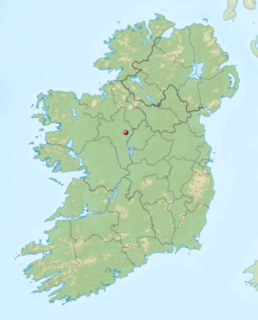
The Scramoge ambush is an ambush carried out by the Irish Republican Army (IRA) on March 23, 1921, during the Irish War of Independence (1919-21). The IRA ambush a lorry carrying British Army troops and Royal Irish Constabulary (RIC) officers at Scramoge (also spelled Scramogue), near Strokestown in County Roscommon. Three British soldiers and an RIC officer are killed, while two RIC “Black and Tans” are captured and shot dead shortly thereafter.
Following the ambush, the British carry out a sweep in which they capture three of the IRA volunteers involved and kill another who had not taken part.
County Roscommon is not one of the more violent areas of Ireland during the conflict. The local IRA argues to their GHQ that it is very difficult to conduct guerrilla warfare in the flat open countryside there. Prior to the action at Scramogue, the biggest previous incident had been in October 1920, when four RIC officers were killed in an ambush near Ballinderry.
Sean Connolly is sent by IRA GHQ from Longford to re-organise the Roscommon IRA and chooses the ambush site at Scramoge. However, he is killed twelve days before the action, at the Selton Hill ambush in neighbouring County Leitrim.
Both the North and South Roscommon brigades of the IRA take part and are commanded by Patrick Madden. There are 39 volunteers in the flying column, but only 14 take part in the actual attack. The remainder are tasked with blocking roads to keep the IRA’s line of retreat open. The IRA party is armed with thirteen rifles (eleven Lee–Enfields, one Winchester and one sporting rifle), twenty shotguns (though some are in bad condition) and two or three Webley revolvers. This is the largest collection of arms that the IRA assembles in Roscommon during the war and some of them have been borrowed from IRA units in Longford.
Among the volunteers who take part are Martin Fallon, ‘Cushy’ Hughes, Frank Simons, Luke Duffy, Peter Casey, Peter Collins, Patrick Gallagher and Tom Compton. Several of the IRA men, including Hughes, had served in the Irish Guards (IG) in World War I, but had been persuaded by Pat Madden to join the IRA upon their return.
The ambush site is carefully prepared. It is located at a sharp bend on the Strokestown–Longford road. A farmhouse and barn at the bend have been taken over and loopholed, and a trench is dug behind a hedge alongside the road. Only a mile from the IRA’s position, the British 9th Queen’s Royal Lancers regiment is garrisoned in Strokestown House.
The IRA waits in their position all day for British forces to come from Strokestown. Just as a troop lorry finally appears, two civilians came up the road in a pony and trap and have to be frantically waved out of the way.
The lorry carries a nine-man British Army and Royal Irish Constabulary (RIC) patrol traveling on the Strokestown–Longford road. The British inquiry into the incident is to question why the lorry is unescorted, as their practice is not to travel in lone vehicles.
The IRA opens fire from very close range, killing the driver and halting the lorry in its tracks. Several of the soldiers and policemen are hit and they scrambled for cover behind a wall along the road. The lorry has a Hotchkiss machine gun bolted onto it, but its gunner gets off only one burst before being badly wounded and the gun is put out of action. The commander of the patrol, Captain Roger Grenville Peek, is hit in the lorry but tries to run to safety, only to be hit again and killed 400 yards down the road. The other officer with the party, Lieutenant Tennant, is also killed by a shotgun blast. After the death of the two officers, the surviving British, several of whom are wounded, surrender.
Just as the firing is dying down, another lorry, an RIC/Black and Tan patrol, approaches the ambush site but turns back after coming under fire.
Four of the British force are killed – this includes two British Army officers (Roger Grenville Peek and John Harold Anthony Tennant), a Royal Army Service Corps (RASC) driver, and one RIC man (Constable Edward Leslie).
Two men in civilian clothes are also found in the lorry. They turn out to be Black and Tans, Constable Buchanan and Constable Evans, who had been placed under arrest by the soldiers. They are made prisoners by the IRA. The ambush party takes the British arms, including the Hotchkiss gun, burn the lorry and make their escape over the hill of Slieve Bawn.
The IRA leaders, Pat Madden, Luke Duffy and Frank Simons, decide to murder the two Black and Tans, despite their offering to show the IRA how to use the captured machine gun. The IRA officers’ reason that if the prisoners identify the IRA men who had taken part in the ambush, the volunteers will be at risk of being executed if captured. The two are taken to remote locations and shot over the next two days.
The British garrison in Roscommon town mounts a sweep directly after the ambush with eight lorries and one Whippet tank. Three volunteers who had taken part are arrested afterward. Pat Mullooly and Brian Nagle of the North Roscommon Brigade are arrested as they try to get away from the scene of the ambush, as is “Cushy” Hughes, who is picked up when he is drawing his soldier’s pension in Roscommon. Mullooly and Nagle are badly beaten by their captors on the road to Roscommon. The next day, another volunteer, Michael Mullooly, brother of Pat Mullooly, is shot dead in his home by the RIC.
 seamus dubhghaill