
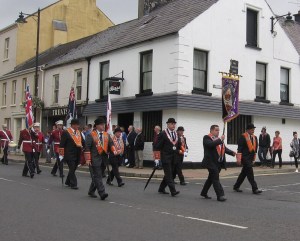
 The Independent Orange Order, a Protestant fraternal organisation, is formed in Belfast on June 11, 1903 by Thomas Sloan and others associated with the Belfast Protestant Association, who have been expelled from the Orange Order because they voice opposition to it being used for party political ends by Ulster Unionists. Originally it is associated with the labour movement, but it soon realigns itself with traditional unionist politics.
It takes its name in memory of King William of Orange of the house of Orange who fights at the Battle of the Boyne, brings about the Glorious Revolution and the Bill of Rights giving the Westminster parliament ultimate power of the country rather than the Monarch. The Independent Order is small compared to the main organisation with 1,500 to 2,000 members. It is largely based around north County Antrim in Northern Ireland but has lodges around the world, including England, Scotland, and Australia. Its annual main Twelfth of July demonstration is held in a north Antrim town or village.
The first notable effect after the formation of the Independent Order is a more liberal interpretation of the rules of the “Old Order.” In the early years of the Institution, many suffer the full wrath of the “powers that be,” who are opposed to any splitting of the Orange Order. Jobs are lost, homes are burned, and their headquarters in Belfast is bombed.
Independent Orangeism today maintains that it is essential for the Orange Institution to be kept free from politics and to guard the principles of Reformation Protestantism. They often express alarm when they believe these principles are endangered by conciliatory politicians. They are opposed to ecumenism and, while being opposed to Orangeism being linked to the Ulster Unionist Party, they are not apolitical and tend to work alongside unionist politicians and parties.
The Institution also promotes Ulster Protestant history and proclaims the principle of “Liberty of Conscience.” They declare their right to think and act independently without direction from political or clerical masters, they seek to strengthen the position of Orangeism, and they often warn of the danger of the development of a social and cultural Orangeism devoid of Protestant principle.

 seamus dubhghaill