
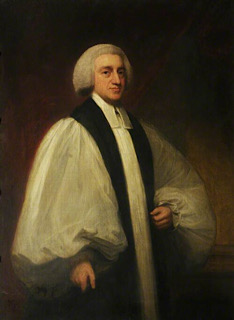
Charles Agar, 1st Earl of Normanton, an Anglo-Irish clergyman of the Church of Ireland, is born in Gowran Castle in Gowran, County Kilkenny, on December 22, 1736. He serves as Dean of Kilmore, as Bishop of Cloyne, as Archbishop of Cashel, and finally as Archbishop of Dublin from 1801 until his death.
Agar is the third son of Henry Agar of Gowran and his wife Anne Ellis, daughter of the Most Reverend Welbore Ellis, Bishop of Meath. His brothers include James Agar, 1st Viscount Clifden, and Welbore Ellis Agar, a notable art collector. Welbore Ellis, 1st Baron Mendip, is his maternal uncle.
Agar is educated at Westminster School in Westminster, London, and Christ Church, Oxford, where he matriculates on May 31, 1755, aged 18. He graduates BA in 1759, promoted by seniority to MA in 1762. On December 31, 1765, he is created a Doctor of Civil Law.
Agar is known to have held particularly marked Calvinistic positions. He serves as Dean of Kilmore from 1765 to 1768, and then as Bishop of Cloyne until 1779.
In 1776, Agar marries Jane Benson, a daughter of William Benson, of Downpatrick, County Down. In 1779 he is appointed as Archbishop of Cashel and also joins the Privy Council of Ireland. In 1784, while he is in office, the new St. John’s Cathedral, Cashel, is completed, and two years later its important Samuel Green organ is built.
In 1794, Agar is raised to the Peerage of Ireland as Baron Somerton. In 1801, he is translated to become Archbishop of Dublin and is created Viscount Somerton. In 1806, he is further honoured when he is made Earl of Normanton. These titles are all in the Peerage of Ireland. He remains as Archbishop of Dublin until his death in 1809, and from the beginning of 1801 onward, sits in the House of Lords as one of the twenty-eight original Irish representative peer, following the Acts of Union 1800 which unites Ireland and Great Britain.
Agar dies on July 14, 1809, aged 72, and is succeeded in his secular titles by his son Welbore Ellis Agar. He is buried in the north transept of Westminster Abbey. His widow Jane, Countess of Normanton, is buried alongside him following her death in 1826. His tomb dates from 1815 and is created by John Bacon.
 seamus dubhghaill