seamus dubhghaill

Promoting Irish Culture and History from Little Rock, Arkansas, USA


Leave a comment

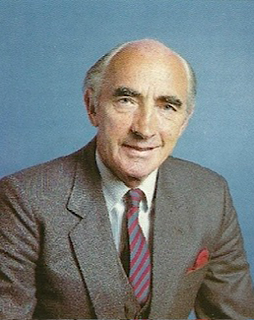
Death of Jim Tunney, Fianna Fáil Politician

James C. Tunney, a Fianna Fáil politician, dies in Dublin on January 16, 2002.

Tunney is born on December 25, 1924, in Finglas, Dublin, the fourth child among three sons and five daughters of James Tunney, a farmer and Labour Party Teachta Dála (TD) and senator, and M. Ellen Tunney (née Grimes), who both come from outside Westport, County Mayo. He is educated at St. Vincent’s C.B.S. in Glasnevin.

Tunney works in the Department of Agriculture from 1943 to 1955 and it is during this period that he studies part-time at University College Dublin (UCD), where he takes a BA in drama, English, and Irish before studying for a postgraduate qualification in Irish. From 1955 to 1962 he teaches drama at Vocational Education Committees (VEC) in Lucan, Balbriggan, and Garretstown, before being appointed headmaster of Blanchardstown VEC in 1962.

Tunney also plays at senior level for the Dublin county football team. He is on the winning side for Dublin in the 1948 All-Ireland Junior Football Championship.

A snappy dresser who earns the nickname “the yellow rose of Finglas,” Tunney is sometimes seen as pompous, a perception possibly attributable to his acting background, which once leads to an audition at Dublin’s Abbey Theatre.

In 1963 Tunney joins Fianna Fáil, and stands for the party at the  1965 Irish general election but is not elected. He is elected to Dáil Éireann as a Fianna Fáil TD for the Dublin North-West constituency at the 1969 Irish general election. He serves continuously in the Dáil until losing his seat at the 1992 Irish general election, having been a TD for Dublin Finglas from 1977 to 1981 when Dublin constituencies are reconfigured as 3-seaters, before being returned for Dublin North-West in 1981.

During this period Tunney serves as Parliamentary Secretary to the Minister for Education (after 1978, Minister of State at the Department of Education) in three governments. He serves as Leas-Ceann Comhairle of Dáil Éireann from 1981 to 1982, and from 1987 to 1993. He is also chair of the Fianna Fáil parliamentary party for ten years. He is a member of Dublin City Council, and serves as Lord Mayor of Dublin from 1984 to 1985.

Following Tunney’s death, Taoiseach Bertie Ahern describes him as “a parliamentarian and a gentleman who was passionately committed to serving his country.” Ahern adds, “he was not only a man of substance but one of style. From the flower that was always in his buttonhole to the elegance of his language in both Irish and English he had a commanding and stylish presence.”

Fine Gael leader Michael Noonan says Tunney had gained “the widespread affection and respect of colleagues of all political parties.”

Leader of the Labour Party Ruairi Quinn describes Tunney as a “thoughtful and courteous colleague” who carried out his duties with “fairness but also with wit and style.”

Leave a comment

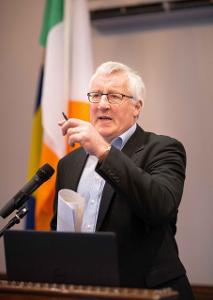
Birth of Pat Spillane, Gaelic Footballer & Broadcaster

Patrick Gerard Spillane, retired Gaelic footballer and current sports broadcaster better known as Pat Spillane, is born in Templenoe, County Kerry, on December 1, 1955. His league and championship career with the Kerry GAA senior team spans seventeen years from 1974 to 1991. Spillane is widely regarded as one of the greatest players in the history of the game.

Spillane is born into a strong Gaelic football family. His father, Tom, and his uncle, Jerome, both play with Kerry and win All-Ireland Junior Football Championship medals. His maternal uncles, Jackie, Dinny, Mickey, and Teddy Lyne, all win All-Ireland medals at various grades with Kerry throughout the 1940s and 1950s.

Spillane plays competitive Gaelic football as a boarder at St. Brendan’s College. Here he wins back-to-back Corn Uí Mhuirí medals, however, an All-Ireland medal remains elusive. He first appears for the Templenoe GAA club at underage levels, before winning a county novice championship medal in 1973. With the amalgamated Kenmare District team he wins two Kerry Senior Football Championship medals in 1974 and 1987. While studying at Thomond College he wins an All-Ireland Senior Club Football Championship medal in the club championship in 1978. He also wins one Munster Senior Club Football Championship medal and a Limerick Senior Football Championship medal.

Spillane makes his debut on the inter-county scene at the age of sixteen when he is picked on the Kerry minor team. He enjoys two championship seasons with the minor team, however, he is a Munster Minor Football Championship runner-up on both occasions. He subsequently joins the Kerry under-21 team, winning back-to-back All-Ireland Under-21 Football Championship medals in 1975 and 1976. By this stage he has also joined the Kerry senior team, making his debut during the 1973-74 league. Over the course of the next seventeen years, he wins eight All-Ireland Senior Football Championship medals, beginning with a lone triumph in 1975, a record-equalling four championships in-a-row from 1978 to 1981 and three championships in-a-row from 1984 to 1986. He also wins twelve Munster medals, two National Football League medals and is named Footballer of the Year in 1978 and 1986. He plays his last game for Kerry in August 1991. He is joined on the Kerry team by his two brothers, Mick and Tom, and together win a total of 19 All-Ireland medals, a record for a set of brothers.

After being chosen on the Munster GAA inter-provincial team for the first time in 1976, Spillane is an automatic choice on the starting fifteen for the following six years. During that time he wins four Railway Cup medals.

In retirement from playing Spillane combines his teaching career with a new position as a sports broadcaster. His media career begins with RTÉ in 1992, where he starts as a co-commentator before progressing to the role of studio analyst with the flagship programme The Sunday Game. He also enjoys a four-year tenure as host of the evening highlights edition of the programme. He also writes a weekly column for the Sunday World.

Even during his playing days Spillane comes to be recognised as one of the greatest players of all time. After fighting his way back from a potentially career-ending anterior cruciate ligament injury, he is named in the right wing-forward position on the Football Team of the Century in 1984. He is one of only two players from the modern era to be named on that team. He switches to the left-wing forward position when he is named on the Football Team of the Millennium in 1999. His collection of nine GAA GPA All Stars Awards is a record for a Gaelic footballer, while his tally of eight All-Ireland medals is also a record which he shares with fellow Kerry players Páidí Ó Sé, Mikey Sheehy, Denis “Ógie” Moran and Ger Power.