seamus dubhghaill

Promoting Irish Culture and History from Little Rock, Arkansas, USA


Leave a comment

Birth of Henry Vivien Pierpont Conyngham

henry-vivien-pierpont-conyngham

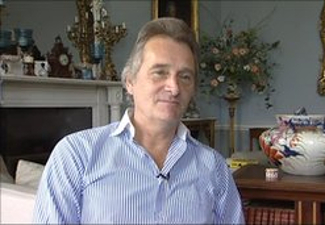
Henry Vivien Pierpont Conyngham, 8th Marquess Conyngham, Anglo-Irish nobleman who holds titles in the Peerages of Ireland and the United Kingdom, is born on May 25, 1951.

The eldest son of Frederick Conyngham, 7th Marquess Conyngham by his wife, Eileen Wren Newsom, he attends Harrow School before studying at Harvard University.

Styled Viscount Slane until 1974 and Earl of Mount Charles from 1974 until 2009, he succeeds his father in the marquessate and other titles in 2009. However, in the Republic of Ireland frequently, and erroneously, he remains referred to as Lord Mountcharles, his former courtesy title. He also inherits the U.K. peerage title Baron Minster, of Minster Abbey in the County of Kent, created in 1821 for his ancestor, the 1st marquess thereby giving the Marquesses Conyngham the automatic right to sit in the British House of Lords until 1999.

As Earl of Mount Charles, he unsuccessfully contests the Louth seat in 1992 for Fine Gael. In 1997 he stands for election to Seanad Éireann for Trinity College Dublin and runs again without success as a Fine Gael candidate for the European Parliament in 2004.

Lord and Lady Conyngham divide their time between Beauparc House and Slane Castle in County Meath. The latter is the family’s principal ancestral seat until it is badly damaged by fire in 1992. The castle has now been restored.

The Marquess Conyngham enjoys a high profile in Ireland as the author of a weekly column in the Daily Mirror. He has been dubbed the rock and roll aristocrat or the rock and roll peer owing to the very successful series of rock concerts he has hosted since 1981, held in the natural amphitheatre on the grounds of Slane Castle. These concerts have included performances by The Rolling Stones, Thin Lizzy, Queen, U2, Bob Dylan, Bruce Springsteen, David Bowie, Guns N’ Roses, Oasis, and Madonna. Lord Conyngham receives the Industry Award at the 2010 Meteor Awards. In his autobiography Public Space–Private Life: A Decade at Slane Castle, he describes his business career and the challenges of being an Anglo-Irish peer in modern Ireland, and how being Anglo-Irish has gradually become more accepted there.


Leave a comment

The Acts of Union 1800

On January 1, 1801, the Acts of Union 1800 goes into effect uniting the Kingdom of Great Britain and the Kingdom of Ireland to create the United Kingdom of Great Britain and Ireland. The Acts of Union 1800 consists of two acts with the same long title, An Act for the Union of Great Britain and Ireland. Both are passed in 1800.

Before these Acts, Ireland had been in personal union with England since 1541, when the Parliament of Ireland had passed the Crown of Ireland Act 1542 proclaiming King Henry VIII of England to be King of Ireland. Both Ireland and England had come in personal union with Scotland with the Union of the Crowns in 1603.

In 1707, the Kingdom of England and the Kingdom of Scotland were united into a single kingdom named the Kingdom of Great Britain. The Irish parliament at that time was subject to a number of restrictions that placed it subservient to the Parliament of England and, following the union of England and Scotland, the Parliament of Great Britain.

In the century that followed the union of England and Scotland, Ireland gained effective legislative independence from Great Britain through the Constitution of 1782. However, access to institutional power in Ireland was restricted to a small minority, the so-called Anglo-Irish of the Protestant Ascendancy. Frustration at the lack of reform eventually led to a rebellion in 1798, involving a French invasion of Ireland and seeking complete independence from Great Britain. The rebellion was crushed with much bloodshed and the subsequent drive for union between Great Britain and Ireland that passed in 1800 was motivated at least in part by the belief that the rebellion was caused as much by loyalist brutality as by the United Irishmen.

Each Act had to be passed in the Parliament of Great Britain and the Parliament of Ireland. The final passage of the Act in the Irish Parliament was achieved with substantial majorities, achieved in part according to contemporary documents through bribery, namely the awarding of peerages and honours to critics to get their votes.

Both Acts, though since amended, still remain in force in the United Kingdom but have been repealed in the Republic of Ireland.