seamus dubhghaill

Promoting Irish Culture and History from Little Rock, Arkansas, USA


Leave a comment

Anti-Treaty IRA Raid Ballyconnell, County Cavan

On the morning of February 5, 1923, at about 7:00 a.m., fifty well-armed anti-Treaty Irish Republican Army (IRA) fighters descend on Ballyconnell, County Cavan, from the hills in a military lorry and several cars. The guerrillas, armed with rifles and three machine guns, stop the train to nearby Ballinamore so that word will not get out to adjacent Irish Free State garrisons and then go in search of those they hold responsible for the death of anti-Treaty IRA volunteer Michael Cull during a raid on Ballyconnell on January 6.

At Oven’s grocery, the proprietor, William Ovens, is shot through the thigh and badly wounded. One of his employees, William Ryan, is dragged out and shot dead. According to the local press, the guerrillas shout “was it you who shot Cull?” at Ryan before they shoot him. His 80 year old father follows the fighters through the streets, shouting “murder, murder.”

Sean McGrath, an Irish language teacher, originally from Galway, is also dragged out of bed and shot dead, apparently for no other reason than that he is lodging at the home of Free State supporter, John Dunn.

The guerrillas proceed to bomb and burn out three shops, including the car dealership and the Post Office, and to smash the windows of the other premises with shots and rifle butts. The Ulster Bank branch is robbed of £200 and two Ford cars are seized. After a rampage of 35 minutes, the IRA column re-mounts their vehicles and heads back toward the Arigna hills, leaving the little town partially in flames, pockmarked with bullet holes and mourning the death of two of its citizens.

According to the pro-Treaty National Army, “Our troops in Belturbet got word of the raid, and immediately set out in all their transport. They were joined en route by two Fords of troops from Cavan, and all proceeded to Ballyconnell, where they arrived shortly after 9 o’clock. They followed the Irregulars past Ballinamore, but failed to get in touch with them.”

The ruthlessness of the reprisal at Ballyconnell – the premeditated assault on civilians – shocks pro-Treaty opinion. For the Free State government it exemplifies the irrationality and criminality of what they called the “Irregulars.” Such madness justifies the government’s repressive measures, particularly the executions of republican prisoners which had been going on since November of the previous year.

Kevin O’Higgins, Minister for Home Affairs and hard-line supporter of the executions policy, says, “I want to combat the view that it was a natural thing to expect that a body of Irishmen would descend upon this little town and proceed to murder their fellow-citizens. It was not a natural thing. It is perhaps the most unnatural thing that has happened since this unnatural strife began.”

Within a week, a National Army expedition is dispatched to the West Cavan/ Leitrim area in considerable strength to root out Ned Bofin’s anti-Treaty column, which had carried out the Ballyconnell raid. They report that “the people are delighted at our presence and their only fear is that we might leave” but are afraid to give information. “Our only concern,” they report, “is the remarkable agility of the Irregulars in retreating from an engagement with us.”

If one is to believe the National Army version, the Irregulars are simply cowardly bandits without any public support and the conflict in the border region would evaporate with the presence in strength of government troops. And if one is to take the Ballyconnell reprisal alone, this would appear to make sense. However, looked at a little more closely, it is clear that the Irish Civil War in this region is a complex web of national and local conflicts, that the Ballyconnell incident is only the culmination of the collapse of Free State authority in the area over several months.

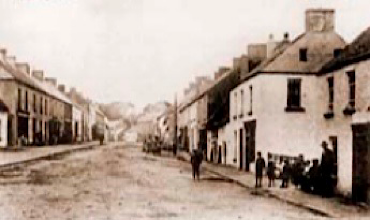
(From: “The Tragedies of Ballyconnell” by John Dorney, The Irish Story, http://www.theirishstory.com, June 2014 | Pictured: The main street in Ballyconnell in the early 20th century)


Leave a comment

Death of Anti-Treaty IRA Volunteer Michael Cull

Michael Cull, an anti-Treaty Irish Republican Army (IRA) Volunteer from Roscommon, is killed during a raid on Ballyconnell, County Cavan, on January 6, 1923.

Ballyconnell is a small town in western County Cavan. According to the 1911 census it is populated by 125 families, or in the region of 600 people, and is according to local pro-Treaty TD Seán Milroy, “in the values of country towns, a very considerable centre of county life.” Since 1921 it has been wedged up against the new border with County Fermanagh and Northern Ireland to the north and the Arigna Mountains to the south and west. As the Irish Civil War rages south of the border, and with no effective police or military presence, Ballyconnell is particularly vulnerable to the depredations of armed groups of various allegiance.

Cull is part of a contingent of 50-70 anti-Treaty fighters holed up in the Arigna Mountains. As well as guerrilla attacks against the forces of the Irish Free State, one of their most frequent actions, out of necessity, is raids on civilian targets for supplies.

Cull, according to the local newspaper, is holding up Ovens’ hardware and grocery shop in Ballyconnell when he is shot dead by a plain clothes Free State officer. The National Army later derisively refers to “the shooting of a looter named Cull … He and others were raiding in Ballyconnell when a couple of officers who were in the area got in touch with them. This gang of Irregulars have been in the mountains for several months past.”

Cull’s death is by no means the end of Ballyconnell’s troubles. The anti-Treaty column based in the Arigna Mountains, composed of Volunteers from Roscommon, Leitrim and Cavan (which includes Cull’s brother James) and led by Ned Bofin, visits a ferocious revenge on the small town for the death of Cull.

Almost exactly a month later, on the morning of February 5, 1923, at about 7:00 a.m., fifty well-armed anti-Treaty IRA fighters descend on Ballyconnell from the hills in a military lorry and several cars. The guerrillas, armed with rifles and three machine guns, stop the train to nearby Ballinamore so that word cannot get out to adjacent Free State garrisons. They then go in search of those they hold responsible for Cull’s death.

At Oven’s grocery, the proprietor, William Ovens, is shot through the thigh and badly wounded. One of his employees, William Ryan, is dragged out and shot dead. According to the local press, the guerrillas shouted, “Was it you who shot Cull?” at Ryan before they shot him. His 80-year-old father follows the fighters through the streets, shouting “murder, murder.”

Sean McGrath, an Irish language teacher originally from Galway, is also dragged out of bed and shot dead, apparently for no other reason than that he is lodging at the home of Free State supporter John Dunn.

The guerrillas proceed to bomb and burn out three shops, including the car dealership and the Post Office, and to smash the windows of the other premises with shots and rifle butts. The Ulster Bank branch is robbed of £200 and two Ford cars are seized. After a rampage of 35 minutes, the IRA column re-mount their vehicles and head back toward the Arigna Mountains, leaving the little town partially in flames, pockmarked with bullet holes and mourning the death of two of its citizens.

According to the pro-Treaty National Army, “Our troops in Belturbet got word of the raid, and immediately set out in all their transport. They were joined en route by two Fords of troops from Cavan, and all proceeded to Ballyconnell, where they arrived shortly after 9 o’clock. They followed the Irregulars past Ballinamore but failed to get in touch with them.”

(From: “The Tragedies of Ballyconnell” by John Dorney, The Irish Story (www.theirishstory.com), June 19, 2014 | Pictured: The main street of Ballyconnell in the early 20th century)