Drew’s parents are the Rev. Thomas Drew and Isabella (née Dalton) Drew. She is the third of the couple’s eight daughters and four sons, although most of her siblings die young. She spends her childhood in Belfast, where her father is the rector of Christ Church in Durham Street from 1833 to 1859. In 1866, she moves to 60 Upper Sackville Street, Dublin, to live with her brother, the architect Thomas Drew.
From here she appears to begin her journalist career, writing articles for the Irish Builder, going on to eventually become its assistant editor. She goes on to write for Belfast’s News Letter, and following advice from its proprietor James Alexander Henderson, she moves to London in 1871 becoming the paper’s London correspondent. She writes two columns, Metropolitan gossip and Ladies’ letter, which are among some of the earliest regular columns written specifically for women, providing society news for her readers in Belfast. Articles by her also appear in The Literary World, The British Architect and London Society.
Drew is one of the founding members of the Ladies’ Press Association, and campaigns for greater rights for women journalists. She becomes a prominent figure in the Institute of Journalists, representing the Institute at several international congresses. She is serving as the vice-president of the Institute at the time of her death. She also works on its Orphan Fund for many years, an initiative she originally suggests in 1891.
In 1894, Drew is one of the signatories of the Frances Power Cobbe memorial campaigning for greater recognition and rights for women journalists, alongside Millicent Fawcett and Jessie Boucherett. She writes a number of novels, including Harry Chalgraves’s Legacy (1876) and The Lutanistes of St. Jacobi’s (1881). In March 1885, she gives a lecture titled Dress, Economic and Technical at the Loan Exhibition of Women’s Industries in Bristol, which later appears as a pamphlet.
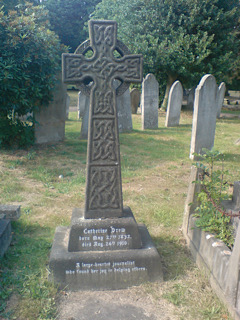
Drew dies at her home in Holland Street, Kensington, on August 26, 1910, and is buried at the Royal Borough of Kensington and Chelsea Cemetery, Hanwell. Lady Drew, her sister-in-law, erects a Celtic cross memorial there in her honour. She bequeaths a jewel-studded gold bracelet to the Institute of Journalists, which had been presented to her by the Institute to mark her retirement in 1908. It is worn by women presidents or the wives of male presidents, and is known as the “Drew Bracelet.”
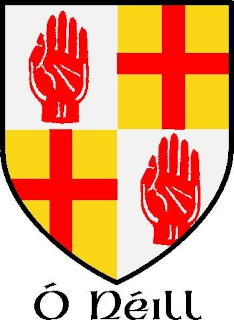
The Battle of Glentaisie is fought in the north of Ulster on May 2, 1565. The result is a victory for Shane O’Neill over the Clan MacDonald of Dunnyveg. The conflict is a part of the political and military struggle for control of the north of Ireland, involving the English and occasionally the Scots. Although the MacDonalds are a Scottish family, based principally on the island of Islay in the Hebrides, they have long been associated with the Gaelic polity rather than the Kingdom of Scotland.
O’Neill assembles his army for the attack on the MacDonnells at the tower house of Feadan, at Fathom Mountain, near Newry. Traditionally, he “kept Easter” at Feadan, and an assembly of his clan would be unremarked until its size draws notice.
The MacDonnells expect O’Neill’s sizeable army to take some weeks to reach their territory on the Antrim coast. They start gathering as many warriors in the Highlands and Islands as they can muster. However, O’Neill advances with unprecedented speed. Within a week his army arrives at Edenduffcarrick.
Sorley Boy MacDonnell gathers a small holding force at a forward base at Cloughdonaghy. He attempts to stop O’Neill’s advancing army at Knockboy, a wooded pass in the hills above Broughshane. O’Neill sweeps Sorley’s ambush away, takes Cloughdonaghy and sends a force of cavalry to seize James MacDonald of Dunnyveg’s recently constructed Red Bay Castle. With the landing beaches at Waterfoot and Cushendall now controlled by O’Neill’s army, the first several hundred of MacDonnell’s men are compelled to land farther north. They land at Ballycastle beach to await the locally raised MacDonnnell army. Their plan is to await the arrival of their brother Alexander, the MacDonnell seneschal of Cantyre, who is assembling a second army composed from late comers to James of Dunnyveg’s army.
O’Neill does not permit the MacDonnells any time for their reinforcement to arrive. His advance guard continues to press the retreating MacDonnell army, who fall back from the beach through Ballycastle. They are driven past the area of the modern Diamond and well away from the river Tow, denying them the necessary water supply for a sizeable army.
Both armies set up camp for the night. O’Neill’s army occupies land at the centre of modern Ballycastle, between the modern Diamond and the river Tow, giving them full access to water. The combined MacDonnell army of around five hundred men occupy the exposed higher ground at Ramon, the ridge at the head of modern Castle Street, Ballycastle, where the Presbyterian Church now stands, with only a small well for their needs.
At very first light, O’Neill attacks uphill with a sudden onslaught led by his heavy Gallowglassinfantry. By forgoing the customary exchange of spears, darts, and arrows by the light infantry kernagh and Scots archers that customarily precede the usually decisive deployment of the Gallowglass corrughadh, or battalions, O’Neill surprises the MacDonnell army. The MacDonnell leaders try to rally their men, but after a violent interlude of some confusion, they break and flee over Knocklayd mountain in the direction of Glenshesk, heading back toward the beach at Cushendun. James of Dunnyveg is seriously wounded in the early fighting and his brother Angus MacDonnell is killed.
The attempt to flee by the old mountain road between Greenan and Ballypatrick Forest in an attempt to reach a possible landing place for their birlinns at Cushendun beach is finally stopped at a hollow at Legacapple. Sorley Boy and James are both taken prisoner. James dies of his wounds two months later at Castle Crocke, near Strabane. Their brother Alistair Og MacDonnell had landed at Rathlin, with the final levies raised in the Highlands and Islands, reputed to be nine hundred men. However, in the immediate aftermath of O’Neill’s decisive victory, Alistair can achieve nothing without a base on the mainland. O’Neill marches on along the north coast to mop up the MacDonnell garrisons and deny Alistair any foothold from which to launch a MacDonnell recovery. Dunseverick and Dunluce fall within a few days, and Alistair returns to Scotland.
Campbell is the eldest son of Thomas Campbell and Jane Campbell (née Corneigle), who marry in 1787 and later have four daughters and two younger sons. His father, the son of soldier Archibald Campbell and his wife Alice McNally, is born on February 1, 1763, at Sheepbridge, near Newry, County Down. The Presbyterian minister William Campbell may have been a relation.
Archibald Campbell is born Catholic but joins the Church of Ireland, while his son joins the seceding branch of the Presbyterian church and studies at the University of Glasgow, graduating with a Master of Arts degree in 1786, although he does not appear in the published records of the university. He becomes a teacher but is determined to become a minister, and studies in the Anti-Burgher Divinity Hall in Whitburn, West Lothian (or the Seceder Theological Seminary in Whithorn, Wigtownshire, according to another source) for two months each year for five years. He is ordained a minister in the seceding congregation of Ahorey, County Armagh, probably in 1798. Although at first a member of the Anti-Burgher party in his church, Thomas Campbell begins to believe that divisions between and within denominations are prejudicial to true Christianity. He writes a report in 1804 suggesting that Burgher and Anti-Burgher Presbyterians in Ireland should unite. When this is vetoed in 1805 by the General Associate Synod of Scotland, Thomas Campbell, then moderator of the Irish Seceding Synod, initiates an unsuccessful move to seek independence from Scottish control. His experiences with church authorities undoubtedly increase his belief in the need to rediscover the scriptural basis of religion, freed from man-made creeds.
In 1804, Thomas Campbell sets up an academy at Richhill, County Armagh. In 1798, he is one of the founders of the Evangelical Society of Ulster in which clergymen from differing sects cooperate but resigns when this enterprise is frowned on by seceding authorities.
In poor health in 1806, Thomas Campbell resigns from Ahorey, and goes to the United States in 1807, where he preaches in small congregations around Washington, Pennsylvania. He is soon accused of doctrinal unsoundness, of disciplinary laxity and of administering the sacraments to non-Presbyterians. His appeal to the Associate Synod of North America is unsuccessful, and in 1809 he ceases to be a minister of the seceder church. His liberal views on Christian unity and on the paramount importance of the Bible attract supporters, and in 1809 they found the Christian Association of Washington. He publishes a declaration and address in which he sets out the principles of this body. His followers claim it represents a “second reformation” or a “restoration.” It forms the basis of the doctrine of what becomes America’s most important indigenous religious development, and is regarded as significant in the history of the wider ecumenical movement. He publishes a great many other tracts and articles. Thomas Campbell dies in Bethany, West Virginia, on January 4, 1854.
Thomas had married Jane Corneigle in 1787 and their eldest son Alexander is born on September 12, 1788, in Broughshane, County Antrim, where his father is teaching. His parents intend him for the ministry, and he receives a good education, partly from his father, and religious training from both parents. He is greatly influenced by his strongminded and pious mother. In October 1808 his family sets sail for America to join his father. The ship is wrecked on the island of Islay, off Scotland. All on board are saved, partly thanks to Alexander’s strength and leadership. Rather than continuing the voyage by other means, Alexander spends eight months in the University of Glasgow to prepare himself for the ministry.
In the summer of 1809, the family finally arrives in Pennsylvania, among many emigrants from Ulster. On January 1, 1812, Campbell is ordained as a minister by his father’s Brush Run Church, and quickly takes over the leadership of the fledgling church. By 1812, most of their followers, thenceforth often called Campbellites, have undergone baptism by immersion; a union with the Baptist denomination results, but does not survive after 1830, by which date Campbell’s work on a translation of the Greek New Testament has convinced him that baptism is unscriptural. Controversy between the two groups continues for many years.
A very able preacher and debater, whose public discussions attract much attention, Campbell attacks the creeds and governance of established churches. In 1823, he founds the journal the Christian Baptist. Subsequently in 1830, after the break with the Baptists, he starts the Millennial Harbinger. Both periodicals are largely written by Campbell and his father, Thomas, and are widely influential. He is convinced that church unity will usher in a millennial age of peace and harmony. Primitive Christianity is thus to bring about a utopian future. His book Christianity Restored (1835) is widely read, in Britain as well as in the United States. In 1826, a translation of the Greek New Testament is printed by Campbell’s press in Bethany, West Virginia. Largely based on recent translations by others, it nonetheless contains variant readings by Campbell and furthers his aim of providing followers with authoritative texts on which to base their beliefs. In 1841, he founds Bethany College, West Virginia, and is its president until his death in Bethany on March 4, 1866, when he leaves it $10,000 and a large library.
In 1832, several fledgling churches join the Campbellites, and form a new body called the Christian Church, or Disciples of Christ, which today has over 3,000 congregations in the United States. The two guiding principles of the lifelong beliefs of the Campbells are in the end irreconcilable. An emphasis on the literal interpretation of scripture allows believers to form beliefs at variance from those of co-religionists, and neither Alexander Campbell’s great authority in the denomination nor Thomas Campbell’s emphasis on the need for church unity are enough to prevent the fissions inevitable in a church that so strongly opposes man-made creeds. There are now at least six major divisions of the Church of Christ, one of several alternative names.
On March 2, 1811, Campbell marries Margaret Brown, and thenceforth derives his income from the large farm that had belonged to her family. They have eight children, who all die in their father’s lifetime. Margaret Brown Campbell dies on October 22, 1827. On July 31, 1828, in fulfilment of his wife’s dying request, the widower marries the English-born Selina Huntington Bakewell, and has six children with her. Four of those children survive him. Selina Campbell writes a memoir of her husband, published in 1882, and lives until 1897.
(From: “Campbell, Alexander” by Linde Lunney, Dictionary of Irish Biography, http://www.dib.ie, last revised May 2021)


 seamus dubhghaill