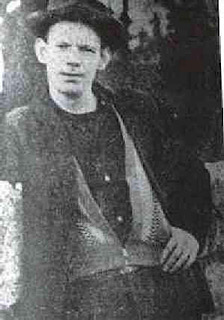
McGladdery is raised by his mother, Cissie McGladdery, a respectable woman who works at the local Damolly Mill to support the family. His father dies prior to this period, leaving Cissie to raise four children alone in modest circumstances. Information on his father remains scarce, and while details about his siblings are limited, he has at least one older brother named Sam.
During his teenage years in the Newry area, McGladdery exhibits patterns of truancy and engages in minor troubles that lead to multiple placements in reform school. Locally in Newry, he earns a reputation as a “well-known bad lad,” particularly noted for predatorial behavior toward women. This perception persists into his early adulthood, marking him as a loner with a violently self-willed disposition, as recalled by his mother. He works sporadically as an agricultural laborer in the Newry region, a common occupation for young men in the area during the late 1950s. By age 25 in 1961, however, he is unemployed and continues to reside with his mother in Damolly.
McGladdery is convicted of the murder of Pearl Gamble, aged 19, whom he had battered, strangled and stabbed to death on January 28, 1961, and whose body is discovered at Upper Damolly, near Newry. It transpires that the murderer and victim are distant cousins. Gamble had gone to a dance at the Henry Thomson Memorial Orange Hall in Newry with three girlfriends. She had been seen dancing with her boyfriend and McGladdery.
The murder investigations lead to McGladdery. When interviewed, he states to have worn a dark blue suit but other people at the dance say he wore a light-coloured one. He is put under surveillance and is discreetly seen going to some undergrowth on February 10, 1961. The following day, the police discover, inside a pillow case in a septic tank, an overcoat, a waistcoat and a handkerchief, all of which are heavily bloodstained. McGladdery is arrested on the same day.
At his trial in Downpatrick, McGladdery pleads his innocence but is found guilty and sentenced to death on October 16, 1961. The evening before his execution he allegedly makes a full confession to the murder. He is hanged, aged 26, at Crumlin Road Gaol in Belfast on December 20, 1961, by executioner Harry Allen.
A BBC Northern Ireland dramatisation of the case, Last Man Hanging, is broadcast on September 8, 2008. McGladdery is portrayed by Michael Condron.
The murder and subsequent execution is the theme of Eoin McNamee‘s 2010 novel, Orchid Blue.
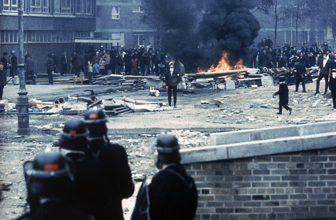
The unrest begins on August 12 with the Battle of the Bogside in Derry’s predominantly CatholicBogside district. Tensions have been building for over a year due to long-standing nationalist grievances, including political discrimination and gerrymandering that has kept the city under Unionist control since 1925. The violence erupts during the annual Apprentice Boys’ march, when Protestant marchers pass through the Catholic area, provoking clashes with residents.
On August 13, nationalist protests spread to other towns, including Belfast, Armagh, Dungannon, and Newry. In Belfast, seven people are killed and hundreds wounded, with many Catholic civilians shot by police. Loyalists attack Catholic homes, and both republican and loyalist paramilitaries are involved. Over 150 homes are destroyed, and 1,800 families are displaced.
By August 14, the British government deploys 300 troops from the 1st Battalion, Prince of Wales’s Own Regiment of Yorkshire to County Londonderry, replacing the exhausted RUC. The move is initially welcomed by some residents, but it remains clear that the violence has not been contained. The deployment marks the start of Operation Banner, the British Army’s long-term presence in Northern Ireland.
The riots and protests are widely regarded as the beginning of the Troubles, a 30-year conflict. The British Army’s presence, the establishment of peace lines to separate Catholic and Protestant areas, and the Republic of Ireland’s call for a United Nations peacekeeping force reflect the deepening crisis.
In short, August 14, 1969, is the day British troops enter Northern Ireland to restore order after days of nationalist-led protests and riots, events that define the region’s political landscape for decades.
Mitchel, a writer for The Nation and founder of his own journal, United Irishman, openly preaches rebellion against England. Convicted of treason in 1848, he is sentenced to fourteen years transportation in Van Diemen’s Land (Tasmania). In 1853, he escapes to the United States, where he publishes his Jail Journal. While in the United States, he is editor of the Richmond Examiner and a strong advocate of Confederate rights and champions slavery. He is imprisoned for several months following the end of the American Civil War.
Mitchel’s return visit to Ireland is prompted by political developments in the Irish Parliamentary Party (IPP), which has nominated him for seats in Cork City and Tipperary without informing him. His well-known skepticism toward constitutional “moral force” agitation makes it uncertain whether he will accept the nomination, but the nomination proceeds anyway.
Mitchel’s return is unexpected, yet is met with public acclaim. Upon arriving in Queenstown (now Cobh, County Cork), he is met by a large crowd, and when he reaches Cork, a procession of ten thousand people escorts him to his hotel. This demonstrates the respect and support he still commands among Irish nationalists, despite his exile in the United States since 1853.
Mitchel then goes to Newry, his native town, where he stays for a few months to recuperate his health and await any opportunity to be elected to Parliament. However, no parliamentary vacancy arises during his stay, and he eventually returns to New York City in October 1872.
Mitchel’s return is part of a pattern of political activity in his later years. In 1875, he is again nominated for Tipperary, elected without opposition, and declared an abstentionistMP — but his election is overturned by the British government on the grounds of his previous felony conviction. He dies in March 1875 in Dromolane, County Down, in the same house where he was born.
In summary, July 25, 1872, marks the beginning of a brief but politically charged visit to Ireland for John Mitchel, a figure remembered for his uncompromising republican stance and his role in the Young Ireland movement.
Parry is born c. 1599 in Madyn Dyswy, Amlwch, Anglesey, Wales, the son of Rhys Parry, a merchant of Newry, County Down. The name of his mother is disputed. His siblings are Arthur, Grace and Magdalen. He is educated in Newry. In 1616, he enrolls as a student of Trinity College Dublin (TCD) where he graduates with a BA in 1620. He obtains his MA there in 1623 and a fellowship on November 24, 1624. In 1630 he graduates as a Doctor of Divinity and later becomes Pro-Vice-Chancellor of the college.
In Anglican politics Parry is regarded as a Laudian. In 1627, he is appointed Prebendary of Tipperkevin, a living belonging to St Patrick’s Cathedral, Dublin. In 1630, he is Incumbent of St. Bride’s Church, Dublin, where several of his children are baptised. In 1634, he is made Treasurer of Christ Church Cathedral, Dublin and chaplain to Lancelot Bulkeley, Archbishop of Dublin. In 1635, he is appointed one of the High Commission for Ecclesiastical Causes. In 1636, he is appointed Prebendary of Stagonyl, another living belonging to St Patrick’s Cathedral, Dublin. By patent dated April 28, he is presented to St. Olave’s in Waterford where he is installed on May 11, but is also licensed to hold his other preferments at the same time. In 1640, he resigns from St. Olave’s and is appointed Dean of Lismore, County Waterford. Some of the Deanery lands had been seized by Richard Boyle, 1st Earl of Cork and Parry tries to get them back but fails. His successor as Dean of Lismore is his first cousin, Robert Parry. In 1643, he is Archdeacon of Glendalough, County Wicklow.
On December 29, 1646, King Charles I of England in a letter states he favours Parry for the See of the Diocese of Killaloe, County Clare. On March 20, 1647, a patent is issued confirming his appointment as Bishop of Killaloe and he is consecrated at Christ Church Cathedral, Dublin, on March 28, 1647, by Lancelot Bulkeley, Archbishop of Dublin, assisted by the Bishops of Kildare and Cloyne. However, as this is in the middle of the Irish Rebellion he was unable to travel to his diocese and remains in Dublin, where he resides in Chichester House, St. Stephen’s Street, which later houses the Parliament of Ireland. In the Hearth Money Rolls the house is assessed for eight hearths so is quite large. On July 9, 1647, he signs the petition of the clergy praying to be allowed the use of the Liturgy, then abolished by order of the commissioners under Oliver Cromwell. On account of his good character and the smallness of the revenues of Killaloe, the King permits him to hold his former preferments in commendam.
Parry marries the daughter of John Price and by her has six children, who are John Parry, Bishop of Ossory, Benjamin Parry, Bishop of Ossory, Edward Parry, Robert Parry, Mary Parry who marries John Bulkeley, and Elinor Parry who is a love and correspondent of John Locke and later marries Richard Hawkshaw.
Parry dies in his house in St. Stephen’s Street on July 20, 1650, at the age of 51, after contracting the plague which rages there, and is buried in St. Audoen’s Church, Dublin. His will dated July 17, 1650, is proved in the Prerogative Court, Dublin. Its terms are: (1) his body is to be interred in St. Audeon’s Church near the doors, with his face to the east, where he also desires the body of his wife to be translated, and laid by his side, (2) he gives to his eldest daughter, Mary Parry, alias Bulkeley, a little silver watch, and her mother’s dear-head ring, (3) to his other daughter “Eleynor Parry” other ornaments that belonged to her mother, (4) to his sister “Madelius Evans” five pounds, (5) to other beneficiaries are given legacies out of the fifty pounds due to him by William Usher, (6) to his cousin, Robert Parry, he leaves his lexicon and other books, (7) to his cousin, Richard Parry, he leaves a gold ring, (8) to his cousin, Mary Parry, wife of Richard, he leaves a money legacy, and (9) he appoints his cousin, Robert Parry, as overseer of his will.
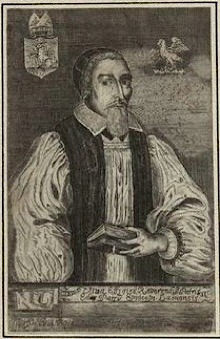
Parry writes a book entitled David restored; or an Antidote against the Prosperity of the Wicked, and the Afflictions of the Just, which is a sermon on the seventy-third Psalm. This is afterward published by his son, John Parry at Oxford in 1660. This work contains an engraved portrait of Edward Parry (above).
(Pictured: An engraved portrait by John Dickson of Dr. Edward Parry, Bishop of Killaloe, from a book authored by the bishop entitled “David restored; or an Antidote against the Prosperity of the Wicked, and the Afflictions of the Just”, published at Oxford in 1660.)
The unrest was triggered by the Orange Order’s permission to march its traditional route through the Garvaghy Road in Portadown, County Armagh, a Catholic/nationalist area, as part of the annual Drumcree parading dispute. The Orange Order, a Protestant fraternal organization, has marched this route since 1807 to commemorate the Battle of the Boyne. For decades, Catholic residents object to the route, seeing it as a sectarian provocation.
The decision to allow the march comes after death threats from loyalistparamilitaries to target Catholics if the parade is stopped. This concession outrages nationalists, who also resent the Royal Ulster Constabulary (RUC)’s aggressive policing of protesters.
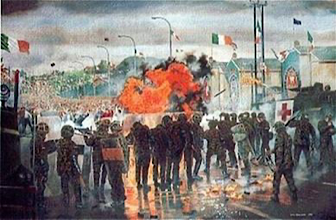
On July 6, around 1,000 Orangemen march under a sealed-off Garvaghy Road, with about 1,500 RUC and British Army personnel present. The next day, mass protests erupt in areas like North Belfast, Lurgan, and west Belfast’s Lenadoon district. Rioters hurl stones, petrol bombs, and other projectiles at security forces, while Republican paramilitaries engage in gun battles with police.
Security forces responded with plastic bullets and other riot control measures, firing over 2,500 plastic bullets at rioters. A 13-year-old boy is critically injured after being struck by one. Hundreds of vehicles are hijacked, set on fire, and used to block roads in Belfast, Newry, Armagh, and Dungannon. The RUC and British Army have to withdraw entirely from some nationalist areas of Belfast.
One civilian is killed in the rioting and over 100 people are injured, including 62 RUC officers and at least three soldiers. One hundred seventeen arrests are made and some armoured vehicles are either damaged or destroyed. An indirectly related incident sees a loyalist Ulster Defence Association (UDA) member killed by a pipe bomb he is handling.
The riots highlight the fragility of peace efforts and deepen divisions over parading rights. The episode leads Secretary of State for Northern IrelandMo Mowlam to urge Orange leaders to reroute future marches. For the Provisional Irish Republican Army, the riots are its last major action in a 27-year campaign. It declares its final ceasefire on July 19, 1997.
The 1997 riots are the last widespread sectarian violence in Northern Ireland before the Good Friday Agreement, underscoring the unresolved nature of the Drumcree dispute and the challenges of achieving lasting peace.
(Pictured: “Drumcree, The Garvaghy Road July 1997” by military artist David Rowlands, oil on canvas, owned by the 1st Battalion (The Cheshires) The Mercian Regiment which depicts British soldiers during the rioting on Garvaghy Road)
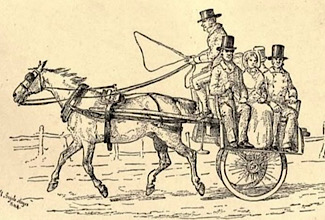
On July 5, 1790, the Irish mail coach service makes its first run from Dublin to Waterford, marking a significant milestone in Ireland’s postal history. This is part of the broader expansion of the General Post Office’s (GPO) mail coach network, which had been introduced in Ireland in 1789.
A twice-weekly mail coach service operates between Dublin and Drogheda to the north, Kilkenny to the south and Athlone to the west as early as 1737 and for a short period from 1740, a Dublin to Belfast mail coach exists. In winter, this route takes three days, with overnight stops at Drogheda and Newry. In summer, travel time is reduced to two days. In 1789, mail coaches begin a scheduled service from Dublin to Belfast. They meet the mail boats coming from Portpatrick in Scotland at Donaghadee, County Down.
The Irish mail coach system is modeled on the successful English service introduced in 1784 by John Palmer, which uses specially built coaches to carry the Royal Mail under contract to independent operators. These coaches are designed for speed and efficiency, stopping only for mail collection and delivery, and are protected by armed guards. The Dublin–Waterford route is one of the early inland services added to the network, complementing other major routes such as London–Norwich, Liverpool–Leeds, and London–Dover.
The July 5, 1790 run from Dublin to Waterford is notable because it is the first scheduled mail coach service on that route, replacing slower and less secure methods like mounted riders or carts. It demonstrates the GPO’s ability to extend its network to key inland towns, improving communication between Dublin and the southeast of Ireland. It also reflects the rapid expansion of the mail coach system in Ireland by 1790, with many towns already having daily mail delivery and collection.
While the primary purpose is to carry the Royal Mail, passengers can also travel at a premium fare. The coaches can carry four seated passengers inside and more standing outside, with the driver and guard occupying the front seats. The journey from Dublin to Waterford is relatively short for the time, but still requires careful scheduling to meet the strict post office timetable.
This first run lays the foundation for a regular mail service that becomes a vital part of Ireland’s transport and communication infrastructure until the advent of railways in the 1830s. By the mid-19th century, most of the mail coaches in Ireland are eventually out-competed by Charles Bianconi’s country-wide network of open carriages, before this system in turn succumbs to the railways. The Dublin–Waterford route, like others, is eventually replaced by the faster rail services, but its role in modernizing Ireland’s postal system is crucial.
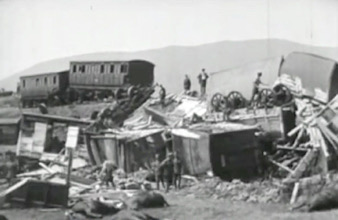
The train is returning from Belfast, where King George V has just opened the first Parliament of Northern Ireland on June 22. It is part of a heavy security escort for the King, including the 10th Royal Hussars (machine gun troop) and their horses, who have been stationed at the Curragh in County Meath. Three special trains have been arranged to bring them back to Dublin, but the third is attacked.
The IRA plants a mine or detonates a bomb that partially derails the train a mile north of Adavoyle Station, between Newry and Dundalk. The derailment causes ten carriages to be thrown across an embankment, killing and injuring many soldiers and horses.
At least three British soldiers are killed (including a sergeant and a private) and twenty are wounded, some of whom later die from their injuries. The train guard, Frank Gallagher, is killed and two other railway officials are seriously injured. Reports vary about the number of horses killed. Some say over 40 horses are killed while others claim as many as 100. Many horses are shot to prevent them from being captured or causing further casualties. Soldiers reportedly weep for their dead horses, as they had served together in World War I. A local farmer and a train guard are also shot dead in the aftermath.
The attack causes an outcry in Britain, highlighting the IRA’s ability to strike high-profile military convoys. The incident underscores the vulnerability of British forces returning from political events in Ireland and is one of several such attacks during the War of Independence.
The Adavoyle ambush is remembered as a symbolic and brutal act in the conflict, combining military casualties with the killing of animals that have been comrades in war. It also illustrates the IRA’s use of railways as a strategic target during the campaign.
Today, the Adavoyle railway station is in ruins, though the Belfast-Dublin line still passes the site.
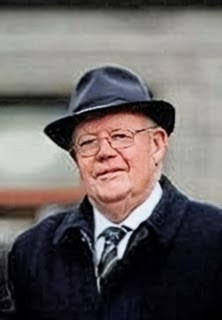
O’Donnell is one of the few senior Catholic judges on the Northern Irish bench and he frequently comes under threat. In 1979, he tries the Shankill Butchers and gives out 42 life sentences, a record in British legal history.
O’Donnell is Chairman of the Northern Ireland Bar Council from 1970 to 1971 and of the Council of Legal Education (Northern Ireland) from 1980 to 1990.
O’Donnell marries Eileen McKinley (died 2008) in 1954. They have two sons and two daughters. Of his sons, Turlough O’Donnell SC is Chairman of the General Council of the Bar of Ireland from 2016 to 2018, and Donal O’Donnell is directly appointed from the Irish Bar to the Supreme Court of Ireland in 2010, before becoming Chief Justice of Ireland in 2021.
O’Donnell dies in Blackrock on April 21, 2017. He is buried at Blackrock/Haggardstown Old Cemetery in Dundalk, County Louth.
Mitchel is born in Camnish, near Dungiven, County Derry, on November 3, 1815, the son of a Presbyterian minister. At the age of four, he is sent to a classical school, run by an old minister named Moor, nicknamed “Gospel Moor” by the students. He reads books from a very early age. When a little over five years old, he is introduced to Latin grammar by his teacher and makes quick progress. In 1830, not yet 15 years old, he enters Trinity College, Dublin (TCD) and obtains a law degree in 1834.
In the spring of 1836, Mitchel meets Jane Verner, the only daughter of Captain James Verner. Though both families are opposed to the relationship, they become engaged in the autumn and are married on February 3, 1837, by the Rev. David Babington in Drumcree Church, the parish church of Drumcree.
Mitchel works in a law office in Banbridge, County Down, where he eventually comes into conflict with the local Orange Order. He meets Thomas Davis and Charles Gavan Duffy during visits to Dublin. He joins the Young Ireland movement and begins to write for The Nation. Deeply affected by the misery and death caused by the Great Famine, he becomes convinced that nothing will ever come of the constitutional efforts to gain Irish freedom. He then forms his own paper, United Irishmen, to advocate passive resistance by Ireland’s starving masses.
In May 1848, the British tire of Mitchel’s open defiance. Ever the legal innovators in Ireland, they invent a crime especially for the Young Irelanders – felony-treason. They arrest him for violating this new law and close down his paper. A rigged jury convicts him, and he is deported first to Bermuda and then to Australia. However, in June 1853, he escapes to the United States.
Mitchel works as a journalist in New York City and then moves to the South. When the American Civil War erupts, he is a strong supporter of the Southern cause, seeing parallels with the position of the Irish. His family fully backs his commitment to the Southern cause. He loses two sons in the war, one at the Battle of Gettysburg in 1863 and another at the Battle of Fort Sumter in 1864, and another son loses an arm. His outspoken support of the Confederacy causes him to be jailed for a time at Fort Monroe, where one of his fellow prisoners is Confederate PresidentJefferson Davis.
In 1874, the British allow Mitchel to return to Ireland and in 1875 he is elected in a by-election to be a member of the Parliament of the United Kingdom representing the Tipperary constituency. However, his election is invalidated on the grounds that he is a convicted felon. He contests the seat again in the resulting by-election and is again elected, this time with an increased vote.
Unfortunately, Mitchel, one of the staunchest enemies to English rule of Ireland in history, dies in Newry on March 20, 1875. He is buried in his parents’ grave in the unitarian cemetery, High Street, Newry, where a monument is later erected by his widow. He is also commemorated by a statue in Newry. Thirty-eight years later, his grandson, John Purroy Mitchel, is elected Mayor of New York City.
The Kingsmill massacre, also referred to as the Whitecross massacre, is a mass shooting that takes place on January 5, 1976, near the village of Whitecross in south County Armagh, Northern Ireland. Gunmen stop a minibus carrying eleven Protestant workmen, line them up alongside it and shoot them. Only one victim survives, despite having been shot 18 times. A Catholic man on the minibus is allowed to go free. A group calling itself the South Armagh Republican Action Force claims responsibility. It says the shooting is retaliation for a string of attacks on Catholic civilians in the area by Loyalists, particularly the killing of six Catholics the night before. The Kingsmill massacre is the climax of a string of tit for tat killings in the area during the mid-1970s, and is one of the deadliest mass shootings of the Troubles.
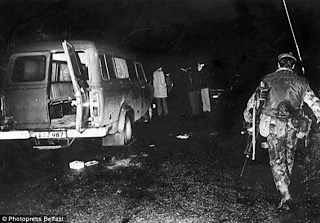
On January 5, 1976, just after 5:30 p.m., a red Ford Transit minibus is carrying sixteen textile workers home from their workplace in Glenanne. Five are Catholics and eleven are Protestants. Four of the Catholics get out at Whitecross and the bus continues along the rural road to Bessbrook. As the bus clears the rise of a hill, it is stopped by a man in combat uniform standing on the road and flashing a torch. The workers assume they are being stopped and searched by the British Army. As the bus stops, eleven gunmen in combat uniform and with blackened faces emerge from the hedges. A man “with a pronounced English accent” begins talking. He orders the workers to get out of the bus and to line up facing it with their hands on the roof. He then asks, “Who is the Catholic?” The only Catholic is Richard Hughes. His workmates, now fearing that the gunmen are loyalists who have come to kill him, try to stop him from identifying himself. However, when Hughes steps forward the gunman tell him to “get down the road and don’t look back.”
The lead gunman then says, “Right,” and the others immediately open fire on the workers. The eleven men are shot at very close range with automatic rifles, which includes Armalites, an M1 carbine and an M1 Garand. A total of 136 rounds are fired in less than a minute. The men are shot at waist height and fall to the ground, some falling on top of each other, either dead or wounded. When the initial burst of gunfire stops, the gunmen reload their weapons. The order is given to “Finish them off,” and another burst of gunfire is fired into the heaped bodies of the workmen. One of the gunmen also walks among the dying men and shoots them each in the head with a pistol as they lay on the ground. Ten of them die at the scene: John Bryans (46), Robert Chambers (19), Reginald Chapman (25), Walter Chapman (23), Robert Freeburn (50), Joseph Lemmon (46), John McConville (20), James McWhirter (58), Robert Walker (46) and Kenneth Worton (24). Alan Black (32) is the only one who survives. He had been shot eighteen times and one of the bullets had grazed his head. He says, “I didn’t even flinch because I knew if I moved there would be another one.”
After carrying out the shooting, the gunmen calmly walk away. Shortly after, a married couple comes upon the scene of the killings and begin praying beside the victims. They find the badly wounded Alan Black lying in a ditch. When an ambulance arrives, Black is taken to a hospital in Newry, where he is operated on and survives. The Catholic worker, Richard Hughes, manages to stop a car and is driven to Bessbrook Royal Ulster Constabulary (RUC) station, where he raises the alarm. One of the first police officers on the scene is Billy McCaughey, who had taken part in the Reavey killings. He says, “When we arrived it was utter carnage. Men were lying two or three together. Blood was flowing, mixed with water from the rain.” Some of the Reavey family also come upon the scene of the Kingsmill massacre while driving to hospital to collect the bodies of their relatives. Johnston Chapman, the uncle of victims Reginald and Walter Chapman, says the dead workmen were “just lying there like dogs, blood everywhere”. At least two of the victims are so badly mutilated by gunfire that immediate relatives are prevented from identifying them. One relative says the hospital mortuary “was like a butcher’s shop with bodies lying on the floor like slabs of meat.”
Nine of the dead are from the village of Bessbrook, while the bus driver, Robert Walker, is from Mountnorris. Four of the men are members of the Orange Order and two are former members of the security forces: Kenneth Worton is a former Ulster Defence Regiment (UDR) soldier while Joseph Lemmon is a former Ulster Special Constabulary (USC) officer. Alan Black is appointed a Member of the Order of the British Empire (MBE) in the 2021 New Year Honours, for his cross-community work since the massacre.
The next day, a telephone caller claims responsibility for the attack on behalf of the “South Armagh Republican Action Force” or “South Armagh Reaction Force.” He says that it was retaliation for the Reavey–O’Dowd killings the night before, and that there will be “no further action on our part” if loyalists stop their attacks. He adds that the group has no connection with the Irish Republican Army (IRA). The IRA denies responsibility for the killings as it is on a ceasefire at the time.
However, a 2011 report by the Historical Enquiries Team (HET) concludes that Provisional IRA members were responsible and that the event was planned before the Reavey and O’Dowd killings which had taken place the previous day, and that “South Armagh Republican Action Force” was a cover name. Responding to the report, Sinn Féin spokesman Mitchel McLaughlin says that he does “not dispute the sectarian nature of the killings” but continues to believe “the denials by the IRA that they were involved”. Social Democratic and Labour Party (SDLP) Assemblyman Dominic Bradley calls on Sinn Féin to “publicly accept that the HET’s forensic evidence on the firearms used puts Provisional responsibility beyond question” and to stop “deny[ing] that the Provisional IRA was in the business of organising sectarian killings on a large scale.”
The massacre is condemned by the British and Irish governments, the main political parties and Catholic and Protestant church leaders. Merlyn Rees, the British Secretary of State for Northern Ireland, condemns the massacre and forecasts that the violence will escalate, saying “This is the way it will go on unless someone in their right senses stops it, it will go on.”
The British government immediately declares County Armagh a “Special Emergency Area” and deploys hundreds of extra troops and police in the area. A battalion of the Ulster Defence Regiment (UDR) is called out and the Spearhead Battalion is sent into the area. Two days after the massacre, the British Prime MinisterHarold Wilson announces that the Special Air Service (SAS) is being sent into South Armagh. This is the first time that SAS operations in Northern Ireland are officially acknowledged. It is believed that some SAS personnel had already been in Northern Ireland for a few years. Units and personnel under SAS control are alleged to be involved in loyalist attacks.
The Kingsmill massacre is the last in the series of sectarian killings in South Armagh during the mid-1970s. According to Willie Frazer of Families Acting for Innocent Relatives (FAIR), this is a result of a deal between the local UVF and IRA groups.
(Pictured: The minibus carrying the textile factory workers is left peppered with bullet holes and blood stains the ground after the massacre, as detectives patrol the scene of the murders)