seamus dubhghaill

Promoting Irish Culture and History from Little Rock, Arkansas, USA


Leave a comment

Death of Political Economist John Elliott Cairnes

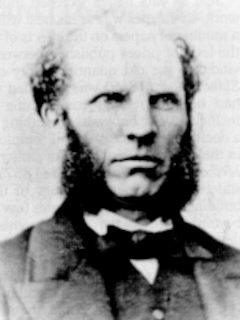
John Elliott Cairnes, Irish-born political economist, dies at the age of 51 at Blackheath, LondonEngland, on July 8, 1875. He has been described as the “last of the classical economists.”

Cairnes is born on December 26, 1823, at CastlebellinghamCounty Louth, the son of William Elliott Cairnes (1787–1863) of Stameen, near Drogheda, and Marianne Woolsey, whose mother is the sister of Sir William Bellingham, 1st Baronet of Castlebellingham. William decides upon a business career, against the wishes of his mother, Catherine Moore of Moore Hall, Killinchy, and becomes a partner in the Woolsey Brewery at Castlebellingham. In 1825, he starts on his own account in Drogheda, making the Drogheda Brewery an unqualified success. He is remembered for his great business capacity and for the deep interest he takes in charity.

After leaving school, Cairnes spends some years in the counting house of his father at Drogheda. His tastes, however, lay altogether in the direction of study, and he is permitted to enter Trinity College Dublin, where he takes the degree of BA in 1848, and six years later that of MA. After passing through the curriculum of Arts, he engages in the study of Law and is called to the Irish bar. But he lacks a desire to pursue the legal profession, and over some ensuing years, he devotes himself to writing in various publications about social and economic questions and treatises that relate to Ireland. He focuses mostly on political economy, which he studies thoroughly.

While residing in Dublin, Cairnes makes the acquaintance of the Archbishop of Dublin Richard Whately, who conceives a very high respect for Cairnes’ character and abilities. In 1856, a vacancy occurs in the chair of political economy at Dublin, founded by Whately, and Cairnes receives the appointment. In accordance with the regulations of the foundation, the lectures of his first year’s course are published. The book appears in 1857 with the title Character and Logical Method of Political Economy. It follows up on and expands John Stuart Mill‘s treatment in the Essays on some Unsettled Questions in Political Economy and forms an admirable introduction to the study of economics as a science. In it the author’s peculiar powers of thought and expression are displayed to the best advantage. Logical exactness, precision of language, and firm grasp of the true nature of economic facts, are the qualities characteristic of this as of all his other works. If the book had done nothing more, it would still have conferred inestimable benefit on political economists by its clear exposition of the true nature and meaning of the ambiguous term law. To the view of the province and method of political economy expounded in this early work the author always remains true, and several of his later essays, such as those on Political Economy and LandPolitical Economy and Laissez-Faire, are but reiterations of the same doctrine. His next contribution to economical science is a series of articles on the gold question, published partly in Fraser’s Magazine, in which the probable consequences of the increased supply of gold attendant on the Australian and Californian gold discoveries are analysed with great skill and ability. And a critical article on Michel Chevalier‘s work, On the Probable Fall in the Value of Gold, appears in the Edinburgh Review for July 1860.

In 1861, Cairnes is appointed to the professorship of jurisprudence and political economy in Queens College Galway, and in the following year he publishes his admirable work The Slave Power, one of the finest specimens of applied economic philosophy. The inherent disadvantages of the employment of slave labour are exposed with great fullness and ability, and the conclusions arrived at have taken their place among the recognised doctrines of political economy. The opinions expressed by Cairnes as to the probable issue of American Civil War are largely verified by the actual course of events, and the appearance of the book has a marked influence on the attitude taken by serious political thinkers in England towards the Confederate States of America.

During the remainder of his residence at Galway, Cairnes publishes nothing beyond some fragments and pamphlets, mainly upon Irish questions. The most valuable of these papers are the series devoted to the consideration of university education. His health, at no time very good, is still further weakened in 1865 by a fall from his horse. He is ever afterwards incapacitated from active exertion and is constantly liable to have his work interfered with by attacks of illness.

In 1866, Cairnes is appointed professor of political economy in University College, London. He is compelled to spend the session 1868–1869 in Italy, but on his return continues to lecture until 1872. During his last session he conducts a mixed class, ladies being admitted to his lectures. His health soon renders it impossible for him to discharge his public duties. He resigns his post in 1872 and retires with the honorary title of professor emeritus of political economy. In 1873 his own university confers on him the degree of LL.D.

Cairnes dies at the age of 51 at Blackheath, London, England, on July 8, 1875.

Leave a comment

Birth of Political Economist John Elliott Cairnes

John Elliott Cairnes, Irish-born political economist, is born on December 26, 1823, at Castlebellingham, County Louth. He has been described as the “last of the classical economists.”

Cairnes is the son of William Elliott Cairnes (1787–1863) of Stameen, near Drogheda, and Marianne Woolsey, whose mother is the sister of Sir William Bellingham, 1st Baronet of Castlebellingham. William decides upon a business career, against the wishes of his mother, Catherine Moore of Moore Hall, Killinchy, and becomes a partner in the Woolsey Brewery at Castlebellingham. In 1825, he starts on his own account in Drogheda, making the Drogheda Brewery an unqualified success. He is remembered for his great business capacity and for the deep interest he takes in charity.

After leaving school, Cairnes spends some years in the counting house of his father at Drogheda. His tastes, however, lay altogether in the direction of study, and he is permitted to enter Trinity College Dublin, where he takes the degree of BA in 1848, and six years later that of MA. After passing through the curriculum of Arts, he engages in the study of Law and is called to the Irish bar. But he lacks a desire to pursue the legal profession, and over some ensuing years, he devotes himself to writing in various publications about social and economic questions and treatises that relate to Ireland. He focuses mostly on political economy, which he studies thoroughly.

While residing in Dublin, Cairnes makes the acquaintance of the Archbishop of Dublin Richard Whately, who conceives a very high respect for Cairnes’ character and abilities. In 1856, a vacancy occurs in the chair of political economy at Dublin, founded by Whately, and Cairnes receives the appointment. In accordance with the regulations of the foundation, the lectures of his first year’s course are published. The book appears in 1857 with the title Character and Logical Method of Political Economy. It follows up on and expands John Stuart Mill‘s treatment in the Essays on some Unsettled Questions in Political Economy and forms an admirable introduction to the study of economics as a science. In it the author’s peculiar powers of thought and expression are displayed to the best advantage. Logical exactness, precision of language, and firm grasp of the true nature of economic facts, are the qualities characteristic of this as of all his other works. If the book had done nothing more, it would still have conferred inestimable benefit on political economists by its clear exposition of the true nature and meaning of the ambiguous term law. To the view of the province and method of political economy expounded in this early work the author always remains true, and several of his later essays, such as those on Political Economy and Land, Political Economy and Laissez-Faire, are but reiterations of the same doctrine. His next contribution to economical science is a series of articles on the gold question, published partly in Fraser’s Magazine, in which the probable consequences of the increased supply of gold attendant on the Australian and Californian gold discoveries are analysed with great skill and ability. And a critical article on Michel Chevalier‘s work, On the Probable Fall in the Value of Gold, appears in the Edinburgh Review for July 1860.

In 1861, Cairnes is appointed to the professorship of jurisprudence and political economy in Queens College Galway, and in the following year he publishes his admirable work The Slave Power, one of the finest specimens of applied economic philosophy. The inherent disadvantages of the employment of slave labour are exposed with great fullness and ability, and the conclusions arrived at have taken their place among the recognised doctrines of political economy. The opinions expressed by Cairnes as to the probable issue of American Civil War are largely verified by the actual course of events, and the appearance of the book has a marked influence on the attitude taken by serious political thinkers in England towards the Confederate States of America.

During the remainder of his residence at Galway, Cairnes publishes nothing beyond some fragments and pamphlets, mainly upon Irish questions. The most valuable of these papers are the series devoted to the consideration of university education. His health, at no time very good, is still further weakened in 1865 by a fall from his horse. He is ever afterwards incapacitated from active exertion and is constantly liable to have his work interfered with by attacks of illness.

In 1866 Cairnes is appointed professor of political economy in University College, London. He is compelled to spend the session 1868–1869 in Italy, but on his return continues to lecture until 1872. During his last session he conducts a mixed class, ladies being admitted to his lectures. His health soon renders it impossible for him to discharge his public duties. He resigns his post in 1872 and retires with the honorary title of professor emeritus of political economy. In 1873 his own university confers on him the degree of LL.D.

Cairnes dies at the age of 51 at Blackheath, London, England, on July 8, 1875.


Leave a comment

Birth of James Graham Fair, Mining Tycoon & U.S. Senator

james-graham-fair

James Graham Fair, banker, mining tycoon, and United States Senator from Nevada, is born in Clogher, County Tyrone on December 3, 1831. He is credited with discovering the Big Bonanza, one of the richest pockets of gold and silver on the Comstock Lode.

Born in what is now Northern Ireland in 1831 to Scotch-Irish parents, Fair immigrates with his family to the United States when he is a boy and grows up on a farm in Illinois. Following the 1849 California Gold Rush, he travels to California. He earns a reputation for understanding ore bodies, inspiring his eventual employment as superintendent of various mines.

The 1859 discovery of the Comstock Lode in Nevada provides Fair with new opportunities. In 1865, he becomes superintendent of the prestigious Ophir Mine. Two years later, the Hale and Norcross Mine in Virginia City hire him as assistant superintendent, but the owners dismiss him within a year for unclear reasons.

While at the Hale and Norcross, Fair meets John William Mackay, whose success at the Kentuck Mine made him a millionaire. The two Irish immigrants recognize common interests and form an alliance. Mackay gives Fair the position of superintendent of the Rising Star Mine in Idaho, a property he had recently acquired. The venture proves unsuccessful, but it solidifies a working relationship between the two.

Fair works quietly with Mackay and investors James C. Flood and William S. O’Brien to obtain control of the Hale and Norcross Mine. Fair turns it to profit with better management. He and Mackay combine their expertise to acquire and explore other claims. In 1873, largely through Fair’s persistent search in the Consolidated California and Virginia Mine, the partnership discovers the famed Big Bonanza, one of the richest ore bodies in history. Fair and the others become extremely wealthy. He uses his assets to defeat the incumbent William Sharon for a seat in the United States Senate, which he holds in an undistinguished way from 1881-1887 as a Democrat.

Fair develops real estate in San Francisco and acquires mining property outside Nevada. Theresa Fair, his wife, is respected in Virginia City for donations to causes including those of the Catholic Church and the Daughters of Charity. When she divorces her husband in 1883 for habitual adultery, national public opinion turns against the senator. During his bid for reelection, he finds little support. Even Mackay fails to come to his aid, and he easily loses his seat to William Morris Stewart in 1887. He then moves back to San Francisco.

James Fair dies on December 28, 1894 in San Francisco of diabetes mellitus at the age of 63. He is buried in Holy Cross Cemetery in Colma, California.


Leave a comment

Founding of the Irish Emigrant Society

An illustration from The Weekly Herald, 1845.The Irish Emigrant Society is founded in New York City on March 22, 1841.

The Irish and other emigrants face numerous abuses such as “illusive advertisements,” “crooked contractors,” “dishonest prospectuses” and “remittent sharpers” when they arrive in the United States. The Irish Emigrant Society is founded in 1841 by a group of New York Irish to combat issues such as these.

In December 1848 the Emigrant Society advises emigrants that as soon as their ship comes into harbour she will be boarded by an agent of the Society who will offer them sound and honest advice. In addition they warn that the ship will also be boarded by a large number of “runners” – conmen who will make it their business to attract them to the boarding houses that employ them. Emigrants are instructed be careful not to accept help from them as their ploy is to promise good quality board at low prices, but when they come to leave the house an exorbitant fee will be demanded. They will threaten not to hand over luggage unless this fee is paid and violent scenes might often ensue.

The Society warns that many persons, some of Irish birth, have set up offices in the city where they claim to be agents for railroad and steamboat enterprises. These crooks sell tickets which appear to entitle the holder to travel to specific destinations but which are worthless. To protect emigrants from such frauds, various measures are introduced in New York in 1848 including the construction of reception centres and the licensing of steam boats to take emigrants from the quarantine to the landing piers. Boarding houses are also required to display their prices in English, Dutch, German, Welsh and French.

Emigrants who survive the ordeal of the crossing are faced with the decision of where to settle in America. Newspapers carry advertisements singing the praises of the land and climate of Illinois, Iowa, Minnesota and Michigan but never mention the backbreaking work of clearing the land for farming. California also proves to be a very popular destination when news of the California Gold Rush breaks in 1849. It also provides opportunities on the lands that the Native Americans have deserted in search of gold.

(From: “1841 – The Irish Emigrant Society Is Founded In New York,” Stair na hÉireann, https://stairnaheireann.net